


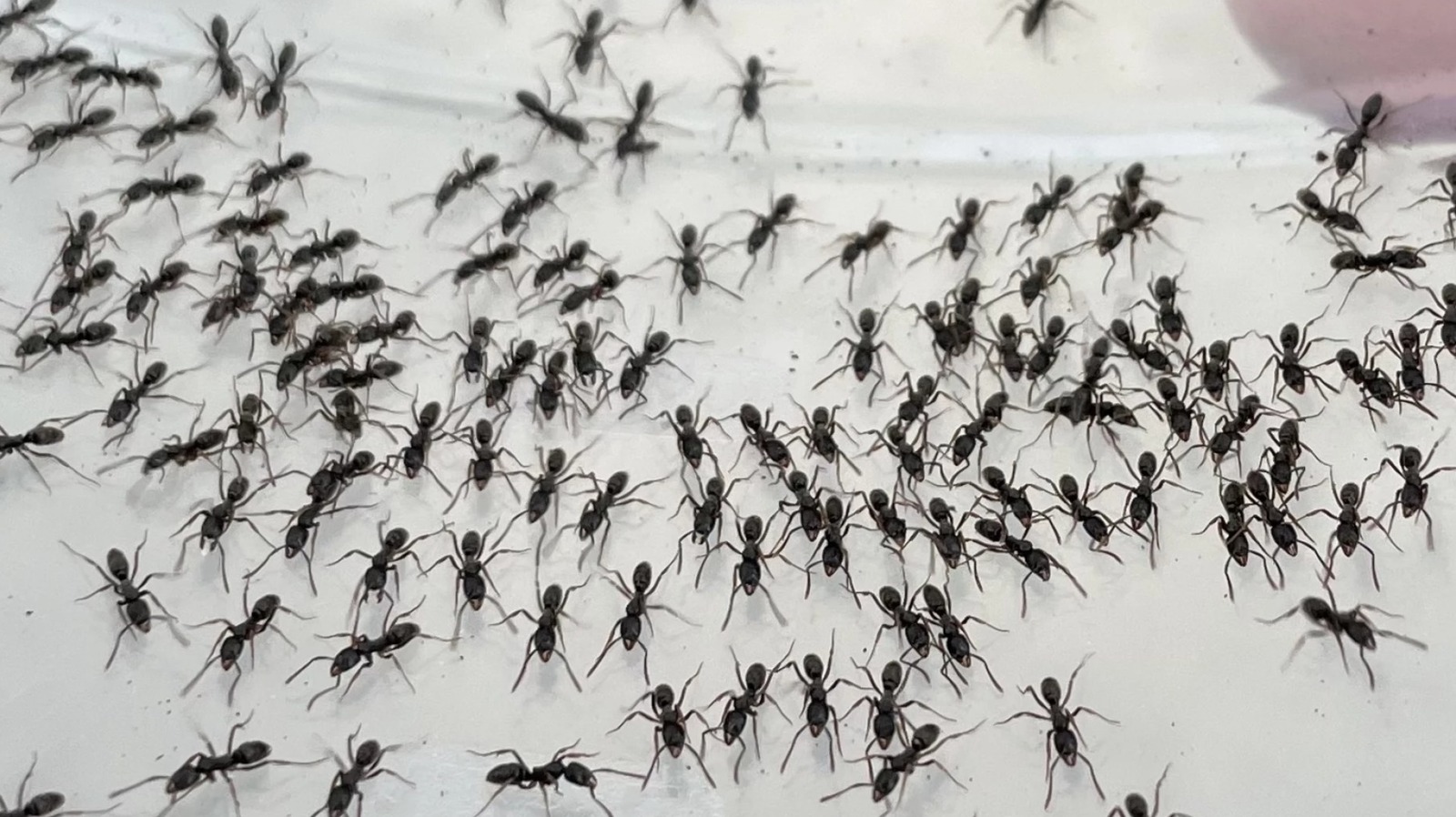
The weather is finally warming up, and it’ll soon be time for short-sleeve shirts, picnics, and storing drinks in coolers — all perfect for summer survival. But with warm weather also comes insects, including invasive species of ants. Unfortunately, one such species is slowly encroaching on southeastern parts of the United States. And if you happen to get stung by one of them, you could be in for a world of pain.
Brachyponera chinensis, better known as the Asian needle ant, is a species of ant that hails from many Asian countries, including China, Japan, and the Koreas. While the ant was first seen in the U.S. back in the 1930s, it’s only recently started making its way across the American Southeast in states like Florida, Georgia, South Carolina, and Tennessee. However, people have also allegedly spotted these insects in Wisconsin, Washington, and Texas.
As an invasive species, Asian needle ants are posing threats to our native ant populations, which are vital to local ecosystems. However, Asian needle ants are also problematic because they’re among the relatively few insects that are venomous to humans. While the venom of the common fire ant burns intensely and can even leave scars, life-threatening allergic reactions are rare. Asian needle ant stings are not only painful, but they’re seemingly more likely to cause severe allergic reactions. Even bee stings trigger allergic reactions less frequently than Asian needle ants do.
How to identify an Asian needle ant
Ants are tiny, so many of them are prone to looking identical to an untrained eye. However, if you know what sort of traits to look for, you can determine if the ant you’re about to step on is an Asian needle ant without it having to sting you first.
Asian needle ants are particularly small, generally measuring just one-fifth of an inch in length, and they’re often dark brown or black with lighter-colored legs and mandibles. These ants love to set up nests in houses and other areas with a reliable food supply. If you find an ant in your house and you’re worried it’s an Asian needle ant, try trapping it in a glass jar. If it can’t scale the sides, you’ve got an Asian needle ant on your hands — unlike most ant species, this variety of ant can’t cling to glass or other smooth surfaces.
While Asian needle ants will happily feast on sugary foods they find lying about — yet another reason to buy smart kitchen gadgets like vacuum sealers and airtight storage containers — they actually prefer eating other insects. Termites are seemingly among the Asian needle ant’s favorite meals, but it’s also known to eat spiders, cockroaches, and centipedes. So, if you’ve got an infestation of any of those insects, you might want to ask your local exterminator if you’ve also got an Asian needle ant problem.
Dealing with Asian needle ant stings and infestations
According to the USDA, Asian needle ant venom is potent enough to cause severe pain over several hours. While most victims only experience pain at the sting site, some people have reported the pain migrating to different areas of the body. Hives, general redness, and itchiness are typical symptoms, but these stings can be life threatening for those who happen to be allergic. According to a study published in The Journal of Allergy and Clinical Immunology, seven people in a 327-person sample pulled from a specific area of Korea exhibited an allergic response to Asian needle ant venom. Among those seven people, however, four of them — 57% — suffered from “potentially life-threatening anaphylaxis.” The incidence of allergies and hypersensitivity to Asian needle ants among the U.S. population isn’t yet known, but if you’ve been stung by one of these ants and have a history of stinging-related allergies — or if the resulting pain and redness persist over many days — seek immediate medical attention.
Because the Asian needle ant invasion is relatively recent, and because these pests prefer to prey on other insects, exterminators have yet to devise a reliable way of dealing with them. North Carolina State University recommends using “protein-based insecticide baits,” such as Extinguish Plus, Advion Fire Ant Bait, Potigard, and Maxforce FG. That said, these products are meant to manage infestations rather than stamp them out. Orkin suggests sealing up any areas where the ants can get in, reducing indoor moisture, clearing outdoor leaves and plant debris to deter nesting, and keeping the home free of open food (robot vacuums are great for sucking up any crumbs you may have missed). If none of that works, you’ll likely have to get in touch with your local pest control service.
