


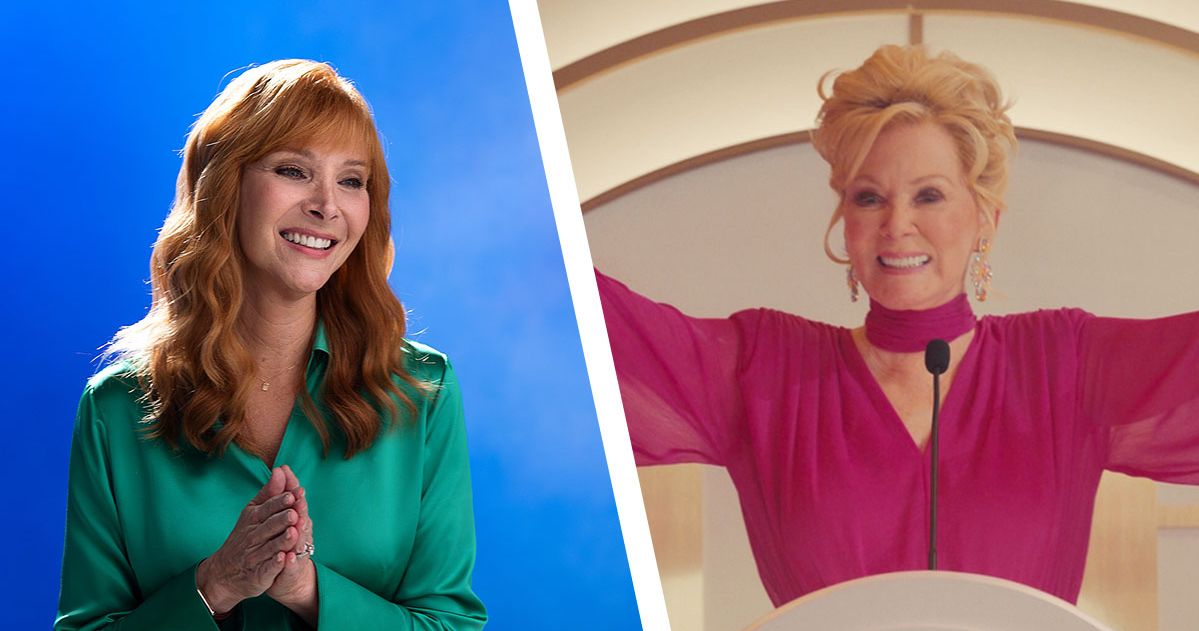

Nobody’s ever beaten Jean Smart for Hacks. What if Valerie Cherish can?
Photo-Illustration: Vulture; Photos: HBO
The one thing an awards show needs for maximum intrigue is a head-to-head battle in a major category. This year, several of the top acting categories seem weighted toward a heavy favorite. Noah Wyle (The Pitt) in Lead Actor in a Drama and Matthew Rhys (Widow’s Bay) in Lead Actor in a Comedy feel locked in, and my intuition is that The Pitt’s Shawn Hatosy has Supporting Actor in a Drama nailed down too. But even in a race where the metrics heavily tilt toward one performer, a formidable challenger can emerge. This year, that’s what’s shaping up in Outstanding Lead Actress in a Comedy, where an undefeated Jean Smart takes on the return of Lisa Kudrow and The Comeback. What may seem like an open-and-shut case for the “Jean Smart Doesn’t Lose for Hacks” file is instead going to come down to how many voters think Hacks has been rewarded enough and how many voters really love Lisa Kudrow.
The case for Jean Smart is fairly simple. This is her turf. Since Hacks first premiered in the 2020–21 Emmys season, Smart has won all four times she’s been nominated. The only reason anyone else has a Lead Actress in a Comedy trophy over that span — Abbott Elementary’s Quinta Brunson in 2023 — is because Hacks was delayed a year due to the strikes. Smart’s the betting favorite again for good reason: Hacks landed the plane with its final season, bringing Deborah Vance the kind of professional achievement and accolades she’s always sought on her own terms.
Smart was an Emmys favorite even before Hacks, though she was never nominated for Designing Women, the show that put her on the map. She actually wasn’t nominated for anything until 2000, when she won Guest Actress in a Comedy for Frasier. She was nominated a total of ten times prior to Hacks, for eight different shows, winning twice as a guest actress on Frasier and once as a supporting actress on Samantha Who?. Of the eight categories it’s possible for an actress to be nominated in, she’s placed in six of them; she’s only missing Lead Actress in a Drama and Lead Actress in a Limited/Anthology Series or Movie.
Smart’s four wins for Hacks have been the easiest bet on the Emmys ballot this decade. If she were to win again, taking the trophy for all five seasons of Hacks’s run, it would be a generational achievement — though, fascinatingly, not an unprecedented one; Hope Lange won the Lead Actress in a Comedy Emmy for both seasons of The Ghost and Mrs. Muir’s short run in 1969 and 1970. But five seasons would be a much more impressive feat than two, no disrespect to the titular Mrs. Muir. Not even Julia Louis-Dreyfus could pull that off for Veep. After winning for six consecutive seasons, Louis-Dreyfus lost for Veep’s seventh and final season to Phoebe Waller-Bridge for Fleabag in 2019.
And there lies the danger. Emmy voters are creatures of habit … until they’re not. It’s something of a myth that actors and actresses will always win for their swan-song seasons, born from a handful of valedictory triumphs for the likes of Kelsey Grammer and Bryan Cranston. Most of the actors who won for their shows’ final seasons were winning for the first time (Jon Hamm for Mad Men, Sarah Jessica Parker for Sex and the City, Kyle Chandler for Friday Night Lights, Matthew Rhys for The Americans). Meanwhile, James Gandolfini, Edie Falco, Allison Janney, and Tina Fey are all actors who won multiple times for their respective shows but weren’t granted one final Emmy for the road.
There’s also the Widow’s Bay factor — which does pertain here, even if the Apple TV horror-comedy doesn’t have anyone nominated in the Lead Actress in a Comedy category. While Hacks outpaced Widow’s Bay in total nominations, 24 to 19, the two shows ended up with an equal number of major nominations (lead/supporting, writing, and directing) with seven apiece. Moreover, those 19 nominations for Widow’s Bay marked a performance over expectation that’s made the show the darling of Emmys season. There is momentum at work for Widow’s Bay to be the exciting new show overtaking the retiring veteran series. It’s essentially what Fleabag was to Veep in the latter show’s final season. The Phoebe Waller-Bridge comedy was new and unusual, and stacked up against a show like Veep that had won plenty, the new show prevailed. Fleabag won six Emmys, including Comedy Series and Lead Actress, while Veep won nothing. Now, Hacks has already outperformed Veep’s final-season nomination tally by a wide margin (24 for Hacks to only 9 for Veep in 2019), so it’s not a one-to-one comparison. But still, Widow’s Bay matching Hacks for momentum at the top of the ballot could be a signal that voters are ready to move on.
When it comes to Lisa Kudrow in The Comeback, there’s no case for historical precedent, because there’s never been an Emmys résumé like this before. The Comeback has aired three seasons separated by 9 and then 12 years. Kudrow’s been nominated for Outstanding Actress in a Comedy Series all three times, but the show has been nominated for only three other Emmys (for directing and casting in 2006, and for writing this year). The voters love her; they have repeatedly shown themselves to be less enamored of her show. This matters. Since 2000, only three actresses have won Lead Actress in a Comedy for a show that wasn’t also nominated for Outstanding Comedy Series: Melissa McCarthy for Mike & Molly in 2011, Toni Collette for United States of Tara in 2009, and Julia Louis-Dreyfus for The New Adventures of Old Christine in 2006, when she also defeated Lisa Kudrow for the first season of The Comeback. (In 2006, none of the Lead Actress in a Comedy nominees were from an Outstanding Comedy Series nominee, which hadn’t happened since 1970 and hasn’t happened since.)
But it’s not the track records that make the Jean Smart–vs.–Lisa Kudrow Emmys battle so fascinating. It’s what their characters — and by extension their shows — represent when it comes to the state of television today. Last year, The Studio got a ton of mileage out of being an insidery show about the frustrations, compromises, cynicism, and — crucially — the kernel of sincerely held belief in movies as an art form. Both Hacks and The Comeback are similarly set within the industry, and it’s remarkable how much of the same ground they’ve covered. Deborah Vance and Valerie Cherish struggle for the respect they deserve, even if Hacks is a little more earnest and loud about its main character’s status as a legend in her field. Both shows have gotten a ton of mileage out of the humiliation rituals that performers must go through to stay relevant and financially viable in the current industry; Valerie was on The Traitors this year, while Deborah and her daughter were on The Amazing Race. Both shows directly addressed the threat AI presents to the industry, though The Comeback did so more earnestly and at length.
The differences in each show’s approach to the fraught state of the entertainment industry could indicate which way the voters might go. Hacks’s final season sees Deborah Vance having washed her hands of the compromises and hypocrisies of late-night television. She’s under a gag order, but her ultimate goal is to sell out Madison Square Garden for the stand-up set of her life, and when that falls apart at the 11th hour, she stages an even bigger setting in Central Park. Meanwhile, Ava’s happy ending involves her rebooting Deborah’s old sitcom with Deborah’s approval and, if the series finale is any indication, with absolutely no notes from the network.
The Comeback — perhaps inevitably given its main character — offered a less triumphant took at the industry. Valerie spends the season starring on a sitcom written by AI. Try as she might to eke out small victories — finding her voice as a producer, championing a young writer — she’s ultimately defeated. How’s That succeeds as an AI-created show, and she ends up replaced by a digital version of herself: the literal nightmare scenario for any actor in the industry. Of course, The Comeback was never going to be a show where Valerie saves the television industry from itself. Her triumph in the series finale is in her getting to make another sitcom, a real one this time, one that values her oft-overlooked but very real talents and expertise as a creature of situation comedy. Val ends The Comeback as a winner, but not how Deborah Vance has won. Valerie’s quiet victory lies in that scene where she tells her longtime documentarian that she’s been in on the joke the whole time.
So which way will the voters in the Emmys’ performer branch lean when it comes to these two visions of Hollywood’s uncertain present? It feels natural to want to join the Deborah Vance victory parade. But in a deeply informal survey of actors and actresses working in television on the subject of which of these two actresses should win the Emmy, the responses were overwhelmingly for Lisa Kudrow. It’s far from a statistically rigorous survey, but it is a finger to the wind, and anecdotally, that wind is blowing in the direction of the erstwhile Mrs. Hatt. Unlike Smart, who’s won four times for Hacks, this is a rare chance to give Kudrow a trophy. Yes, she won Outstanding Supporting Actress in a Comedy for Friends back in 1998, but that was almost 30 years ago. Of her 17 career nominations, six have been for Friends and four for The Comeback (including a writing nomination this year), and she earned the other seven as a producer on shows like Web Therapy, the genealogy series Who Do You Think You Are?, and the Friends reunion special in 2021. But she hasn’t held a trophy aloft since Bill Clinton’s second term, and combined with the Halley’s Comet–esque rarity of a new season of The Comeback, you can see why actors would jump at the chance to vote for her.
Ironically, Kudrow is now experiencing the kind of glow-up to “TV icon” that Smart did when Hacks debuted. Smart’s longevity in the business meant that the TV Academy was now full of voters who’d been watching and appreciating Smart’s work for decades. You’re seeing the same thing for Kudrow in the way she’s spoken about, not just in the easily excitable realms of social media but among her fellow actors. This year’s Hollywood Reporter comedy-actress roundtable featured Kudrow as a kind of mother figure for the younger generation represented by Ashley Padilla (Saturday Night Live), Hannah Einbinder (Hacks), Keke Palmer (The ’Burbs), Quinta Brunson (Abbott Elementary), and Rachel Sennott (I Love LA). The other women were constantly deferring to the wisdom of her years in the business. That roundtable went viral because Palmer made a joke about “2 Girls, 1 Cup,” but if you watch that clip again, Padilla is essentially ignoring the “2G1C” meshuggaas because she’s so intently focused on talking to Kudrow.
Ultimately, we’re all going on vibes here. There won’t be a precursor award before the Emmys that will give us a window into where the Smart-or-Kudrow sentiment is leaning. But when the race comes down to one iconic actress whose show carried the flag for the continued existence of television comedy versus another, there are no losers.
The Supporting Actress in a Comedy category doesn’t feature the same dynamics as Lead, but there are certainly echoes. Hannah Einbinder won her first Emmy for Hacks last year, and as the co-lead of her show, she’s had more opportunities than most to impress. Her competition includes:
Dale Dickey for Widow’s Bay
Janelle James for Abbott Elementary
Kate O’Flynn for Widow’s Bay
Michelle Pfeiffer for Margo’s Got Money Troubles
Megan Stalter for Hacks
Jessica Williams for Shrinking
It’s tough to envision Janelle James suddenly winning this year after four previous losses, though it would be an incredibly welcome surprise. Shrinking’s momentum feels solidly in the Supporting Actor category this year. Dickey and Stalter face the problem of having more prominent co-stars in the category alongside them.
That leaves a three-way race between Pfeiffer, O’Flynn, and Einbinder. Pfeiffer certainly has the star power as an A-list legend in her own right who gives a funny and heartfelt performance that ends with her shedding grandmotherly tears in a courtroom. But Widow’s Bay came along and yanked a lot of the awards buzz away from its Apple TV compatriots, so I think Einbinder’s main competition here is O’Flynn. It’s all going to depend on whether Widow’s Bay can carry that momentum from the 19 nominations into the next round of voting. O’Flynn submitted her spotlight episode, featuring Patricia’s ill-fated sunset cocktails turned near-massacre event. She has the goods. Einbinder is still the favorite; based on last year, we know for a fact that the voters love her. But she also didn’t have Stalter potentially pulling Hacks votes from inside her category last year. There’s upset potential.
-
What Do the Episode Submissions Tell Us About Actors’ Emmy Chances?
-
Netflix Gives La Bola Negra a Real Chance
-
Watch Out, a Dramedy Could Be Coming for Your Emmy
Frasier, The District, 24, Samantha Who?, Harry’s Law, Fargo, Watchmen, and Mare of Easttown.
Smart vs. Kudrow Is the Hottest Race at the Emmys
Your product is saved! You’ll receive emails when your saved products go on sale. Manage preferences.
