


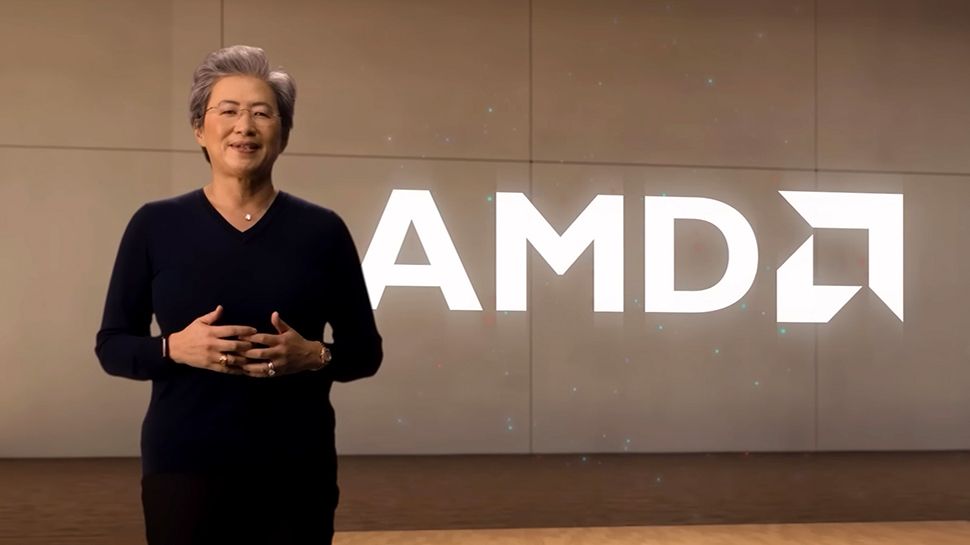
Although AMD has been at the heart of the recent components craze, with its stock surging by more than 3,000% in the last few years, the company hasn’t been as essential to the AI buildout as Nvidia. However, its leadership in the form of Lisa Su has, for a long time, been attuned to the changing landscape of the industry.
Overcoming bottlenecks
The world of computing was a little different in 2013, when Lisa Su delivered remarks at the International Solid-State Circuits Conference (ISSCC) about the challenges in continuing to scale up processing power.
Quote of the day
This article is part of TechRadar Pro’s QOTD project to provide an insight into the minds of the brightest and most recognized figures in the technology industry today and in years gone by. Read the full series here.
CPUs were still the dominant component then, but Su, who was then AMD’s senior vice president and general manager for its global business units, hinted at a future in which other breeds of computing architectures would come to the fore.
The solution that Su proposed — known as heterogeneous computing — essentially involved combining CPUs with GPUs and specialized accelerators to offload processors onto chips or components that are best suited to efficiently carry them out. With these systems, shared memory pools would allow the different processors to work in harmony.
Building for the AI supercycle
If that system sounds familiar, it’s because it’s exactly the sort of arrangement that goes into designing systems like AMD’s Instinct MI400 family of components or Nvidia’s Vera Rubin platform. These are superchips that are integral to the ongoing AI buildout.
Although the rise of AI in the way that it ensued wasn’t on the cards in 2013, Su, who was appointed as AMD’s chief in 2014 shortly after this presentation, articulated a vision that has been realized with full force more than ten years on.
The traditional era of computing, in which CPUs are the dominant technological force within a computing system, has given way to that more heterogeneous environment — not only in data centers but in consumer devices too — with GPUs, NPUs, accelerators, and other components, all cooperating (and often pooling memory) to run as efficiently as possible.
