


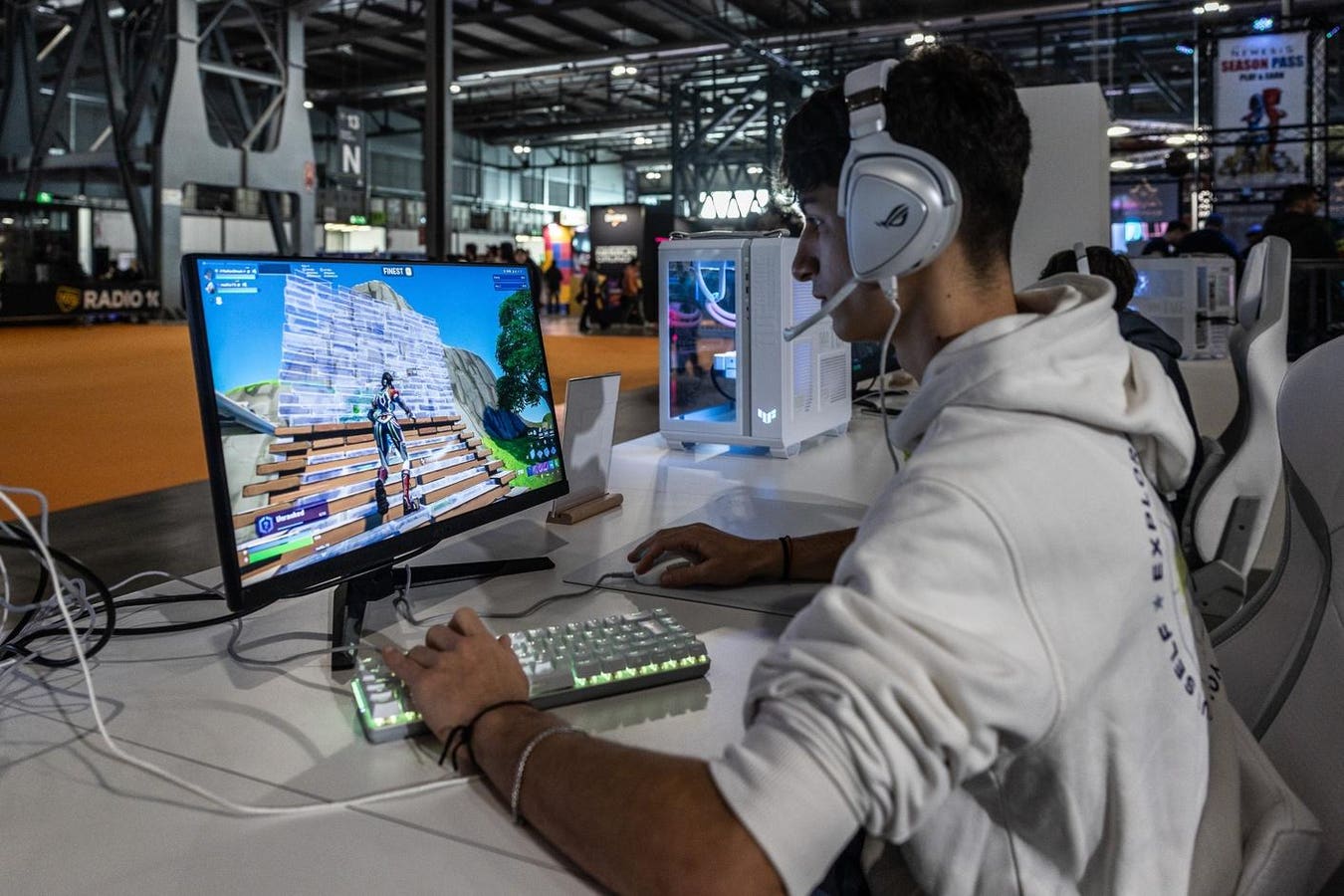

(Photo by Emanuele Cremaschi/Getty Images)
Getty Images
The global video game business is bigger than ever, with an estimated $195 billion in revenue from game-related software, add-ons and content (but not including hardware). So why, with so many players, and so much money, are so many companies and people in the industry struggling?
Two new annual studies on the state of the industry provide some clues, most notably that a handful of long-established franchises led by Roblox, Call of Duty, and Fortnite dominate the business, especially outside the massive, mobile-first China market. Those giant franchises routinely devour much of the time people have available for games each week.
Worse for the industry, the young males who have long been its core audience now have plenty of other highly engaging, highly distracting interactive options beyond games, including online gambling & prediction markets, crypto, social media, and “creator pornography.”
Game-related revenues hit an all-time high in 2025, after recovering from a post-lockdown trough in 2022.
(Graphic courtesy of Epyllion)
All of that means there’s really only a small bit of available time and attention for most players to find, sample and adopt new titles. That’s one of the conclusions from Matthew Ball, the analyst and former media executive who turns out a few deep-dive entertainment-industry reports a year, in an early peek at his 167-page, 2026 state of games report.
Ball and a separate report from long-time analyst firm Sensor Tower do say some new titles have broken through, and may have long-term prospects, pointing to Expedition 33, Peak, Arc Raiders, and Silksong, among others.
EA’s Battlefield 6 is hardly a newcomer, but after half a decade on hiatus, the franchise’s newest installment was 2025’s best-selling PC title, unseating long-time sales champ Call of Duty from Activision in what Sensor Tower called “a great year for shooters.”
Sensor Tower’s State of Games 2026 report focuses elsewhere, though, especially on the extraordinary presence Roblox has created with particularly tween and teen gamers. The publicly traded company has become an essential gamer platform, attracting 380 million monthly active users playing on as many as 50 million user-created “experiences”
Roblox in fact, is “in its own category,” especially thanks to its massive popularity on Android mobile devices, Sensor Tower noted. But you can find the app pretty much on any device that can play games, which helps in adoption.
Perhaps just as importantly, Roblox’s vast range of experiences (an estimated 7 million or so are “active”) means there’s something for every kind of gamer, from the most casual to most hard-core. Roblox ranked in the top nine apps by audience share in all five Sensor Tower’s persona categories, including No. 1 for PC and “Core” gamers. Roblox also far and away the leader among game franchises on top gaming websites and webstores.
“Roblox is stealing (market) share and growing its own garden,” Ball wrote. Other games have to figure out a way to get those Roblox fans to look up long enough to try their offerings. But given Roblox’s entry price, omnipresence, and choice of experiences, challengers better be incredible.
Roblox share prices are up 200% since 2022, rivaled only by Konami. Grand Theft Auto publisher Take-Two Interactive is up a stout 153%, too, and that’s despite repeated delays in Grand Theft Auto 6. Only those three companies performed better than the S&P 500 amid an historic run for AI-related stocks.
Roblox, to Ball, is one of the “Big Five,” the handful of aging, seemingly untouchable franchises that dominate play on PCs and consoles (it’s a slightly different list for each). Collectively, they devour 45% of gamer engagement, leaving few leftovers to feed newcomers.
Roblox, like other big franchises, hasn’t grown much in the United States and Canada for a while, its true growth opportunities in Asia and what Sensor Tower calls “ROW,” the rest of the world.
That shifting locus of growth will shift Roblox itself, changing design choices to better appeal to non-Western audiences.
It also has implications for the game’s technology, as Roblox makes tech decisions to ensure its experiences operate more reliably and pleasurably on the bewildering array of lower-end Android devices available especially in Asia. The company also will need to expand its range of revenue and payment models to accommodate different audiences.
Regardless, there’s plenty of business going on. Sensor Tower estimates 50 billion mobile games were downloaded in 2025, generating $82 billion of in-app purchases, up 1.4% on the year;
The more intimidating number might be the number of games released in 2025, a daunting 225,000, or 617 games every day of the year. That puts a premium on expensive user-acquisition and -retention strategies, especially in mobile,. and makes it formidably difficult for new titles to break through all the noise.
Sensor Tower also noted a signature inflection point: consumers for the first time spent more on mobile apps than mobile games, led by the proliferation of generative AI apps with subscriptions that have hit the market in the past 18 months.
Sensor Tower called that “an outcome that seemed highly improbable just a few years ago.” But Ball games are “losing the attention wars” to an array of new kinds of interactive experiences attracting tens of millions of users, especially among the young men who long were hard-core gamers.
“Interactivity is still ascendant,” but those young men are using new kinds of experiences that basically didn’t exist a decade ago, including betting and prediction markets, crypto and meme coins, social video, and “creator pornography” such as OnlyFans.
“And so, while global player spend has firmly rebounded since 2022, where, when, and how this sum is spent has changed drastically, and thus too have many developers’ prospects,” Ball wrote.
There are other factors here, Ball suggested, including the rise of all-you-can-play subscription plans on Xbox, PC and PlayStation. He also said the vast China market is “eating” the game business. It comprises 20% of the market but has realized 38% of the growth, mostly for Chinese-made games.
No shock that shrinking opportunities for revenue and audiences have made it more and more difficult for startups and challengers in the game industry.
Private funding for game makers dropped another 55% in 2025, even after three years of industry growth overall. Scores of planned and already-launched titles were cancelled. And while layoffs may have eased from 2024’s awful 14,400 lost jobs, they still topped 9,200 in 2025. Even with all those job cuts, profits and margins are still shrinking. Unless your game is one of the chosen few in a vast industry trying to figure out its new normal.
