


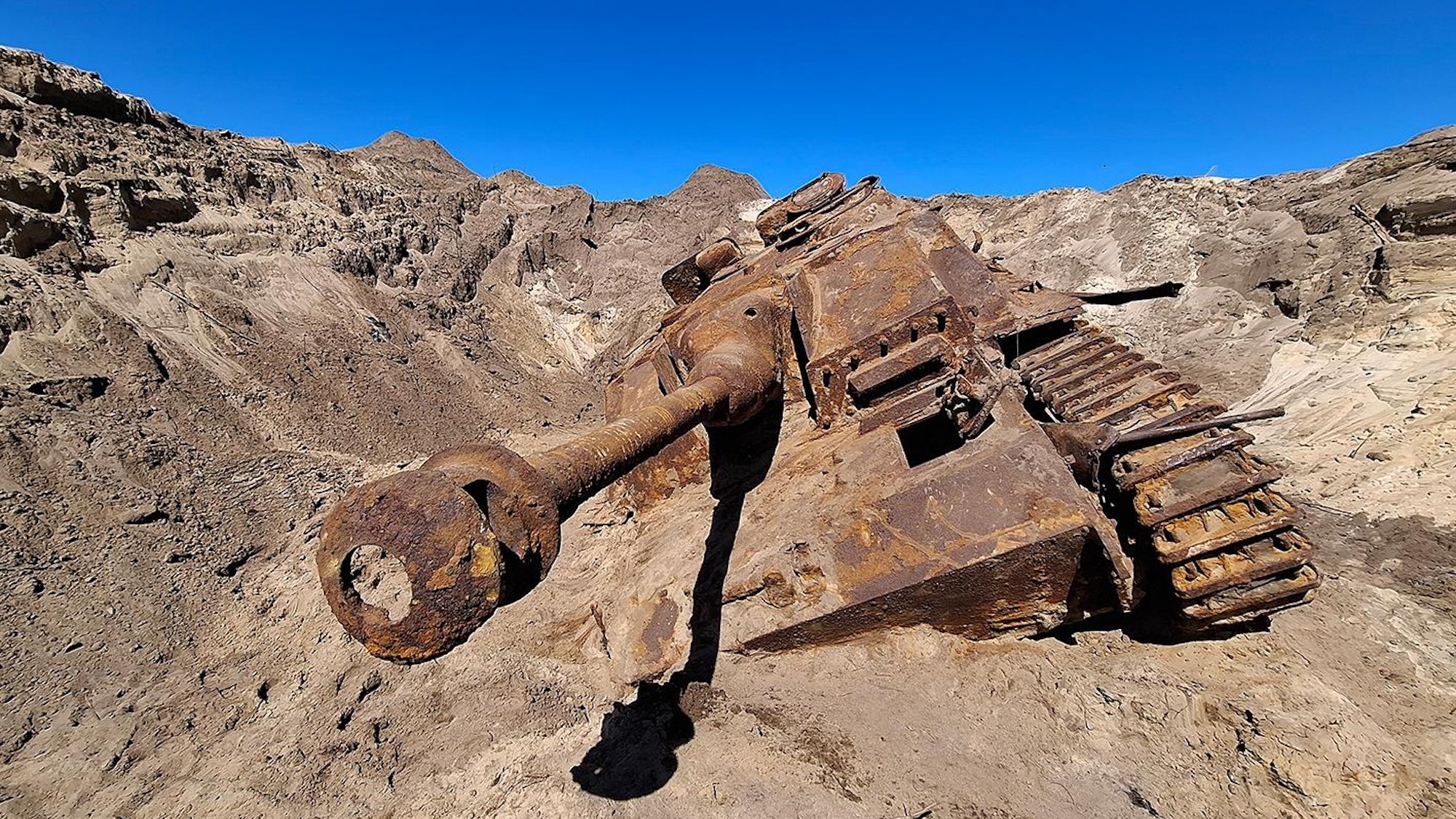
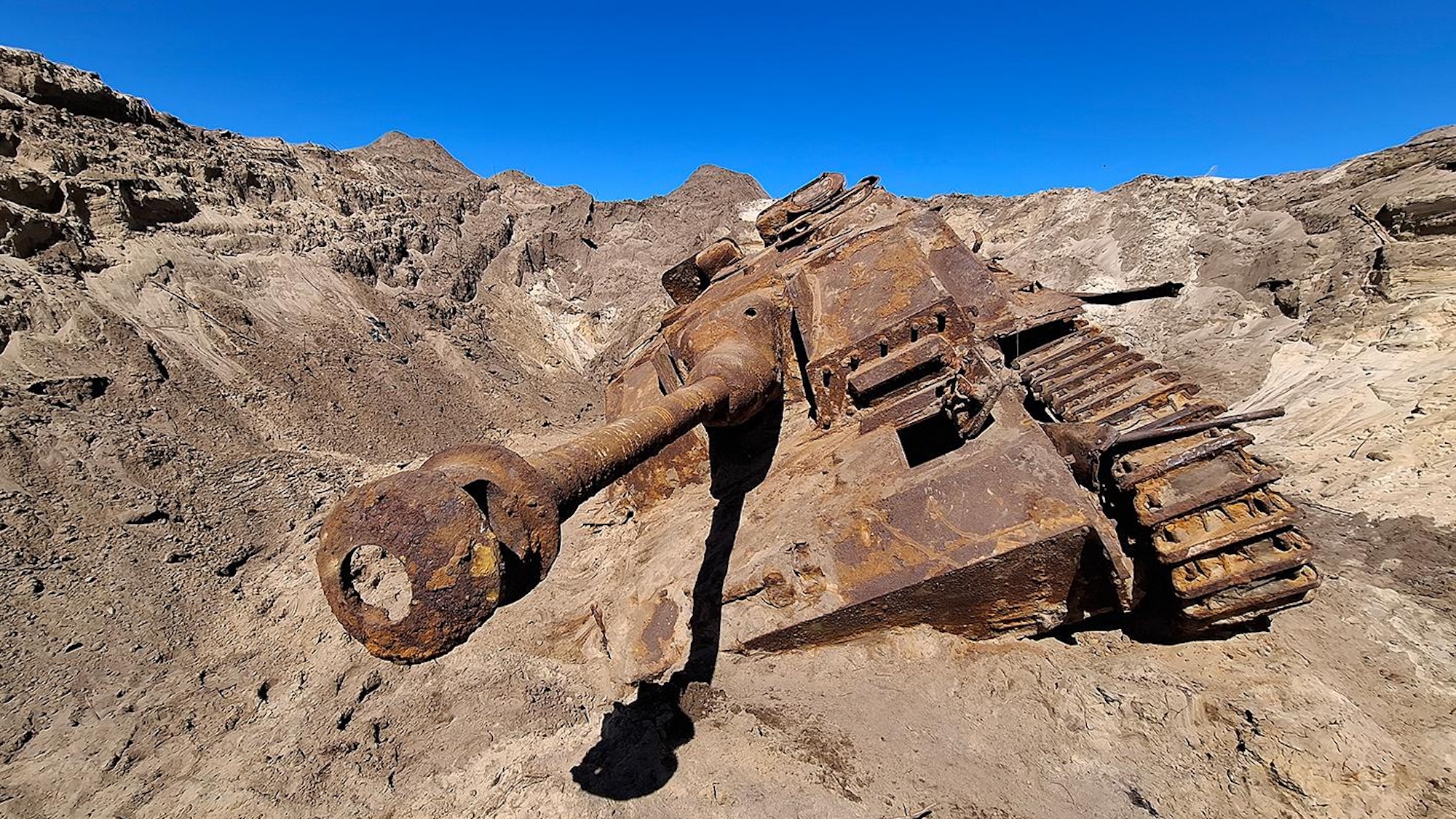
Over 9,300 StuG III were manufactured during World War II.
Credit: A. Hüser / Archaeological Monument Preservation Cuxhaven District
Get the Popular Science daily newsletter💡
Breakthroughs, discoveries, and DIY tips sent six days a week.
By signing up, you confirm you are 16+, will receive newsletters and promotional content and agree to our Terms of Use and acknowledge the data practices in our Privacy Policy. You may unsubscribe at any time.
Construction workers in Germany digging along the North Sea’s rugged coast discovered a massive World War II relic painted with evidence of its dark past. According to archaeologists in the district of Cuxhaven, about 58 miles northwest of Hamburg, experts recently excavated a nearly complete Sturmgeschütz III (StuG III) assault vehicle. The remnants of this formidable tank have been buried in the sand beneath the Nordholz naval air base for over 80 years.
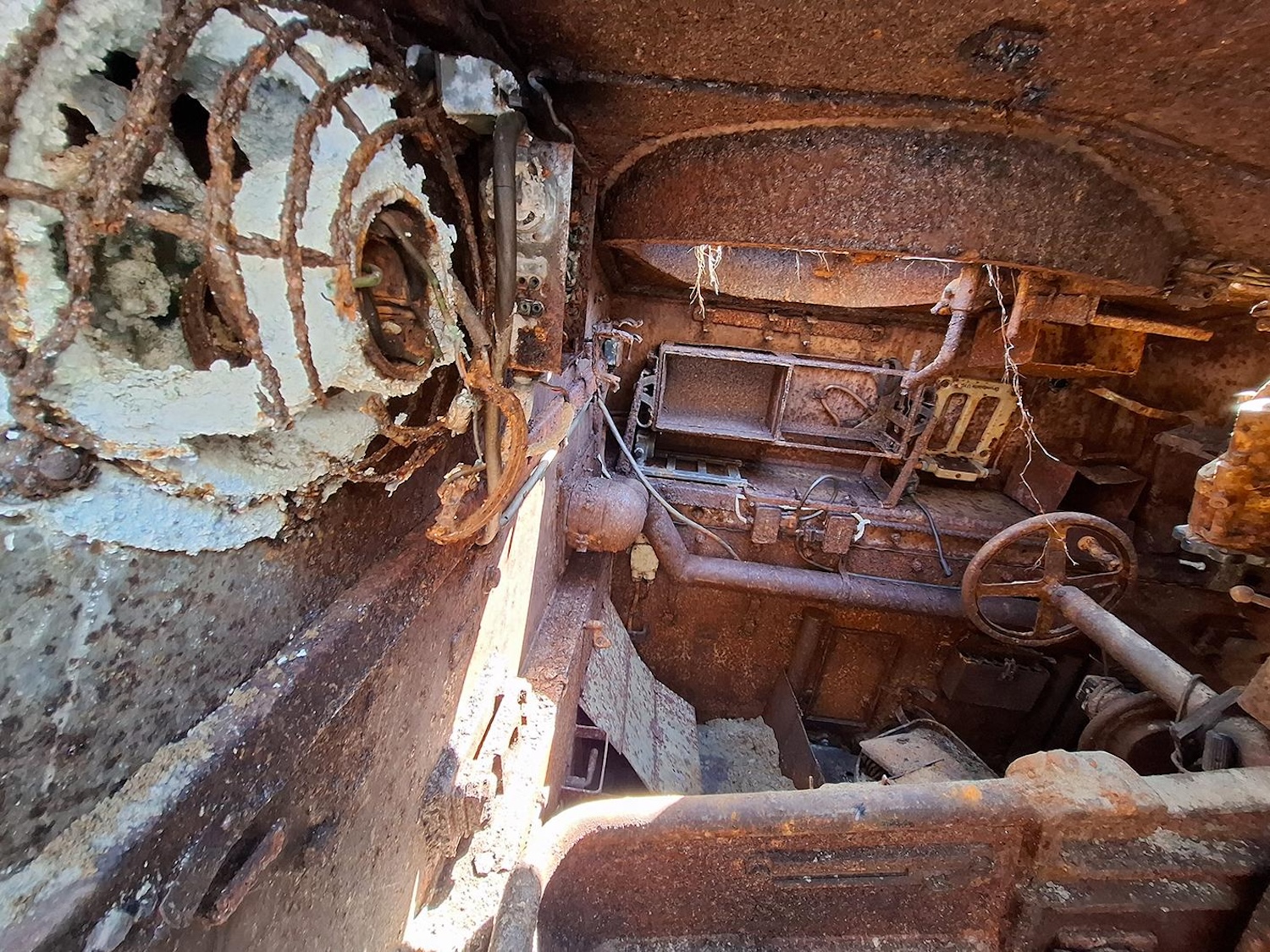
Similar to other tanks, the StuG III was Nazi Germany’s most widely produced tracked vehicle during the war. The defense company Rheinmetall constructed over 9,300 of them throughout the war, only ceasing production in April 1945. Unlike other tanks, the StuG III’s assault gun was fixed in place, instead of installed on a rotating turret. This meant its four-person crew needed to move and position it facing a target each time before firing. Despite its overall size, the StuG III felt much smaller from the interior.
“The view inside is very impressive. It feels oppressively cramped,” Cuxhaven archaeological heritage director Andreas Hüser said in a recent interview.
These design features weren’t necessarily limitations, however. Although researchers have yet to definitively prove that this particular StuG III saw combat, well-preserved details suggest it spent much of the war in action. At least 17 white marks are still visible on its gun barrel,likely a symbol for each enemy tank it destroyed.
Burying enemy weaponry and vehicles after a defeat may sound strange, but it was actually a relatively common practice from Allied forces following World War II’s conclusion. Its location in dry sand at the edge of a slope also protected the StuG III from deterioration. Even after more than 80 years, portions of its original camouflage paint are still clearly visible, and some of its running gear remains undamaged. Near the StuG III, archaeologists also recovered remnants of small shells and light ammunition.
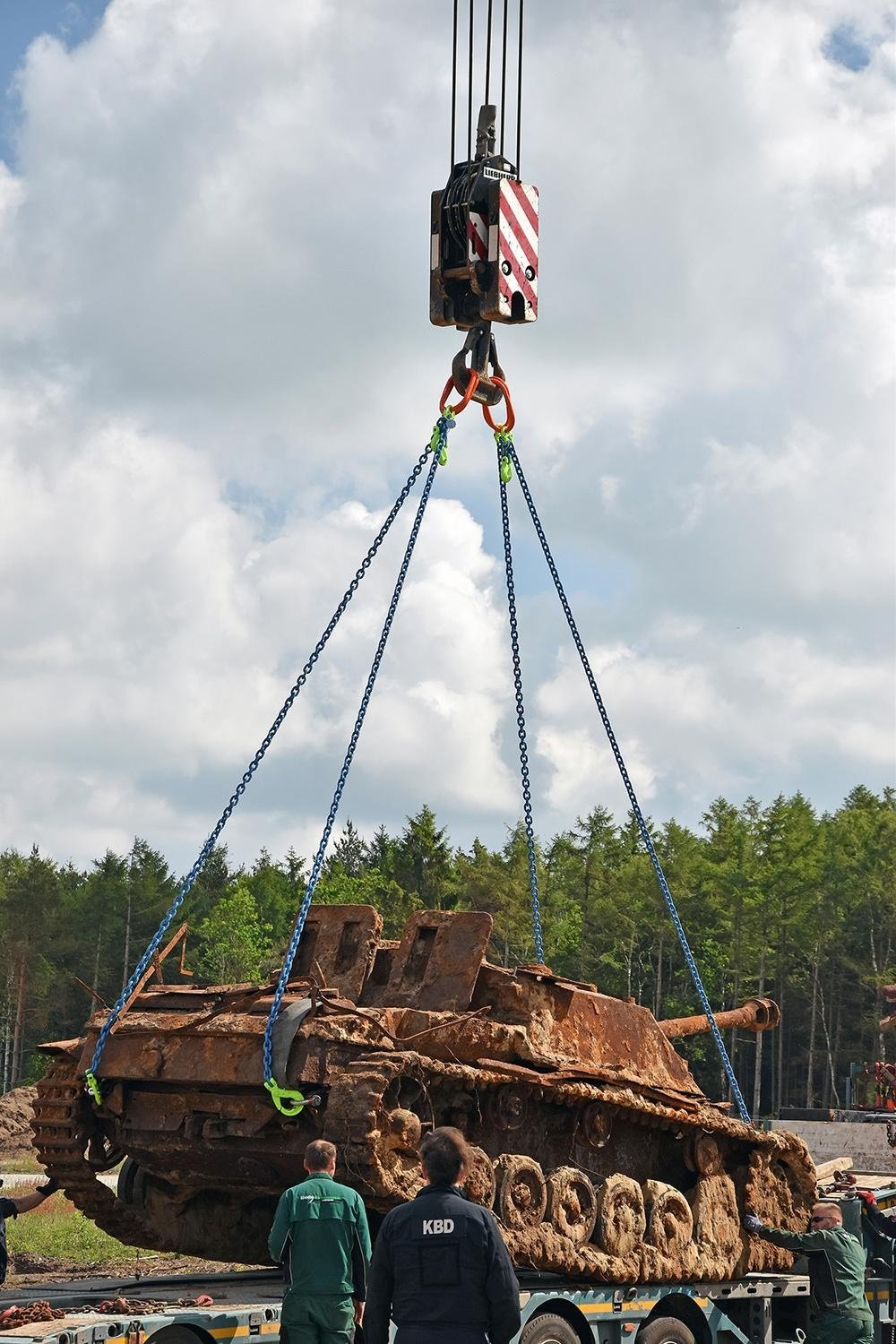
“Not only from an archaeological point of view but also simply because the vehicle is almost complete, this is an important find,” explained Hüser. “Armored vehicles surviving in such a complete state are otherwise rare.”
Experts are now prepping the StuG III for transport to Munster in August for additional preservation work. From there, it’s scheduled for delivery to the Bundeswehr’s Military History Museum in Dresden for public display.

2025 PopSci Best of What’s New
The 50 most important innovations of the year
