


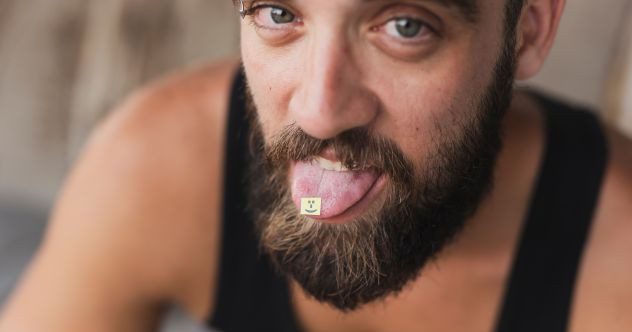
For decades, psychedelics occupied a peculiar place in public culture. Depending on who was speaking, they were either dangerous narcotics, psychiatric breakthroughs, spiritual tools, or the reason somebody’s roommate suddenly believed trees could communicate telepathically.
What often gets overlooked, however, is how many highly accomplished people experimented with these substances during periods of genuine personal, scientific, or creative uncertainty. Not because they wanted to “expand consciousness” in the vague, poster-covered dorm room sense of the phrase, but because they were searching for something conventional approaches had failed to provide. In some cases, that meant relief from depression or addiction. In others, it meant overcoming intellectual stagnation, creative frustration, or questions their professions could not easily answer.
To be clear, psychedelics did not magically transform ordinary people into brilliant visionaries. Human history already contains enough unbearable men explaining the universe beside acoustic guitars. But several famous figures later admitted these experiences profoundly altered the way they thought about themselves, their work, and reality itself.
Here are ten famous minds who emerged from psychedelics convinced something inside them had fundamentally changed.
Related: Ten Recreational Drugs That Were Surprisingly Common in Antiquity
10 Cary Grant Tried to Fix the One Thing Fame Could Not
Cary Grant: The Gentleman Debonair’s Secret LSD Experiment Unveiled
By the mid-1950s, Cary Grant had become one of the most recognizable actors on Earth. He was charming, wealthy, famously handsome, and seemingly incapable of taking a bad photograph. Unfortunately, none of that prevented him from being profoundly unhappy.
Behind the carefully polished Hollywood image, Grant struggled with anxiety, insecurity, failed relationships, and what he later described as a lingering inability to feel genuinely at peace with himself. In search of some kind of emotional breakthrough, he began undergoing LSD-assisted psychotherapy under psychiatrist Mortimer Hartman in California—a legal treatment at the time.
Grant reportedly participated in more than 100 sessions over several years and spoke unusually openly about the experience afterward. He claimed the therapy helped dismantle years of emotional repression and allowed him to confront deep personal fears he had previously buried beneath fame and routine. In one interview, he even described LSD treatment as “beneficial to me beyond belief.”
The remarkable part is not that a movie star experimented with psychedelics. It is that one of Hollywood’s most admired men spent years quietly trying to learn how to be happy.[1]
9 Bill Wilson Believed Psychedelics Could Help Alcoholics Recover
How Bill Wilson ACTUALLY got sober !!
Few organizations are more closely associated with sobriety than Alcoholics Anonymous, which makes its co-founder’s later interest in LSD feel almost aggressively ironic.
By the 1950s, Bill Wilson had already helped build AA into a global movement, but privately, he remained fascinated by the psychological mechanisms behind addiction and recovery. Wilson believed that many alcoholics improved only after experiencing what he called a profound “spiritual awakening”—a sudden shift in perspective powerful enough to break destructive patterns that ordinary willpower could not.
When early psychiatric researchers began experimenting with LSD in therapeutic settings, Wilson became intrigued. After participating in supervised sessions himself, he concluded that psychedelics might help certain patients achieve the same kind of transformative emotional experience AA sought through spirituality and self-reflection. He later argued that LSD could occasionally help “deflate the ego” in deeply resistant alcoholics.
Not everyone in AA appreciated this idea. In fact, many members found it horrifying. Wilson eventually stopped publicly advocating for psychedelic research to avoid damaging the organization he helped create.
Still, the fact remains: one of the most influential figures in addiction recovery quietly believed psychedelics might save lives.[2]
8 Kary Mullis Thought LSD Helped Him Think About Science Differently
The Man Who Took LSD and Changed The World
Kary Mullis was not the sort of scientist who inspired confidence in university public relations departments. The Nobel Prize-winning biochemist behind the invention of polymerase chain reaction—or PCR—was brilliant, outspoken, eccentric, and perfectly willing to discuss things most scientists would wisely keep to themselves.
Among those things was his long history with LSD.
Mullis openly admitted to using psychedelics during his younger years and later suggested the experiences altered the way he approached complex scientific problems. In interviews, he argued that LSD encouraged unusual patterns of thought and helped him consider possibilities he might otherwise have dismissed too quickly. At one point, he even remarked that he doubted he would have developed the same intellectual flexibility without it.
Importantly, Mullis never claimed LSD magically handed him the idea for PCR like some chemically enhanced lightning bolt from heaven. The breakthrough still required years of scientific training, technical knowledge, and experimentation. But he clearly believed psychedelics helped shape the creative mindset that allowed him to approach molecular biology from unusual angles.
Which, admittedly, is still a fairly alarming sentence to attach to one of the most important medical techniques ever developed.[3]
7 Steve Jobs Considered LSD One of the Most Important Experiences of His Life
Steve Jobs On LSD | Forbes
There are many phrases people expect to hear from the co-founder of Apple. “Revolutionary technology,” perhaps. “Design philosophy.” Maybe even “minimalist innovation.” Fewer expect: “taking LSD was a profound experience.”
Yet Steve Jobs said exactly that on multiple occasions.
During the 1970s, long before the black turtlenecks became mandatory cultural artifacts, Jobs experimented with LSD while navigating the strange intersection of youth, spirituality, and early computing culture that defined much of California at the time. Unlike many public figures who later treated their psychedelic years as embarrassing footnotes, Jobs continued speaking positively about the experience decades afterward.
In a well-documented interview, he described taking LSD as “one of the two or three most important things” he had done in his life. Former colleagues and biographers also noted that Jobs believed the experience broadened his perspective and reinforced his emphasis on intuition, simplicity, and human-centered design.
That does not mean the iPhone emerged from a hallucination involving cosmic enlightenment and very expensive fruit. But Jobs clearly believed psychedelics helped shape the way he thought about creativity, perception, and the relationship between people and technology.[4]
6 Ram Dass Turned to Psychedelics After Losing the Career
🍄 Ram Dass | Beautiful & Magical Mushroom Trip Story
Before he became Ram Dass, spiritual author and counterculture icon, he was Dr. Richard Alpert: a respected Harvard psychologist with a promising academic career and a life that appeared, at least externally, to be progressing exactly as planned.
Then it abruptly collapsed.
In 1963, Alpert and fellow psychologist Timothy Leary were dismissed from Harvard amid growing controversy surrounding their psychedelic research and increasingly unconventional behavior. For Alpert, the fallout was deeply personal. The professional identity he had spent years constructing suddenly disappeared, leaving him adrift and increasingly uncertain about what, if anything, actually gave his life meaning.
Psychedelics became part of that search.
Alpert later described experiences with psilocybin and LSD as profoundly destabilizing in both terrifying and enlightening ways, forcing him to confront insecurities and emotional contradictions he had previously hidden beneath academic success. Over time, those experiences helped push him toward Eastern spirituality, meditation, and eventually the identity that made him famous worldwide as Ram Dass.
Importantly, he never portrayed psychedelics as magical solutions. If anything, he often described them as temporary glimpses rather than permanent transformation.
Still, those glimpses completely redirected the course of his life.[5]
5 John C. Lilly Took Curiosity Further Than Most Scientists Were Willing To Go
Science of Breaking Reality – John C. Lilly – Beyond The Veil
John C. Lilly was already an accomplished neuroscientist before psychedelics entered the picture. He had built a respectable career studying the brain, developing early models of consciousness, and experimenting with sensory deprivation tanks to better understand how the mind behaves in isolation.
Then he decided to see what would happen if you combined all of that with LSD.
Lilly began taking psychedelics while floating in sensory deprivation tanks, attempting to explore what he believed were deeper layers of consciousness. What followed was a series of experiences that he interpreted as contact with non-human intelligences—entities he later referred to as the “Earth Coincidence Control Office,” a name that did not help his reputation among more cautious researchers.
His work grew increasingly unconventional over time, expanding into attempts to communicate with dolphins and explore what he believed were shared aspects of consciousness between species. While some of his earlier research remains influential, particularly in the development of flotation tanks, his later claims were widely criticized and dismissed by the scientific community.
Even so, Lilly represents a fascinating example of what happens when a serious scientist follows intellectual curiosity past the point where most of his colleagues are willing to go.[6]
4 Humphry Osmond Helped Create the Word “Psychedelic”
The Mescaline experiment: Humphry Osmond and Christopher Mayhew
Before the term “psychedelic” existed, scientists struggled to describe substances like LSD in a way that captured their psychological effects without sounding overtly alarming. British psychiatrist Humphry Osmond solved that problem in 1957 by coining the word itself—combining Greek roots to suggest something that “reveals the mind.”
Osmond was not merely interested in terminology. He was deeply involved in early research into the therapeutic use of psychedelics, particularly in treating alcoholism. Working with colleagues in Canada, he conducted controlled experiments in which patients were given LSD under supervision, often combined with psychotherapy. Some patients reported profound emotional experiences that appeared to help break long-standing addictive patterns.
The research was controversial, but it attracted serious attention during the 1950s and early 1960s before legal restrictions halted most studies. Osmond remained convinced that psychedelics had legitimate medical potential when used carefully and in controlled environments.
His influence extended beyond medicine. He famously corresponded with writer Aldous Huxley, helping shape early intellectual discussions about psychedelics and consciousness that still echo today.[7]
3 Aldous Huxley Treated Psychedelics as a Philosophical Tool
Aldous Huxley on Mescaline ( Interview ) 1961
Aldous Huxley, best known for Brave New World, approached psychedelics not as a thrill-seeking experiment but as a serious philosophical inquiry into human perception and consciousness.
In 1953, Huxley took mescaline under the supervision of Humphry Osmond. The experience became the basis for his influential essay The Doors of Perception, in which he described how the drug appeared to alter his sense of reality—not by adding hallucinations, but by removing what he believed were mental filters that normally limit human awareness.
Huxley argued that the brain functions as a “reducing valve,” filtering out most of reality so that we can focus on survival. Psychedelics, he suggested, temporarily loosen that filter, allowing a person to experience a broader, more immediate sense of existence. Whether or not one accepts that interpretation, the idea became enormously influential in both philosophical and countercultural circles.
Later in life, Huxley remained interested in the potential of psychedelics for spiritual insight. According to accounts from his wife, he even requested LSD on his deathbed in 1963, suggesting that he viewed the experience as meaningful enough to accompany his final moments.[8]
2 Francis Crick and the Story That Refuses to Go Away
Did Francis Crick Discover DNA on LSD? Asking His Collaborator Christof Koch
Few scientific discoveries have had as much impact as the identification of the double-helix structure of DNA, and few scientists have had their reputations tested by rumor quite like Francis Crick.
For years, a persistent story has circulated claiming that Crick was using LSD at the time he conceptualized the structure of DNA. The idea appears to have originated decades after the discovery, fueled in part by anecdotes and secondhand accounts rather than direct documentation.
There is no solid evidence that LSD played any role in Crick’s breakthrough, and most historians treat the claim with considerable skepticism. However, the story has proven remarkably durable, in part because it fits neatly into a broader cultural narrative about psychedelics and creativity.
Crick himself never confirmed the claim, and his colleagues emphasized the rigorous scientific process behind the discovery. Still, the persistence of the story reflects a broader fascination with the possibility that altered states of consciousness might influence even the most disciplined forms of intellectual work.[9]
1 Dock Ellis Pitched One of Baseball’s Strangest Games
Dock Ellis No Hitter On LSD| Forgotten Sports Stories| Sports Vaults | Baseball History
On June 12, 1970, Pittsburgh Pirates pitcher Dock Ellis took the mound against the San Diego Padres and proceeded to throw a no-hitter—one of the most difficult feats in baseball. The unusual part is that Ellis later claimed he had taken LSD earlier that day and was still experiencing its effects during the game.
According to Ellis, he had initially believed he had the day off and only realized he was scheduled to pitch after receiving a phone call hours later. Despite feeling disoriented, he traveled to the stadium and played. His performance was erratic—he walked eight batters and hit one—but he managed to prevent any hits, securing a victory.
The story has become one of the most famous anecdotes in sports history, though some details remain debated. Ellis himself recounted the experience years later, and while it is difficult to verify every aspect of his claim, the game itself is well documented.
Regardless of how literally one interprets his account, it remains one of the strangest intersections of professional athletics and altered states of consciousness ever recorded.[10]
fact checked by
Darci Heikkinen