


We may receive a commission on purchases made from links.
Investing in a speaker system should be an exciting adventure for you and yours. There are numerous audio manufacturers on the market, and most of these brands are renowned for more than one product or platform. But before you blow the dust off your old CD or vinyl record collection, you’ll want to lock down what type of speakers you plan on investing in: powered or passive. While one isn’t necessarily better than the other, the passive speaker route will probably be the pricier option for a first-time speaker owner. Why, you may be wondering? Because you still have to buy all the stuff that sends audio to your speakers.
Passive speakers aren’t amplified in any way, shape, or form — it’s up to you to provide the amplification and audio signals. That means factoring in the cost of even a relatively basic two-channel stereo amplifier and speaker wire, at least to start. You’ll also need to make sure that the amp you purchase has all the audio connections you’re looking for (e.g., RCA, phono, digital optical, etc.). The $250 Sony STR-DH190 is a top-rated stereo receiver that’s been on the market for years, and it’s particularly great for listening to music.
It outputs up to 100 watts per channel and includes several audio outputs; it even offers Bluetooth support for wireless playback from a phone or laptop. Fortunately, you can grab a spool of speaker wire for as little as $10 (thanks, Amazon Basics!), but once your state’s sales tax is figured in, you’ll be spending close to $300 for power and audio — that’s before you’ve even selected a pair of passive speakers.
Many powered speaker systems have more upfront costs, but you won’t need to invest in your own amplification
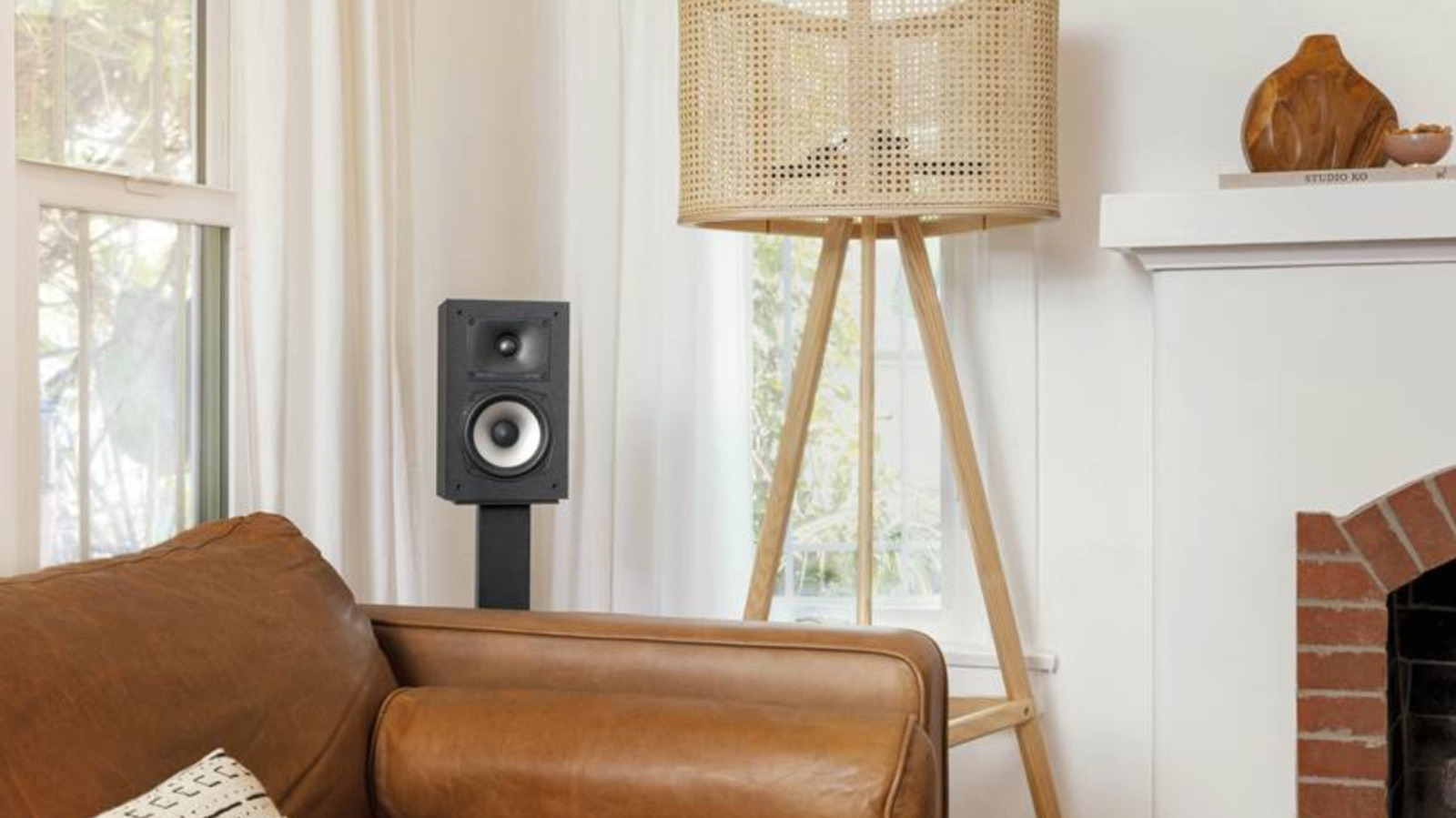
While you can certainly find a used or refurbished pair of passive speakers for a rock-bottom price, you shouldn’t sacrifice quality for cost. Fortunately, brands like Polk Audio and Klipsch make great pairs of bookshelf speakers — a common type of passive speaker — that won’t break the bank. In most cases, though, you’ll still be spending close to $300 for a decent pair (although we did find these $180 Polk Audio monitors).
Now, you could definitely end up spending $300 or more for a pair of powered speakers, too; the difference is that you won’t absolutely need to invest in an external amp or AV receiver. Most powered speakers include several audio inputs, and some of the more advanced models can even be connected to Wi-Fi, allowing you to access platforms like Spotify or Tidal directly from the speaker — no phone required. Closed ecosystems like Sonos or Bose’s Lifestyle lineup are a couple of fan favorites for networking, but we’re also big fans of the $600 Edifier S1000W.
The latter can be interfaced with Wi-Fi or Bluetooth and supports features like AirPlay 2, as well as Spotify and Tidal Connect. The combo is even outfitted with RCA inputs if you want to hook up a record player, CD carousel, or other analog audio equipment. Yes, $600 is a big sticker price, but remember: If you don’t already own a source of amplification, a passive speaker setup may end up costing the same, if not more.
