



The U.S. government is tiptoeing toward national regulation of artificial intelligence, sparking debate about which voices should be a part of that conversation.
As technology companies develop newer and more powerful AI tools, they’ve done so with little regulation from state governments and even less from the federal government. But within the past few weeks, competing visions have emerged from the White House, Congress, and AI companies over who will oversee the technology’s use and what form that oversight will take.
Last week, President Donald Trump signed an executive order calling for major AI companies to voluntarily submit their cutting-edge models for a 30-day period of government review – a notable step for an administration that has taken a hands-off approach to AI, which it says allows the United States to stay competitive with countries like China. In the days following the order, OpenAI CEO Sam Altman built on that with a more detailed blueprint for AI regulation. President Trump also recently said he would like to meet with AI leaders to discuss giving the U.S. government equity stakes in major AI companies.
Why We Wrote This
Artificial intelligence in the United States has so far been met with a largely hands-off regulatory approach. That approach is changing, raising questions about who sets and implements AI policy.
And now, Congress has weighed in: Republican Rep. Jay Obernolte of California and Democratic Rep. Lori Trahan of Massachusetts introduced a draft bill June 4 that would establish a high-level framework for AI, including requiring major AI companies to undergo mandatory audits and establishing protections for workers facing job loss.
But these visions have prompted backlash from people who say they attempt to regulate a sweeping technology without including the voices of the people who will be most impacted. The congressional draft bill, which was the institution’s most ambitious bipartisan attempt yet at creating national AI regulation, was denounced by several influential Democratic lawmakers. They raised concern about the legislation’s proposal to preempt – or supersede – many state-level laws. Some of these Democrats hope to advance their own approach if they can win back power in Congress.
The framework for AI regulation that prevails will affect everything from businesses seeking a competitive advantage to students using the technology in school.
“The decisions we make now, whether we choose to do something or choose not to do something, are going to affect the shape of our society for the next 20 to 30 years,” says Suresh Venkatasubramanian, director of the Center for Technological Responsibility, Reimagination, and Redesign at Brown University. “So it’s really important that we both act, but get it right.”
A focus on national security
A national structure for AI has been the subject of much anticipation. Tech companies have demanded such a framework for years, for reasons that Dr. Venkatasubramanian says range from wanting to know what is expected of them to hoping that a broad federal framework will invalidate stricter state laws.
And as AI develops rapidly, average Americans have started to demand more structure regarding the technology, such as restrictions on data centers.
With Mr. Trump’s new executive order and the recent action in Congress, the federal government seems to be taking steps – albeit slowly – toward federal action. But critics say these visions for AI are too narrow.
“What we are seeing from the White House, from OpenAI, and now from Congress is a convergence around a narrow vision of AI regulation focused on national security and frontier model safety,” said Alondra Nelson, founder of the Science, Technology, and Social Values Lab at the Institute for Advanced Study, in an emailed statement to the Monitor.
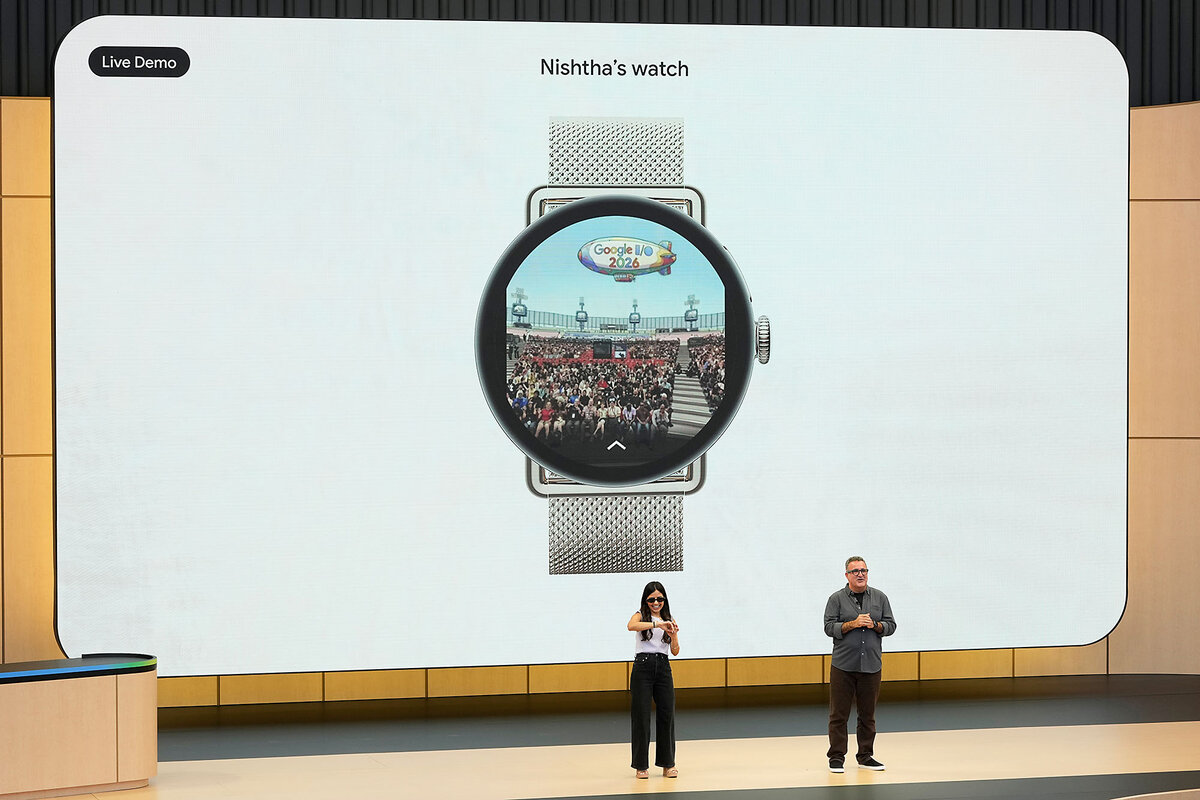
Nishtha Bhatia (left) and Shahram Izadi (right), officials at Google, wear intelligent glasses while speaking at an event in Mountain View, California, May 19, 2026. The White House and Congress are slowly taking steps to regulate the AI industry.
These proposals devote significant attention to establishing a review process for frontier models – the most powerful and cutting-edge technologies created by leading tech companies – before they’re released to the public. The goal is to ensure bad actors can’t take advantage of them, such as using AI to conduct sweeping cyberattacks.
“The [executive order], the bill, advocacy in the AI companies [are all] really focused on this kind of unique layer of so-called catastrophic risk,” says Daniel Remler, a senior fellow at the Center for a New American Security.
That focus reflects the national security concerns that dominate the AI conversation for many Republican lawmakers. But others say regulation for a technology as wide-reaching as AI should address concerns that are closer to everyday people.
Dr. Nelson says the cutting-edge concerns are important but “leave unaddressed the vast majority of what the American public is actually worried about,” things like job loss and harm to youth.
Preempting state laws
That’s not to say there have been no attempts to address those issues at a national level. For example, Representatives Obernolte and Trahan’s draft bill dedicates significant attention to tracking AI-related job loss and providing relief to workers. Mr. Trump earlier this year urged Congress to create a legislative framework for AI that prioritized child safety. (The recent bipartisan bill largely ignored that issue. Mr. Obernolte’s office says that’s due to other lawmakers addressing it.)
Mr. Obernolte, who is widely considered a Republican leader on AI policy in Congress, spent months working on the bill before Ms. Trahan joined the effort after expressing concern about Anthropic’s powerful new model Mythos. Two other Democrats have signed on to the draft bill.
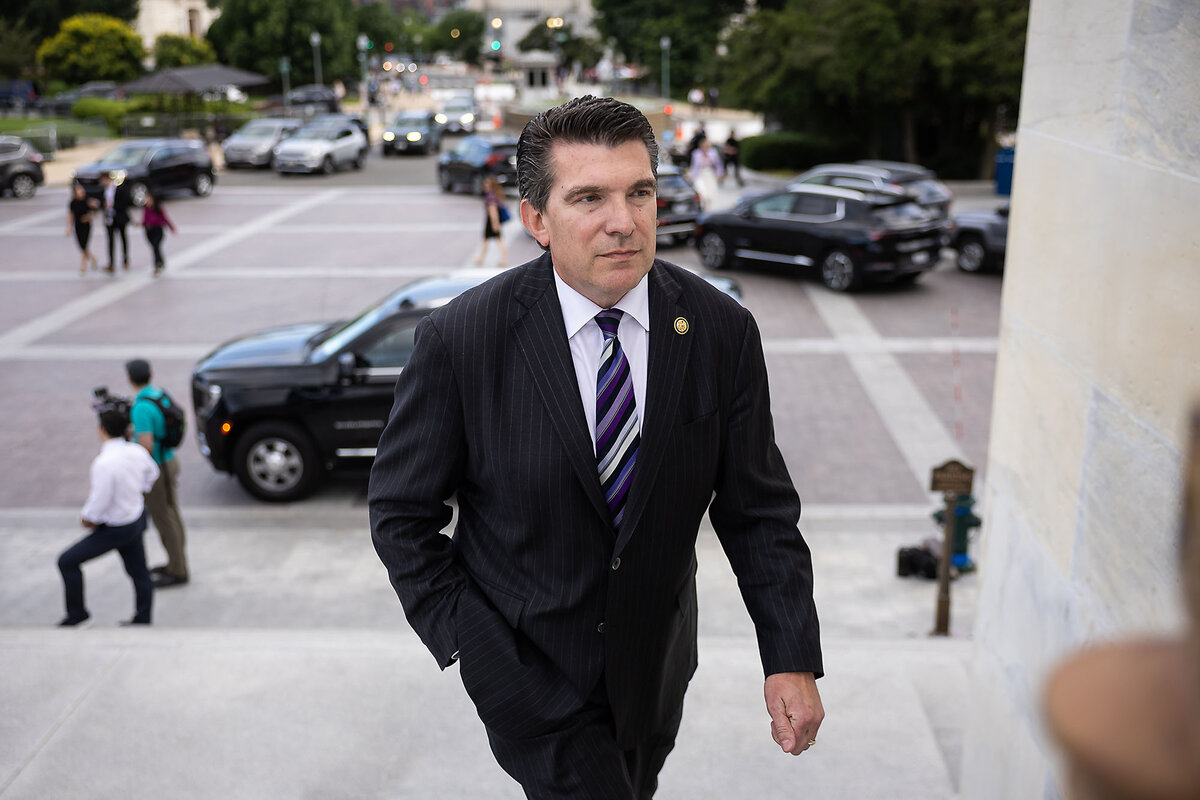
Francis Chung/Politico/AP
Rep. Jay Obernolte, a Republican from California, arrives for a vote at the U.S. Capitol in Washington, June 8, 2026. He recently introduced legislation with Democratic Rep. Lori Trahan of Massachusetts that would set some regulations on AI companies.
The problem for many AI safety advocates is an issue called preemption: when states are barred from passing their own regulations so that the national standard becomes the dominant one.
The congressional bill, for example, would ban for three years any state or local laws that target the development – though not deployment – of AI models. Critics of that model say that could mean a state is blocked from implementing a child safety law that prevents a chatbot from being trained in such a way that it tends to give damaging mental health advice.
Proponents of preemption say having one national law instead of multiple state laws will ensure that AI protections are extended to all 50 states, and will equal the playing field for innovators who might otherwise have to contend with conflicting laws.
Preemption made the recently introduced bill a nonstarter for many Democrats, including the three members of a newly formed House Democratic Commission on AI.
Jina John, a senior policy counsel for AI at the American Civil Liberties Union, says the preemption policy in the new bill elevates industry voices at the expense of state-level policymakers who have been working on AI regulation longer than Congress.
“States and cities have been doing this work consistently for several years right now, and the federal government really has been playing catch-up,” says Ms. John. “And so, it is quite a big deal to try to take that power away from the states.”
The bill’s sponsors will solicit feedback from industry representatives, state governments, and the general public in the coming weeks before introducing a final draft, according to Representative Obernolte’s office. The bill’s advocates say the thorough, bipartisan draft bill emphasizes that Congress is taking AI seriously, though Democratic resistance means it faces a steeply challenging path forward.
“[AI is] a whole-of-society issue that we have to deal with, and that requires a reasonable national conversation that we’re still struggling to have,” says Dr. Venkatasubramanian.
