


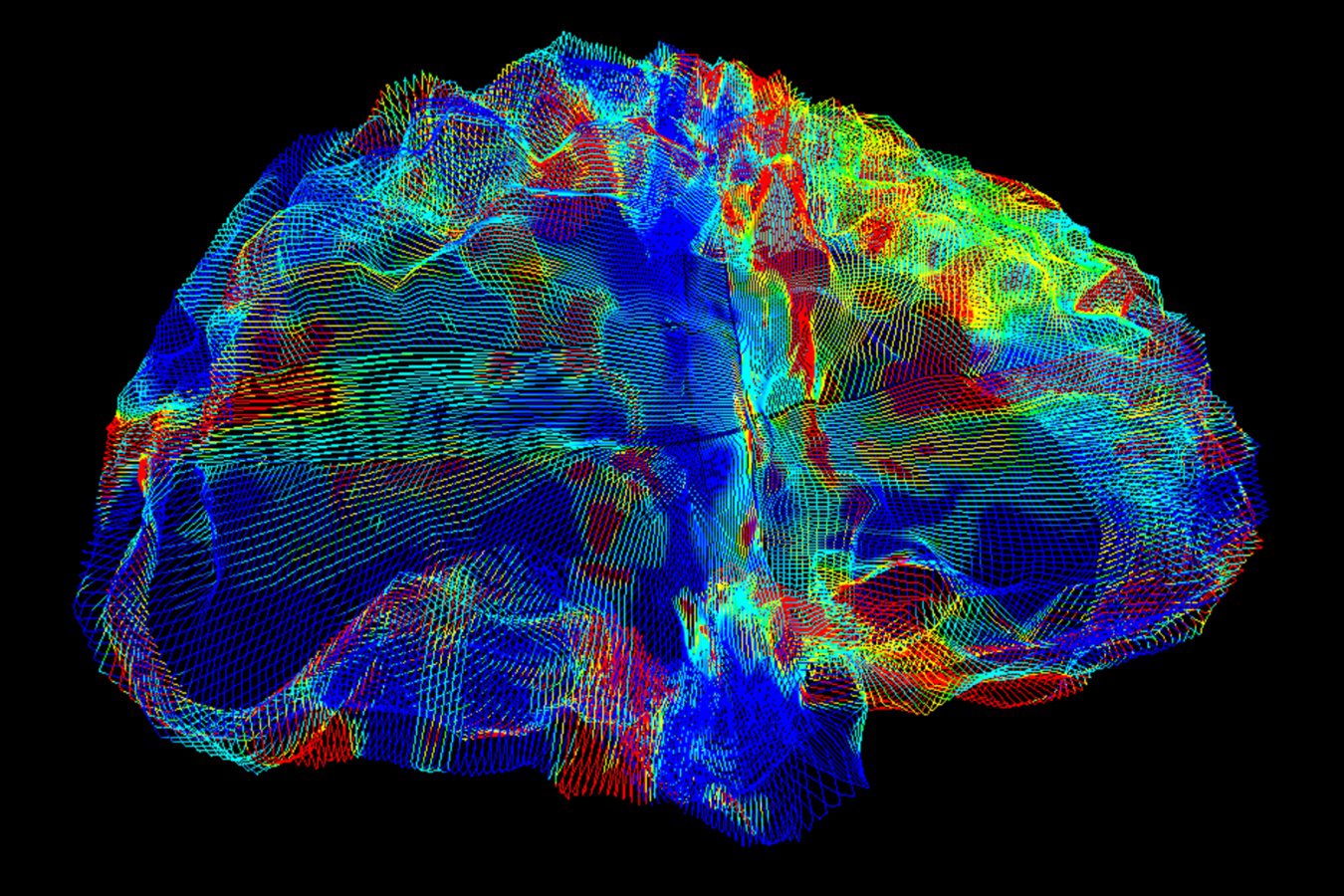

A coloured MRI scan of someone with Alzheimer’s disease. The different colours represent the direction of water diffusion, revealing the orientation of nerve fibres, which are disrupted in Alzheimer’s
MARK AND MARY STEVENS NEUROIMAGING AND INFORMATICS INSTITUTE/SCIENCE PHOTO LIBRARY
A drug that clears amyloid from the brain by hijacking its iron-transport system may be a much safer treatment for Alzheimer’s disease than the approved amyloid-targeting therapies. These controversial treatments can cause brain changes that lead to bleeds and swelling in up to 40 per cent of patients, but the new drug’s more efficient entry system allows it to be used at lower doses, with fewer side effects.
Over the past few years, two antibody drugs – lecanemab and donanemab – have been approved for treating early-stage Alzheimer’s disease in the US and the UK. This was the first time therapies have been approved to slow the course of the condition; however, many have argued that their effect on slowing cognitive decline is modest. This, combined with the drugs’ high prices, means they aren’t available on the UK’s national health services.
Trials have also shown that around 20 and 40 per cent of people taking lecanemab and donanemab, respectively, develop amyloid-related imaging abnormalities (ARIAs), where fluid leaks from blood vessels in the brain. In some people, this can cause serious bleeds and seizures. There were even several related deaths in the trials.
The pharmaceutical company Roche has designed another antibody drug called trontinemab. Like with the other therapies, this clears clumps of the protein beta-amyloid – which is widely thought to contribute to Alzheimer’s disease – from the brain.
In the latest development, Luka Kulic at Roche in Basel, Switzerland, and his colleagues have found that trontinemab causes significantly fewer ARIAs than other antibody drugs and more quickly reduces amyloid levels in the brain, with this being maintained for a year at least. The findings were presented at the Alzheimer’s Association International Conference in London on 14 July.
This is probably because trontinemab’s entry into the brain differs from that of other amyloid drugs. It consists of an antibody that binds to a receptor that usually transports iron across the blood-brain barrier, meaning it is shuttled into the brain, rather than having to slowly drift across via diffusion, like with the approved amyloid therapies. In the brain, the drug can then bind to and help clear beta-amyloid.
As a result, trontinemab crosses the blood-brain barrier much more effectively to reach its target sites. “You don’t need as much of [trontinemab] because it can get to the brain much easier, and therefore it’s less invasive on your brain,” says Luciana Maffei at the University of Oxford. “With the other ones, you have to use a lot of [the drugs] with the hope that just some of it gets through, so it’s quite disruptive.”
Last year, Roche released results showing that around 90 per cent of participants with mild cognitive impairment or mild-to-moderate Alzheimer’s disease went from having excessive amyloid build-up in their brain to normal levels within six months of taking a monthly dose of trontinemab. With other amyloid antibodies, it takes more than a year for around three-quarters of patients to get to this point.
“The reduction in amyloid was remarkable; [trontinemab] achieved massive reductions quicker than we’ve seen before,” says Nick Fox at University College London. Crucially, less than 5 per cent of these participants developed ARIAs.
Although Roche hasn’t released data on how trontinemab affects cognitive decline, the findings so far suggest it probably matches, or even outperforms, lecanemab and donanemab, says Fox. “What all the other studies have told us is the key to clinical benefit is getting amyloid low enough, quickly enough, so my prediction would be that [trontinemab] would do at least as well as the licensed therapies. It could potentially do even better.”
If these greater benefits justify the cost, which is always going to be high with an infused antibody, trontinemab could even become available on the UK’s national health services, says Fox. It may also have the added benefits of requiring fewer infusions and fewer brain scans to check for ARIAs, further driving down the cost, he says.
Roche is now planning two larger trials to assess whether trontinemab slows cognitive decline among people with early-stage Alzheimer’s and if it prevents the condition in people who are particularly at risk.
