


Traveling to China always begins a few days prior to the actual trip. Due to internet restrictions, commonly used services like Google and Meta’s apps are virtually impossible to access. You have to choose a VPN, purchase an eSIM, and set up your Alipay account, which is one of the few ways to pay for goods and services in the country. Still, nothing beats the excitement of journeying across the world to see cutting-edge technology being built.
Following an exciting Computex 2026, which featured Nvidia’s first Arm-based superchip and Intel’s new handheld-focused processor, Lexar invited the American media to Shanghai, Suzhou, and Shenzhen to get a first-hand look into what it believe is its next breakthrough technology: the mSSD. Lexar opened its factory and labs to us to highlight how seriously it takes the process of creating and testing its processors.
If you’re not familiar, Lexar has been around for 30 years now. Founded in San Jose, California, it’s now owned by a Shenzhen-based manufacturer called Longsys, and it competes with other big players in the market like SanDisk, Sony, and Samsung. With the RAM crisis pushing prices higher than many consumers are comfortably paying, Lexar knows that every drive it builds matters and needs to be perfect. “What we are seeing is not just a short-term disruption, but a structural shift driven by AI. Our approach is not simply to react to price cycles, but to design products that remain stable, relevant, and cost-effective,” says Van Baer, general manager of Lexar in North America.
Every detail matters
While companies like Apple, Samsung, and Google have a high level of consumer mindshare, the storage inside of our tech isn’t something we spend much time thinking about — until it fills up. That said, there’s a delicate balance between creating brand awareness and letting the products speak for themselves. “What people often do not see is how much detail goes into validation. For Lexar, testing is not just about whether a card works once, it’s about whether it performs reliably over time, across real devices, and under stress,” says Baer.
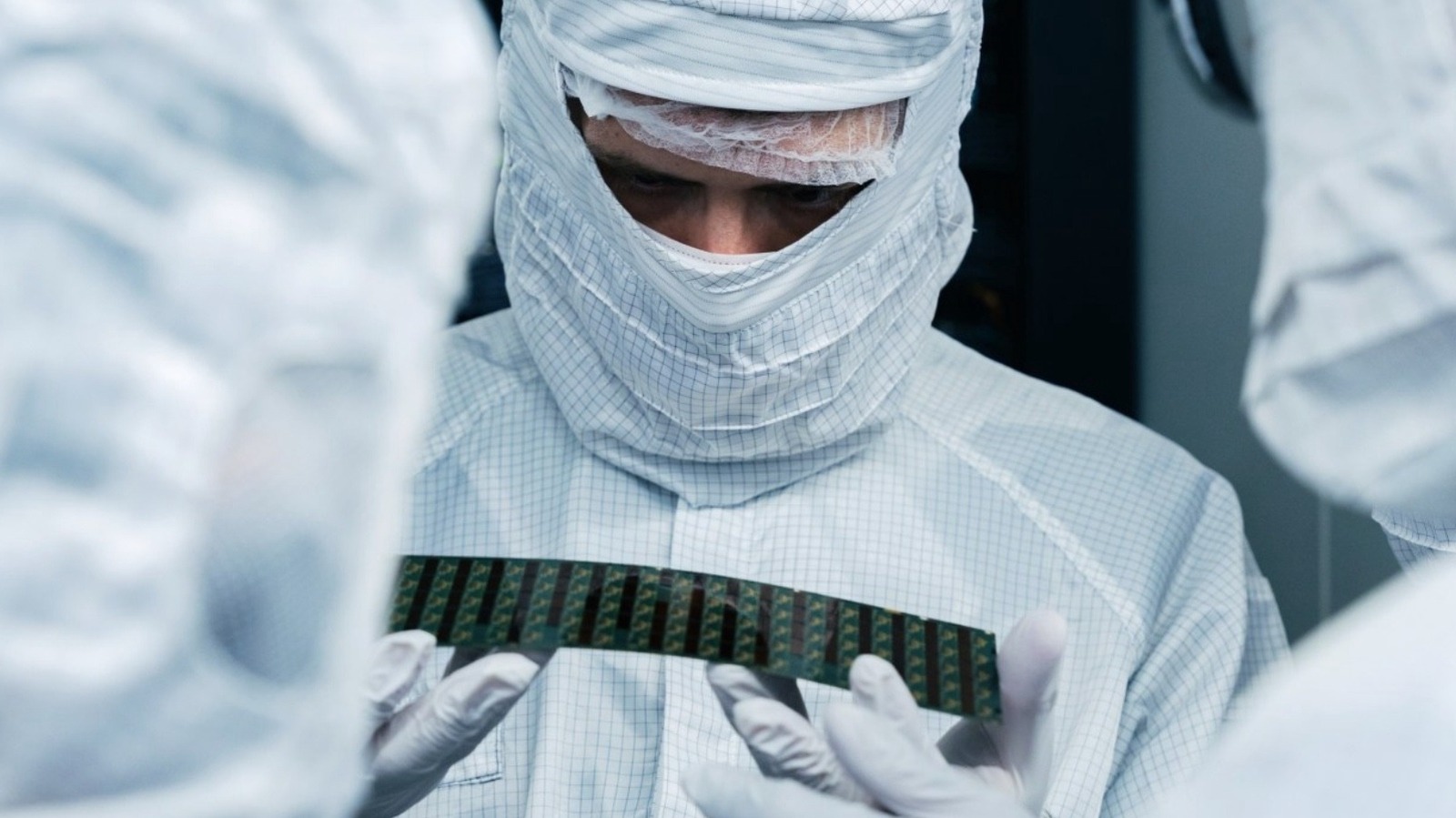
Beyond just hearing from executives, Lexar showed BGR its Longforce Production Line in Suzhou, and then took us to its innovation and quality labs in Zhongshan, near Shenzhen. On the first stop, we dressed up like factory workers (I could never survive in a factory) to see how the company brings its products to life. The process starts at the silicon level, as Lexar evaluates NAND flash chips to ensure they’re working even before hitting the assembly line.
Instead of just testing random samples from a batch, Lexar evaluates every single unit in its line to measure sustained write speeds, power consumption, and sector failure handling. These products are also tested by subjecting them to thermal extremes, moisture and seals, physical shock, and X-rays.
Disneyland for tech is a floor in South China
Lexar
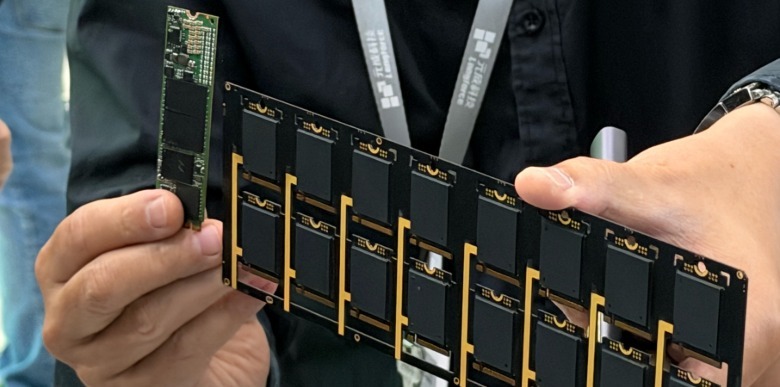
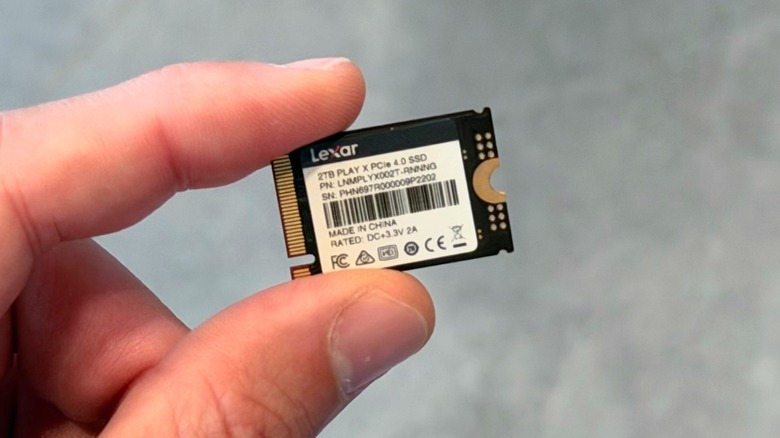
Following another three-hour flight from the outskirts of Suzhou to Shenzhen, our final stop was Lexar’s innovation and quality labs, where products are developed and tested with other devices. In the innovation department, Lexar showcased its micro SSD (mSSD) technology, which has recently been released as Lexar Play X. This PCIe 4.0 drive, smaller than a standard SSD, delivers read speeds up to 7,400 MB/s and write speeds up to 6,500 MB/s. The product is slowly expanding globally, as it already arrived in Europe, but it lacks a release date in the U.S.
 José Adorno/BGR
Currently, the product comes with an adapter so it can be used in any machine, but Lexar is pushing to create a new industry standard for wearables, robots, and laptops, as the drive is significantly smaller than an SSD. “Looking forward, we want to keep bringing more innovative consumer storage products to market. For us, innovation is not just about specs. It’s about making storage more relevant and more useful in people’s everyday lives,” Baer explains.
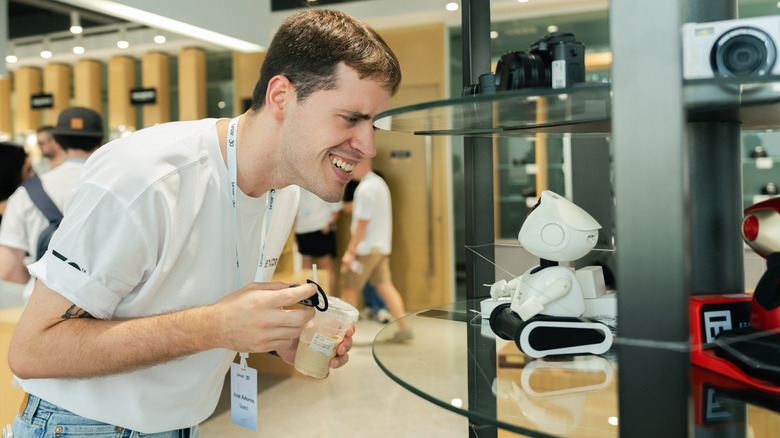
On the testing side, Lexar showed us a few floors filled with products. All the cameras, computers, AI security cameras, consoles, phones, and tablets are organized on shelves and tables. These products need to be tested with Lexar’s technologies to ensure that when consumers buy a Nintendo Switch 2, phone, or laptop, there won’t be any compatibility issues.
Protecting our digital memories
José Adorno/BGR
During the trip, the North America PR head Richard Chang and I were discussing the importance of creating high-quality storage solutions. He told me that when he was younger, he used to go to Hong Kong to see his family, and on one of those trips, his camera’s memory card broke (he says it wasn’t Lexar’s). However, this memory card had the last photos of a family member who passed away a few years later, and he lost the last pictures he had with them.
As cheesy as it sounds, this conversation stuck with me, as in a world where we store so much information in our devices and in the cloud, we’re never really prepared for faulty storage, a stolen device, or something that could take away our memories. As Lexar celebrates its 30th anniversary, I also thought about another brand celebrating the same landmark: the Pokémon Company.
On its servers, I still have some creatures from 2004, from the “Pokémon FireRed” and “LeafGreen” games. Some still live in the Pokémon Home cloud subscription, but others have been ported over to “Pokémon Legends: Z-A,” stored in a corner of a Lexar microSD card. It’s a tender memory, made out of bytes, and now I can rest assured on my way back home that the same care I put into those games 22 years ago, Lexar is also putting into its products.
