


SNEHIT PHOTO/Shutterstock
Data centers have been linked to pollutants and harmful emissions, as well as excessive consumption of power and water, and many of these issues are why so many U.S. states are trying to ban their local development. But there’s another problem that most don’t think about, as only those who know what it’s actually like to live near a data center can attest to the experience.
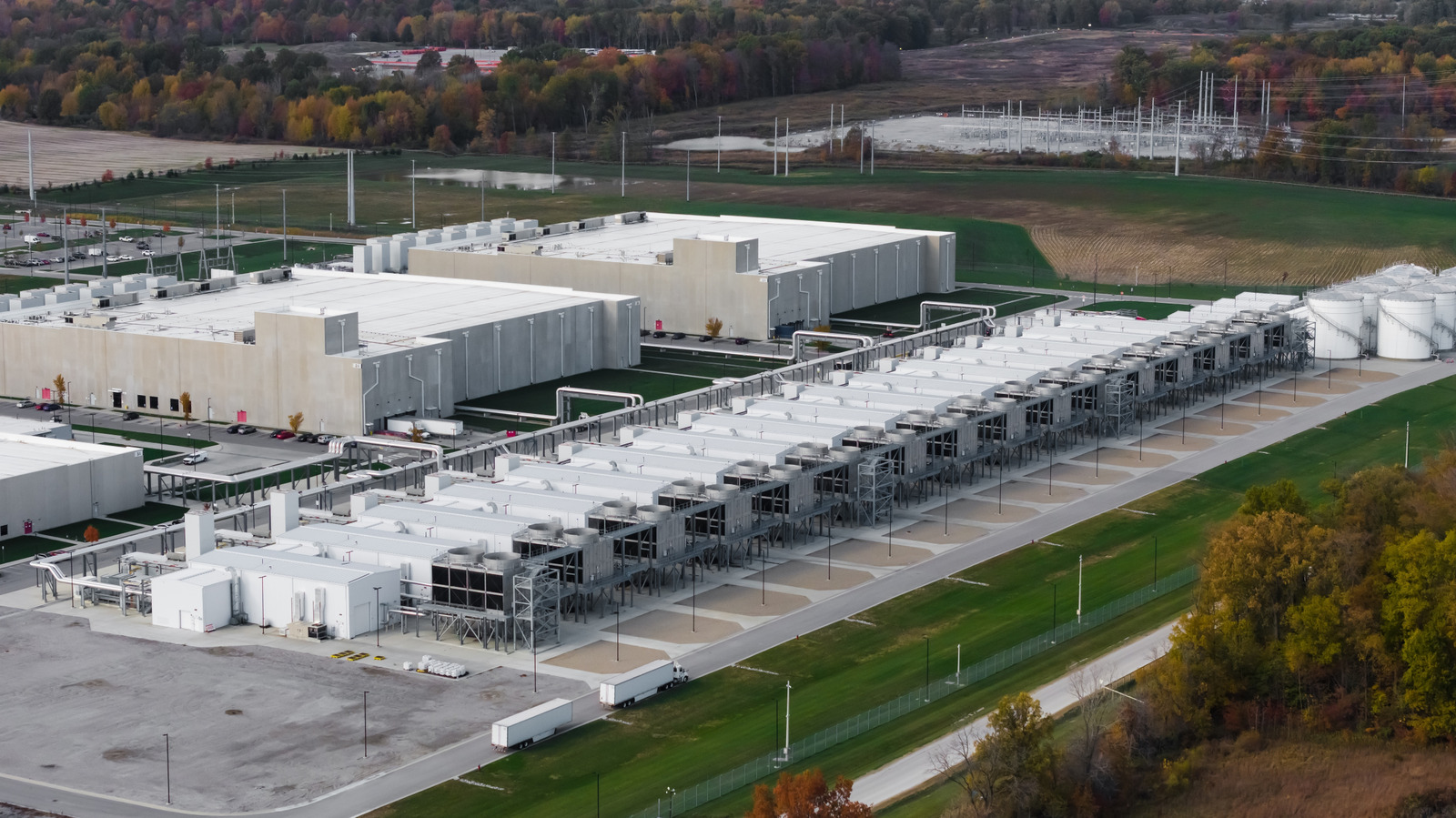
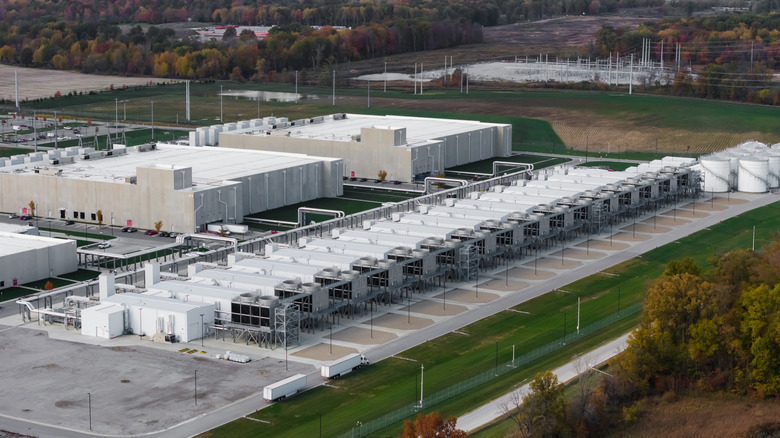
All those electronics, servers, cooling solutions, and on-site generators contribute to heavy noise pollution. According to LSRS, noise from cooling fans and transformers alone can reach up to 80 decibels at the property line. Meanwhile, generator load tests, or power generators under a heavy load, can be heard up to a mile away. But here’s the thing. It’s not the peak or maximum loudness that’s an issue. What’s a bigger problem, and harmful over the long-term, is that the noise is nearly non-stop for those living nearby. The loud noise can be heard up to a mile away, but low-frequency noise stretches even further.
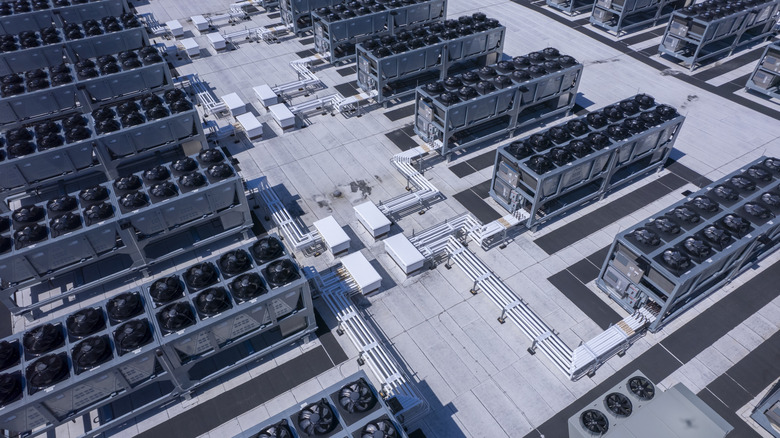
There are many systems at a data facility making constant noise. Cooling towers, dry coolers, rooftop air handlers, and HVAC ventilation, all for climate control, transformers, generators, and switchgear for medium-to-high power operations, service vehicle traffic, and construction machinery, are all common contributors to sound pollution. Worse yet, during an outage, exactly when you’d think things would quiet down, the generators kick in to deliver backup power to the facility. The sound dissipates the further away you go, but can still produce a low-frequency hum that can be heard miles and miles away. That constant hum is the source of several health concerns for the neighbors of a data center.
Why is constant low-frequency noise a problem?
MotionPixxle Studio/Shutterstock
People that live near or around data centers have reported experiencing headaches, nausea, vertigo, sleep deprivation and disturbances, ear pain, hypertension, and ringing in the ears. It’s also not hard to imagine any of those issues exacerbating other health concerns like a spike in severe anxiety or worsening mental state.
It should be noted, however, that while there are some studies on the matter, such as one from 2016 published in the “Science of the Total Environment” journal, and another from 2026 at MDPI, there isn’t enough scientific evidence to definitively link low-frequency noise and harmful health effects. That doesn’t mean there’s no correlation, it simply means we don’t have enough empirical evidence to support either side of the argument. You may or may not be inclined to listen to and believe residents living in close proximity to data centers, those most affected by this in their day-to-day lives.
The more recent 2026 study does conclude that evidence “suggests” infrasound — the type of low-frequency sound produced by data centers — “can modulate mechanical and biological pathways,” which could alter or disrupt the body’s homeostatic balance; the normal way your body regulates and maintains itself. Keeping your body in balance can help you better deal with problems that arise like illnesses, injuries, or other ailments. In relation to data centers, being out of rhythm could cause things like people have described; headaches, loud ringing in the ears, nausea, or vertigo.
Noise isn’t the only concern, and that’s the real problem
Here Now/Shutterstock
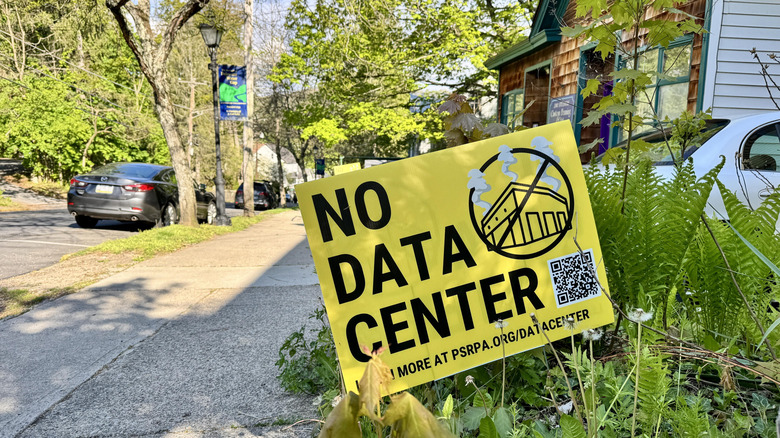
Not to relentlessly pester everyone with the same ideas, but data centers have been shown to contribute a lot of other unwanted side effects to local communities beyond noise. If the noise alone was the only major concern, we probably wouldn’t be seeing as much pushback against the development of these facilities. But that’s not the only issue. Cloud computing and AI data centers are doing way more harm than just driving up utility prices, and frankly, in this economy, that’s egregious enough.
Data centers increase air pollution, contribute to negative climate change, consume loads of water and power, take up an enormous amounts of land, cause noise pollution as discussed here, and put added pressure on already marginalized communities. Some of these impacts stretch miles and miles beyond the facilities themselves, just like the low-frequency noise.
More alarmingly, despite these ongoing issues, a huge number of data centers are set to be built, and come online, in the U.S. The number of local communities that will soon be affected by these issues is growing by the day, exponentially even. Even if you don’t live near one, you may still be paying for the soaring costs they cause.
