



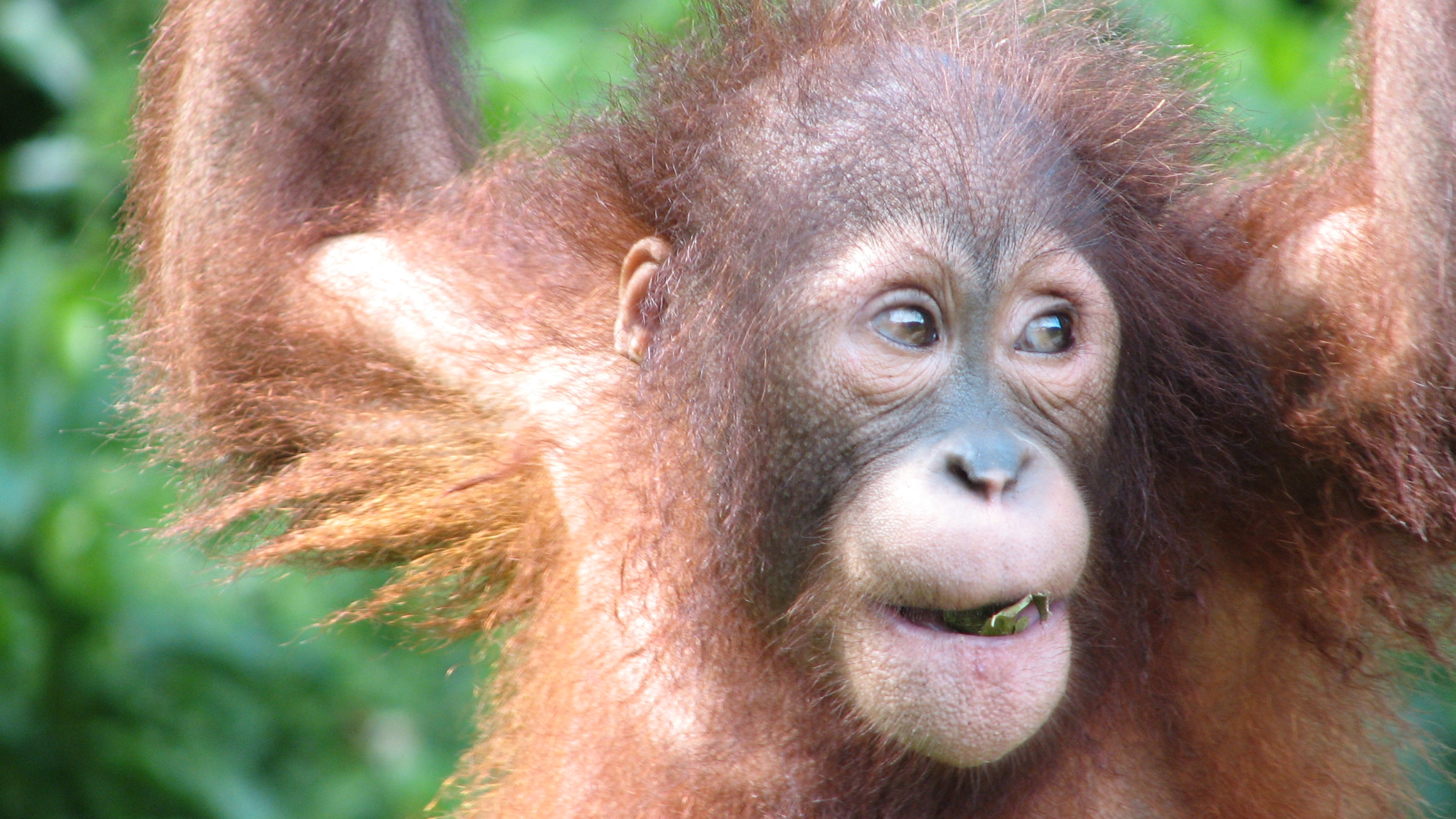
An orangutan smiling.
Image: Shutterstock
Get the Popular Science daily newsletter💡
Breakthroughs, discoveries, and DIY tips sent six days a week.
By signing up, you confirm you are 16+, will receive newsletters and promotional content and agree to our Terms of Use and acknowledge the data practices in our Privacy Policy. You may unsubscribe at any time.
We share 98.9 percent percent of our DNA with many of our primate cousins, but we also may share something a little more silly. Modern humans and great apes may have been laughing for at least 15 million years. The findings, published today in the journal Communications Biology, shed new light on how our speech evolved.
“How did humans evolve the remarkable ability to speak? Speech leaves no fossils, and complex language exists only in our own species,” Dr. Chiara De Gregorio, a study co-author and primatologist at the University of Warwick, said in a statement. “But we’ve found a 15-million-year-old clue in an unexpected place: our laughter.”
All living great apes (orangutans, bonobos, chimpanzees, gorillas, and humans) laugh. However, it’s been unclear how laughter may have changed the past several million years of evolution and how it may relate to human speech evolution.
In this new study, a team from the University of Warwick in the United Kingdom analyzed recordings from four orangutans, two gorillas, four chimpanzees, three bonobos, two gorillas, and four humans. They found the same pattern across 14 laughter sequences—all six species laugh with evenly spaced rhythmic intervals between successive sounds.
According to the team, this basic rhythmic structure was likely already present in a shared common ancestor 15 million years ago. This structure has also remained with all living great apes over all that time, since all great apes show the same underlying speech pattern.
“By comparing how different species laugh, we can see that a basic rhythmic structure has remained unchanged since our last common ancestor,” De Gregorio said. “That’s extraordinary.”
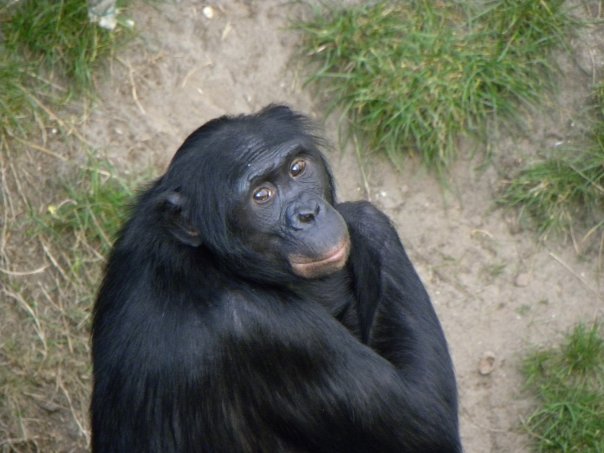
While the basic rhythm has stayed constant, human laughter has changed a bit. It’s become faster, more variable, and gained sophisticated control that is dependent on the context. Humans are the only great apes that have this ability to (mostly) control when and how they laugh depending on the situation. An uncontrollable laugh when tickled is vastly different from a polite laugh in a meeting, an infectious laugh during a movie, or a nervous little giggle after making a mistake. That same underlying rhythm in laughter is shaped by a conscious control to communicate varying emotions and intentions.
These findings suggest that throughout great ape evolution, our ancestors gradually developed more control over the timing of their vocalizations, including laughter. Scientists consider sophisticated vocal control like this as a fundamental building block of speech.
Since laughter has such deep evolutionary roots and has remained shared by all living great apes for millennia, it is one of the easiest ways to study how the vocal transformations changed across hominid evolution.
“Contrary to the classic notion that the first humans suddenly acquired vocal control capacities remarkably different from their predecessors, laughter evolution tells us that humans lay on a continuum, a prolongation of vocal control capacities that were already being cumulatively honed in for 15 million years,” study co-author and primatologist Dr. Adriano Lameria concluded.

2025 PopSci Best of What’s New
The 50 most important innovations of the year
