


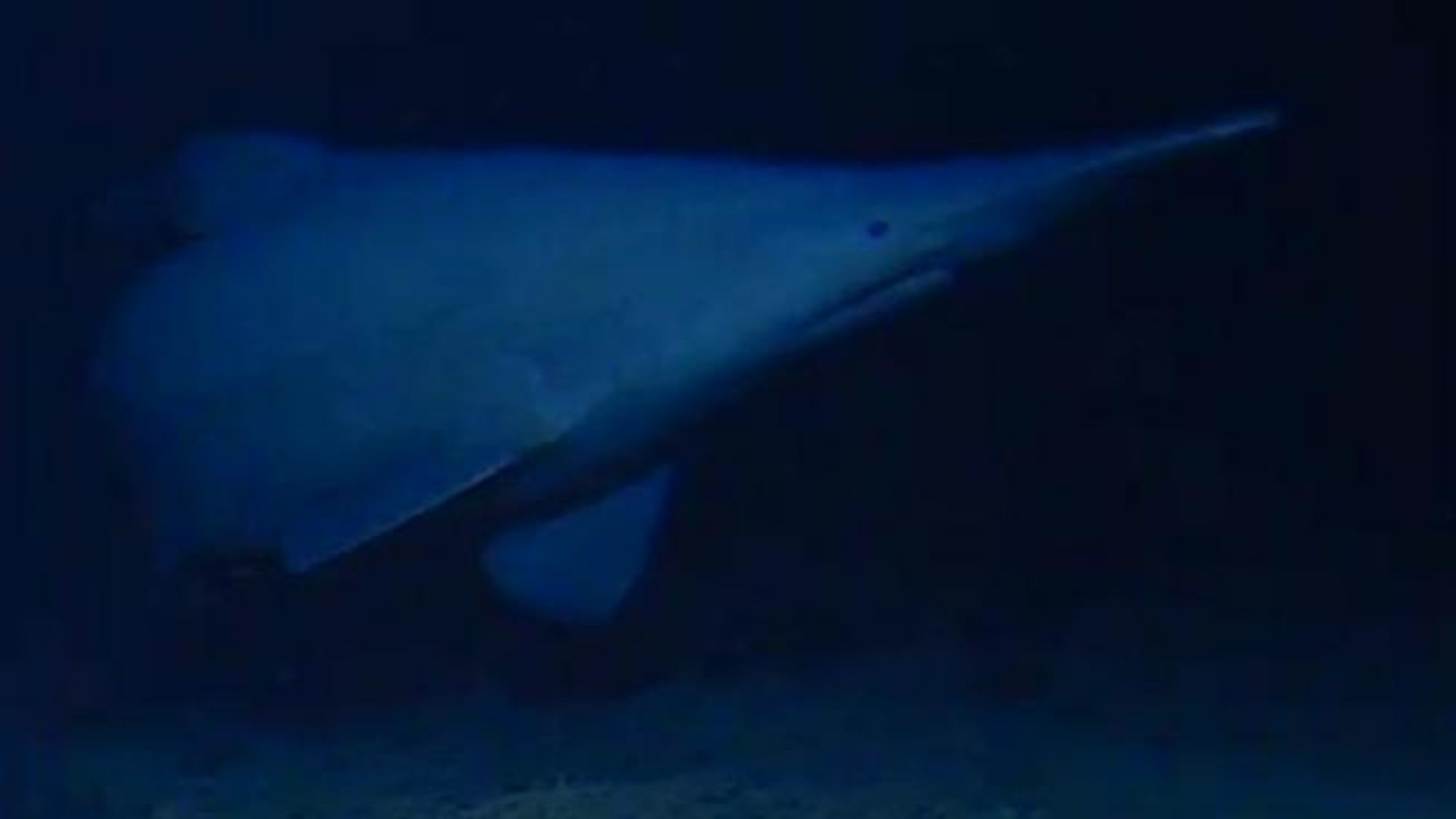
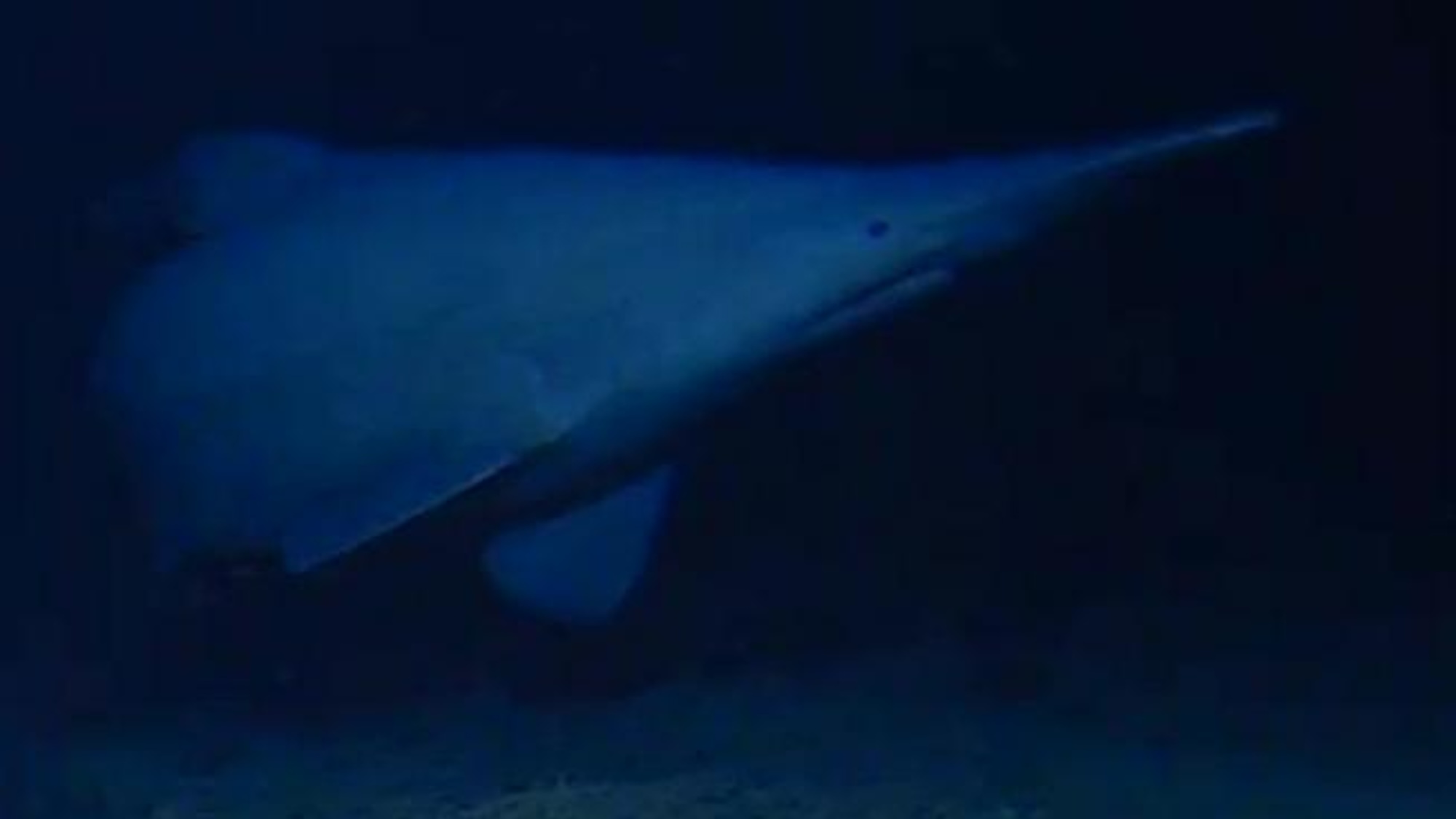
The goblin shark was first described in 1898.
Credit: Minderoo-University of Western Australia Deep-Sea Research Center / Inkfish
Get the Popular Science daily newsletter💡
Breakthroughs, discoveries, and DIY tips sent six days a week.
By signing up, you confirm you are 16+, will receive newsletters and promotional content and agree to our Terms of Use and acknowledge the data practices in our Privacy Policy. You may unsubscribe at any time.
The goblin shark (Mitsukurina owstoni) is one of Earth’s rarest and most elusive sharks. It’s also one of the weirdest. With its distinctive, hornlike snout and protrudable jaws, the pink-skinned living fossil is the only surviving representative of a family lineage that dates back nearly 125 million years.
The goblin shark was first identified in 1898, but sightings remain few and far between. The fish typically remain at a depth of around 3,000 feet, and any encounters with humans have been the result of accidental fishing line snags. The 13-foot-long predators also die quickly after reaching the surface.
However, marine biologists at the University of Hawaii at Mānoa recently captured videos revealing not one, but two goblin sharks swimming in their native habitats. The clips accompany a study published in the Journal of Fish Biology, and showcase the surreal encounters in the Pacific Ocean.One goblin shark was spotted near Jarvis Island (halfway between Hawaii and the Cook Islands) and the other on the slope of the Tonga Trench southeast of Fiji.

Goblin shark
“Seeing the most iconic of all the deep-sea sharks alive and looking healthy in its natural habitat is a unique honor,” said University of Hawaii at Mānoa oceanographer and study co-author Aaron Judah.
Spotted on separate expeditions in 2024 and 2025, both videos offer new information on the goblin shark simply based on where they were located. The Jarvis Island sighting extends the animal’s known habitat to the Central Pacific Ocean, while the Tonga Trench recording occurred nearly 2,300 feet deeper than expected.
“The goblin shark is one of these deep-sea charismatic animals that I never thought we’d see alive,” said study-coauthor and Minderoo-University of Western Australia Deep-Sea Research Center founder Alan Jamieson, who spotted the Tonga Trench shark. “To do so was amazing, but to then learn that colleagues in Hawaii also saw one was just incredible.”

2025 PopSci Best of What’s New
The 50 most important innovations of the year
