

• About
  • Advertise
  • Privacy Policy
  • Contact
Over View - Your Daily News Source
  • Home
  • News
    • Business
    • Politics
    • Science
  • Lifestyle
    • Food
    • Travel
    • Health
    • Fashion
  • Entertainment
    • Entertainment
    • Sports
  • Tech
No Result
View All Result
  • Home
  • News
    • Business
    • Politics
    • Science
  • Lifestyle
    • Food
    • Travel
    • Health
    • Fashion
  • Entertainment
    • Entertainment
    • Sports
  • Tech
No Result
View All Result
Over View - Your Daily News Source
No Result
View All Result
Home News Science

Don’t miss Saturn shine close to the moon on Nov. 20

admin by admin
November 19, 2026
in Science
0
Don’t miss Saturn shine close to the moon on Nov. 20
0
SHARES
2
VIEWS

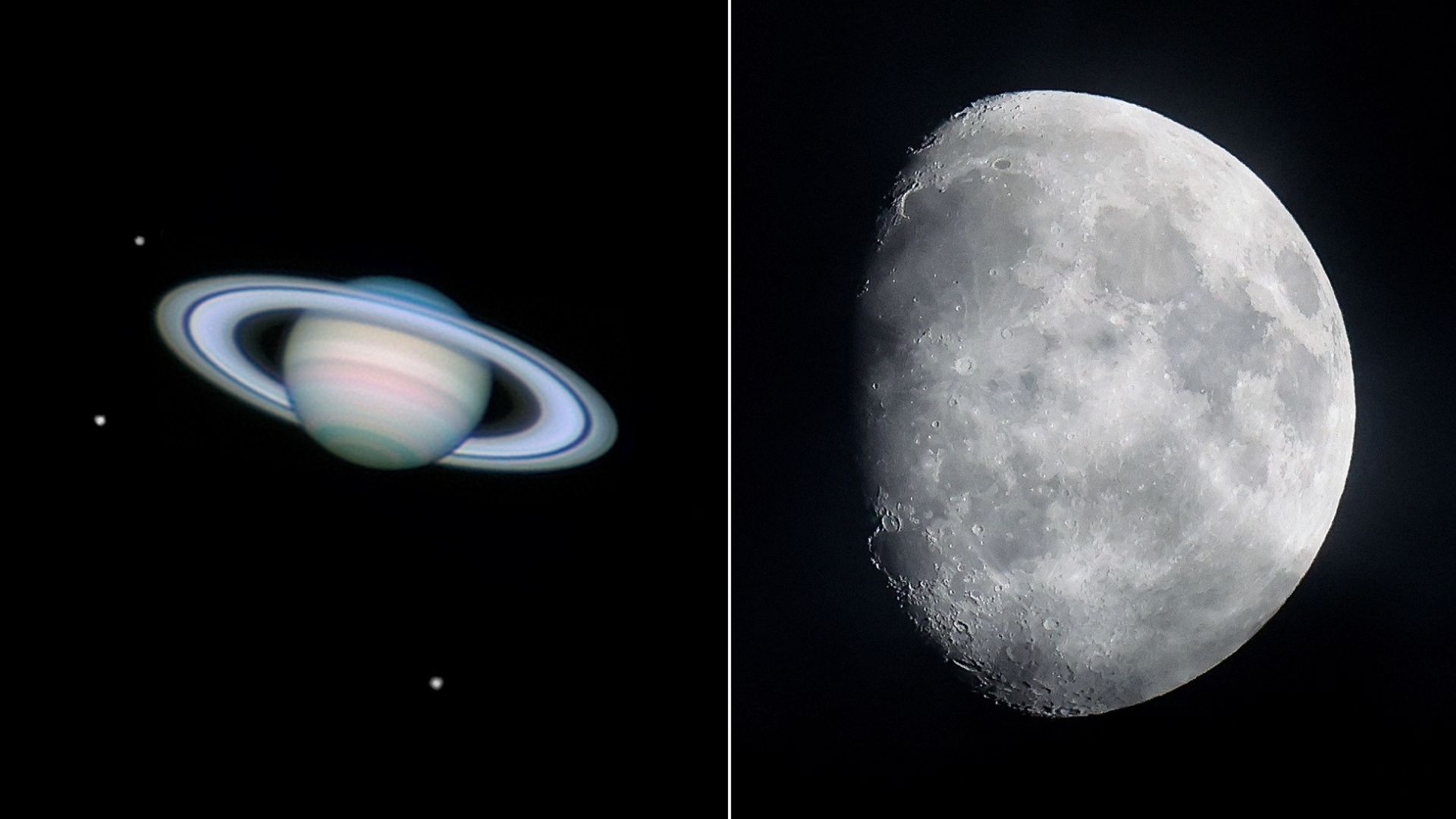
The moon shines close to the ringed giant Saturn after sunset on Nov. 20, presenting a spectacular naked-eye display as the stars of the Great Square of Pegasus twinkle nearby.

Saturn’s steady light will appear a little over 5 degrees from the 82%-lit moon in the southeastern sky after the sun dips below the horizon for viewers in the U.S. — roughly the width of your three middle fingers held at arm’s length.

Moonlight will hide fainter stars from view, though you should be able to spot Algenib, Markab, Alpheratz and Scheat arrayed in a diamond formation above the lunar disk, marking out the asterism of the Great Square of Pegasus in the November sky.

The moon will present a spectacular target through the eyepiece of a 6-inch telescope, as the terminator line separating night from day creeps ever closer to its western edge. It’s a great time to explore the 110 km-wide Gassendi Crater on the edge of Mare Humorum as its eastern rim and central peaks throw intense shadows across its interior.
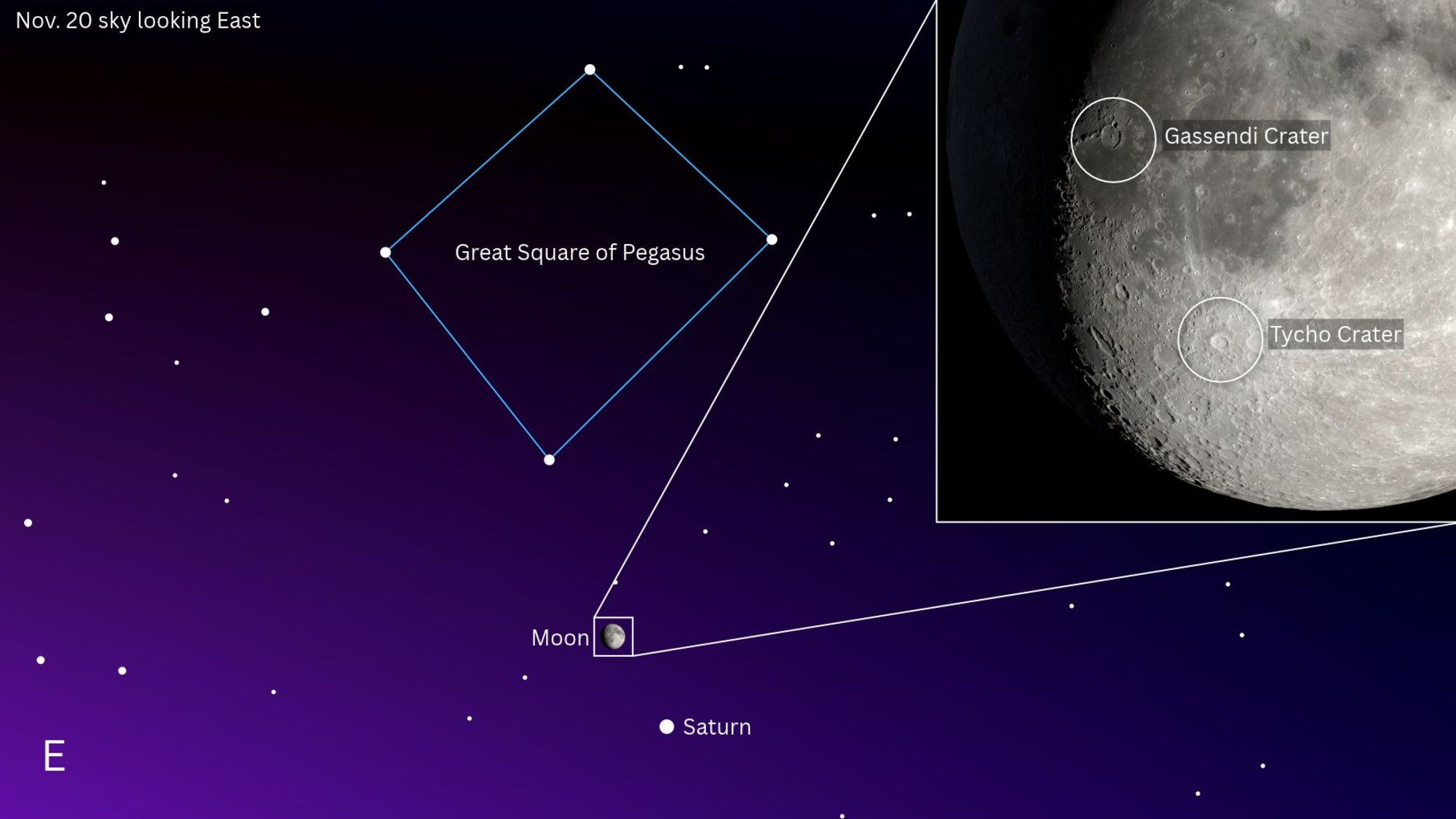
The location of the moon close to Saturn is shown in a simulated night sky close to prominent stars for the night of Nov. 20. An inset shows the moon with the location of the Gassendi Crater.

Gassendi Crater is a fascinating target for telescope observation during the moon’s waxing gibbous phase. (Image credit: Created by Anthony Wood in Canva. Inset: NASA Scientific Visualization Studio.)

Slewing your telescope over to Saturn will reveal details and subtle variations in the cloud surface of the gas giant, along with its iconic ring system, which is gradually becoming more visible following its ring plane crossing in March 2025.

Depending on viewing conditions, you may also notice a shoal of bright, star-like points of light surrounding Saturn’s disk, which represent the large moons Titan, Dione, Tethys, Rhea and Iapetus.

Interested in seeing the planets of the solar system up close for yourself? Then be sure to check out our picks of the best telescopes available in 2026, including the Celestron NexStar 8SE, which we rate as the best motorized scope out there.

Editor’s Note: If you would like to share your planetary astrophotography with Space.com’s readers, then please send your photo(s), comments, and your name and location to spacephotos@space.com.

Read More

Previous Post

How To Adjust Aim Assist In GTA 6 (And Why You Should)

Next Post

Get $400 off the first Vaonis Vespera Pro model ahead of Black Friday — only eight left in stock

Next Post
Get $400 off the first Vaonis Vespera Pro model ahead of Black Friday — only eight left in stock

Get $400 off the first Vaonis Vespera Pro model ahead of Black Friday — only eight left in stock

  • About
  • Advertise
  • Privacy Policy
  • Contact

© 2026 JNews - Premium WordPress news & magazine theme by Jegtheme.

No Result
View All Result
  • Entertainment
    • Entertainment
    • Sports
  • Lifestyle
    • Fashion
    • Health
    • Travel
    • Food
  • News
    • Business
    • Politics
    • Science
  • Tech

© 2026 JNews - Premium WordPress news & magazine theme by Jegtheme.