



Get the Popular Science daily newsletter💡
Breakthroughs, discoveries, and DIY tips sent six days a week.
By signing up, you confirm you are 16+, will receive newsletters and promotional content and agree to our Terms of Use and acknowledge the data practices in our Privacy Policy. You may unsubscribe at any time.
With the recent Artemis II mission to the moon, humanity is again starting to explore the possibility of astronauts spending long periods of time in space—perhaps even one day going to Mars, even if doing so sounds pretty awful. Still, for all the chest-beating talk of looking to the stars, there’s one question that you rarely hear asked: Would humanity be able to reproduce in space? And more specifically, how would space affect pregnancy and birth?
Dr. Varsha Jain of the University of Edinburgh is one of surprisingly few researchers considering these questions. She’s been referred to as a “space gynaecologist”—although she says that technically, “my proper title is that I’m an OB-GYN and clinical academic”—and has written and spoken extensively about the question of whether we’ll be able to have babies in space. While, in theory, one could be pregnant and potentially even give birth in space, Jain says, there are just too many questions that remain unanswered for either to be very safe.
Space’s effects on reproductive health
The first question that comes to mind is how one even researches a topic like this. There’s no empirical data, insofar as no one has ever been to space while pregnant, and it’s not like we can do double-blind studies by launching pregnant women into space to see what happens. Does this mean that we’re relying entirely on hypothesis and theory?
Yes and no, says Jain. “What we do have,” she explains, “are studies that have been done in other environments or on other species: For example, rodents have been pregnant and been into space. So we can try to understand what is happening to their bodies and their physiology.”
There are also situations on Earth that can provide insight: For example, parabolic flights, where passengers experience a short period of weightlessness or reduced gravity, simulating the gravitational environment of space travel.
Ultimately, one of the biggest limits on our knowledge is the lack of data about the effects of spaceflight on women’s bodies.
There’s not a lot of information about how space affects women’s bodies. Period.
“A lot of that information we do have [about the effects of space flight on the body] has come predominantly from male subjects and male participants,” Jain says.
“In a lot of the textbooks about human physiology [and] what happens to the human body in space, the chapters on cardiovascular health, lung health, kidney health,” she says, “all of those chapters are based predominantly on male astronauts. So it would be really great to write an entire book where the chapters are focused on female health, rather than having one chapter on the sex-based differences.”
Ironically enough, it’s the lack of understanding of women’s bodies that is responsible for this scarcity of data. The first woman in space, Soviet cosmonaut Valentina Tereshkova, orbited the Earth 48 times in a three-day mission during 1963, but it took NASA another 20 years to send a female astronaut into orbit. Even today, six men have been to space for every woman.
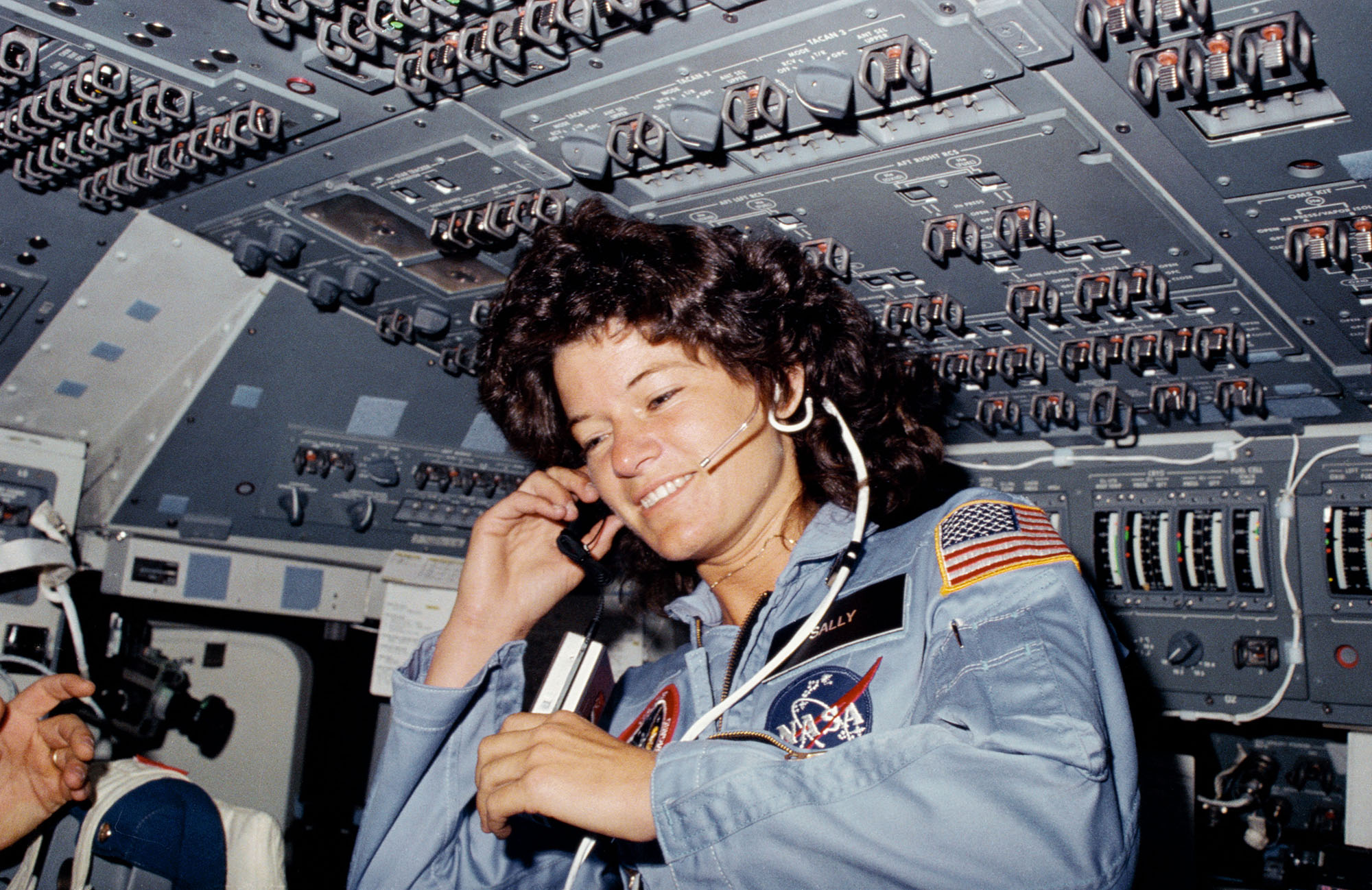
Not to mention, in the past, NASA engineers haven’t exactly shown an exemplary understanding of women’s bodies to begin with. In 1983, engineers famously packed 100 tampons into legendary astronaut Sally Ride’s “crew equipment” bag for a single week in space—along with a make-up kit.
“[They] asked me, ‘Is 100 the right number?’” Ride later sighed. “I said, ‘No. That would not be the right number.’”
Radiation would pose real risks for pregnant women
Even without empirical data, there are several fairly obvious risks that space would pose to both pregnant people and babies. The first is the high volume of background radiation. Space looks empty, and there’s fewer gases, molecules, and atoms in a given volume of space than there is here on Earth. Unfortunately, the stuff that is there tends to be dangerous, because it’s moving really, really fast.
Take the example of galactic cosmic radiation. This specific type of radiation comes from beyond our solar system and is “composed of the nuclei of atoms that have had their surrounding electrons stripped away and are traveling at nearly the speed of light,” according to NASA.
On Earth, our planet’s atmosphere and magnetic field protect us from these fast-moving particles. In space, however, the particles are free to rocket through pretty much anything in their path. As they do, they can ionize the atoms they encounter, knocking electrons clear of their atomic nucleus. NASA describes this sort of radiation as being “like an atomic-scale cannonball that blasts through material, leaving significant damage behind.”
This can lead to all sorts of negative health outcomes, from cataracts to cancer—and, as per the World Health Organization, children are “significantly more sensitive to radiation exposure than adults.”
Jain says that as an OB-GYN, she “would think really hard, long and hard” before sending a pregnant woman for a single X-ray because of the dangers of radiation. Doses of radiation are measured in Sieverts (Sv), with a chest X-ray providing a dose of 0.1 mSv. According to NASA, meanwhile, “astronauts are exposed to ionizing radiation with effective doses in the range from 50 to 2,000 mSv.” That’s an awful lot of chest X-rays.
It’s no surprise, then, that Jain identifies radiation exposure as “the number one biggest worry that would be on my mind” about the idea of sending a pregnant woman to space.
Other reasons pregnancy in space could be really bad
However, radiation is not the only concern. The lack of gravity is also a potential problem for a body that’s both under strain and undergoing significant changes from carrying a child.
“We know that microgravity has an impact on muscles and bone,” Jain says. “That would be of concern to me because your muscle and bone distribution also changes during pregnancy. When you add those two [factors] together, what does that mean?”
Ultimately, we don’t know, Jain says. But it could be bad.
And there are also less obvious potential dangers. She cites a study examining mice giving birth in a microgravity environment, noting that these mice “had twice as many labour contractions than the ground controls. And we found later that there was an issue with one of the proteins in the muscle of the womb.”
It’s impossible to know how many other such dangers lurk for pregnant women in space. And then there’s the question of giving birth.
What would happen if you gave birth in space?
So could a woman give birth in space? Jain says that in theory, there’s no reason why not, although “it would be difficult and stressful for any number of reasons, some of which we know, and some of which we don’t.”
As with giving birth on the ground, there’s an awful lot that can go wrong, and both the dangers and the question of how to deal with them would be more profound in space. “I wouldn’t be as concerned about vaginal birth [in space],” Jain says. “But what I would be concerned about is [what would happen if] there was a problem.”
What, for instance, if a caesarean section was required? “Probably somewhere near to a quarter to a third of babies are born on average by caesarean section,” Jain says. “We’ve never done an operation at that scale [in space].” Time would also be of the essence, and as Jain points out, “things don’t happen very quickly in space.” Performing surgery in microgravity would be very hard.
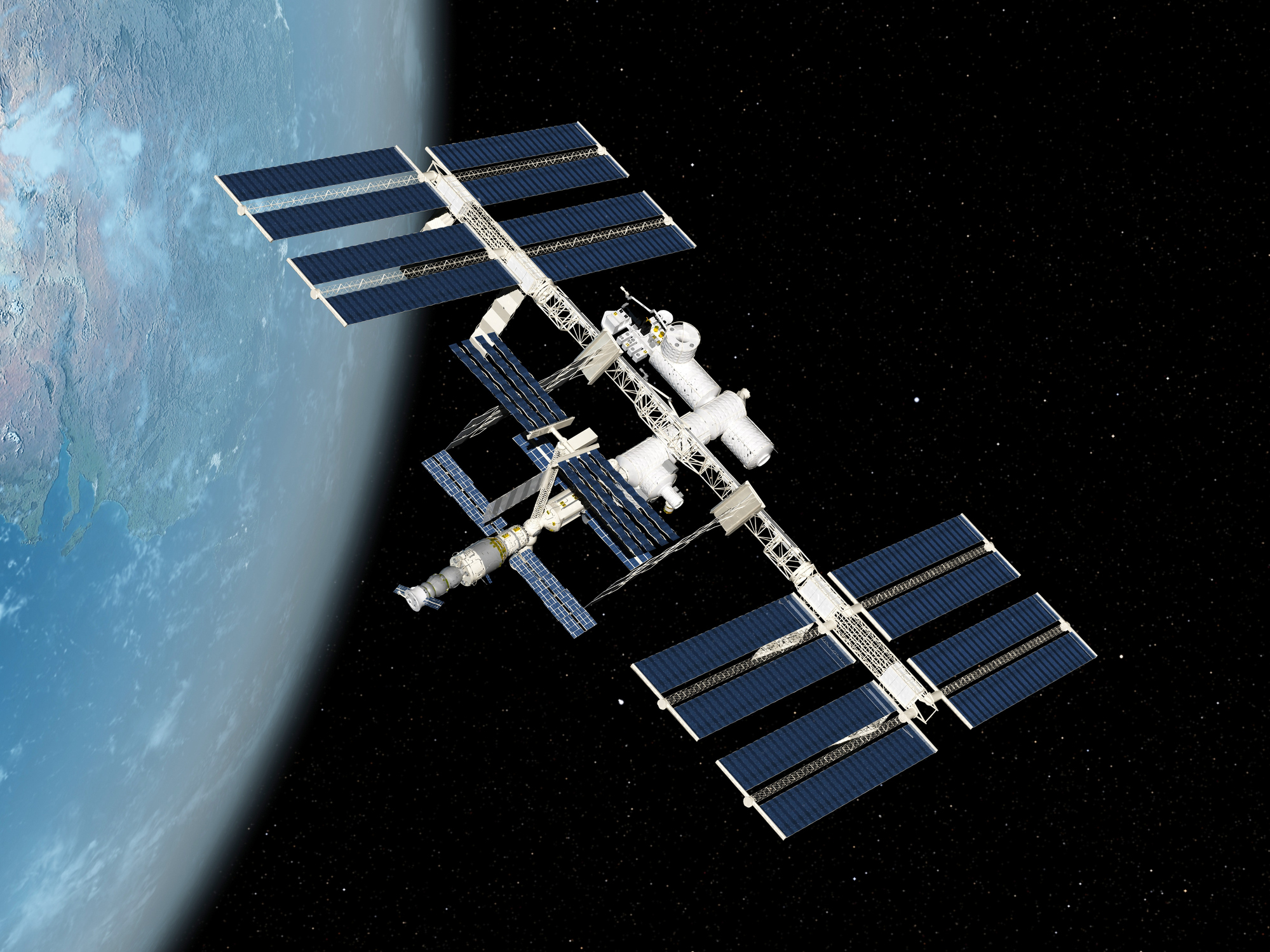
Even if we could magically conjure up a fully equipped labor ward on the International Space Station, the mere fact of being in space would again present added dangers. For a start, the lack of gravity does strange things to fluids: “If I was doing an operation—for example, a caesarean section—there’s no way I would want blood forming and coalescing in front of me,” says Jain. “So [that environment] adds different dynamics to the situation.”
And, again, there’s the effect of the environment on the human body. “There’s something called space flight anemia,” Jain says, “and we know that on Earth, starting at a lower blood count level is a risk factor for bleeding at labour. [That means that] for postpartum hemorrhage, being anemic is a risk factor—so that [would] already start to worry me.”
Perhaps the most profound implication of considering questions like these is the light they throw onto what’s already happening—or not happening—back here on Earth, where our understanding of women’s bodies and women’s health still lags behind that of men in any number of ways.
“Are there other areas I’d like to see research in?” Jain says. “Sure. All of it.”
In Ask Us Anything, Popular Science answers your most outlandish, mind-burning questions, from the everyday things you’ve always wondered to the bizarre things you never thought to ask. Have something you’ve always wanted to know? Ask us.
Related ‘Ask Us Anything’ Stories

2025 PopSci Best of What’s New
The 50 most important innovations of the year
