


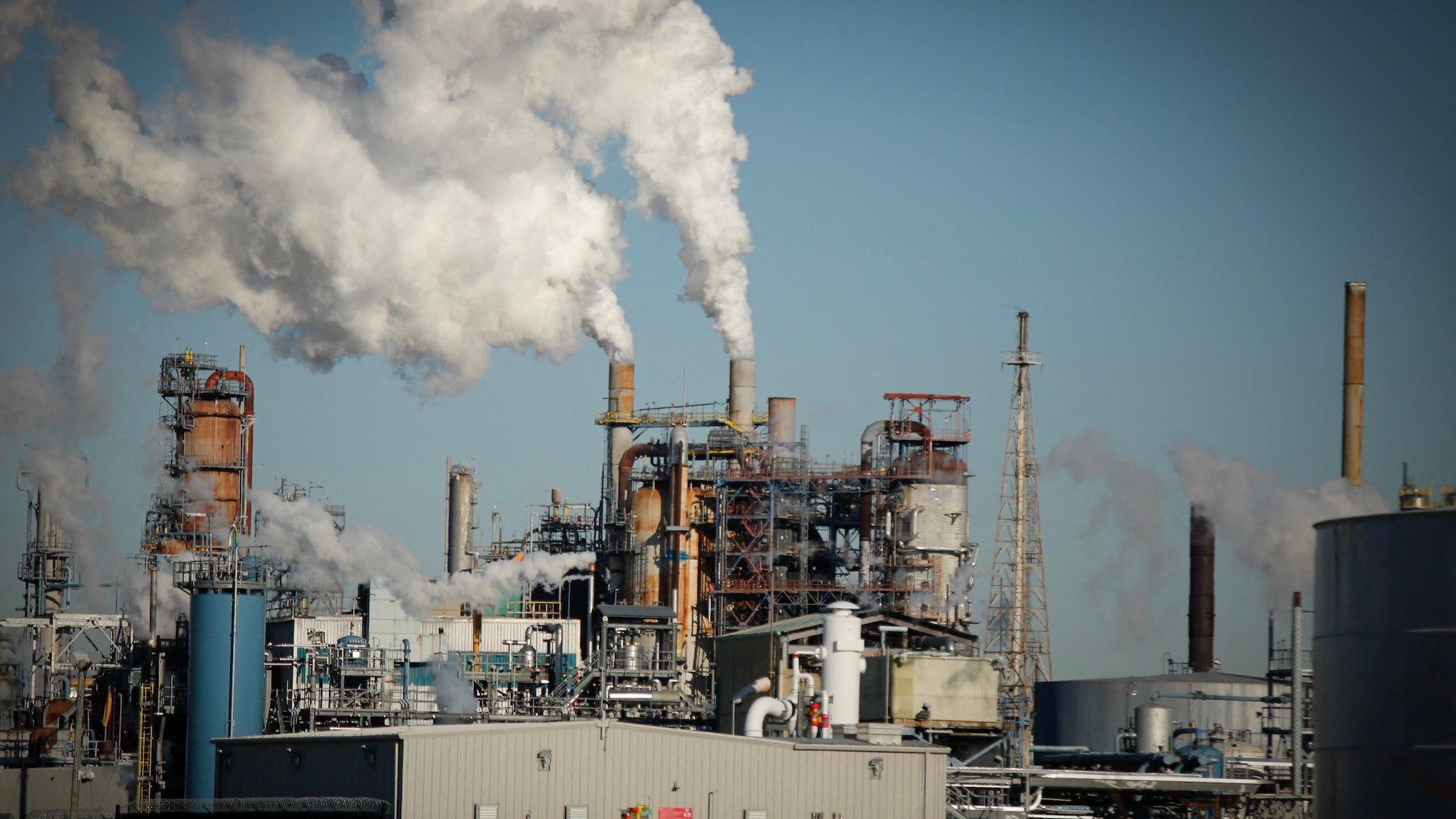
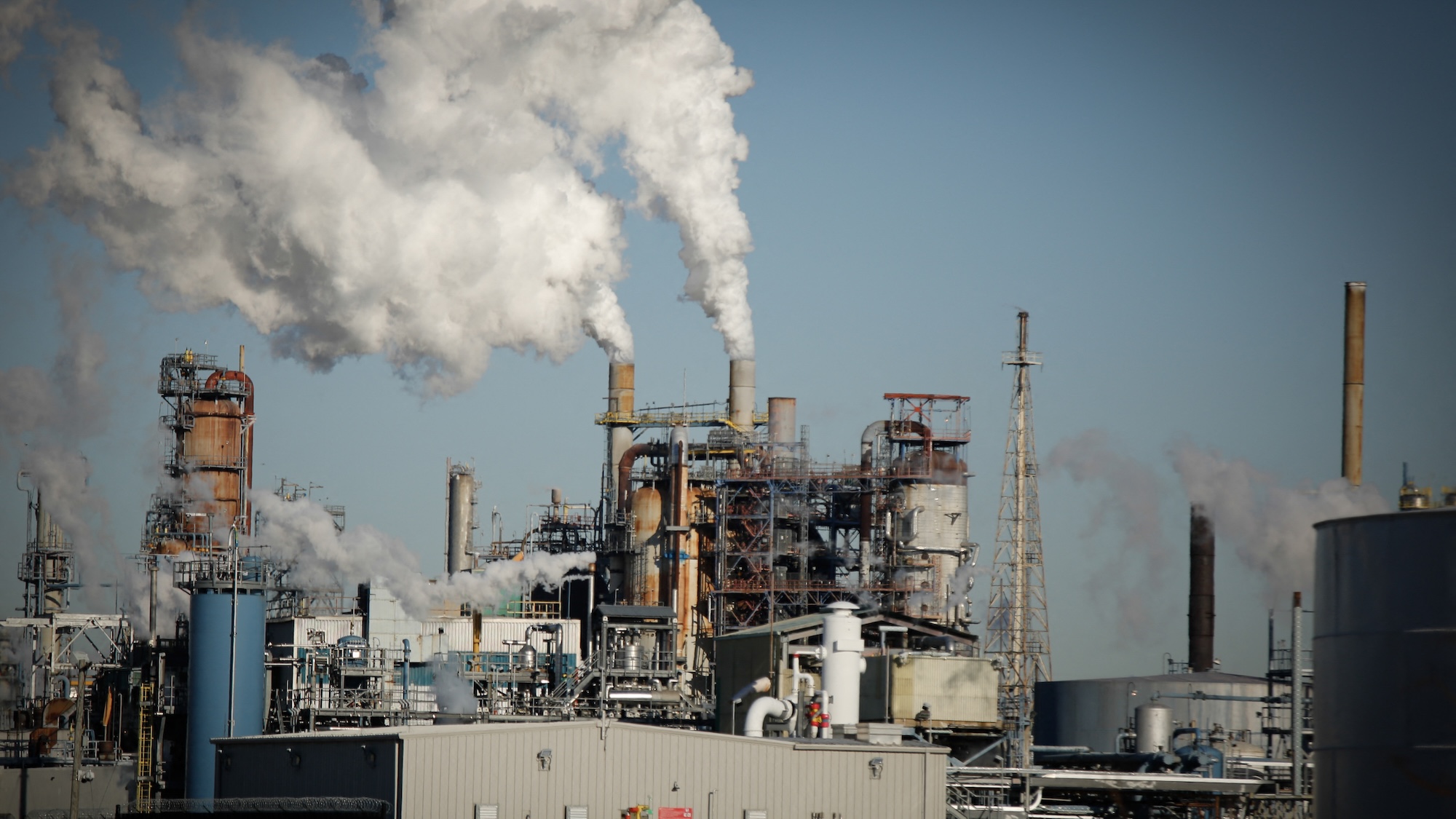
Smoke emanates from smokestacks at the Phillips 66 Bayway Refinery in Linden, New Jersey, on March 18, 2026.
Get the Popular Science daily newsletter💡
Breakthroughs, discoveries, and DIY tips sent six days a week.
By signing up, you confirm you are 16+, will receive newsletters and promotional content and agree to our Terms of Use and acknowledge the data practices in our Privacy Policy. You may unsubscribe at any time.
Air quality is linked to a wide range of health issues including respiratory problems, cardiovascular complications, and cancer, and that list of concerns only continues to grow. According to researchers presenting this week at the 42nd Annual Meeting of the European Society of Human Reproduction and Embryology (ESHRE), common pollutants may be fundamentally disrupting human sperm genetics—and these alterations may affect far more than male fertility.
One of the largest studies of its kind, the project took place from 2013 to2017 and included over 2,000 men in Salt Lake City, Utah. Volunteers provided researchers with semen samples initially after signing up, and then at two, four, and six month intervals. The researchers were particularly focused on examining changes to sperm DNA methylation. These chemical shifts regulate genetic activity without actually rewriting the DNA itself. Changes in methylation are already linked to genes utilized during chromosomal organization, cellular maintenance, and overall sperm development.
At the same time, the team also used regional data to estimate the men’s exposure to outdoor air pollutants during the roughly three-month window of sperm production known as spermatogenesis. These included common concerns like nitrogen dioxide, sulphur dioxide, fine particulates, and ozone. Although past studies already discovered evidence linking air pollution to semen quality, geneticists still do not fully understand how these adverse results occur at the molecular level.
The researchers flagged ozone and nitrogen dioxide as some of the most influential pollutants. The pair are frequently recorded at higher levels in urban areas like Salt Lake City due to natural gas combustion and traffic emissions.
“Our findings suggest that air pollution exposure during key stages of sperm development may be associated with changes in sperm DNA methylation, including in genes involved in spermatogenesis and early developmental processes,” Carrie Nobles, a study co-author and University of Massachusetts Amherst environmental health scientist, said in an accompanying statement.
Researchers pinpointed 39 DNA methylation changes associated with air pollution, especially in GNAS—an imprinted gene linked to poorer semen quality and fetal development. However, Nobles explained the GNAS implications are “particularly important.”
“Because imprinted genes can persist through early embryonic development, this raises important questions about whether fathers’ environmental exposures may influence not only fertility, but pregnancy and offspring health,” she said.
Since these are preliminary findings, Nobles stressed that it’s vital that researchers now work to replicate their results in future studies. She also explained that further investigations into measurable effects on men’s fertility and pregnancies are needed, as well as looking into other pollution sources.
“We know that couples exposed to air pollution often have difficulties becoming pregnant, and this may be one of the explanations amongst the myriad ways that pollution impacts our reproductive health,” former ESHRE chair Karen Sermon said of the study.

2025 PopSci Best of What’s New
The 50 most important innovations of the year
