


You can’t call Coldwater a one-stoplight town because it doesn’t have one. But on Main Street after sunset, rows of headlights start to glow.
“Throw your hazards on, everybody!” a man yells in the dark to a gathering crowd in early June. Horns honk, lights blink, and the whooping and hollering start. Someone brings an American flag.
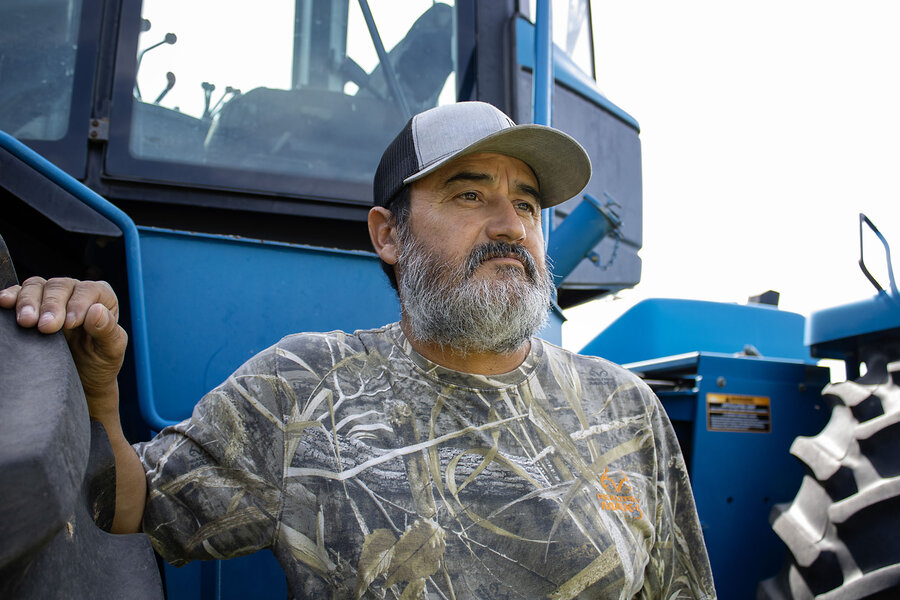
Joe Ceballos, a two-time mayor, is coming home after three weeks in detention several counties away. He is a Kansan in a town of ruby-red politics and amber waves of grain. But on paper, he is not American. That made it illegal for him to vote, as the state says he did many times.
Why We Wrote This
A former two-time Kansas mayor is facing deportation. Some supporters of President Donald Trump are wrestling with the implications of immigration enforcement that is broader, they say, than what they voted for or expected.
He pleaded guilty this spring to election-related state crimes and faced a fine but no jail – a relief to him and his supporters. Then things escalated: detention by U.S. Immigration and Customs Enforcement in May and the start of deportation proceedings.
Many locals defend the green-card holder from Mexico. They call his wrongful ballot-casting an honest mistake, outweighed by his hard work and heart. Barry Loveall, a retired pig farmer who came to greet “Joe,” says he wouldn’t care if his friend were from outer space.
“He’s not afraid to roll up his sleeves and jump in a ditch with you. … He fixed my sewer pipe,” Mr. Loveall says. “Far as I’m concerned, best man I know.”
Since President Donald Trump returned to office, more and more Americans have learned that their neighbors are deportable. The government is rounding up far more than the murderers and rapists it said it would be targeting. Immigrants who have lived in the United States lawfully for years are among them.
Support for Mr. Trump here runs deep, in a county that he carried in 2024 with 83% of the vote. Many Trump supporters, including Mr. Ceballos, don’t necessarily see the former mayor’s case in conflict with their politics. No, this isn’t what they voted for, they say. Instead, those Republicans see Mr. Ceballos’ story as an exception to the rule and hope an immigration judge agrees.
Mr. Ceballos’ legal team is working to keep his green card and avoid deportation. Ironically, Kansas, a GOP stronghold, has led the charge against immigrants voting illegally, an effort earlier rebuked by federal courts. The Trump administration has amplified the real but statistically tiny concern. This month, the Department of Homeland Security called on ICE to pursue stiffer penalties – including deportation – because such voting “dilutes the votes of American citizens and undermines our democracy.”
So what happens when the “best man” you know is a rallying cry for your party’s base? And worse, could be expelled?
On Coldwater’s Main Street, a red pickup truck appears with Mr. Ceballos inside. A friend approaches with a “We Love You, Joe!!” sign as the horns and sirens swell.
A hand reaches out the truck window and waves.
Sarah Matusek/The Christian Science Monitor
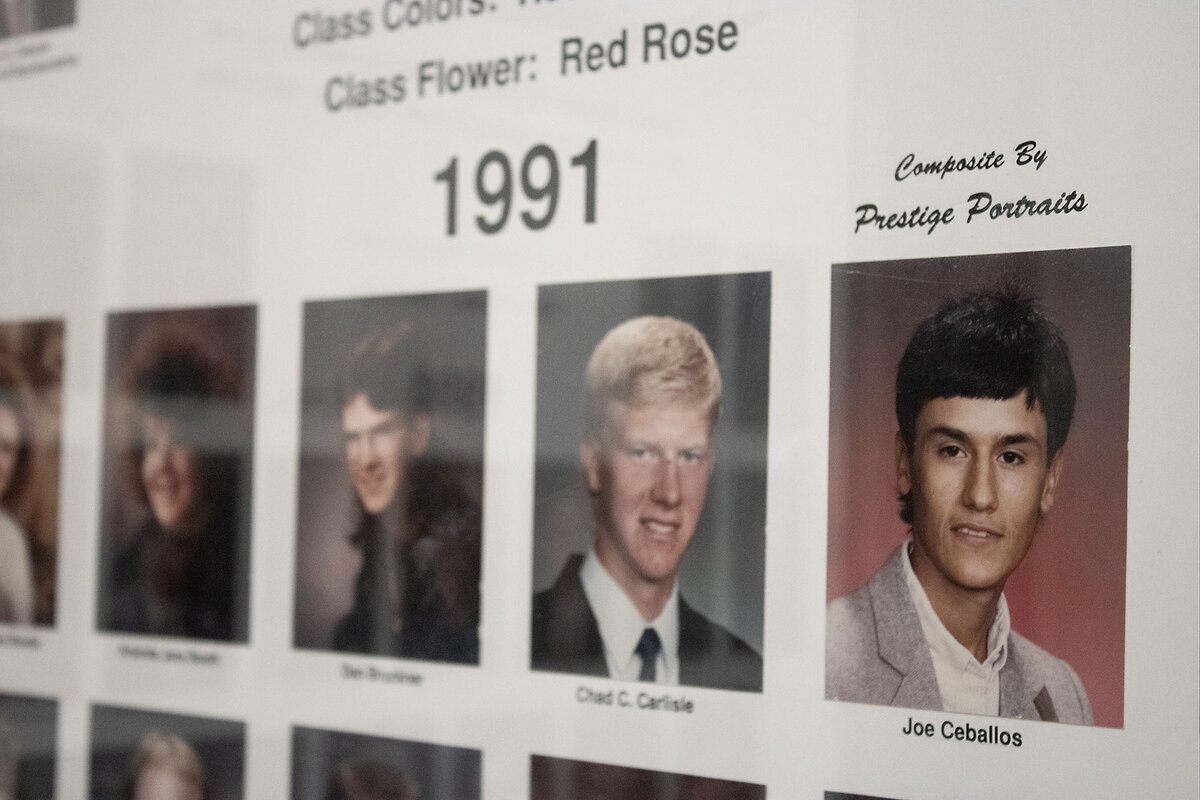
A portrait of Joe Ceballos, who graduated from South Central High School in Coldwater, Kansas, in 1991, still hangs at the school. Mr. Ceballos came to the United States when he was 4 years old, and has had a green card for 36 years.
Small town life
In the distance, wind turbines somersault in place. Closer in, pumpjacks nod at the earth, coaxing crude oil out. It’s been a bad year for wheat, thanks to fickle rain in south-central Kansas. A church marquee calls for harvest prayers. The loudest sound in Coldwater is the occasional grunt of semitrucks down U.S. 183, which splits the town of hundreds in half.
When the local paper was first printed in 1884, it called the county home to “some 1,000 honest, contented and happy people.”
In its inaugural edition, The Western Star wrote of “immigrants that daily flock” into Coldwater, “dusty and hungry looking.” The paper forecast their upward mobility, reckoning that those newcomers would, in a couple of years, own good farms. Then, their grandchildren would attend college and go on to “fill positions of honor and trust.”
As far as Mr. Ceballos can recall, he’s always been “Joe.”
Born José, he says his family brought him to the United States at age 4. His stepfather’s itinerant work meant a lot of moving around. In the 1980s, he says, a Texas ranching family that employed the teenage Mr. Ceballos brought him to Coldwater.
His senior photo still hangs in the high school, part of the class of 1991. His special ed teacher, Gail Boisseau, says he was placed in her class because of his gaps in formal learning, but quickly caught up. During one of her field trips to the county clerk’s office, an official encouraged him, then over 18, to register to vote. He says he did.
There’s a wrinkle to that story told around town. The current county clerk says her records show that the Republican first registered to vote several years later in April 1999. Regardless, Mr. Ceballos would have registered before a Kansas law, enacted in 2013, required proof of citizenship to register to vote. Federal courts later struck down that law after it halted more than 30,000 voter applications.
Mr. Ceballos has had a green card for 36 years, meaning he’s lived here lawfully all that time. He speaks with the regional twang and R’s that dip like wells.
In Coldwater, he became known for putting up American flags for Memorial Day. He also digs a huge hole in a field, fills it with mud, and lets trucks try – and fail – to traverse it. His “mud run” trophies from those events glint from a shelf in his garage.
Mr. Ceballos served on Coldwater’s city council and was elected mayor twice, the last time in 2025. The day after he won reelection, the Kansas attorney general announced felony charges against Mr. Ceballos: voting without being qualified and election perjury. In an affidavit, a state official alleged that, since 2006, Mr. Ceballos voted 25 times. He declined to comment on that accusation.
“At no point do I recall, when I got my green card, [anyone] giving me instructions on what I could or couldn’t do,” says Mr. Ceballos, who resigned last year. He says he believed that ID card gave him permission to vote. (Though he has previously said he voted more than once for Mr. Trump, he declined to comment on that for this story.)
Around the start of 2025, Mr. Ceballos had surgery after a fall and was told recovery could take months. With his green card up for renewal, he decided to apply for citizenship.
“Now that I have the time,” he recalls thinking. Permanent residents like him aren’t required to naturalize.
Asked during an official interview if he’d ever voted, Mr. Ceballos said yes.
Before a packed county courtroom in April, Mr. Ceballos pleaded guilty to three misdemeanor counts of disorderly election conduct. He faced a $2,000 fine.
“The judge even clapped,” says his wife, Jayne Ceballos.
Relief was brief. After the close of his criminal case, immigration authorities called for Mr. Ceballos. He turned himself in to ICE in Wichita in May, then was transferred to a county jail.
It’s unclear how, if at all, Mr. Ceballos’ criminal history will factor into his case before federal immigration court. In the 1990s, Mr. Ceballos was convicted of two other state misdemeanors: battery and property damage, court records show. He declined to comment on those charges for this story.
Immigration judges weigh positive and negative factors when deciding whether people in Mr. Ceballos’ position should stay, says Paul Hunker, former chief counsel for ICE in Dallas.
Good behavior and community contributions can count, he says. The judge can also look at potential harm to family members and others if he’s removed.
“You don’t want to deport fine, upstanding people,” Mr. Hunker says. “That actually harms your community.”
Some Coldwater residents have offered donations and written letters of support for Mr. Ceballos, as they grapple with the local implications of their politics.
As Mr. Loveall, the former pig farmer, puts it: “I don’t know if they’re trying to make all Democrats out of us or what.”
Sarah Matusek/The Christian Science Monitor
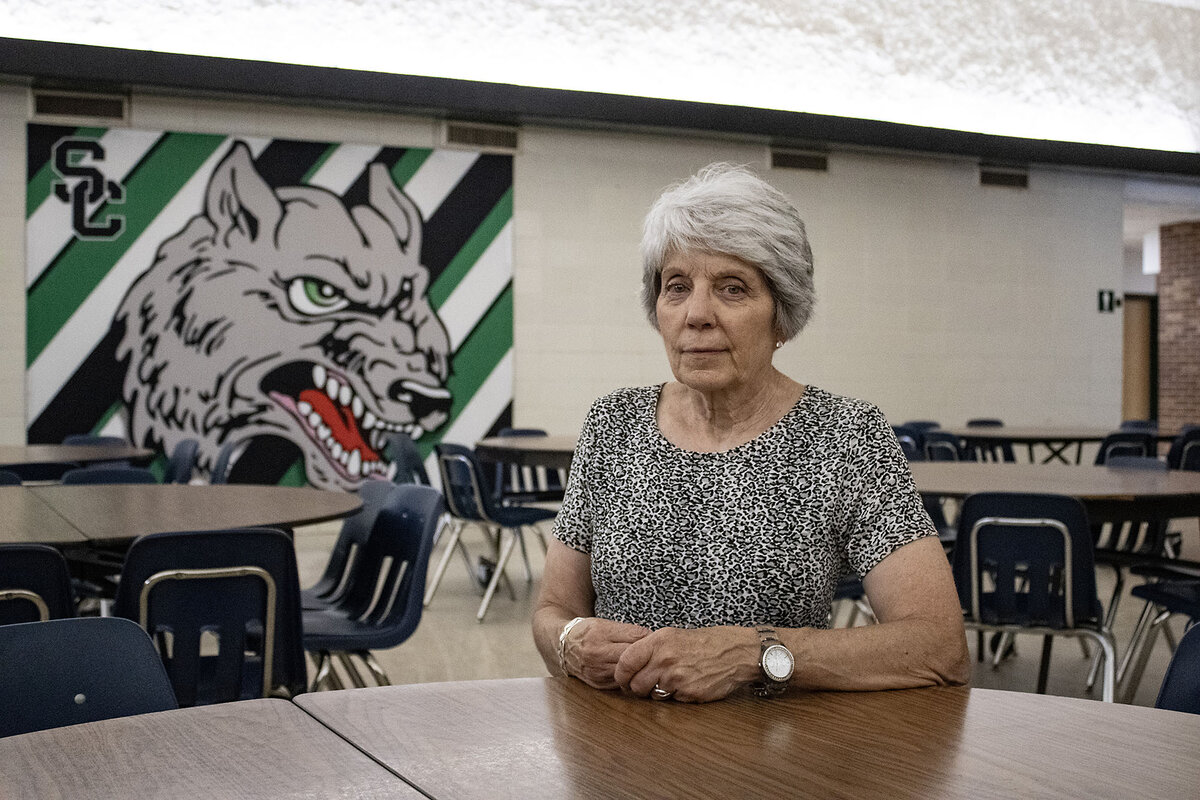
Linda Basnett, the longtime secretary for the school district, recalls knowing Joe Ceballos while he was a student at South Central High School in the early 1990s. Like many other locals in tiny Coldwater, Kansas, she supports the now-former mayor, whose immigration case is under scrutiny by the federal government.
A reckoning
Mr. Ceballos’ supporters say the man deserves administrative grace, as someone who embodies the American dream.
Waiting for his release from custody is hard for Ms. Ceballos. When they met in the 1990s, she recalls, he had probably just two pairs of jeans.
“He didn’t have anything. And now look at him,” she says with pride.
The retired nurse knew her husband had a green card; he had renewed it over time. Ms. Ceballos says she thought it was fine for him to vote because he had registered. She struggles to support what became an aggressive immigration crackdown over the past year.
“I think that ICE has gotten out of control,” says Ms. Ceballos in her living room. “I really do. Especially in the bigger cities. You know, shooting and beating people up, because they’re standing in their way.”
“I think those are extremes, though, that are really put out there in the media,” her son, Larry Woodrum, counters from across the room.
“I like the idea that they’re going to take criminals away … not everyday people,” Ms. Ceballos says. “But it’s not how it works, I guess.”
As confidence in the president over immigration policy has dipped, the administration has scaled back high-profile street arrests. Yet while detentions and deportations have continued, Trump officials have hinted at exceptions that they’re willing to embrace, such as immigrants they say will benefit the nation economically or assimilate well.
Mr. Ceballos has “worked for everything he has,” says Paul Rickabaugh, a loan officer at a local bank. The former mayor sharpens Mr. Rickabaugh’s chainsaw.
“We all need to abide by our laws,” Mr. Rickabaugh says. “But I felt like Joe was a guy that didn’t understand that he was doing wrong.”
Everyone’s ignorant of something, says Mr. Woodrum, the rancher’s stepson. Offering himself as an example: He thought that, by Mr. Ceballos marrying his U.S. citizen mom, the man automatically became an American years ago.
A rare Democrat here, Ms. Boisseau, the former special ed teacher, says Mr. Ceballos’ saga has only entrenched her politics.
“I am not in favor of open borders, but I’m also not in favor of plucking people off the street,” she says. Not only is Mr. Ceballos here lawfully, but she adds, “He loves America more than most Americans.”
At the high school, Linda Basnett, a Republican, wrestles with envisioning what ideal immigration enforcement should be.
“You see these small children and these families come over here, because they want a better place to raise their kids, and I understand that,” says Ms. Basnett. “But I don’t know how much the United States can handle.”
As the school district’s secretary for four decades, Ms. Basnett has known Mr. Ceballos since he roamed her halls. “Maybe in this situation, it’s wrong to send him back.”
Mr. Ceballos is one of six electrical linemen locally employed. His absence has slowed operations, according to his boss, Michael Bushnell.
“I just figured Joe was one of us,” a U.S. citizen, says Mr. Bushnell. “In my mind, he is. But on paper, he’s not.”
Sarah Matusek/The Christian Science Monitor
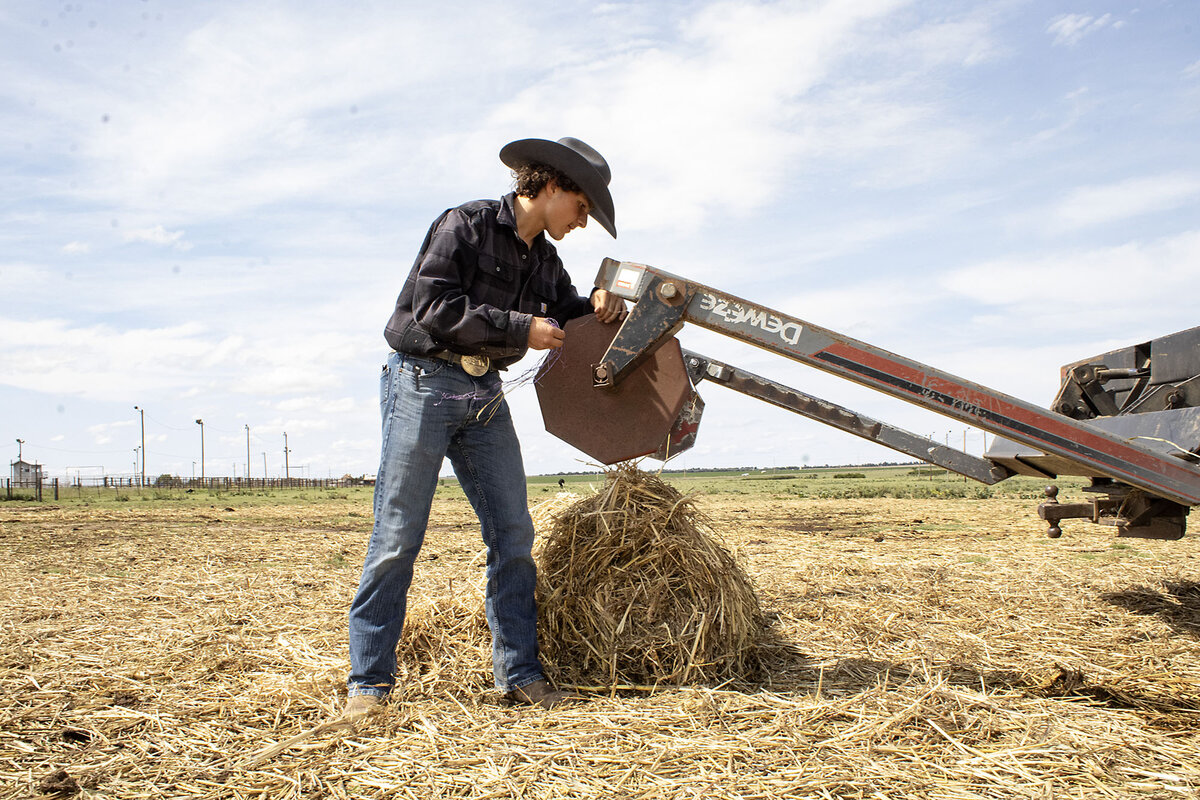
Parker Woodrum, the grandson of Joe Ceballos, feeds horses and cattle while Mr. Ceballos is in detention, June 2, 2026.
Relief arrives
Some 200 miles away, Mr. Ceballos spent three weeks at the Chase County detention center as an ICE detainee. At one point, his housing unit held 30 other immigrants, he recalls. Some fellow detainees were glad to be deported, he says, “because they’ve been in there a while.”
Chase County has for years held immigrant detainees, who typically occupy the most beds. According to Mr. Ceballos, “the guards were awesome.”
Sheriff Jacob Welsh calls the treatment “Kansans taking care of your neighbor.” He’d rather that immigrants be held at his jail, he says, than shipped off to a “megafacility” where “they’re just a number.”
Mr. Ceballos’ legal saga has strained the family emotionally and financially. His wife says they sold a couple of trailers of cattle to pay for court costs.
Parker Woodrum, Mr. Woodrum’s son, took over feeding the cattle once his grandfather went to jail. The 15-year-old works for Mr. Ceballos, whom he likens to a best friend. Driving a truck, Parker rumbles toward the pasture with a hay bale in the back.
“I want to take over this ranch, if he ever passes it on,” says Parker, dark curls cushioning his cowboy hat. He also wants to become a lineman, “just like him.”
Parker says he didn’t know his grandfather was an immigrant until he saw a news story online. He thought “Joe” was short for Joseph.
With an old Folgers coffee jug, Parker scoops out grain for horses and whistles out to cows. Recent weeks have stressed the animals – even the dogs, Parker says. “They’re not used to being away from Joe.”
Relief comes in early June. An immigration judge approves Mr. Ceballos’ $3,000 bond. Three days later, he’s released.
Word gets out in Coldwater that night. Locals load up their trucks.
Homecoming
On Main Street, Mr. Ceballos wraps everyone he sees in hugs. Friends, neighbors, grandson Parker.
“I can’t believe it,” he says in a daze. His beard has grown thick. “All the people that are here to support me – it’s amazing.”
The next morning, down a dirt road on the edge of town, he’s catching up with family and friends inside his garage.
Mr. Ceballos, in a baseball cap, apologizes that he can’t answer all the questions, given his immigration case.
If he ever met President Trump, what would he say?
He pauses.
“I would definitely be respectful and shake his hand,” Mr. Ceballos says. “I don’t think I would confront him.”
In his view, the administration started off strong, “finding the bad guys.” Murderers, rapists, and drug dealers should be targeted, he says. But some actions have gotten out of hand.
“They’re actually detaining kids, detaining moms, and parents and stuff, and separating the families,” he says. “I really don’t agree with that.”
The thought of being sent to Mexico scares Mr. Ceballos. There, he wouldn’t know “what I can and can’t do.” Now in his 50s, the rancher says he has no family there. And his Spanish is rusty.
“It’d be like sending an old man to Mars.”
For now, he sits in his garage, door open to a soft wind. Neighbors come for one more hug. A dog won’t leave his feet.
