


A roofing contractor facing £3.1m in claims over a school fire has lost a preliminary High Court dispute over the interpretation of its insurance policy.
The judge ruled that even an accidental failure to follow specified fire-safety precautions could prevent Banbury-based Attleys Roofing from claiming on its insurance.
However, the court has not decided whether Attleys breached any of the precautions or was responsible for the blaze.
In court documents, Attleys warned that without insurance, the costs of defending claims and any compensation it might have to pay were “likely ultimately to destroy” its business.
The dispute arose after the contractor used an oxyacetylene torch on lead detailing at Horris Hill Preparatory School in Newbury on 27 April 2023.
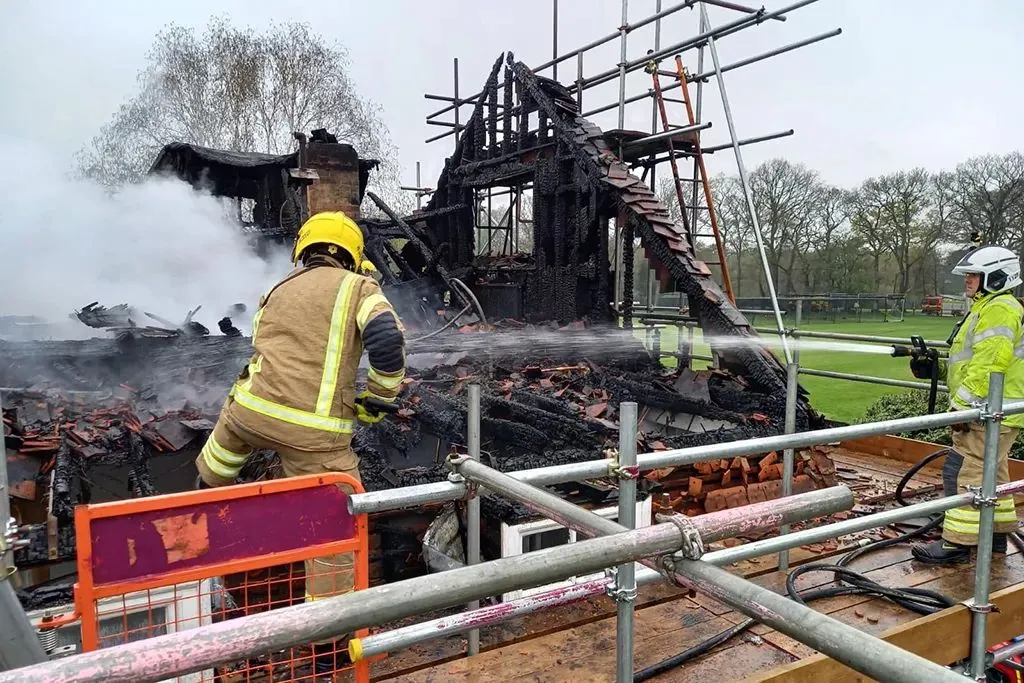
A fire broke out shortly after the work finished, destroying the roof of a three-storey building known as the Bank, which Attleys described as having been “severely damaged”.
More than 50 firefighters were called to tackle the fire. According to Attleys’ court documents, its workers left the building at around 11.40am, with the fire alarm sounding shortly after midday.
The firm says the fire originated in or around the roof, although the precise point of origin remains unknown.
After receiving threats of legal action over the damage from the property’s freeholder and leaseholder, Attleys sought confirmation that its insurer QBE would cover any resulting liability and associated costs.
However, QBE disputed its obligation to provide cover on 20 June 2024, relying on conditions in the policy requiring specific precautions when carrying out work involving naked flames or other heat sources.
These included appointing someone responsible for fire safety, checking for combustible materials within six metres of the work, ensuring another person monitored for outbreaks of fire and maintaining a continuous fire watch for an hour after work finished.
It led Attleys to take the matter to court for clarity.
In its Particulars of Claim dated 7 July 2025, Attleys revealed that the property’s freeholder and occupiers had made provisional compensation claims totalling £3.1m.
It denies breaching the conditions and denies responsibility for causing the fire through negligence.
The firm also stated that it faces collapse without the cover as the legal costs and potential liabilities are “likely ultimately to destroy” its business.
In a hearing at the High Court, Attleys argued that the requirement to take “reasonable precautions” meant QBE could only refuse cover if the contractor had acted recklessly.
QBE did not allege that Attleys had acted recklessly, the court heard.
However, QBE argued that the precautions listed in the policy were absolute requirements and that even an accidental or negligent failure to comply could invalidate cover.
In a judgment handed down on 26 October, Judge Pearce ruled that the policy created “an absolute obligation to take the precautions specified therein”, meaning a negligent or innocent failure to comply could prevent the contractor from claiming insurance cover.
The judge acknowledged that conventional insurance clauses requiring reasonable precautions generally only exclude cover where the insured has acted recklessly.
However, he found that the specific safeguards listed in Attleys’ policy went further, making compliance a condition of insurance.
His judgment only resolves a preliminary legal issue about the meaning of the policy.
The court has not determined whether Attleys failed to take any of the specified precautions.
But in court documents, Attleys warned that the costs of defending claims arising from the fire, and any compensation it might ultimately be required to pay, were “likely ultimately to destroy” its business without insurance cover.
The contractor denies responsibility for the blaze and maintains that it complied with the fire-safety conditions of its policy.
Even if a breach is established, a further issue remains under section 11 of the Insurance Act 2015 over whether the failure could have increased the risk of the loss that occurred.
The judgment does not specify a date for a further hearing.
The family run firm, which has been trading for almost 40 years, is not large enough to file audited accounts.
Attleys has been contacted for comment.
