


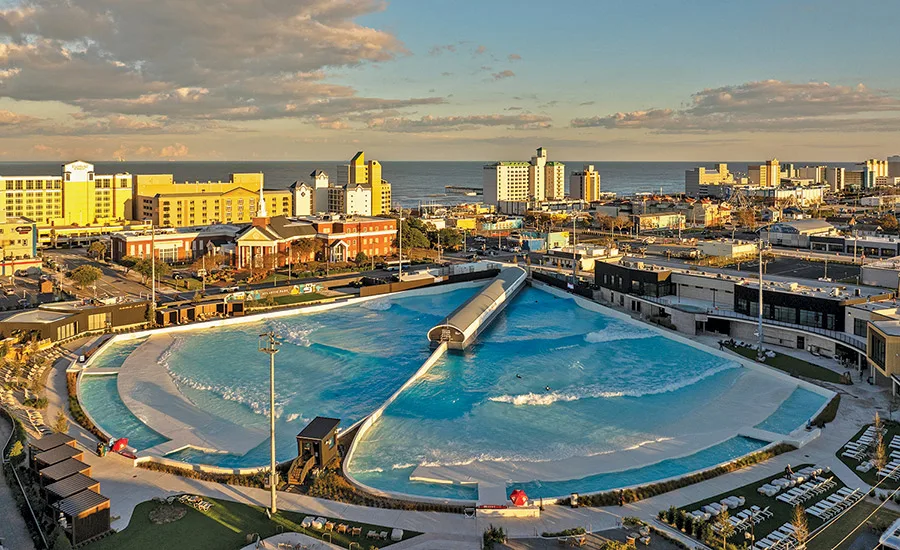

Photo by Dave Chance Photography, courtesy W.M. Jordan Co.
Atlantic Park
Virginia Beach, Va.
BEST PROJECT
Submitted by: W.M. Jordan Co.
Owner/Developer: Venture Realty Group
Lead Design Firm: Hanbury
Construction Manager At-Risk: W.M. Jordan Co.
Architects: Gensler and Cooper Carry
Architect for Lagoon Structures: Architects Orange
Civil Engineer: Kimley-Horn & Associates Inc.
Structural Engineer: Uzun & Case LLC
Lagoon Design: Coffman Engineers
Subcontractors: Agent Wall Systems Inc.; Baker Concrete Construction; Century Concrete; East Coast Plumbing; James River Exteriors; L.E. Ballance Electrical Service Inc.; Mid Atlantic Fire Protection Inc.; Shoreline Industries Inc.; SteelFab of Virginia; Warwick Mechanical Group
Atlantic Park transformed 13 acres of long-vacant surface parking lots into a development featuring year-round surfing and a live entertainment venue as well as dining and retail space. At the heart of the $350-million project is the Wavegarden Cove surf lagoon—the first in North America. Roughly the size of a major league baseball field, the lagoon delivers up to 1,000 waves per hour and is integrated into an urban environment, one block from the Atlantic Ocean. Adjacent to the lagoon is the Dome—a 3,500-seat entertainment venue with retractable hangar doors that open to an additional 1,500 lawn seats. The project also includes 309 apartments, a 20-room hotel and more than 110,000 sq ft for shopping, dining and entertainment.
Delivering the project required coordination among hundreds of entities and a disciplined, solutions-driven team approach. The team laser scanned all offsite utilities to develop a full 3D civil information model. Crews then upgraded and installed new public utilities, storm and sewer lines, traffic signals and technology infrastructure for both the site and surrounding roads. The digital model streamlined construction coordination and was shared with the city of Virginia Beach for future maintenance and planning.

Photo by Hanbury, courtesy W.M. Jordan Co.
The work was complicated by the city’s moratorium on road closures during the peak tourist season from May to October, requiring extensive planning, communication and flexibility.
The team also overcame major underground obstructions, including abandoned creosote pilings, underground storage tanks, car parts and a cache of antique glass soda and medicine bottles. Through soil testing, careful debris removal, proper hazmat controls and thorough documentation, the site was prepared safely and responsibly for new construction.
Multiple major components were built concurrently, while critical infrastructure and site access were established early. Limited laydown space and the demands of an active tourist environment made just-in-time deliveries essential.
The project was completed on time and on budget with no recordable incidents and no lost-time accidents during nearly 1 million work hours.
