



Artificial Intelligence may be a reason for the rising number of layoffs across companies, across sectors, and across continents. But it’s not because the bots are doing your job now. Companies choose to spend their money on buying or building bots instead of paying you. AI is taking away the money, not exactly your job.
A recent report from outplacement firm Challenger, Gray & Christmas showed that American companies attributed 21% of the job cuts to AI. That’s significant until you realise that it’s the fifth on the list of reasons. High energy costs, an uncertain war in Iran, rising cost of capital from rate hikes, and falling demand from a rising cost of living all rank higher than AI.
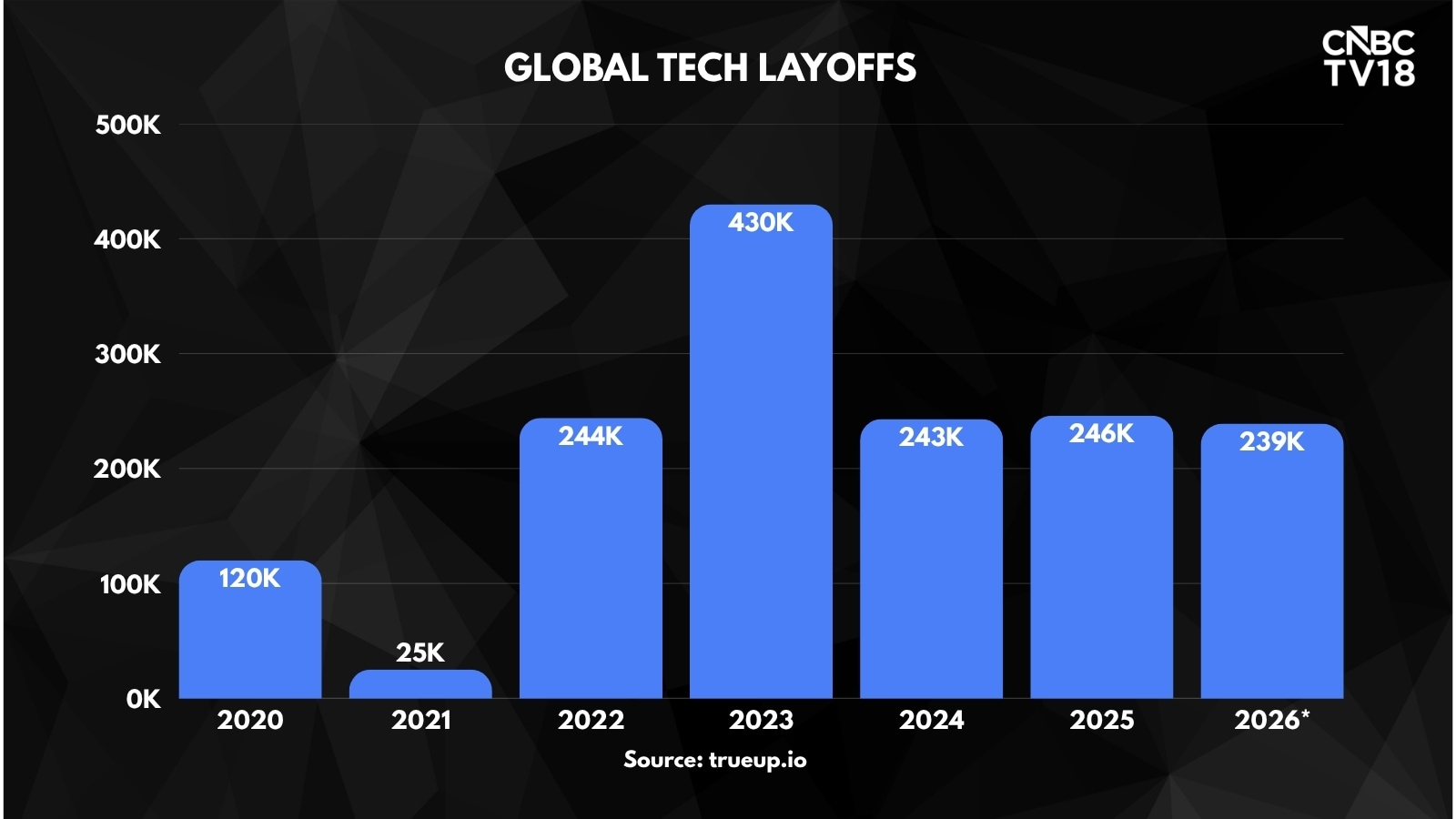
Data doesn’t align with pervasive fear of AI
Tech layoffs this year may be the least in three years. Job cuts in 2023 were nearly 80% higher than the trend this year.
We know it’s not a recession, at least not yet. What’s happening is reorganisation.
An interesting trend has emerged in India, in particular. Employees earning ₹20 lakh and above are seeing salary hikes of nearly 18% year-on-year, Mumbai-based hiring consultant Teamlease told CNBC-TV18 recently. For premium skills in the ₹50 lakh-plus bracket, hikes are even higher at 40-45%.
Someone’s gotta pay for it. So, those earning less have had to settle for increments of less than 7%.
While the situation may not be as dire as some Instagram reels suggest, there is enough reason to worry.
Research from institutions such as the OECD suggests AI adoption is currently affecting tasks more than entire occupations. Companies are automating parts of jobs rather than eliminating them altogether.
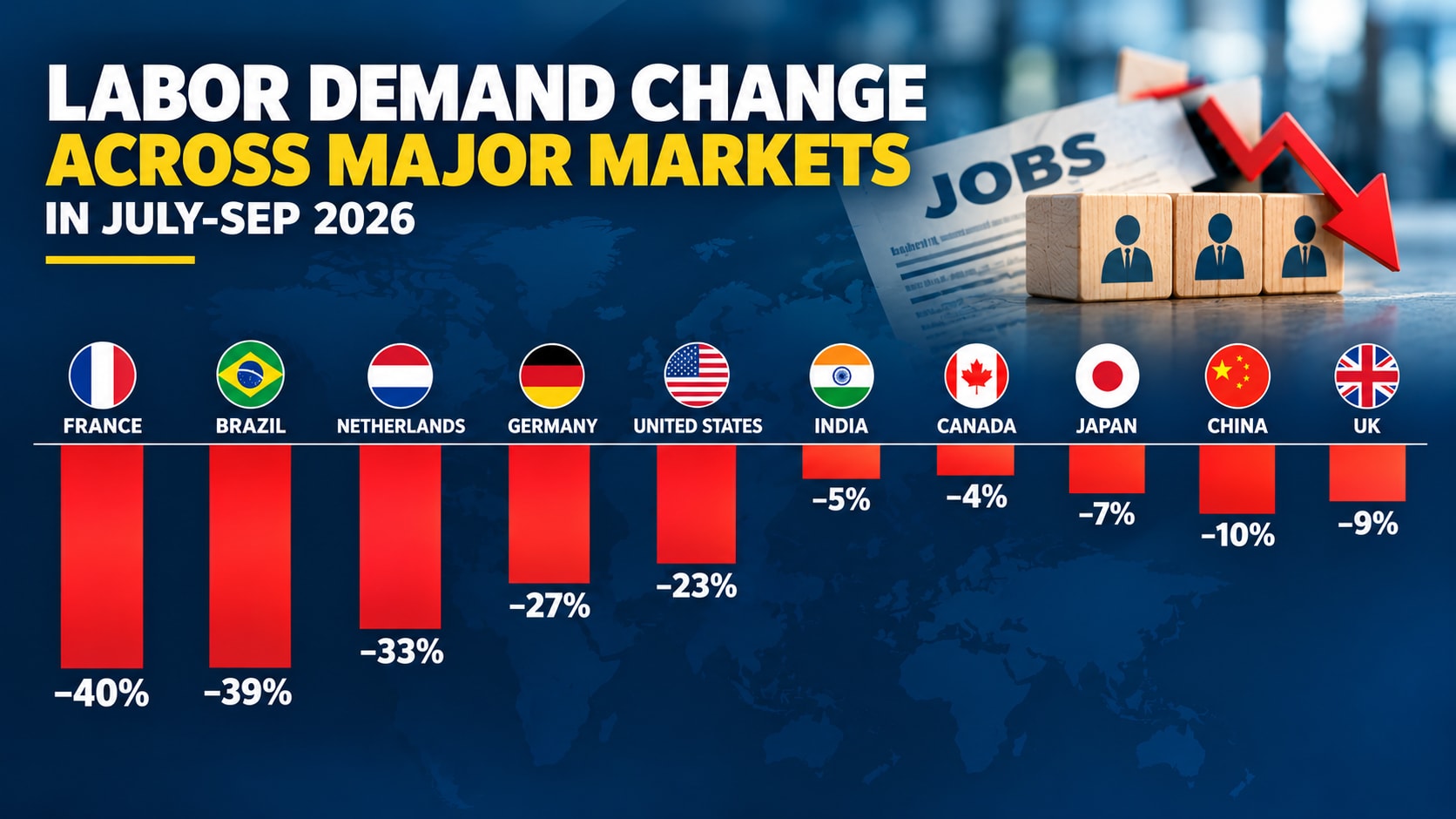
Source: Global Job Market Trends report released Bain & Co, a consulting firm.
How AI is changing jobs and organisation structures
A customer service executive who once handled basic queries is now expected to manage AI-powered chat systems. A software engineer increasingly works alongside coding assistants. A content creator is expected to understand prompt engineering, AI research tools and automated editing workflows.
Companies can make a lot more money with very few employees. The risk is high, especially for entry-level jobs with repetitive tasks that can now be easily automated.
The Hyundai quality inspector’s job was not eliminated by AI-assisted scanning; it was reimagined around interpreting flagged defects rather than performing the full visual check manually, said a recent White Paper from IIT Madras’ Centre of Responsible AI.
These are the five questions policymakers must address while formulating solutions for the disruption AI may cause
1. Which workers are displaced from which specific tasks; what adjacent roles they can realistically enter given their existing skills;
2. What training duration is required to bridge the gap; who pays for that: the employer, the state, or the worker
3. Whether formal certification is necessary for the new role or whether on-the-job supervision suffices;
4. Whether wages in the adjacent role are preserved, and if not, how the gap is cushioned;
5. How workers are supported, financially and otherwise, during the transition period itself
Why are fresh-out-of-college graduates more at risk due to AI?
The risk is especially high for people entering the job market, and it’s only going to get worse as AI becomes more capable. In engineering, job seekers already far outnumber available jobs.
This structural change in the labour market could be devastating for India, where millions of graduates enter the workforce each year.
Just as important is the next question: If fewer people enter a profession at the ground level, where will tomorrow’s experienced workers come from?
Even if we tone down the anxiety of the job cuts today, it’s necessary to worry about the jobs that aren’t created for tomorrow.
The task may be tougher because even AI may not have the answers to the questions we face. “What we’ve seen so far in the labour market from artificial intelligence has very little predictive power for what we’re going to see in the labour market because of AI in five years, or 10 years, or 15 years,” Doug Elmendorf, a Harvard Kennedy School economist and former director of the Congressional Budget Office, told Harvard Business Review.
Read more: Should AI be treated like a human? A new paper published this week has an answer
