


The Art of the Phone Call Scene

By
Roxana Hadadi,
a Vulture TV critic who also covers film and pop culture.
She is a juror for the Peabody Awards.
Spoilers follow for Union County, in theaters August 14.
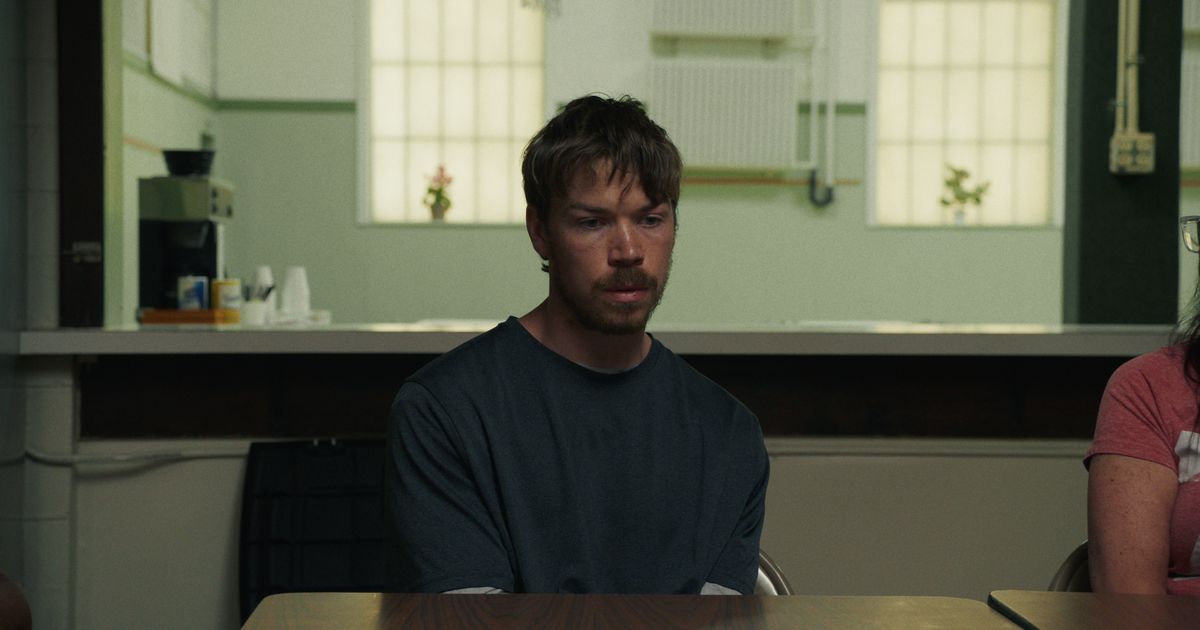
Will Poulter’s character, Cody Parsons, doesn’t speak much in Union County, Adam Meeks’s new film about how the opioid epidemic has devastated a corner of rural Ohio. The film begins and ends with testimonials from real people involved with Bellefontaine’s adult recovery court — men and women trying to stay clean, find work, reconnect with their families and friends, and not be defined by their addictions. Bits of Cody’s backstory find their way into the movie like exhales of smoke from the cigarettes he favors now that he’s in a drug-rehabilitation program. Every time the character shares a bit of his past, Poulter plays the moment like Sisyphus pushing a boulder up a hill.
Cody isn’t proud of his history: his addiction to heroin, his time in prison, his estrangement from his sister, Katrina (Emily Meade), and her young daughter. He rarely volunteers information to others that isn’t asked of him. In group, he mostly introduces himself and then passes his time on to the next person. With a potential love interest who is helping Cody fix up his car, he keeps his words, and his smiles, brief. It’s a phenomenally internal performance from Poulter, miles away from his bootlicking salesman in I Love Boosters or his swole chef in The Bear. Poulter avoids eye contact and keeps his physicality unobtrusive, reflecting how tightly wound Cody is keeping himself in order to stay on the straight and narrow — until a phone call. Union County’s most soul-baring scene is the best moment in Poulter’s performance and a reminder that sometimes people just talking is the best thing cinema can offer.
Union County is straightforward but not simplistic. The film follows with great care Cody’s time in this court-mandated program, which is swarmed with dozens of people who all have similar stories about getting hooked on opioids and who get the time to tell those stories. (Like Sing Sing, Union County’s cast is a mixture of professional actors and real people.) This is a movie whose visual language is defined by stillness: head-on shots during the sober-support meetings Cody has to attend or through the passenger-side window of the car in which Cody and his younger brother, Jack (Noah Centineo), drive around, Noah rapping along to what’s on the stereo while Cody tries not to laugh. The camera is patient, an embedded observer in these people’s lives that takes in both their penance and their mistakes.
Cody’s phone-call scene observes both, putting us alongside Cody as he both flirts with rock bottom and grasps a hand extended to him in aid. Cody and Jack being in the program together isn’t good for them; after they relapse and crash Cody’s car, Jack is sent to a more intensive rehabilitation program in another county, and Cody gets Jack’s room in a sober-living house. Slowly, Cody seems to be getting better, a transformation we can track by how much he opens up to others and how much Poulter lets the character relax. He weeps during group when he shares that he first gave heroin to Jack and that Katrina found out about their shared addiction when she discovered them passed out in her house. He spends time with Katrina and her daughter, eating ice cream, looking at old pictures, and accepting that from Katrina’s perspective, “There’s a lot that I do not know how to forgive.” And then everything is nearly derailed when he learns that Jack has died from a fentanyl overdose — Jack, who had been doing well, holding down a job, showing up for his meetings with the judge. If Jack couldn’t keep it together, how can Cody? Union County watches as Cody drives up to to make a buy, and the camera stays inside the car as Cody returns with his purchase, forcing us alongside his long walk. This is the point of no return, and we’re about to see it happen.
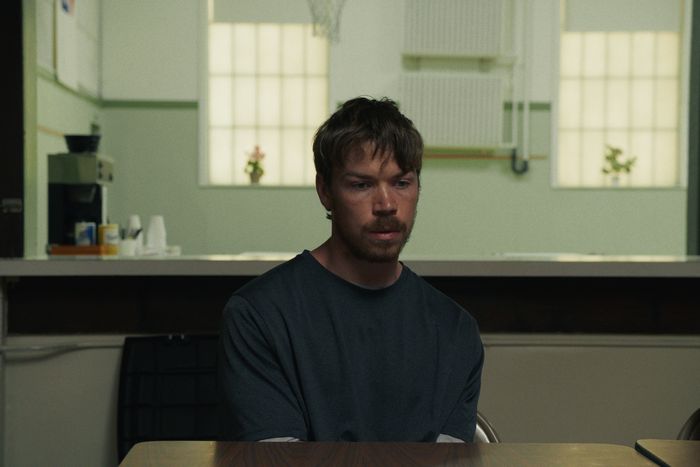
Or not — because Union County upends what we might expect. Cody is sitting in his car, slumped against the driver’s-side window, as we saw him when he and Jack relapsed the first time. This time, though, Cody isn’t high; he’s working up his courage. He calls the program’s counselor, Annette (Annette Deao), and he doesn’t speak when she picks up the phone. Then she apologizes — for Jack’s death, for what Cody has been going through, for everything. “Everybody said he was doing so well,” Poulter says, his voice breaking and his despair obvious. “He was, he was,” Annette assures him, but every minute of every hour of every day is a struggle to not use again. What happened to Jack isn’t anyone’s fault, Annette tells Cody with the steadiness and calmness of someone who has taken this kind of phone call before and who realizes that what the person on the other end of the line needs is a promise of judgment-free understanding. Annette knows the guilt Cody feels over Jack’s drug use. She knows that a combination of heroin and self-annihilation would be tempting after Jack’s death. She’s not going to try and diminish what he’s going through. But she is going to let him cry, and she is going to stay on the line. She’s going to be there for him, even when he’s not sure he can be there for himself.
That phone call, and the grace Annette offers to Cody during their conversation, becomes Cody’s turning point, the experience that makes him fully recommit to recovery. It’s a gorgeous bit of naturalistic, honest acting that allows both Poulter to home in on Cody’s vulnerabilities and fears and Deao — who is playing a lightly fictionalized version of herself — to convey the type of work she does and the type of companionship she provides to people. There’s a fluidity to this scene, and to how Deao and Poulter play off each other. More phone calls in movies! More opportunities for actors to turn in two-handers with no extra faff — just two people speaking to each other, putting all their emotions out there, reacting to what the other person is doing, and bringing us into their characters’ confidences. Think of half-naked hotties Mina (Sarita Choudhury) and Demetrius (Denzel Washington) flirting on the phone in Mississippi Masala, or CBS producer Lowell (Al Pacino) telling tobacco-industry whistleblower Jeffrey (Russell Crowe) that the world needs heroes in The Insider, or Father Duplenticy (Josh O’Connor) realizing construction-company employee Louise (Bridget Everett) needs to talk about her dying mother and closing the door on Benoit Blanc (Daniel Craig) in Wake Up Dead Man to have some privacy during their call. Each is among the most compelling, rousing scenes in those movies because they focus on the humanity and dignity of listening to another person speak, hearing them, and engaging with them. Union County is no different. The film won’t let Cody give up, and that’s because Deao picks up his call.
The Art of the Phone Call Scene
Your product is saved! You’ll receive emails when your saved products go on sale. Manage preferences.
Things you buy through our links may earn Vox Media a commission.
