


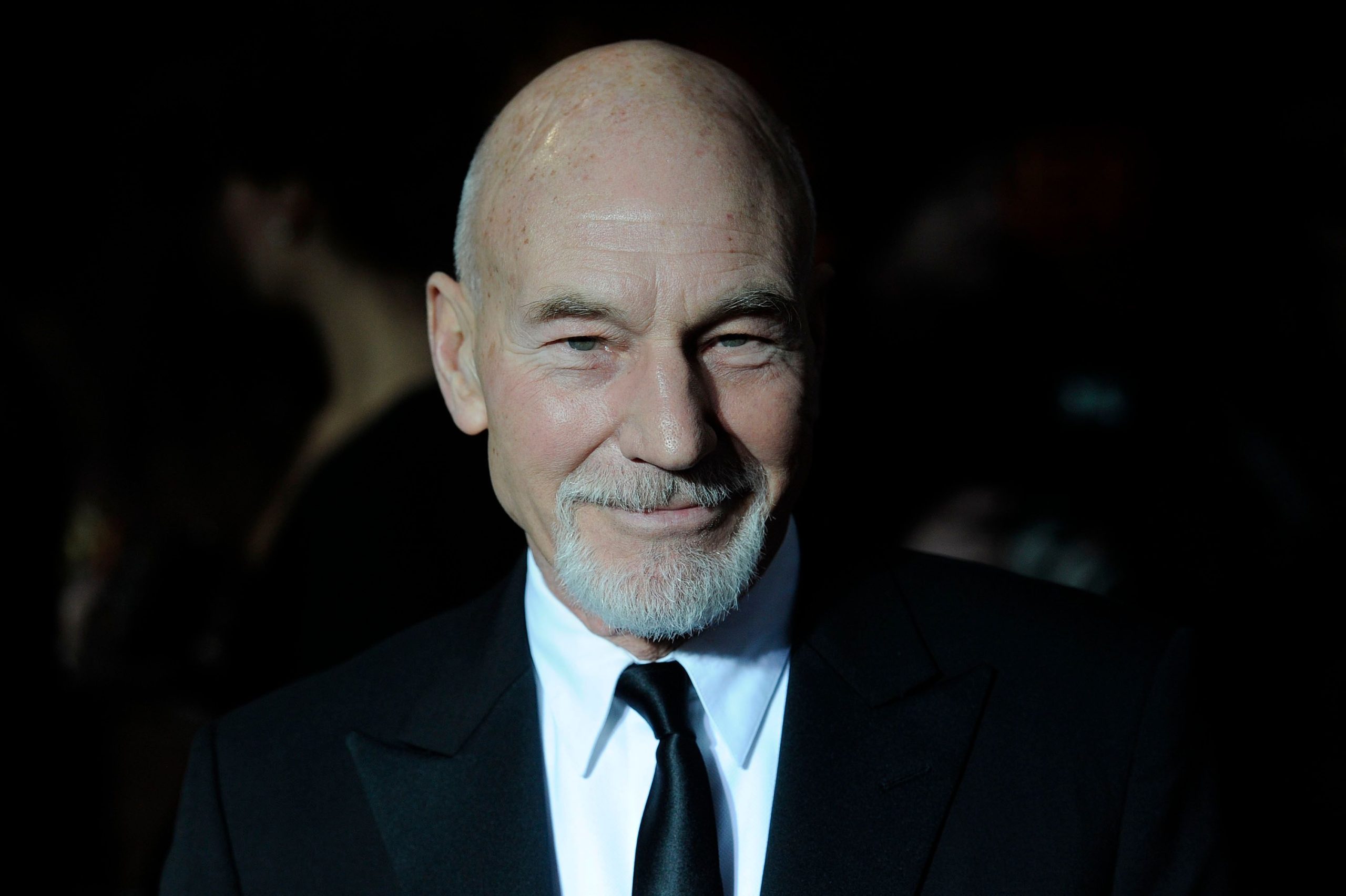
Sir Patrick Stewart, the beloved actor of stage, screen, and television, died Wednesday following “a brief and poignant journey with Alzheimer’s disease and Lewy body dementia,” according to his representative, Kelly Bush Novak. The performer, best known in this and every other star system as Captain Jean-Luc Picard of the USS Enterprise, first appeared in the legendary role in September 1987. After seven seasons of television, four feature films, several video games, and site-specific interactive experiences, he returned to the character in the age of streaming, finally warping to retirement and surrounded by his crew, in January of 2020. He was 79 years old.
Stewart began his long and prosperous life in Yorkshire, England, as the youngest of three boys. His father was a World War II veteran, and, as Stewart discussed, suffered from post-traumatic stress disorder. Witnessing violence against his mother as a child, he said, led to Stewart’s later charity work for causes surrounding domestic violence.
He took theater classes in his youth and befriended a slightly older local lad, the actor-mountaineer Brian Blessed. He went on to study at the Bristol Old Vic Theatre School, a small, competitive conservatory that began with support from Sir Laurence Olivier, and boasts Daniel Day-Lewis, Olivia Colman, Jeremy Irons, Miranda Richardson, and many others as alumni.
In 1966, at age 26, Stewart joined the Royal Shakespeare Company, one of the most prestigious theater companies in Britain. During his time there, he appeared as the lead in The Life and Death of King John, as Oberon in A Midsummer Night’s Dream, and as Shylock in The Merchant of Venice, as well as more than 80 other roles, at the RSC’s main home in Stratford-upon-Avon, in London, and on tour. During this part of his career, he also appeared in supporting roles on television. The two most notable were the BBC production of I, Claudius, in which he played Emperor Tiberius’s double-crossing Praetorian guard Sejanus opposite a who’s who of British thespians (Derek Jacobi, John Hurt, Siân Phillips, Bernard Hill, John Rhys-Davies, Stewart’s old chum Brian Blessed, just to name a few), and as the evil mastermind Karla opposite Sir Alec Guinness in the adaptation of John Le Carré’s Tinker Tailor Soldier Spy and Smiley’s People.
As the 1970s turned to the 1980s, there were some film roles of note, including the part of Leodegrance in John Boorman’s Excalibur and Gurney Halleck in David Lynch’s version of Frank Herbert’s Dune. At one moment in the film, he leads a charge into battle clutching a cute li’l pug. (This same character, without the use of domesticated pets, was played by Josh Brolin in the more recent iteration.)
In 1986, with the original Star Trek still drawing good numbers in reruns and on videocassette, and with the feature films starring William Shatner and Leonard Nimoy doing well at the box office, Paramount thought it wise to update the series for television. Franchise creator Gene Roddenberry, who had worked on a “Phase II” Star Trek project in the late 1970s (which led, eventually, to the 1979 film) soon found himself at the drafting board for Star Trek: The Next Generation.
With a bridge crew of several writers and producers from what we now call The Original Series, the new version, set a little less than 100 years down the timeline, differentiated itself in a number of ways. The most notable change was reversing many of the attributes between the Captain and his first officer. Whereas Captain Kirk was a man of action, Captain Jean-Luc Picard was more cerebral, calculating, and cultured, sharing many characteristics with TOS’s half-Vulcan second-in-command, Mr. Spock. (TNG’s Commander Riker, played by Jonathan Frakes, was a bit more rough-and-tumble, and also likelier to woo interplanetary women.)
Patrick Stewart was not Roddenberry’s first choice (Belgian actor Patrick Bauchau, Yaphet Kotto, Roy Thinnes, and Dark Shadows’s Mitch Ryan were also in the mix). But in time, the not-too-well-known Shakespearean won out. When the casting was announced, a reporter suggested to Roddenberry that by the 24th century, in a time of faster-than-light starships, surely humankind would have found a cure for male pattern baldness, no? “No, by the 24th century, no one will care,” Roddenberry retorted, to the delight of bald guys everywhere.
As Stewart has repeated time and again, he took the gig thinking it was a doomed project, as no one would want to watch a retread of a classic. He figured he’d make a few quick bucks, secure some contacts, then head back to his real job on the British stage. He later called the decision to join Starfleet “the most important thing” in his career and his life.
But the first season of Star Trek: The Next Generation did not sail out of spacedock without some bumps. (Please don’t rewatch episode four, “Code of Honor,” if you know what’s good for you.) Though wanting to differentiate itself from TOS was the right move, some of the scripts could have used a little more derring-do, and the Picard character comes off at times as a little too cold. This unease was mirrored a bit behind the scenes, where Stewart experienced a little bit of culture clash.
Most of his fellow cast members were Americans who had worked in TV, like Night Court alum Brent Spiner. They were prone to goofing around in between takes, to the point that Stewart actually called a company meeting to scold them. It did not go over too well, but in time, Stewart began to loosen up. (This has now become a favorite thing for the gang to reminisce about during panels at Star Trek conventions, as everyone quickly became, and remained, good pals.)
The chemistry on the USS Enterprise (the Enterprise-D, if we’re getting specific) synched, and the show was a massive hit, making television history as a model for a successful first-run syndication. (If you happened to be a budding sci-fi nerd in central New Jersey that got both New York and Philly stations, it meant you could watch the show twice in the same weekend—not that I would know anything about that.)
From the first episode of TNG in late 1987, through a crossover to Star Trek: Deep Space Nine, and then feature films ending with 2002’s Star Trek: Nemesis, Stewart’s Picard saved the galaxy countless times with class, strength, and poise. Now is not the time to ask, “Who was the best captain?” But one can say, unequivocally, that Picard was the most quotable.
As TNG transitioned from television series to movies, Stewart, with more time on his hands, saw to it that his first role out of the gate would prove his range as an actor. As such, he costarred in the LGBTQ classic Jeffrey, based on Paul Rudnick’s play, as the flamboyant interior decorator Sterling. It may seem like nothing now, but, in 1995, to see a science fiction hero embracing a gay role was a bold move for progressivism.
In the 1990s, between Trek movies, Stewart played Captain Ahab in a USA Network adaptation of Moby Dick, led a one-man show version of A Christmas Carol, and played Prospero in The Tempest for the New York Shakespeare Festival. Then, in 2000, Stewart took on another clutch role in science fiction, Professor Charles Xavier in Bryan Singer’s version of X-Men.
As the schoolmaster/spiritual leader of Marvel’s mutant population, Stewart has played Professor X in eight features, most recently in Sam Raimi’s Doctor Strange in the Multiverse of Madness. It was through the X-Men universe that he and Sir Ian McKellen forged their delightful and public friendship, which led to the two performing in Waiting for Godot together, and McKellen officiating at Stewart’s wedding to jazz singer Sunny Ozell in 2013.
In 2006, Stewart made the first of several returns to the Royal Shakespeare Company to play Mark Antony in Antony and Cleopatra. His most recent turn on the boards at his old haunt was 2011’s The Merchant of Venice, once again playing Shylock, for director Rupert Goold.
But after a slew of television guest spots (from Frasier to Extras) and lending his voice to various projects including several led by Seth MacFarlane, an album with classical pianist Emanuel Ax, and a profitable Pontiac campaign, he found himself going back to the future. Star Trek: Picard launched in 2020 with a rocky first two seasons before the ship righted itself for a final, triumphant season in 2023, shepherded by Terry Matalas, that reunited Stewart with the cast (and the more than 35-year-old ship) from The Next Generation.
Patrick Stewart was not Captain Jean-Luc Picard, but he brought him to life. Over 178 episodes of TNG (and countless novels and comic books that you can pretend are episodes in your head, not to mention daydreams) the French space explorer with the English accent was a beacon of righteousness and leadership. He accepted input and analysis from anyone in his crew, but felt no obligation to consensus when his mind was made up. He was bookish but also sexy and liked to keep his tunic straight.
As Stewart aged, he increasingly recognized the degree to which Star Trek meant something to millions (and would defend those hardcore fans when needed!) In 2010 he was knighted by Queen Elizabeth II. He won a Grammy in 1996 for best spoken word album for children (a recording of Peter and the Wolf) and in 2008 was nominated for a Tony for a production of Macbeth. He was nominated for four Emmys, though none of them for Star Trek.
During the coronavirus pandemic, he initiated a series on social media in which he read a new Shakespeare sonnet each day. We’ll conclude here with the final one.
-
Penélope Cruz Says She and Husband Javier Bardem are Selective When They Work Together
-
Making the Elizabeth Holmes Doc Fried Nathan Fielder’s and Lance Oppenheim’s Brains
-
“I Hate My Fucking Life Right Now”: How DC Republicans Reacted to the Blue Wave
-
Inside Lane Kiffin’s Trash-Talking, “Joey Freshwater” Era With Nick Saban at Alabama
-
Stacey Abrams Discusses the 2026 Midterms—and Her Future—with Ta-Nehisi Coates
-
From the Archive: Inside Elizabeth Holmes’s Chilling Final Months at Theranos
