


There has been no shortage of discussion in recent years of modern masculinity and the online personalities who shape it. The ecosystem of young and middle-aged men selling self-help to each other is loose and somewhat elusive, and so, for short, we call it the manosphere.
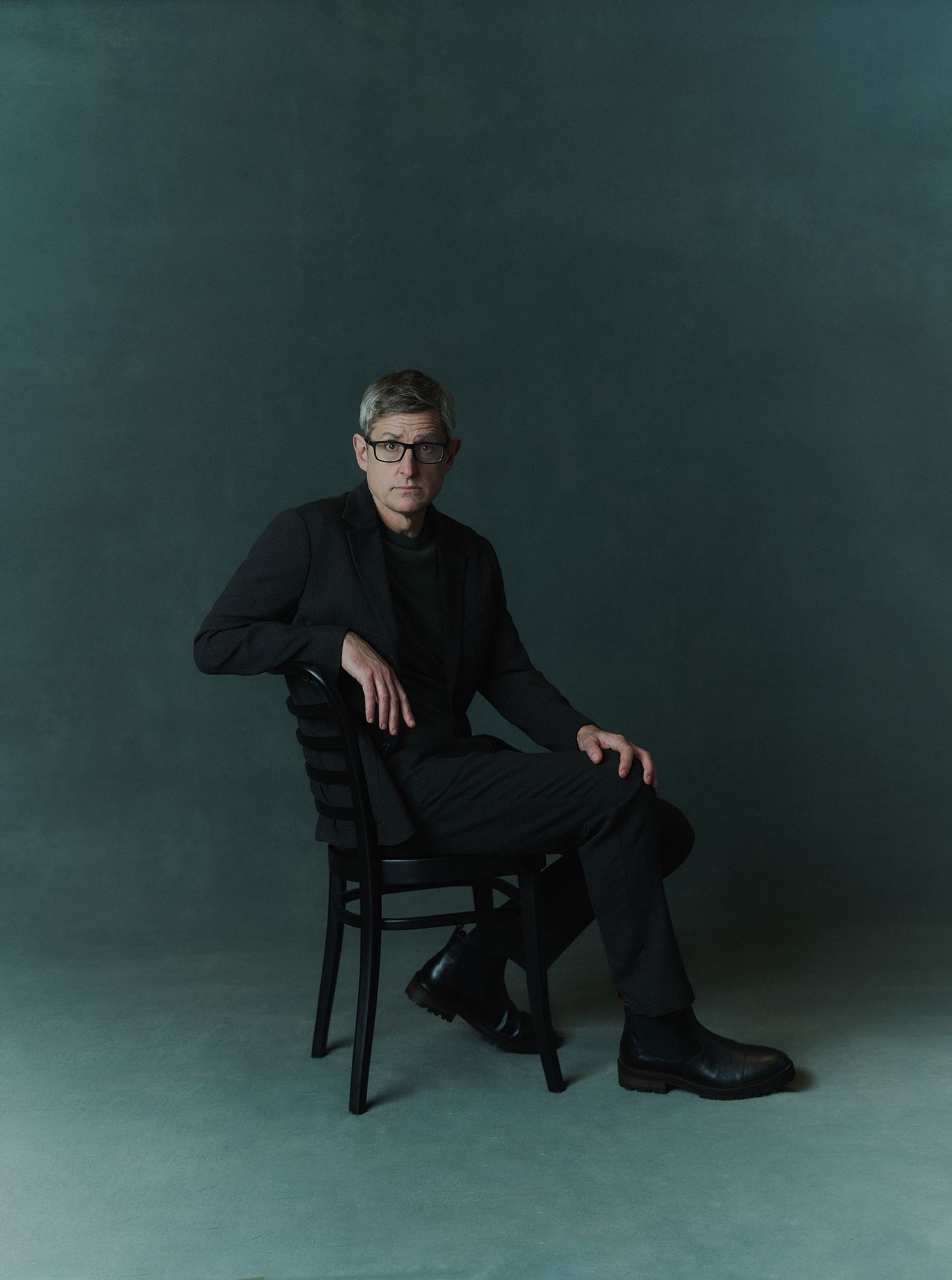
In the view of documentarian Louis Theroux, this world is also a stage for a dark but rich cast of new-media characters. Theroux has long made sordid subcultures his calling card, ranging from pornographers to Scientologists, and in his latest effort, the Netflix documentary Inside the Manosphere, out on Wednesday, he takes an approach that is both characteristic of him and fairly novel.
Theroux visits the Louisiana home of Justin Waller, an associate of Andrew Tate’s who dined at Mar-a-Lago with Donald (and Barron) Trump during the lead-up to the 2024 presidential election, where he quizzes the mother of Waller’s children on her comfort level with their arrangement of one-sided monogamy. He attracts the ire of HSTikkyTokky, a British influencer firmly in the Tate tradition, and their feud culminates in a discomfiting appearance by the streamer’s mother. All told, Inside the Manosphere is an unusually domestic glimpse at the men who rake in millions for providing noxious advice about domesticity.

Theroux visits the workplace of Myron Gaines, host of the staple manosphere podcast Fresh and Fit.
Alexander Tamargo/Netflix.
For writers and documentarians, part of the challenge in covering the manosphere is its sheer sprawl. Theroux zoomed in on a select slice of some of the defining voices of the day. In an interview with Vanity Fair, which has been edited and condensed for clarity, he discussed the nature of this particular performance, the sorts of folk traditions that the Tate class has engaged in, and the extent to which we should panic about it all.
Vanity Fair: We’ve all read a lot about the manosphere. This, as I took it, was the most humanistic document of this world to date. How did you arrive at the choice to look at these figures’ family backgrounds, and their father figures or lack thereof?
Louis Theroux: I’ve been doing these kinds of documentaries for nearly 30 years and I often see projections of strength as confessions of weakness. I did a thing about pro wrestling in 2000. I’ve done documentaries about pimp culture in Houston, the world of pornography, and a lot of the performance of masculinity is hiding a kind of insecurity. I mean, that’s not a particularly original insight. So going into it, I had an instinct that that was the case. The key figure on the scene is still really Andrew Tate. He’s the most famous. And from reading about him and seeing interviews, it was clear that he’d come from a very traumatized upbringing in which he says his father was physically abusive. Then going in and seeing how it played out in different ways, it seems completely self-evident. The people who are retailing these philosophies of ultra-masculine, super competitive, don’t trust anyone, I’ll teach you the secrets of success. Life is a zero-sum game. You have to crush or be crushed. I’ve seen it as well in the world of influencers, self-help gurus in Las Vegas. It’s this wolf and sheep mentality. You’re either a wolf or a sheep, and which would you rather be? So I see that as a symptom of people who’ve grown up in a kind of apocalyptic domestic scenario.
The manosphere means different things to different people. It can mean anything from Andrew Tate to Joe Rogan to…
Theo Von or Dave Portnoy. I think a comedian’s job is to be outrageous and push the envelope and be ironic and play different characters, and long live that whole mode of art. But yes, I think the term manosphere is a very inexact one. The manosphere is slightly in the eye of the beholder, and it’s not a term they particularly embrace or endorse, but it does mean something. And at the extreme end of it, there are certain characteristics, some less controversial, some more controversial. If someone says, like, “men and women are different,” as a blanket crude statement, I don’t have a huge issue with that. You could debate it. One would never want to be imprisoned by those kinds of gender norms, but I think it’s helpful to recognize that in general, men are stronger than women physically. That has ramifications for public policy and safety in all sorts of ways to recognize that. But to go from that to women are inferior or that women shouldn’t be able to vote, it’s clearly a massive leap. And that’s what these guys are doing. They’re routinely degrading and demeaning women.
Since the manosphere is such an unwieldy concept, how did you choose who you wanted to go after?
I think one of the key insights here is that the manosphere term is as much about technology and platform as it is about message. So there’s people who’d be putting out manosphere messages in books maybe, or in-person seminars and wilderness retreats. And I wasn’t interested in that. For me, the key was the fact that the content was reaching phones and screens and being consumed by millions of kids or young men.

Theroux met Justin Waller, a likeminded friend of Andrew Tate’s, in the manosphere hub of Miami before visiting him in his native Louisiana.
Courtesy of Netflix.
And there’s a lot of gym influencers or business influencers, hustle bro culture that might not be to my taste, but I don’t regard [that] as a huge problem. If they’re in Miami saying, “This is how you get fit, get a six pack in six weeks,” again, that’s fine. So it was the idea that actually they were routinely degrading and demeaning women. And what you find is, oftentimes, that goes hand in hand with a conspiratorial mindset that bleeds into a full-on antisemitic, crazed Illuminati mindset, the idea that there’s a secret room where people are pulling the levers. And I think there’s a natural drag towards that in the culture.
You had a particularly combative rapport with HSTikkyTokky.
He kind of worked himself up into a lather. And it was really interesting in what it said about how there’s this gladiatorial dimension to a lot of influencer culture where they’re constantly feuding and they’re being egged on by the chat. And I wasn’t trying to goad HS especially, but he was being goaded by people in his comments saying, “Oh, Theroux’s going to finish you. Oh, you are cooked, mate. When that documentary comes out, you are going to catch an L.”
You point out in the film that condemning these personalities only benefits them in the end—it’s more grist for them and strengthens their adversarial position. So where do we go from here, and where does this all sit for you on the level of moral panic?
I think it’s important to not take it too seriously, but also to take it seriously enough. I do think that term, “moral panic,” is an apt one in the sense that we can underestimate the resilience of the younger generation and also their ability to read the culture. I think there’s parts of them who can, if they’re from homes where people are keeping an eye on them and talking to them about their content, that they can metabolize extreme content and come out the other side.
I do think kids in general are also vulnerable. If they’re not exposed to positive role models or if they don’t have that sort of critical thinking mentality, then it has an impact. Alongside that is people who have just absolutely lost connection with the real world, with facts. So that is worrying, isn’t it? It seems like absolutely a symptom of the culture that we’re in where we have technology that amplifies division and there’s no barrier to entry so that people could build social media followings based on cynically pumping out bullshit content. I’m not sure what the road back from that looks like.
That’s the really scary thing to me. When I was in high school, we had Tucker Max, who had a similar ideology, but then he sort of washed out. Andrew Tate is not washing out. Nick Fuentes is not manosphere exactly, but he’s not washing out.
There’s very little that is in Andrew Tate that you don’t find in books by Iceberg Slim, the pimp who wrote his books in the ’60s, but the difference isn’t the message, it’s how it’s being put out. It’s the fact that it’s going viral thanks to various algorithms. I think the other part that’s overlooked is the extent to which it’s all part of a cynical game where the end goal is to sell crappy products to young men, teenagers. So with Tate, the front door is the misogynistic content, but behind it is, Subscribe to my online university and pay 50 dollars a month or whatever it is and learn a bunch of stuff. Because of people’s connection with Tate and the level of parasocial relationship he has with his fans, he is a highly effective salesperson for these products.
There’s a portion of the documentary devoted to antisemitism as an extension of these spaces. It fits the grandest conspiracy theories about how the world works, which makes it perfect fodder for this strain of podcasting and livestreaming. Was there anything about working on this that left you feeling optimistic?
I will say that I’ve studied history. That was my degree at university, and we’ve been through convulsive moments of technological change before, whether it was the printing press or the industrial revolution, and we’ve tended to struggle and then survive. Now, it’s not clear to me where the route out of the room is in this fire drill or in this particular moment of panic, but I think there is one. I think things have to get to a point of being intolerable, and then action will be taken. And what it is, I don’t know. This is above my pay grade, but I think it’s not good enough to say parents need to keep an eye on their kids. At a certain point, we need to think about policy. A lot of it’s characterized as a free speech issue, but truthfully, it isn’t that. It’s like they’re actually being amplified and forced down our throats by these tech platforms and algorithms.
I don’t know if it’s possible to say or if it makes a difference, but after spending real, intimate time with these guys, do you have a sense of the extent to which it’s a put-on?
They certainly do perform always with an eye to how it will do for them, how it will grow their followings and build their brand. I do think parts of it are real. We are all multiple selves, and the part that connects with our baser instincts, that’s the part that these guys are trying to reach. I think they’re aware. I think some of them burn out on it.
I think when you’re engaged in a continuous feedback loop of content creation and then the comments that come in and your main relationship is with a tribe of anonymous commenters in the chat, that’s a very existentially weird situation to be in. So I don’t think they always know who they are. In some cases, they have religious…[leading livestreamer] Sneako found God. I think there comes a time when you’re looking for something solid, something that is non-negotiable in your life. But to answer your question, I think they’re lost in their own self-presentation, but enough of it is real enough for us to be worried.
Tucker Max also found God.
They talk about touching grass, but I think there comes a time when you need to—basically, they unplug and try and get their lives together.
-
Inside the Enhanced Games—Where Athletes Biohack Their Way to Glory
