


 9 min read
As the 2025 movie season comes to a close this weekend, we’re thinking about the future. More specifically, the future of ambitious, original films—both the ones that are up for awards and the ones that never intended to be.
If the cinematic landscape had been slowly shifting over the past couple decades, the activity was downright seismic this year. Paramount is on the cusp of swallowing Warner Bros., further consolidating power in an industry that’s already an oligopoly. Meanwhile, the powers that be are giddy at how they can use AI to conjure fake actors and make real ones punch each other. And yet, there is plenty to celebrate. A bunch of great films and film achievements are up for awards, the 2026 slate is already off to a strong start, and over the course of the past year, some bold originals managed to turn back the clocks and be bona fide discourse-dominating, profit-making hits. We took a shot at summing up how they did it, interviewing difference makers both inside and at the periphery of the industry.
First up, Sev Ohanian. Ohanian went to USC film school with Ryan Coogler and wound up being a producer on Coogler’s debut, Fruitvale Station. He’s also produced Searching (which he also cowrote), Judas and the Black Messiah, Creed III, and, this past year, Sinners. Below, he talks about reading Coogler’s script for the first time, what made the film a massive success, and why, to make a good movie, you need exactly three good scenes—and no bad ones.
This conversation has been edited and condensed for clarity.

Sev Ohanian on the set of Sinners.
ESQUIRE: Tell me about your first impressions when you read Ryan Coogler’s script for Sinners.
SEV OHANIAN: The evening he sent me the full script, I did what I always do—close my door, lock myself in, read it. The surreal montage sequence? I gasped. That was an early draft and it changed a little over the course of us developing it. What didn’t change was the epilogue when older vampire Stack comes and sees older Sammy and they have a conversation. The last line of the movie was always, “For a few hours, we were free.”
And here I am reading this homage of Ryan’s, this personal story about his own family’s ancestors in the Mississippi South, and my immediate connection to it was my own ancestors who are not from Mississippi but from Armenia. I told him I couldn’t believe the way he ended it—the idea of jumping to the ’90s. But thematically, what’s being said—that this group of marginalized people who undergo so much oppression and hardship, they choose to celebrate and enjoy life and each other not despite those hardships but rather because of them—I related to that in every blood cell in my body.
Going into this film, there are few directors who have more cachet than Ryan Coogler. But Sinners could be perceived as a risky script.
I genuinely don’t see it as a risky movie—primarily because it’s Ryan, and especially because it’s Ryan and Michael B. Jordan. They’ve always netted massively positive results across every spectrum of success. Sure, on paper, I guess you could imagine someone in the industry saying, Historical, primarily Black cast, genre that takes its time getting to genre, that could feel risky. But I don’t believe in that. And we had the benefit of having a full script. Anyone who read that script, whether they were studio heads or our colleagues that we trusted, it became undeniable. So to me, it was genuinely never a risk.
Do you think the more unusual elements contributed to the movie being such a massive success?
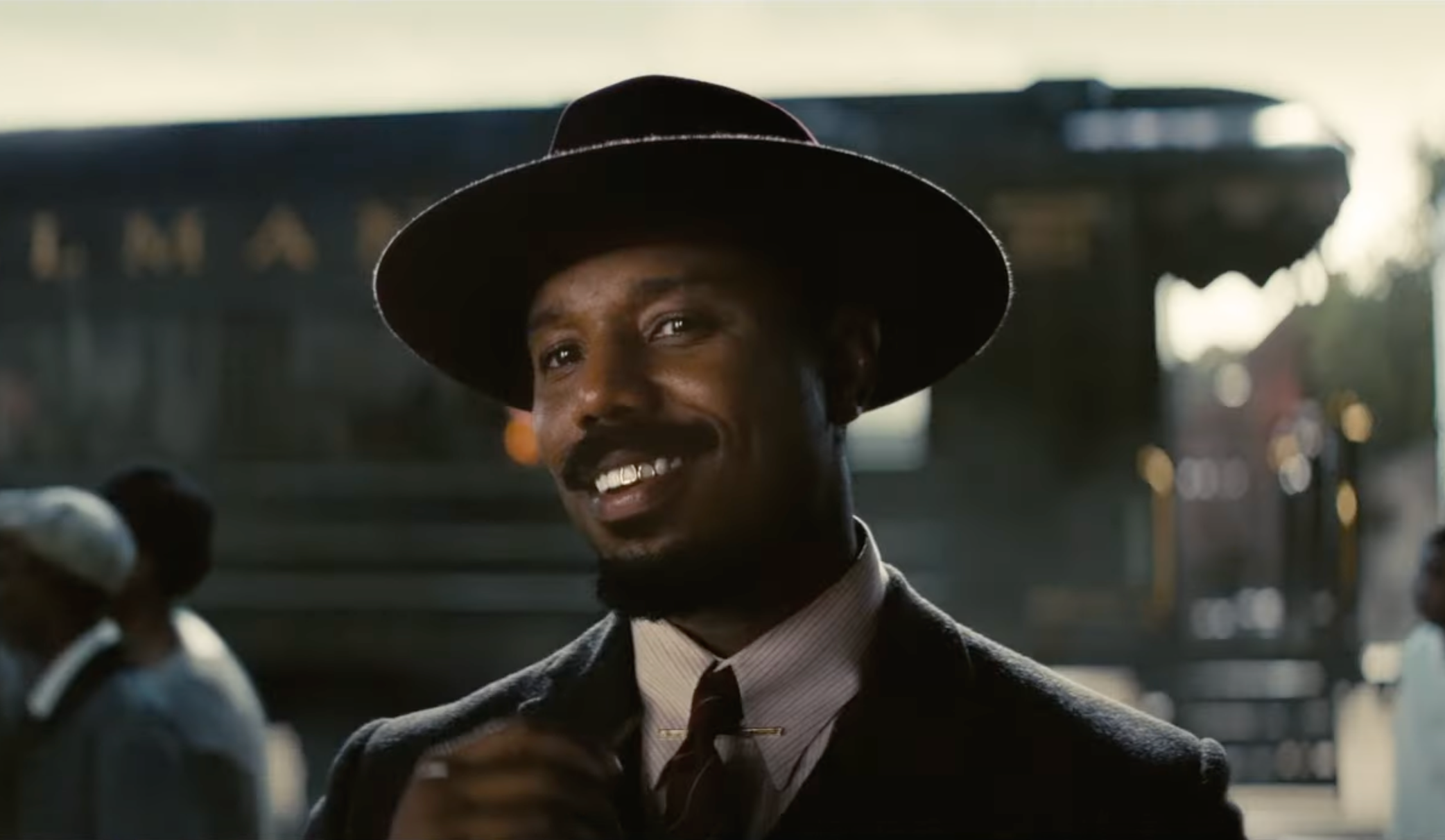
Undeniably. Something Ryan talks about is that, in this day and age, for a movie to really work you have to think about hooks, plural. It’s not enough for a movie to just have that one high-concept hook where you might want to go see it. To really make it work, you have to have a lot of them. The idea of Michael B. Jordan playing twin brothers, that feels like an event. And the idea of introducing vampires into this lore and what they represent, that’s also fresh. The blues music, the modernized music, the dance sequences. We were trying by design to deliver a movie that delights audiences over and over again.
We went to USC film school, and they would teach us this classic quote: To make a good movie, you need three good scenes and no bad scenes. The power of Ryan is he over-delivered and gave seven really good scenes.
What you’re describing in terms of having multiple hooks is something I see in a lot of movies—and usually it’s bad, as if the movie was constructed for the marketing campaign. How is Ryan able to create hooks without it feeling gimmicky?
Ryan always develops with theme in mind first and foremost. The idea of there being twins was never meant to be a marketing gimmick. It was always “This is a film that at its core is about duality.” The idea of Sammy being pulled between church and blues music and what those represent. There are so many conversations in the film where there are two diametric sides—Smoke is all about money and Annie’s all about faith. So Ryan will always think about character, theme, and story more than anything else.
That’s not to take away from him being a brilliant producer—someone who does know to think about the market and what works. But it’s never, “Let’s make a movie that we think will make money.” It’s always, “How can I take this idea of mine and let it grow to its full development so people want to see it?”

In 2018, Ryan Coogler, Zinzi Coogler, and Sev Ohanian founded Proximity Media. Their crowning achievement? Sinners, of course.
It sounds like what you’re saying boils down to leading with enthusiasm.
Oh my God, yes. And there’s no movie Ryan has made that he has infused with more enthusiasm than this one. This was a challenging shoot. The days were long and there was never enough money or time and we constantly had fires to put out. But through it all, Ryan carried himself with so much enthusiasm. He’d walk around set saying, “Big movie, everyone! Big movie!” We’d have the most challenging five hours of trying to get something and barely making it, and Ryan would be beaming like a child saying, “This is the best movie I’ve ever made. This is the best time I’ve ever had making a movie.” That becomes infectious.
The process of making the movie sounds very pure.
In my experience doing this for about 15 years, when you have a filmmaker like Ryan or Shaka King or Aneesh Chaganty, they bring that passionate energy, and that creates this unmeasurable X factor where it’s not about the money or the time or the artistry necessarily but people’s passion. And you feel that. When you have a filmmaker like Ryan who’s making this movie, which is the most important movie of his career, as he often said, how could you not want to do your best and put yourself into the film?
What did conversations with Warner Bros. about marketing look like?
What’s challenging about the film is it defies genre, by design. Is it a horror film? Kind of. Is it a musical? Kind of. It’s this big, operatic, southern-Gothic Ryan Coogler masterpiece. So it’s hard to find comps for a movie like that. To us, that was exciting. We saw it as an opportunity to lead with the movie itself and not rely on older marketing tactics. We had this amazing marketing team at Warner Bros. Ultimately, we knew the movie would be its best marketing asset, so the quicker we could do fan events and show clips, the better.
The biggest thing was Ryan’s Kodak video. That was a pitch from Ryan and us. Warner Bros. was amazing and helped us film it and get it out there. We were having a late-night editing conversation talking about how much work we put into the large format and wondering if people would even know to go see the large format. I was like, “Do people even know what large format is?” And Ryan said, “What if we just show them?” When that video came out, it dominated and changed the conversation for the movie. Audiences saw that enthusiasm that Ryan had for the film and realized that they should go see this. And the folks that did see it told their friends, and it snowballed from there.

Beyond the Kodak video, what else did you want to convey about the film?
We wanted to put our cast out there. Including the cast that’s not Michael B. Jordan. We made it clear to the studio that if we’re going to be in Mexico or Korea or London, we wanted to have as many of our incredible actors there. Because once those fans or critics or whoever saw the movie, they would flock to those incredible actors. Warner Bros. was game. That was a big deal for us. Ryan and Zinzi [Coogler, Ryan’s wife and producing partner] knew firsthand from the Marvel press tours that fans and critics being able to spend one-on-one face time with the actors they just saw sometimes made all the difference in how people took that movie away.
We also had a lot of notes on trailers. One thing we were always advocating for was to put as much as possible of Ludwig Göransson’s score into the trailers—to not lean on other scores or modern music that sometimes trailers are scored with. That can work for other movies, but for this one it benefitted greatly from having Ludwig’s music.
Warner Bros. just had this incredible year, with a bunch of big hits and big critical successes. From your experience, what’s [Warner Bros. Pictures executives] Pam Abdy and Mike De Luca’s special sauce?
They’re really good at their jobs. They give excellent notes. They really understand story. They know what’s important to advocate for and what’s not. There was a time when Warner Bros. had a lot of press covering whether their slate would be successful. And Sinners was often being mentioned in those articles as a potentially risky film—whether it was the budget or subject matter or whatever. I remember being quite upset about that, because this is Ryan. He singlehandedly made $2 billion with just four films at the time. I remember being in a meeting with Mike and Pam, asking if we should make a statement. I was saying that out of love for them, feeling it was unfair that they were being named personally in a lot of these articles. And I’ll never forget, Mike and Pam were extremely calm and they just said, “Nope. We’ll let the movies speak for themselves.” It wasn’t cockiness, either. It was just a quiet confidence that they’d green-lit the right movies and supported the right filmmakers.

Ryan Coogler and Sev Ohanian met while they were students at USC’s film school. Now? They’re racking up Academy Award nominations together.
As someone who’s also worked on smaller indie fare, how do those types of films break through today?
I wrote and produced an original movie called Searching that we made for under a million dollars. That film went on to make $75 million in theaters alone. Going back to Ryan’s notion about hooks, that’s a movie that takes place on computer screens but is done in a more cinematic or emotional way than other films of that type. It had the missing-child storyline but with hopefully inventive twists and turns along the way, and we cast an incredible actor, John Cho, who didn’t get enough leading roles. So make your story and scale fit your budget. And think about a hook that is fresh and new and exciting. Try to tell stories that reach an incredibly extreme range of emotions. Movies that will take you to the highest highs and lowest lows. Sinners is a great example of that, where there’s really beautiful celebratory moments and then there are dark moments.
We often talk about Proximity projects being event-driven projects that are meant to bring audiences in close proximity to often overlooked subjects. That notion of “often overlooked” subjects is what adds a lot of specificity to our films. With Sinners, a lot of people who have seen it have told me they didn’t know plantation money existed.
Tell me more about how you think about projects at your company.
The metrics I’m often encouraging my team to think about are: Is the movie propulsive? And propulsive doesn’t just mean Fast and the Furious–style action. Moonlight is an incredibly propulsive movie. It has narrative momentum. And then: Is the movie unique? It’s not enough to be just another good cops-and-robbers movie. You need something that hasn’t been seen before for it to feel fresh for audiences so they show up. Plus, genre blending is a good approach generally now because audiences are so savvy and they’ve seen everything a hundred times. When someone tells you it’s southern-Gothic-meets-horror, you’re like, How does that work?
Lastly, surprising. Films work best when audiences’ expectations are subverted in a satisfying way. And that applies even to the endings of the movies. I’ve learned that often how your audience will feel about a film is what they feel those final five minutes before the lights go on. Was that surprising in a satisfying way?
