


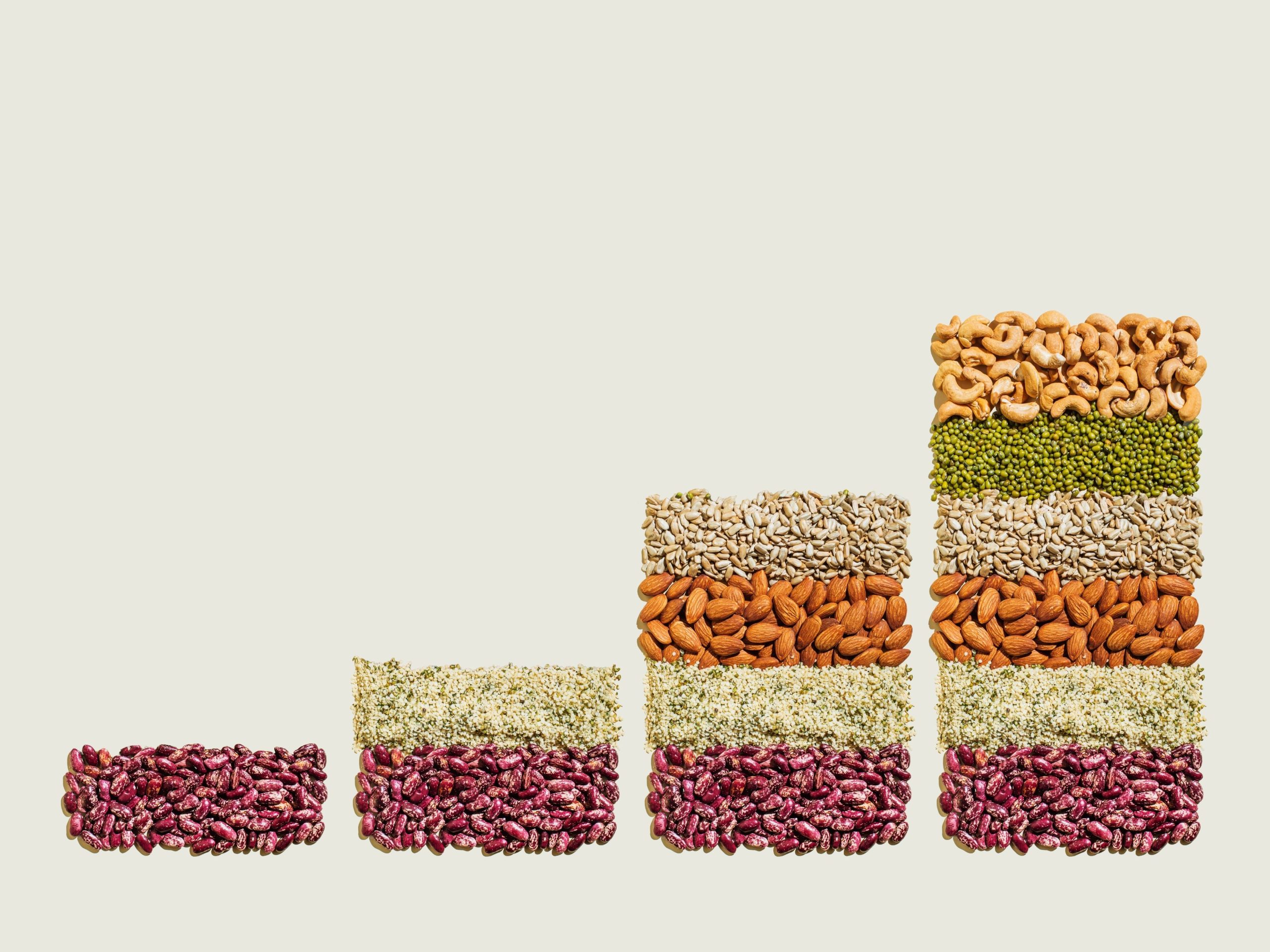
With the fibermaxxing fad encouraging people to prioritize this chronically neglected nutrient, one issue keeps coming up: the side effects. As important as hitting your daily fiber goal is, your body doesn’t always make doing so easy. Fiber is difficult for your digestive system to break down and has to be handed off to bacteria in the colon instead (which is kind of its point), so piling on too much too fast can result in a barrage of painful, awkward, or inconvenient digestive symptoms—bloating, gas, stomach cramps, the whole nine yards.
To be clear, GI distress isn’t a sign to abandon your pursuit of a higher-fiber diet. “Even with fiber becoming a growing trend, people still greatly underestimate its importance and, also, just how many ways it benefits the human body,” Desiree Nielsen, RD, a recipe developer with a focus on plant-based nutrition, tells SELF. You’re probably familiar with fiber’s ability to keep you full, stave off constipation, and support gut health, but it wears plenty of other hats too, like lowering “bad” LDL cholesterol and stabilizing your blood sugar (not to mention reducing your risk for a slew of diseases in the long run). In fact, overlooking fiber is one of the top nutrition mistakes people make, according to experts.
But if you feel apprehensive at the thought of fighting constant stomach discomfort in the process of working to correct a fiber deficiency, we don’t blame you. In fact, it’s a complaint that Lisa Ganjhu, DO, a gastroenterologist at NYU Langone Health, hears all the time at work: “I have a lot of patients that will say ‘I ate more fiber, and now I’m really bloated and crampy,’” she says. Thankfully, there’s a way to curtail those disagreeable side effects so you can (comfortably) continue your fiber journey: a strategy Nielsen calls fiber training. Here’s what that involves, and how to start developing those “muscles.”
What exactly is fiber training?
Fiber training is exactly what it sounds like: training your body to handle fiber better. It’s all about “slow, consistent increases in fiber to help you build your tolerance…while minimizing the potential symptoms,” Nielsen says.
You can think of fiber training kind of like preparing for a race. “In much the same way that you wouldn’t go out and run a marathon tomorrow if you haven’t run a mile before,” you need to work your way up to a high-fiber diet, Nielsen says. Similarly, Dr. Ganjhu compares it to a weightlifting regimen. Rather than lifting 50-pound weights right off the bat, “you kind of have to adjust slowly,” she says. “You start off with 10. When that becomes easy, you go to 20, then you go to 30”—and so on.
Fiber training is especially critical if you’re constipated at the outset, as many people are, according to Nielsen. Even though fiber can help prevent and alleviate constipation, too much at once can actually make an existing issue worse by overwhelming your gut. “When you add a ton of fiber to an already backed-up system, it’s kind of like a bottleneck on the highway,” Nielsen says: If you try to shoehorn four lanes into one, you’re going to end up with a jam on your hands.
How to start fiber training
Now that you know fiber training entails steadily increasing your fiber intake, you’re probably wondering what that looks like on a more practical level. Before we share specifics, some context for how much fiber you actually need might be helpful. Per the federal Dietary Guidelines for Americans, 2020-2025, women should aim for 28 grams of fiber daily from ages 19 to 30, 25 grams of fiber daily from ages 31 to 50, and 22 grams of fiber daily starting at age 51, though some experts recommend even more—a helpful set of parameters if you’re not sure where to start.
While the ideal amount of fiber to add to your diet while fiber training can vary from person to person depending on health needs (like a constipation issue), most people are “looking at [adding] probably three to five grams at a time,” Nielsen says.
With that in mind, you’ll want to choose a food that has a fiber content in that ballpark—say, an apple (around four grams of fiber), a half-cup of chickpeas (around five grams of fiber), a tablespoon of chia seeds (around five grams of fiber), or two tablespoons of ground flax (around four grams of fiber)—and eat a serving every single day until you feel like your body has adjusted (read: you’re not experiencing any additional bloating, gas, or other GI side effects). This process typically takes around five to seven days, according to Nielsen, but everyone’s digestive system is different, so don’t worry if you need more (or less!) time. “It really is about listening to your body and individualizing the rate at which you increase,” Nielsen says. “You have to follow your symptoms and go slow,” Dr. Ganjhu agrees.
Then, you can tack on another dose—like a second apple, a full cup of chickpeas, two tablespoons of chia seeds, or four tablespoons of ground flax. Continue increasing your fiber intake in these increments (and at this pace) until you’ve hit your daily fiber goal. If you’re a 35-year-old woman starting from scratch, reaching 25 grams of fiber—the recommended daily amount for that age—would take around five five-gram doses, six four-gram doses, or eight three-gram doses, for example.
Some fiber training tips to keep in mind
People who are constipated may want to specifically fiber train with foods that are low in FODMAPs—fermentable carbohydrates particularly hard on sensitive stomachs—according to Nielsen. Like we said above, increasing your fiber intake when you’re backed up can, well, backfire, so low-FODMAP foods are more likely to be a safe bet than their high-FODMAP counterparts. Kiwis, which contain four grams of fiber in a two-fruit serving, are an especially strong option if you fall into this category (and they’ve even been specifically studied as a dietary constipation treatment), Nielsen says. Similarly, she adds, a gentle fiber supplement like Metamucil, which is made from psyllium husk, also “provides a lot of the benefits, but tends to be less irritating to a troubled system.”
Another tip: If you’re constipated, make sure to drink plenty of water as well (though the oft-referenced eight-glasses-a-day requirement is something of a myth!). Because fiber needs water to work its stool-softening magic, insufficient fluids could leave your bowel movements hard and dry, exacerbating the problem.
Whatever new fiber sources you choose, taking this slow-and-steady approach should help ease the transition to a higher intake. “If you’re someone who doesn’t eat a lot of fiber and all of a sudden you start eating 30 grams of it, the colon is just not going to know how to manage that efficiently,” Dr. Ganjhu says. But by leveling up little by little? You can heighten that “colonic fitness”—and sidestep the worst of the awkward stage.
Related:
- 11 Foods That Probably Aren’t as High in Fiber as You Think
- 5 High-Fiber Breakfast Recipes That Will Keep You Full Until Lunch
- 11 High-Fiber Vegetables to Make Any Side or Salad Even More Satisfying
Get more of SELF’s great service journalism delivered right to your inbox.
