


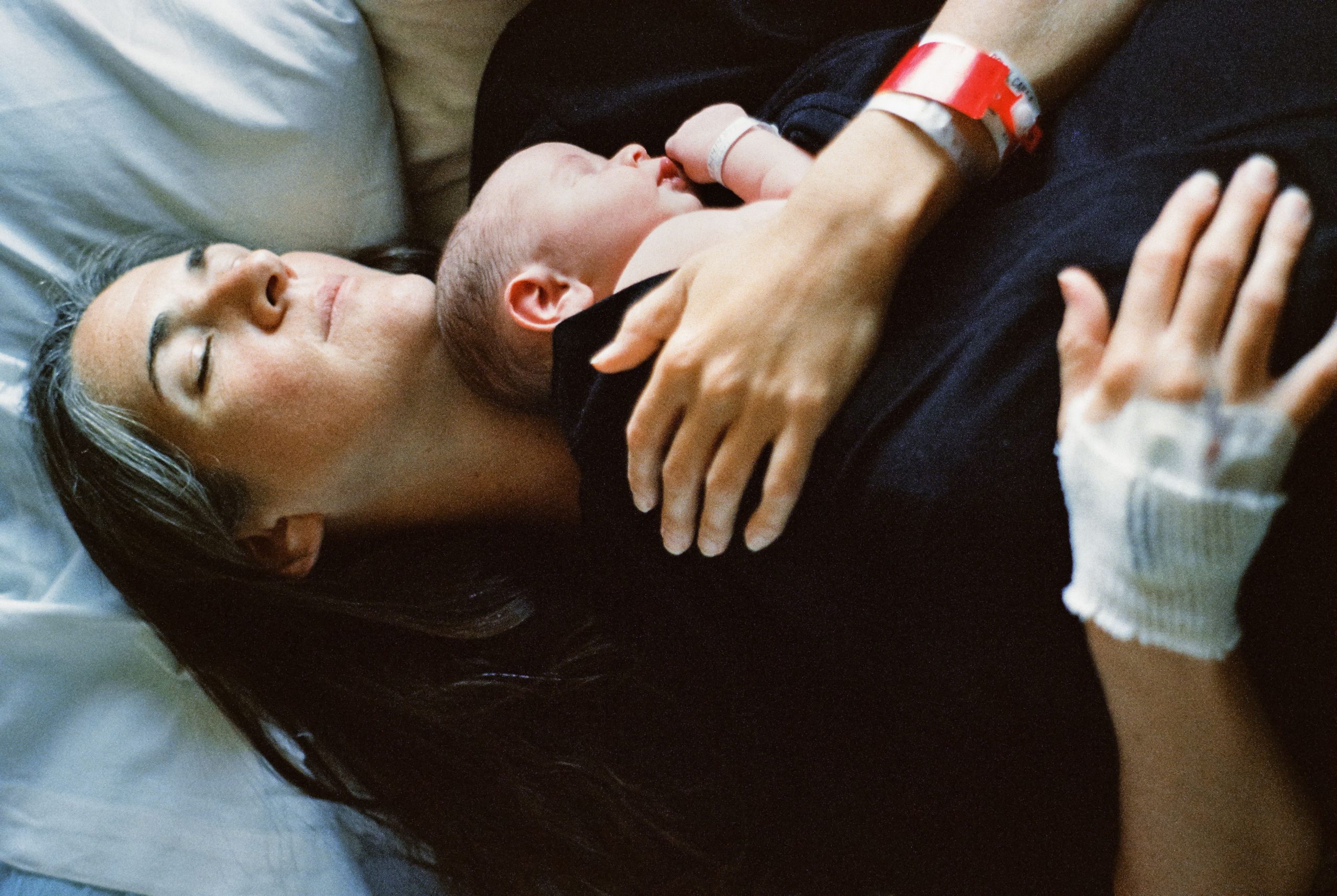
It didn’t take long for Terrell Baldock, then 37, to sense that something was different in the wake of her third pregnancy. The prior two times she’d been postpartum, she hit a turning point within the first six months when the “bringing-home-a-baby” anxiety lifted and she was sleeping through the night, she tells SELF. But this time, months passed, and “nothing was improving,” she says. If anything, she felt worse: “There were the wake-ups with the kids, but then I wasn’t going back to sleep, and I was wired and tired,” she says. “I was more depressed, more anxious. And I had a ‘screaming at strangers in parking lots’ kind of rage.”
Baldock’s doctor figured it was postpartum depression. She went to therapy and tried an antidepressant, then an antipsychotic because “nothing was working,” she says. It wasn’t until 13 months postpartum, when a naturopathic doctor ran bloodwork, that she learned her levels of the sex hormone progesterone were low—an indicator of perimenopause, or the phase preceding menopause, when hormone changes can cause an array of mental and physical symptoms.
As of late, more women are experiencing both postpartum and perimenopause at once, Jessica Shepherd, MD, a board-certified ob-gyn and chief medical officer at the telehealth platform Hers, tells SELF. Postpartum symptoms “can take upward of a year to resolve,” she points out. Meanwhile, perimenopause can span anywhere from a couple years to a decade prior to menopause, meaning it can arrive as early as your late 30s. And a growing number of women in the US are waiting until then, or later, to have kids, thanks to changing cultural norms and a boom of fertility medicine. In fact, a 2025 CDC report showed that the number of births among women ages 35 to 39 has nearly doubled since 1990, and for the first time, in 2023, more babies were born to women aged 40 and over than to teens. So it’s no wonder even first-time moms are becoming more likely to hit perimenopause while postpartum.
It was the case for Anu Sharma, age 45. She delayed starting a family to pursue her career and, at 39, had a traumatic birth experience—which inspired her to create the San Francisco–based maternity clinic Millie. “People think it’s a linear process: You have a baby, and then you’re postpartum, and then a few years later you find yourself in perimenopause. But it can all happen kind of concurrently,” she says, describing her postpartum period as “one big blur” of mood changes, weight gain, fatigue, and hair loss. In 2025, Sharma expanded Millie’s offerings to include menopause care after learning that so many Millie patients were also caught in what she calls “postpartum-perimenopause hot soup.”
Why perimenopause can fly under the radar during postpartum
In the first couple days post-childbirth, estrogen and progesterone drop precipitously from their pregnancy highs, Dr. Shepherd says, which can prompt irritability and low mood for a few weeks (referred to as “baby blues”). In perimenopause, those same two hormones tumble downward, often on a zigzagging path, which can trigger similar mental symptoms, like anxiety or a short fuse.
The picture gets fuzzier in moms over 35, who are both more likely to be heading toward menopause and may be at greater risk for postpartum depression. There’s a higher chance they faced pregnancy complications or a long battle with infertility, Stacey Silverman Fine, MD, a board-certified ob-gyn at virtual family planning platform Maven Clinic, tells SELF.
Sharma, for one, had a serious case of postpartum preeclampsia. By the time she recovered, she’d barely settled into motherhood when the COVID-19 pandemic struck. She was depressed, anxious, and fatigued, “but I largely ignored it because I assumed it was just the stress of life as a new parent, made worse by a pandemic and starting a company,” she says. Even in less of a perfect storm, the turbulence of new-mom life can get jumbled up with the mental fallout of perimenopause, making it tough to parse one from the other.
Confusing things further are the hormonal shifts linked with breastfeeding, if you choose to do so: Prolactin and oxytocin levels soar to facilitate mom-baby bonding, which keeps estrogen and progesterone levels down. “When women are nursing, it can create this pseudomenopausal state due to the low estrogen, which can cause symptoms like vaginal dryness, low libido, hot flashes, and night sweats,” Dr. Silverman Fine says. You also might not get your period back while nursing (a.k.a. lactational amenorrhea), or it could be irregular for up to a few months after stopping breastfeeding. That too mirrors perimenopause, making it even trickier to know if you’re actually entering this life stage or just confronting the normal effects of nursing.
How experiencing postpartum and perimenopause at once brings unique challenges
Experts say shifting into perimenopause doesn’t necessarily mean your hormone levels fall any lower during postpartum than they might otherwise—but it does mean they may not recover from the post-birth plummet. So it could feel like the postpartum haze just never lifts. Many women in this situation report persistent mood issues, fatigue, and restlessness.
Baldock noticed that she often wasn’t able to fall back asleep after waking up to tend to her baby, which made her constantly groggy. “I found that I needed naps to get through each day,” she says. “There were times when I’d have to call a client and say, ‘I can’t do this today because I’m just in rough shape.’”
Other physical symptoms of perimenopause—including joint pain and hot flashes—can also make new motherhood more challenging. “It was tough not being able to really cuddle with your kids because your body is so hot and uncomfortable all the time,” Baldock says. For Sharma, the body changes of both phases compounded each other: Not only did she struggle to lose the baby weight, but she gained more. Her hair was thinning and falling out, and it was hard to tell whether postpartum or perimenopause was to blame.
And then there’s the pile-on of mental symptoms. The stresses of being a new mom combined with the hormonal chaos of perimenopause could have you feeling fried, ready to snap at any given moment. “If I had a bad day, it felt like the end of the world, and it was never going to get better,” Baldock says. As both women experienced, it can also be tough to find peers who can relate and support you through this unique one-two punch.
What relief looks like at the crossroads of both life stages
Because of how ambiguous symptoms can be, managing them starts with seeing your ob-gyn, who can take a careful history and may run bloodwork too. This way, they can get a clearer idea of whether you’re truly grappling with both life stages or just experiencing a longer recovery from birth. “We need to give the body enough time to equilibrate before jumping to the conclusion that it’s perimenopause,” Dr. Shepherd says.
Whether you’re in one phase or both also critically influences what kinds of hormonal treatments you can use, Dr. Silverman Fine says. As a first-line treatment for major menopause symptoms, The Menopause Society recommends hormone therapy (HT), which involves restoring depleted estrogen and progesterone with bioidentical versions, usually in the form of a pill or patch. But that’s generally not advised in the first couple months postpartum (while hormones level out) and during nursing, because HT can halt milk production and seep into breastmilk.
Same goes for combined oral contraceptives, which contain synthetic versions of estrogen (estradiol) and progesterone (progestin). They’re highly effective during perimenopause to “even out the hormone swings and prevent pregnancy, which is still possible in this phase,” Dr. Silverman Fine says. But the estradiol can mess with milk supply and filter into breastmilk, so you’ll likely want to steer clear if you’re nursing. In this scenario, you could use a progestin-only pill (a.k.a. the minipill), Dr. Silverman Fine notes, which can still temper mood changes and irregular periods to some degree. Baldock, for one, got a progestin intrauterine device (IUD) and found it at least resolved her wonky cycle.
Beyond systemic hormones, there’s an array of other solutions that are safe to use at any point in the postpartum-to-perimenopause journey. For example, vaginal estrogen cream—which is largely not absorbed into the blood—can be “quite efficacious for dryness,” Dr. Silverman Fine says. And antidepressants that impact serotonin in the brain (SSRIs and SNRIs) can mitigate irritability and potentially hot flashes and night sweats too, she adds.
Lifestyle adjustments can also make a major difference for the overlap of symptoms, Dr. Silverman Fine says. That includes increasing protein and fiber intake and replenishing nutrients like vitamins D and B12 that can dip post-pregnancy, Dr. Shepherd points out. Fitting in a bit of cardio each day—even if it’s just a brisk walk with your baby in a stroller—can help with not only weight gain but also fatigue and mental health symptoms, Dr. Silverman Fine says.
Baldock has especially leaned on exercise, initially brief strolls outside, then hikes, and most recently weightlifting. “Building muscle has given me this positive reinforcement of, ‘You can still do new things, and you’re not broken,’” says Baldock, who also started taking a combination birth control pill last month to restore her estrogen levels. “I’m sleeping better, I have more energy, and I finally am starting to feel like myself,” she says.
Related:
- When Postpartum Depression Shows Up as Intense Anger
- Why Perimenopause Can Make You Ravenous—And What to Do About It
- One Under-the-Radar Sign of Perimenopause? Lots of UTIs
Get more of SELF’s great service journalism delivered right to your inbox.
