



Pros
- Excellent battery life
- Impressive durability
- Advanced GPS and navigation features
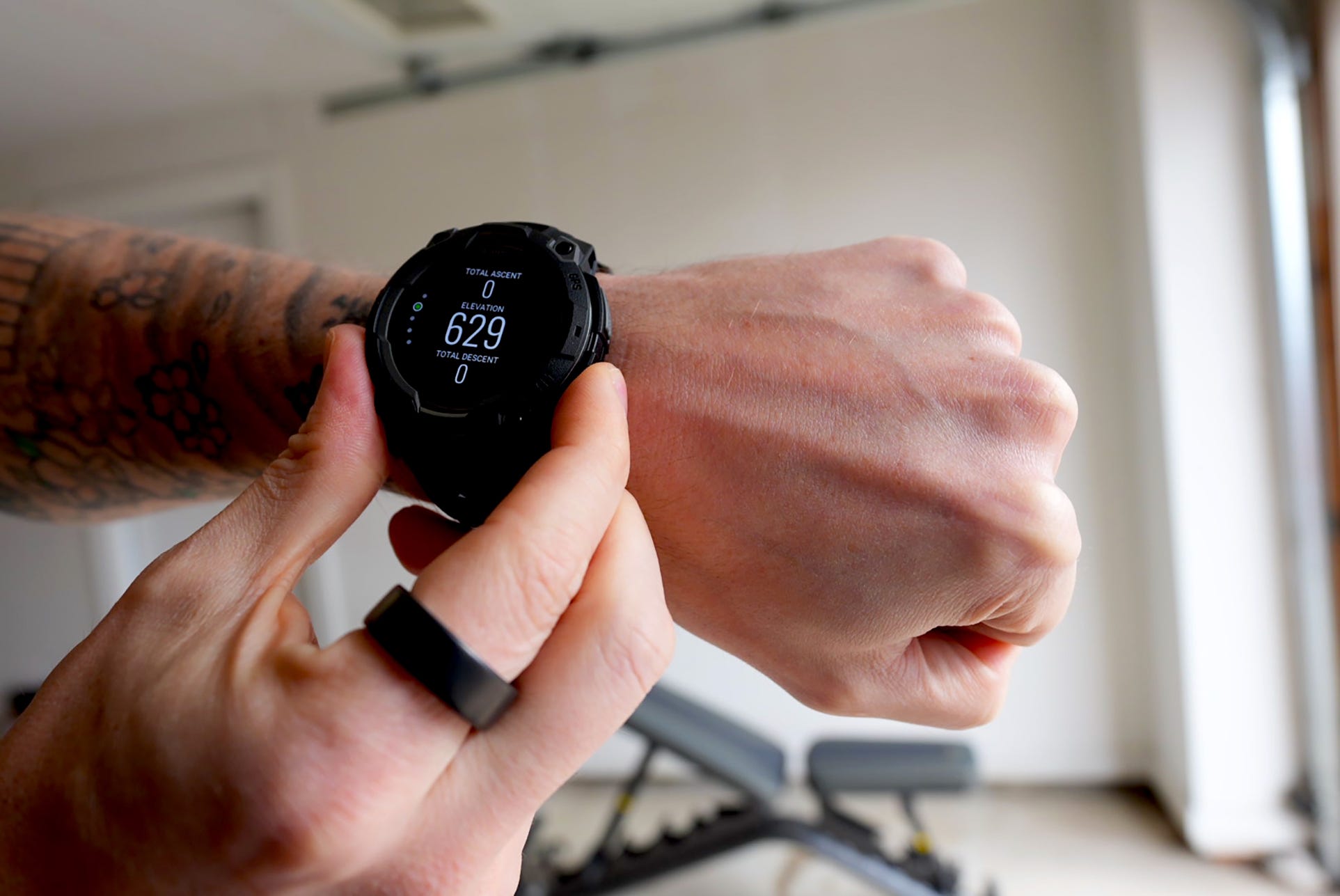
The Fenix 8 stands as Garmin’s ultimate performance watch, offering detailed training insights and reliability for marathoners, ultra-runners, and multi-sport competitors. The watch doesn’t doesn’t track your runs—it analyzes every aspect of your performance with features like training readiness, recovery time, and PacePro technology, allowing you to plan your race-day strategy with GPS-based pace guidance. These features can help you optimize your performance.
Battery life remains exceptional even during GPS-intensive activities. While the standard 51mm AMOLED version delivers approximately 29 days, the solar-equipped model extends this to 48 days with adequate sun exposure. The watch offers multiple power management profiles that let you customize battery usage based on what you have planned that day. This ensures you have the data you need from start to finish without worrying about mid-race charging.
Beyond its training capabilities, the Fenix 8 serves as a reliable navigation tool during unfamiliar routes and trail races. The full-color topographic maps, turn-by-turn directions, and ClimbPro feature help you strategize your effort on challenging courses. You also get comprehensive recovery features, with detailed sleep tracking, HRV status, and body battery energy monitoring that help prevent overtraining.
While the Fenix 8’s price places it among the most expensive sport watches available (especially for the new Fenix 8 Pro), serious athletes who spend hundreds of hours training for major events will find the watch’s performance insights and bulletproof reliability well worth the investment. “This watch has everything that Garmin has to offer into a low-profile casing,” says MH Fitness and Commerce Editor Charles Thorp, NASM. “Rugged enough to perform in tough terrain, but sleek enough to fit in everywhere else.”
Specs
| Case Size | 43 mm, 47 mm, 51 mm |
| Dimensions | 51 x 51 x 14.7 mm |
| Battery Life | Up to 29 days |
| Display Type | AMOLED |
| GPS | All-systems GNSS and dual-frequency GPS |
| Water Resistance | 10 ATM |

Pros
- Lightweight, comfortable design
- Onboard music storage and contactless payments
- Sleep coach and built-in sports apps
Cons
- Only available in one size
The Vivoactive 6 is one of Garmin’s more lifestyle-oriented models, offering a balance between everyday smartwatch functionality and robust fitness tracking. With its sleek design and comprehensive tracking features, it’s a solid alternative to the Apple Watch SE for those who want longer battery life (up to 11 days) and more comprehensive fitness metrics.
Through running and strength training sessions, the Vivoactive 6 offers detailed metrics about VO2 max, aerobic and anaerobic output, and exercise load. These insights provide a clearer picture of fitness progress than basic calorie and distance tracking. The responsiveness during workouts particularly stood out during our side-by-side comparison with the Apple Watch SE. When increasing running pace, the Vivoactive 6 updated immediately, while the Apple Watch lagged noticeably behind. During strength training, we appreciated the live heart rate zone updates, making it easier to gauge workout intensity in real time.
The most significant advantage over the Apple Watch is battery life. While our SE required daily charging, the Vivoactive 6 kept going for days between charges—a game-changer for active users. The comfortable fit works well even on smaller wrists, and at $299, it offers more fitness functionality than similarly priced competitors while maintaining everyday usability. It supports contactless payments and can even store music from your favorite Spotify playlists. If you want comprehensive fitness insights without the premium price, the Vivoactive 6 hits the sweet spot.
Specs
| Case Size | 42 mm |
| Dimensions | 42.2 x 42.2 x 10.9 mm |
| Battery Life | Up to 11 days |
| Display Type | AMOLED |
| GPS | All-systems GNSS and single-band GPS |
| Water Resistance | 5 ATM |
Advertisement – Continue Reading Below

Pros
- Fantastic running tools for structured training and recovery
- Bright, vibrant screen and durable design
- Great battery life
Cons
- Some advanced features need accessories
The Forerunner 970 is Garmin’s new flagship running watch, built for athletes who want every data point without sacrificing everyday usability. It pairs a brighter 1.4-inch AMOLED display with a built-in speaker and microphone, plus a tougher sapphire lens and lightweight titanium bezel, so it feels premium yet rugged enough for hard training.
During intervals and long runs, the interface is intuitive—pace, heart rate, and distance are all visible at a glance, and after each session the watch prompts you to rate how the run felt. The 970 also offers deeper performance tools, including running economy, running tolerance (when paired with Garmin’s HRM 600 chest strap), hill score, endurance score, and more detailed load analysis to show how hard you’re pushing week to week.
Battery life remains a major selling point. Garmin claims up to 15 days in smartwatch mode and 26 hours in GPS mode with multi-band SATIQ, so you can stack long runs, races, and daily training without worrying about charging. Built-in full-color maps, turn-by-turn directions, dynamic round-trip routing, ClimbPro, and Up Ahead make the watch just as useful on unfamiliar trails as it is for neighborhood miles.
Recovery and health tracking also see significant upgrades over older Forerunners. Training Readiness delivers a simple morning score based on recent sleep and workload, so you know whether to push or back off. Upgraded sleep tracking, nap detection, and newer tools like ECG readings also provide a clearer picture of how your body handles stress, illness, and heavy training weeks.
| Case Size | 47 mm |
| Dimensions | 47 x 47 x 12.9 mm |
| Battery Life | Up to 15 days |
| Display Type | AMOLED |
| GPS | All-systems GNSS and dual-frequency GPS |
| Water Resistance | 5 ATM |

Pros
- Multi-week battery life
- Sturdy, durable build
- Advanced GPS and navigation features
If you’re looking for something that’s durable, look no further than the Instinct 3. The watch offers military-grade construction that can withstand some real punishment, with a rugged design that proved its worth throughout testing. We accidentally banged it against doorways and scraped it against kettlebells during workouts, yet it emerged without a scratch. The distinctly masculine aesthetic features a substantial case housing an impressive array of sensors while maintaining water resistance to 100 meters.
Battery performance is one of the Instinct 3’s most impressive features. While Garmin claims 18 days between charges, our testing revealed closer to 21 days of regular use without heavy reliance on battery-intensive features. It makes it one of the longest-lasting watches in Garmin’s lineup, while providing a significant advantage over other mainstream smartwatches. When you do need a recharge, a quick 10-minute session can add several hours of use—perfect for those who forgot to charge before heading out the door.
For trail runs and hikers, the watch includes a digital compass that shows your precise directional heading, multi-band GPS with SatIQ technology, and a built-in flashlight with multiple intensity levels including a red light option. The Instinct 3 also features ABC sensors that provide real-time environmental data. Of course, the watch also offers powerful health and fitness features, including HRV status, stress tracking, and the ability to track your blood oxygen levels.
Read more: Our Garmin Instinct 3 AMOLED Review
Specs
| Case Size | 40 mm, 45 mm, 50 mm |
| Dimensions | 50 x 50 x 14.4 mm |
| Battery Life | Up to 24 days |
| Display Type | AMOLED |
| GPS | All-systems GNSS and dual-frequency GPS |
| Water Resistance | 10 ATM |
Advertisement – Continue Reading Below

Pros
- Excellent AMOLED screen
- Light, compact design
- Straightforward core metrics that won’t overwhelm users
Cons
- Music storage costs more
Don’t let the lower price tag fool you: The Forerunner 165 packs serious running tech into a $249 package, making it the ideal option for runners who are just getting started on their journey or those looking to dip their toes into fitness trackers. This relative newcomer to Garmin’s lineup boasts an AMOLED display, a lightweight design, and advanced training metrics runners will appreciate.
Despite being positioned as an entry-level running watch, the Forerunner 165 outclasses similarly priced competitors with its premium build quality and thoughtful design. It’s incredibly comfortable, especially compared to Garmin’s bulkier models, while still maintaining the brand’s impressive durability. The AMOLED screen offers excellent readability even in bright sunlight, and text looks crisp. We particularly appreciated the intuitive physical button navigation combined with touchscreen functionality.
For runners who want their first serious training companion, the Forerunner 165 hits the sweet spot by delivering Garmin’s core running analytics without overwhelming users. While it lacks some of the advanced recovery tools found in the Forerunner 965 like Training Readiness, it covers all the essentials with accurate GPS tracking and guided workouts.
Specs
| Case Size | 43 mm |
| Dimensions | 43 x 43 x 11.6 mm |
| Battery Life | Up to 11 days |
| Display Type | AMOLED |
| GPS | All-systems GNSS and single-band GPS |
| Water Resistance | 5 ATM |

Pros
- Flashlight helps you stay visible in low light
- Offers advanced health and sleep tracking features
- Up to 12 days of battery life
Cons
- Less capable app integration than Apple Watch
The Venu 4 is Garmin’s latest lifestyle smartwatch, and it feels like a smarter, more polished upgrade from the Venu 3. Available in 41mm and 45mm sizes, it pairs a bright AMOLED display with a metal case and a low-profile design for a clean, casual look that looks great both at the office and at the gym.
In testing, the Venu line has always stood out for being easy to live with, and the latest model doubles down on that. Battery life stretches up to roughly 12 days in smartwatch mode depending on how often you’re working out and using the always-on display, which means you don’t have to baby it with nightly charges—topping it up during a shower a few times a week is usually enough. The built-in LED flashlight is also a welcome addition for running at dusk or dawn, helping you stay visible to drivers. You also get a speaker and mic for taking calls and using your phone’s voice assistant from your wrist.
What makes the Venu 4 more than a standard smartwatch is that it treats your health as more than just steps and heart rate. Health status and lifestyle logging show how daily choices—like drinking caffeine later in the day—actually affect your sleep, stress, and heart rate variability, so the data feels more useful than just a bunch of charts. The Venu 4 also has the new Garmin Coach feature, with over 80 preloaded GPS and indoor sports apps that cover everything from walking and HIIT to yoga and strength training.
Its app and ecosystem integration still isn’t as far-reaching as an Apple Watch, especially on iPhone, but if you care more about deeper health tracking and better workouts, the Venu 4 is a great alternative that offers multi-day battery life and more recovery-focused insights.
| Case Size | 41 mm, 45 mm |
| Dimensions | 41 x 41 x 12 mm |
| Battery Life | Up to 12 days |
| Display type | AMOLED |
| GPS | All-systems GNSS and dual-frequency GPS |
| Water Resistance | 5 ATM |
Advertisement – Continue Reading Below

Pros
- Comes preloaded with 43,000+ courses
- Club suggestions based on performance and weather conditions
- Green contour data shows slope direction of select greens
Cons
- Niche features if you’re not a golfer
The Approach S70 is the ultimate golf companion, delivering comprehensive course coverage—with over 43,000 preloaded courses worldwide—in a sleek, lightweight design. Available in two sizes (42mm and 47mm), this premium golf watch displays detailed course maps showing precise distance to greens, hazards, and doglegs, while the Virtual Caddie feature provides club recommendations based on your playing history and current conditions.
What truly sets the S70 apart is its attention to golf-specific details. The watch provides front, center, and back distance readings to every green, along with precise yardages to hazards. This is extremely helpful as sometimes you can’t even fully see a hole and have no idea that a water hazard is lying within distance of your next shot, so that overview of the hole is crucial info to have. The “plays like” feature accounts for elevation changes and wind when calculating distances, something that can be difficult to gauge on your own.
Beyond the thousands of preloaded courses, the S70 also displays green contour data to improve your putting strategy (Garmin Golf membership required). During our testing, the functions and how to navigate them took a little getting used to, but once we got that down, it was pretty easy after every shot just to twist our wrist to get our next distance. The AMOLED display has also been crisp and never difficult to see out in the sun.
At $699, the S70 is a significant investment, but for golfers who regularly play and want and easy way to gauge the shots to hit, the combination of golf-specific features and modern smartwatch functionality makes it a great companion on the course.
Read More: Our Review of the Garmin Approach S70
Specs
| Case Size | 42 mm and 47 mm |
| Dimensions | 47 x 47 x 13.4 mm |
| Battery Life | Up to 16 days |
| Display Type | AMOLED |
| GPS | All-systems GNSS and dual-frequency GPS |
| Water Resistance | 5 ATM |
Brandon Russell is a freelance writer covering gear and technology. He started his journey as a news writer at a small newspaper and later began reviewing smartphones, movies, and video games. In his free time, he enjoys the slower, more intentional experience of using a 35mm film camera and making short videos about movies he grew up watching.
Reviewed byRyan Brower
Former Senior Gear and Commerce Editor
Ryan Brower is the Senior Gear and Commerce Editor at Men’s Health, where he tests the best products in outdoor gear and tech. Baseball, surfing, and camping occupied most of his time growing up.
He also trained in martial arts for 12 years and holds a third degree black belt. He has written about the outdoors for nearly two decades and was previously the Managing Editor, Content Performance at Gear Patrol. He is also a Certified Beer Server and previously covered the craft beer industry. Ryan currently lives on the water in New Jersey with his wife and their dog.
