


The first time Caroline went on Wegovy, it wasn’t a secret: She told her boyfriend, mother, and close friends. Over the course of six months, they watched as she shed 30 pounds, going from 130 back to what she calls her “healthy original weight” of 100 pounds. Even still, her loved ones worried about the extent of her weight loss and didn’t want her to lose even more.
“I had tried every way under the sun to lose weight,” Caroline tells SELF. The 34-year-old, who lives in Montreal, asked to use only her first name to protect her privacy. “I was really tired of trying.” At five feet four inches, she wasn’t obese and didn’t think her primary doctor would approve a prescription.
So she went online and found a doctor who prescribed the medication over the phone, unaware of how much Caroline actually weighed. Immediately after starting Wegovy, she says, “the weight started coming off incredibly fast.” After six months she decided she wanted to stop. But as soon as she got off Wegovy, the weight came back: She gained 10 pounds in a month. “I realized, I can’t stop,” Caroline says.
So for the past six months, she has been taking Wegovy again, this time at a maintenance-level dosage. But there’s one big difference: This time, she’s keeping it a secret from her boyfriend and family. “Now that we’re talking about kids, he’s seen all the impacts [of the drug] and he’s done with it,” she says. Since she lives alone, hiding her medication from him is relatively easy—she stashes it in the back of the fridge, since it needs to be kept cold. But she’s still worried he’ll see it, and when they travel together, she has to hide the medication in the hotel room fridge—or, if they’re visiting his parents, in their refrigerator. “So imagine, I’m hiding stuff in my parents-in-laws’ fridge, hoping they won’t see them,” she says. “It’s super awkward.”
Sometimes avoidance is the easiest option.
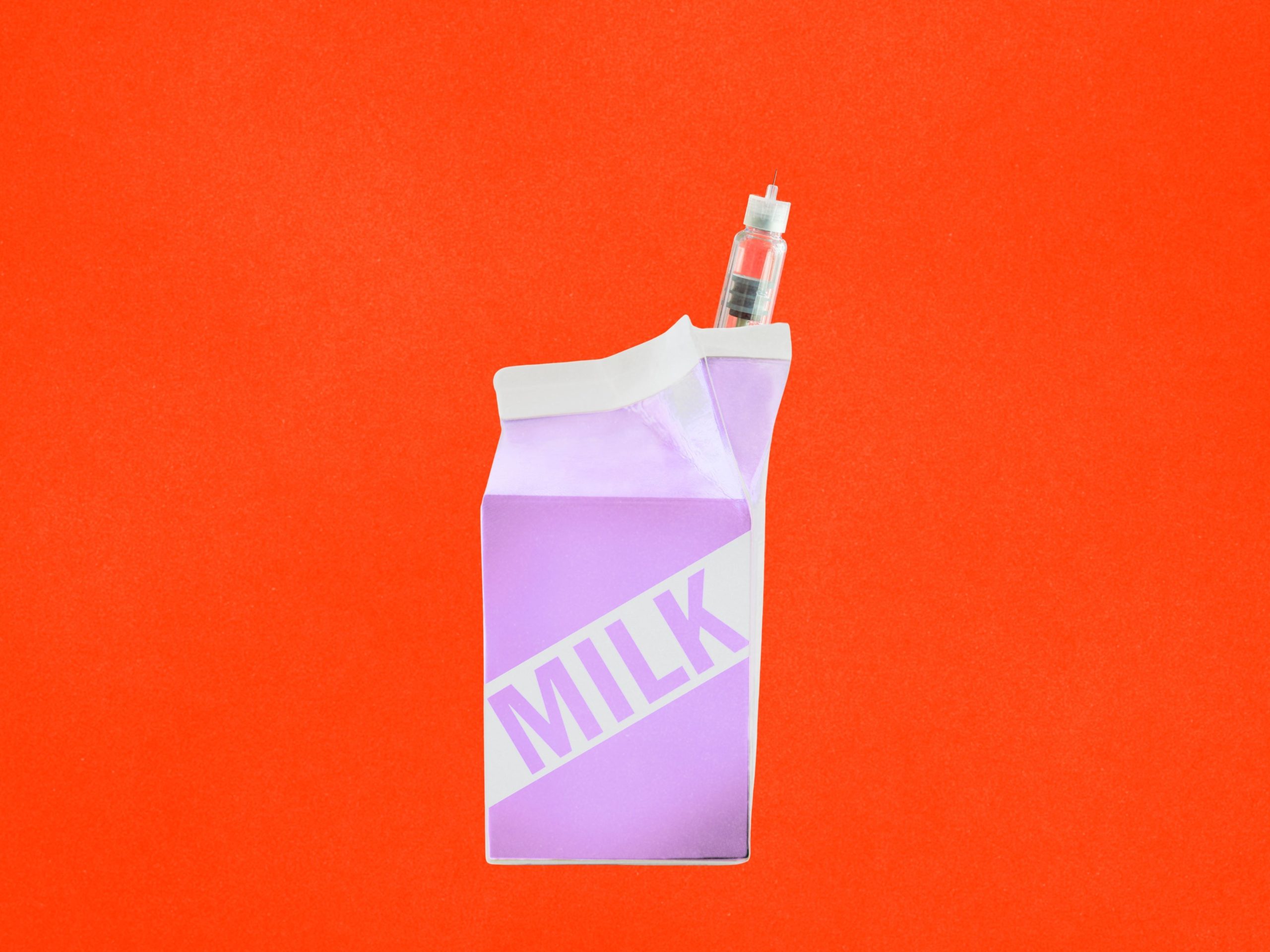
Caroline isn’t the only woman going to great lengths to keep her GLP-1 use a secret. On a recent thread on the r/GLP1microdosing subreddit, women shared their tips and tricks for hiding medication from their partners. One stashes them in a tomato paste box. Another uses a play food container from a child’s pretend kitchen. Still others have turned to an opaque feta cheese container, butter stick box, anchovy paste box, empty bottles of women’s probiotics and Alani Nu supplements, a plastic to-go container, a metal water bottle, a box of wine, and a baking soda box in the back of the fridge—all to conceal the weight loss medication.
“It’s a real thing,” Kia Mitchell, MD, who specializes in family and obesity medicine, tells SELF. She has seen numerous women in her Jacksonville, Florida, practice go to similar efforts to hide their medication from their partners. The first time she heard about this pattern, it was from a patient who “just didn’t want to turn this into a debate at home,” she says. “She just wanted to have the option” to take the medication. “A lot of my patients are similar,” Dr. Mitchell adds. “There’s this loss of control with the gaining of the weight, but being able to control the narrative around weight loss has been empowering and exciting” for her patients. “Because now they can reveal it on their own terms. That’s where the control comes back.”
The reasons women want to reveal their weight loss medications on their own terms are palpable in that subreddit thread. “If my husband found out, it would just be a series of lectures,” wrote a user called Vivid-Act-6442. “Just don’t want to hear any negative or critical opinions,” wrote another user called [deleted]. “After 52 years of marriage, one knows one’s mate.” One woman chimed in to say she was hiding her meds from her teens—because she didn’t want them telling her ex-husband. “I just don’t feel like the questions,” she wrote.
Dr. Mitchell has mixed feelings about this type of secrecy. Anyone on a health journey benefits from having a “network that’s really cheering for you,” Dr. Mitchell says. “Dealing with something like this, I want people to have community.” But, she continues, it’s “empowering and protective” for women to get to decide who knows about their weight loss drugs—even if, ideally, “you really want to be in a relationship with someone you trust completely.”
From a medical standpoint, there are some potential pitfalls to hiding GLP-1s from a significant other. For one, it’s easier to get pregnant while taking them—Mitchell says she has “several GLP-1 babies” in her practice. There are also the drugs’ potential side effects, and hiding medication can make it more difficult for a patient to turn to her partner if she’s struggling. And more generally, secrecy can cause stress. “When someone is trying to lose weight, we want their stress hormones to be as low as possible,” Dr. Mitchell says. “If you’re trying to hide [medication], we’ll be fighting an uphill battle if you’re stressed about that.”
Telemedicine makes it easier to hide them.
The bigger issue is hiding GLP-1 medications from your regular doctor, something that has become much easier thanks to the rise in telehealth companies like Hers and Ro. That’s a problem Caroline is having: She didn’t tell her doctor both times she went on Wegovy and still doesn’t want to, even though she’s concerned about how the drug may interact with the Accutane and Ritalin she takes. The idea of admitting her GLP-1 use to her doctor makes her anxious, since she doesn’t want to break their trust. But her annual physical is coming up, and her doctor will see that she’s lost a lot of weight.
“I use ChatGPT as my doctor at this point since I can’t be honest with my own doctor,” she says. “I say, ‘Hey, this is my actual weight, what type of dosage is okay to take with other drugs?’” Admittedly, she adds, this is “probably not the best option.”
Caroline got her Wegovy prescription through Hers. During the process she was only asked for basic bloodwork and received no counseling, just “documentation to read.”
Craig Primack, MD, the head of weight loss at Hers, tells SELF that the company’s prescribing doctors “do ask [patients] to talk with their primary care doctor about the care they’re getting.” He acknowledges that the company doesn’t do much in the way of direct counseling but says that “we ask about mental health and anxiety and stresses.” The Hers app contains what Primack terms “psychologist-built information” about topics such as sleep management and eating personas.
Dr. Primack is “absolutely” aware that some patients hide their medication from their partners. He says that some don’t want to say anything until they’ve proven they can lose weight; some don’t want to say anything because of the medication’s cost; some worry about how it could change the way they and their partner see each other. “Your weight and persona set up a dynamic in your couple,” Dr. Primack says. “When you start changing that, sometimes spouses get very jealous—‘Oh my god, you’re becoming potentially more attractive.’ Not that weight is directly linked to that, but that’s what I hear them say.”
And then, of course, there’s the more general stigma associated with weight and weight loss. “One benefit of telemedicine is it takes the bias and stigma away,” Dr. Primack says. “One reason we are here is because people are uncomfortable going to talk to their primary care doctor about it.”
Whether or not Caroline decides to tell her doctor about her medication, she still will have to grapple with the larger issues that her Wegovy use, and her secrecy around it, have raised. “It’s very stressful,” she says. “The fact that not only can I not talk about it, but I’m also unable to get off of it. I don’t love the idea of taking medicine like that forever, but I’m kind of stuck with it.” She doesn’t want to gain weight, she explains. “But I wonder to which extent I’m too harsh with my criticism of my body. Maybe my goals are too intense.”
How to talk with your partner about weight loss medication
Given the incredible degree of vulnerability and sensitivity tied up with weight loss, the dilemma about whether to tell people about a GLP-1 medication is all too understandable. But how to tell people can make it easier, says Rachel Goldman, PhD, a clinical assistant professor in the department of psychiatry at NYU Grossman School of Medicine and a clinical psychologist whose areas of expertise include weight management and disordered eating, tells SELF. “Framing it around their own experience and needs can make the conversation feel more manageable and less like something they have to defend,” she says.
Since deciding whether to have this conversation isn’t easy, Dr. Goldman would first encourage a patient to “think about their why,” she says. “What led them to this decision? What does this treatment mean for their health and wellbeing?” Once someone feels more grounded and confident in their reasoning, “it becomes easier to communicate it with that confidence.”
Dr. Goldman also suggests coming up with some sample scripts before having the conversation. “I would suggest that they lead with their own personal experience and not think about others and why/how others are using it,” she says. “I would encourage them to use ‘I’ statements.”
It’s also helpful to think ahead of time about a partner’s potential reaction and to have a plan in place for different scenarios. Thinking about what you want from a partner is likewise helpful—is it support, understanding, “or simply space to make their own health decisions without judgement?” Dr. Goldman asks. She adds that it’s important to remember that a partner’s initial reaction might not be their final reaction—it can take time for someone to process a conversation and to work through their own biases and misconceptions.
“Ultimately,” she says, “the goal isn’t to have a perfect conversation, but it’s to open the door to more honesty, connection, and support over time.”
But if that fails, there’s always a box of anchovy paste.
Related:
- Everyone Wants This Unapproved Weight Loss Drug—And Some Have Found a Way to Get It
- How GLP-1s Are Quietly Reshaping Gym Culture
- The Ultimate Grocery List for GLP-1 Users, According to a Dietitian
Get more of SELF’s great service journalism delivered right to your inbox.
