
• About
  • Advertise
  • Privacy Policy
  • Contact
Over View - Your Daily News Source
  • Home
  • News
    • Business
    • Politics
    • Science
  • Lifestyle
    • Food
    • Travel
    • Health
    • Fashion
  • Entertainment
    • Entertainment
    • Sports
  • Tech
No Result
View All Result
  • Home
  • News
    • Business
    • Politics
    • Science
  • Lifestyle
    • Food
    • Travel
    • Health
    • Fashion
  • Entertainment
    • Entertainment
    • Sports
  • Tech
No Result
View All Result
Over View - Your Daily News Source
No Result
View All Result
Home Lifestyle Health

AI-Assisted POCUS Helps NPs, PAs Make Faster Cardiac Calls
admin by admin
June 30, 2026
in Health
0
AI-Assisted POCUS Helps NPs, PAs Make Faster Cardiac Calls
0
SHARES
1
VIEWS

A patient arrives with shortness of breath, lower-extremity edema, and fatigue. Is it heart failure? Severe valvular disease? A noncardiac problem?

For many nurse practitioners (NPs) and physician assistants (PAs), the answer often depends on an echocardiogram that may not be available for hours — or, in some settings, days.

As health systems increasingly ask advanced practice providers (APPs) to practice at the top of their licenses, many are taking on larger roles in triage, chronic disease management, hospital medicine, and cardiovascular care. Yet one major bottleneck remains: obtaining timely cardiac imaging information that can help guide management decisions.

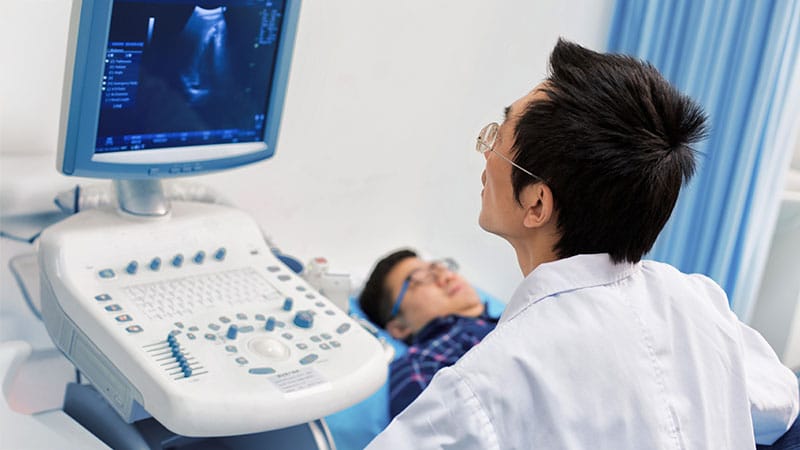
A new FDA-cleared AI platform from AISAP aims to address that challenge by combining point-of-care ultrasound (POCUS) with real-time AI analysis, allowing clinicians to obtain actionable cardiac information at the bedside within minutes.

photo of Robert Klempfner
Robert Klempfner, MD

The cloud-based platform analyzes focused cardiac ultrasound images and provides automated measurements and diagnostic guidance related to structural heart disease, valvular abnormalities, and heart failure. Robert Klempfner, MD, the co-founder and chief medical officer of AISAP and the director of the Cardiac Prevention and Rehabilitation Institute at Sheba Medical Center in Ramat Gan, Israel, said the goal is not to replace detailed scans and diagnoses only cardiologists can make, but to extend specialist-level insights to frontline clinicians while patients are still in front of them.

“We wanted to empower physicians who are not cardiologists to make accurate interpretations and bedside decisions,” he said.

Practicing at the Top of the License 

For APPs working in emergency departments, hospital medicine services, outpatient clinics, and long-term care settings, cardiac POCUS has become an increasingly valuable bedside tool. However, image acquisition is often only the first step, Klempfner said. Interpreting subtle valvular disease, assessing cardiac function, and obtaining quantitative measurements frequently requires specialist review, creating delays that can affect patient flow and treatment decisions.

Klempfner said those delays are becoming increasingly problematic as cardiovascular disease prevalence rises and healthcare systems struggle to keep pace with growing demand for echocardiography.

“We cannot continue doing the same thing that we have been doing over the past 30 years,” he said. “The numbers mathematically do not match up with the increase that we’re seeing in elderly population, life expectancy is increasing, demand for cardiology is increasing.”

The challenge is particularly acute in rural and underserved communities, where patients may wait weeks or months for outpatient echocardiograms or travel significant distances to see a cardiologist. Rather than replacing formal echocardiography, Klempfner said AI-assisted POCUS serves as a triage tool that meets patients where they are.

“We’re never saying we’re replacing the echo,” he said. “We’re saying we are your frontline.”

For APPs, that could mean answering critical questions sooner: Does this patient need urgent cardiology evaluation? Is there evidence of heart failure? Is significant valvular disease present? Can this patient safely remain in the community, or is escalation of care needed?

Reducing the Learning Curve 

One concern often raised about cardiac ultrasound is the expertise required to obtain high-quality images. Klempfner said that advances in AI-assisted guidance are helping reduce that barrier. At Sheba Medical Center, some focused scans are performed by trained support personnel working alongside physicians and APPs.

Tamar Kupfer, 18, a doctor’s assistant in one of the hospital’s internal medicine units, said she received several days of classroom instruction followed by supervised scanning sessions before working independently.

“We learned the basics of the anatomy of the heart so we understood what we were seeing,” Kupfer said. “Then people from AISAP came into the department and helped us until we were comfortable doing the scans ourselves.”

Today, she performs focused bedside scans that physicians request.

“The doctors will ask me directly if they think a patient needs it,” she said. “If they have someone and they’re trying to diagnostically figure out what’s going on, they might ask for the scan because it takes only a few minutes.”

“It’s a very quick test,” she added. “It can be as little as 2 minutes.”

For APPs already familiar with bedside assessment, the experience suggests that image acquisition may be less of a barrier than many assume. The larger challenge remains obtaining rapid, reliable interpretation that can support clinical decision-making.

A Growing AI-Powered Ultrasound Landscape 

AISAP is part of an increasingly crowded market for AI-assisted ultrasound and cardiac imaging tools. Unlike many companies that focus primarily on either imaging hardware or AI analysis, AISAP combines handheld ultrasound imaging, real-time AI interpretation, automated measurements, structured reporting, and clinical workflow support into a single platform designed for frontline use.

Several of these companies are pursuing related approaches. Butterfly Network, GE HealthCare, and Philips all market handheld ultrasound platforms that allow clinicians to perform imaging at the point of care, while Ultromics focuses on AI-assisted analysis of echocardiographic data. Caption Care, which was acquired by GE HealthCare, pioneered AI-guided cardiac ultrasound acquisition designed to help non-experts obtain diagnostic-quality images.

At the same time, Eko Health is pursuing an alternative approach to earlier cardiac detection through AI-enhanced digital stethoscopes and heart sound analysis.

While the technologies differ, they share a common goal: expanding access to cardiovascular assessment beyond traditional echocardiography laboratories and specialist practices.

For APPs, the question may be less about which company ultimately dominates the market and more about whether AI-assisted imaging can reliably provide actionable information earlier in the patient encounter. As healthcare systems face increasing cardiovascular disease burden, staffing shortages, and growing demand for specialty care, many experts expect AI-enabled diagnostic tools to become a larger part of frontline clinical practice.

Klempfner is the co-founder and medical director of AISAP, LTD, and as such has a financial relationship with the company. 

Tamar Kupfer has no disclosures.

Read More

Previous Post

Apple won’t go broke for us, so why should we go broke for Apple?

Next Post

Dupilumab Reduces Exacerbations in Kids With Type 2 Asthma

Next Post
Dupilumab Reduces Exacerbations in Kids With Type 2 Asthma

Dupilumab Reduces Exacerbations in Kids With Type 2 Asthma

  • About
  • Advertise
  • Privacy Policy
  • Contact

© 2026 JNews - Premium WordPress news & magazine theme by Jegtheme.

No Result
View All Result
  • Entertainment
    • Entertainment
    • Sports
  • Lifestyle
    • Fashion
    • Health
    • Travel
    • Food
  • News
    • Business
    • Politics
    • Science
  • Tech

© 2026 JNews - Premium WordPress news & magazine theme by Jegtheme.