


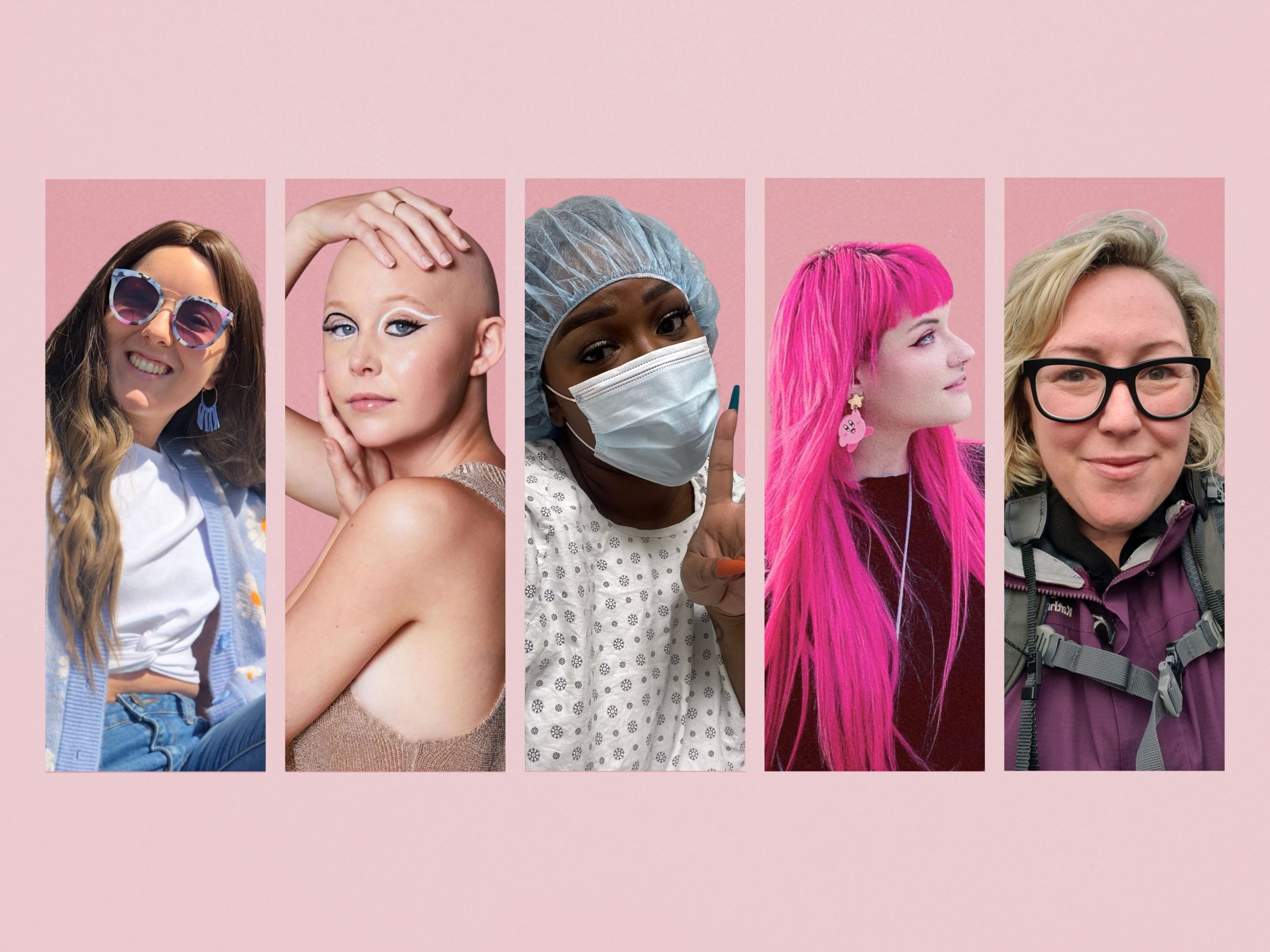
Last year, when Shannen Munster was 31, she began having episodes where she overheated to the point of wooziness—in the middle of winter. Her bones ached. Her brain, she tells SELF, “was like scrambled eggs.” She was in the throes of menopause symptoms that she’d expected to have by around age 50, “but I was speedrunning it 20 years early,” she says.
Munster’s doctor told her to expect these symptoms when she began taking a drug to “switch off” her ovaries and shift her body into a low-estrogen state. The point was to reduce the horrible pelvic pain caused by her endometriosis (a condition in which estrogen-reliant endometrial tissue grows outside the uterus). But the negative impact of being menopausal on her quality of life was greater than she could have anticipated.

Courtesy of Shannen Munster, Michael Bristow
Feeling caught off guard by the emotional and physical toll is common among women who enter medically induced menopause before 40. That could be a temporary state if you take ovary-suppressing medication for a set period of time, as Munster did, to manage a hormone-sensitive condition such as uterine fibroids or premenstrual dysphoric disorder (PMDD). Other women are put on these drugs while undergoing chemotherapy for cancer—to shield their ovaries from being harmed by the treatment—or as part of long-term management for hormone-dependent cancer. In still other instances, medical menopause can be permanent, like when both ovaries are removed (a.k.a. oophorectomy), due to large ovarian cysts or gynecologic cancer.
That was the case for Treanna Evian, who had her uterus and both ovaries taken out to treat stage 1 ovarian cancer at age 32. Like Munster, she was warned about menopause but still struck by the intensity of its effects: “I was angry all the time, mad at everybody and at the world, and I kept gaining weight,” she tells SELF. “It was like watching yourself turn into someone you didn’t recognize.” While that can happen with the typical shift into menopause, it’s usually less jarring and sudden. “If perimenopause, or the transition to menopause, is to have any evolutionary basis, it’s probably to help you slowly adjust to decreasing hormones,” Heather Hirsch, MD, an internist and menopause specialist, and author of Unlock Your Menopause Type, tells SELF. “Your brain does a lot of rewiring over the course of several years.” Jumping right into menopause due to medication or surgery can put your body in shock, she explains, often leading to severe symptoms.

Courtesy of Treanna Evian
A similar scenario can also happen in women who spontaneously enter menopause before 40 (technically deemed “premature” menopause) or between 40 and 45 (“early” menopause), typically due to primary ovarian insufficiency (POI). Hormone levels can drop off abruptly, in some cases due to genetic abnormalities or possibly autoimmune issues, “where the immune system attacks the rapidly dividing cells of ovarian tissue,” Dr. Hirsch says.
But plenty of POI cases have no known cause and occur in women without a family history, as happened to Kirsty Costa, who was 31 and had recently lost a pregnancy when her days became riddled with hot flashes and fatigue. “I felt so old in my body,” Costa tells SELF. “I had creaky bones, sore hips—I could barely sleep, and I didn’t even have the energy to go to the gym.” Her doctors chalked it up to hormone swings post-pregnancy until fertility testing revealed that she had few, if any, eggs left and was indeed menopausal.
The isolation that comes with entering menopause before 40 can have a significant mental impact.
Costa calls the first few years of early menopause a “journey of loneliness.” All of her friends were having babies, “and people were saying to me, ‘Oh, I fell over and got pregnant!’ while I was grieving for my fertility,” she says. “The only people that I could relate to were my mom’s age. They’re all sitting around talking about their hot flushes, and I’m in that camp.” At the time of her POI diagnosis, over 10 years ago, there was also little cultural dialogue about menopause, much less early menopause—which only added to the isolation Costa felt. She channeled her energies into advocacy work, speaking on the topic and supporting the creation of online resources for others in her boat. But even today, there’s not much representation of women experiencing early menopause in the media and movies.
For Meagan Pettit, who was diagnosed with stage 3 breast cancer at 29, being in menopause during chemo just deepened the rift that cancer had wedged between her and her peers: They couldn’t grasp the impact of either cancer, nor menopause on her body. “When you’re going through menopause at a typical age, I imagine you could talk to your friends about the symptoms. But I really didn’t have anyone to sit with these experiences, or people to share feedback or suggestions on what to do that could be helpful,” she tells SELF.

Courtesy of Meagan Pettit, John Pettit
Evian, whose friends also couldn’t relate, ran into a different kind of friction. Because her menopause was the result of curative surgery for her cancer, many of her loved ones thought she should just be thankful that she didn’t have cancer anymore, she says. “A lot of people didn’t understand that two things could be true: I could be grateful for my life and also very upset about what was happening to my life, that I no longer had a uterus.”
The sexual side effects can be especially difficult to navigate at a young age.
The way the vagina can change during medical menopause from “waterfalls to the freakin’ Sahara desert,” as Evian puts it, can really throw your sex life for a loop. A drop in estrogen may cause vulvovaginal tissue to shrivel, and become dry and prone to tearing—which can make sex, particularly penetration, seriously painful. “For the first time in my life, at 30-something years old, I had to look at my husband and be like, ‘Okay, we have to go get lube,’” Evian says. “It took a toll on my marriage, and it was also just heartbreaking to not feel as sexy, or sensual, or any of those things that make it fun to be a woman.”
Pettit was less than a year into dating her now-husband at the time of her cancer treatment, when she began experiencing vaginal dryness. “We would sometimes attempt to be intimate, but I often cut it short because it was very painful,” says Pettit, who was taken off the menopause-inducing drugs after wrapping up chemo. At a certain point during treatment, as she grew wary of the pain, and her partner became afraid of hurting her, it started to not feel worth it to try, “even with lube,” she says, “and we had to be open and honest about that. She has since become a mom.

Courtesy of Miranda McKeon
Dealing with these symptoms while not in a committed relationship can be especially traumatizing, particularly for someone as young as Miranda McKeon, who at 19 was diagnosed with stage 3 breast cancer and entered medical menopause. She was in college when she discovered that sex was painful for her and had “huge episodes of bleeding” as she became intimate with different people, not initially realizing this was out of the norm. “For a while, having comfortable, pleasurable sex is something I wasn’t even sure that I was entitled to, and I was just suffering through to please a man,” she tells SELF. Over time, these experiences “definitely pushed me to address the moral convictions I have around intimacy,” says McKeon, who finished active cancer treatment (chemo, radiation, and surgery) four years ago but remains in medical menopause to avoid recurrence.
Managing symptoms for this type of menopause can bring its own set of challenges.
Hormone therapy (HT), which involves restoring depleted estrogen, is considered the most effective treatment for major menopause symptoms. (Prior concerns about its risks stem from a flawed study, and the resulting “black box” warning was recently removed.) Though Costa was initially advised against HT—and spent ages 31 to 36 white-knuckling symptoms—she has since started HT and “got my life back,” she says. Now, it’s not just safely prescribed for symptom relief in women with POI; as Dr. Hirsch points out, it’s actively recommended to reduce the additional heart and bone risks of spending extra years in an estrogen deficit.

Courtesy of Kirsty Costa
But for plenty of women who enter medically induced menopause before 40, HT is not a viable option. In cases like Munster’s, where the sole purpose of going into menopause is to reduce the estrogen fueling a painful condition, adding back hormones with HT could counteract the potential benefit. And HT may raise the risk of recurrence in women who have or have had cancer.
For those who are unable to take HT, finding relief may look like cobbling together other medication, such as the nonhormonal drug elinzanetant (Lynkuet) recently approved to manage hot flashes, with various lifestyle adjustments. McKeon, for one, is now on vaginal estrogen, a type of local hormone therapy that doesn’t enter the bloodstream—and therefore won’t up her risk of cancer recurrence—but can restore vaginal softness and moisture. She says it’s been a game-changer: “It gave me hope that I could have a semblance of normalcy in my sex life.”
Evian has made small changes in her everyday life to combat hot flashes: She always has a fan on her, and also has ultrabreathable sheets and keeps her bedroom chilly. Managing her mood symptoms has taken more intervention. “I did a couple months of therapy to support myself through the beginning, and I also do a lot of journaling and sharing on social media and with the few friends that I feel like I can fully express myself to,” she says.
Now, four years post-surgery, Evian is benefitting from time too. As with natural menopause, symptoms from surgical or medical menopause tend to settle within a few years. As they’ve eased up, Evian has also uncovered new forms of movement that feel good to her postmenopausal body: barre and dance workouts. “The biggest shift has been that I’m finally starting to feel sexy again,” she says. “I feel more like me again.”
Related:
- Why 30 Isn’t Too Young to Start Thinking About—And Preparing for—Menopause
- This Feel-Good Hack Could Help Ease Menopause Symptoms
- What Is ‘Menopause Massage’ And Why Are We Not All Doing This?
Get more of SELF’s great service journalism delivered right to your inbox.
