


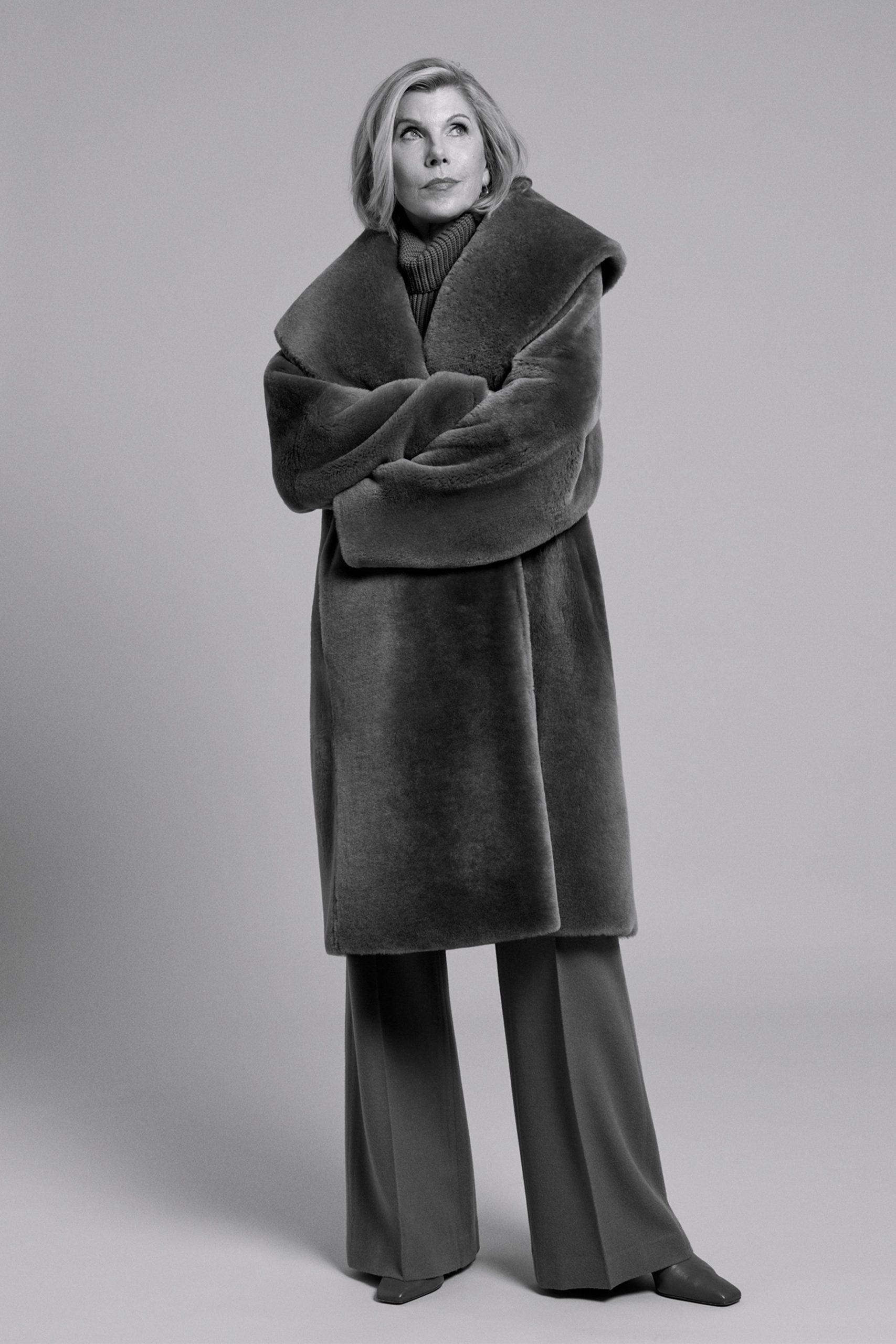
What’s Lafayette 148’s secret to longevity? After 30 years in business, the company has claimed a seat as one of New York’s newest heritage labels. Co-founder and CEO Deirdre Quinn attributes that status to a combination of consistency and evolution, the balance of knowing what needs to change over time and what absolutely cannot.
The brand’s biggest turning point was during the pandemic, when abrupt shifts in customer demand collided with supply chain challenges that threatened to put the company out of business. Quinn and Emily Smith, Lafayette 148’s creative director who joined the brand in 2002 as an intern, made the decision to move the label further upmarket, recommitting to its vertically integrated business model to protect margins and avoid the trappings of order minimums that most brands have to meet. They invested in better quality materials and shifted the majority of sales from wholesale retail to its direct-to-consumer network of stores and e-commerce, with more full-price sellthrough even as prices have increased in step with quality improvements.

Lafayette 148 creative director Emily Smith.
Photo: Brigitte Lacombe
Today, Quinn says she sees Lafayette 148’s competition being less fellow American brands and more as European luxury brands. The brand holds a two-hour slot for its presentations on the New York Fashion Week calendar (Quinn and Smith say they prefer the time to mingle with guests and clients that presentations allow), and this year, started hosting a showroom in Paris for the first time, and also started selling in Harrods last year. The brand projects sales for 2026 will be up 12% over 2025, to $150 million, growth that Quinn attributes to the luxury pivot.
Now, Lafayette 148 is eyeing a bigger US takeover. This fall, the brand opened its first store in Dallas, Texas — an investment more brands are making following the shuttering of the city’s Neiman Marcus — and has plans to open its first stores on the West Coast in 2027. Abroad, the Middle East and Japan are two regions the team is eyeing. That expansion is bolstered by the company’s first C-suite supporting Quinn, including a chief marketing officer, chief merchant and chief commercial officer.

Lafayette 148 CEO Deirdre Quinn.
Photo: Courtesy of Lafayette 148
In a joint interview, Quinn and Smith spoke about the recipe for succeeding as an independent label in New York through intentional reinvention.
Vogue: Lafayette 148 is celebrating 30 years in business this year. What are the steps you took to ensure you’re still standing today?
Deirdre Quinn: Luckily, as a privately owned company, we were able to evolve into what works for us. We want people who want our brand. I don’t need to force it. I’ve watched a lot of people come and go in my 30 years. Luxury has always been the goal for us. So we had to rebuild. Now, we live in the next six months because if that last several years have taught us anything, it’s that you can’t plan like you used to. It makes it exciting.
Emily Smith: For me, it comes down to the quality. We’ve always had really great quality, and I think that’s because we’re vertical. I’ve been working for Deirdre for many years. I grew up here and grew up within the factory, and so I just knew the potential and that we could push it even more. We’re more innovative today with our suppliers, with more of our point of view. That has been the defining difference between where we were and how we’ve evolved. And that part’s been really fun because each season you can stick to the DNA, but just move it a little bit further each season, and move our client along a little bit every season too, but not to a place where she doesn’t recognize it anymore. That’s really important.
Vogue: What advice would you give to a brand starting out today? What advice do you still find yourself seeking?
DQ: I deal with a lot of young brands that want advice and how to get into this industry and what do I think? I usually say to people, “You might not want to hear it from me because I’m a very straight shooter and I have to be honest. I’m not going to act like this is an easy industry. It’s a really tough industry and you should learn from others before you get too far down a road that you didn’t realize was so complicated.”
The advice that I would ask might be around the best way to finance a privately owned business. That’s quite interesting to me. Certainly the thoughts on being more of a global business and what experiences they’ve had in it, doing more non-sized business. We are such a sized business — we have 58 sizes — and it’s the hardest part because of the engineering that goes into making a garment look good.
Vogue: Have you ever considered raising outside investment?
DQ: I thought about it at the worst possible times — the times where you needed help with your cash flow — and that would be a horrible time to sell the company because you wouldn’t get what you put into it. Today, I’m not looking at all. I don’t need the distraction. I have learned to never say never, but for now, I think it’s too exciting for us. I have a plan through 2030, and I’m optimistic about that.
It’s such a power and privilege to not have to answer to someone else. I know that I am a very hands-on owner, and I would be so afraid of somebody coming in here and the first thing they want to do is buy less expensive fabrics or something that just starts a race to the bottom. And it doesn’t mean that there might not someday be some amazing person or company that says, “Wow, you’ve built an American luxury brand. That’s not normal around here. Together, we could take it to another level.” But again, for now, I’m just really focused on rebuilding and continuing to grow what we have and both top and bottom line.
Vogue: You’ve described Lafayette’s customers as successful career women. How do you evolve who your customer base is? Are you thinking about how to capture younger generations?
ES: I want to take a step back to take a step forward on that one. When we were working on the 30th collection, I came across some old sketches that were by the first designer here. And there was sort of this sense of responsibility that you always have in this position to maintain the brand and maintain the clients and never change it too much. And it was really fun to go back and look at where we had started and to see the progression of how it’s evolved. The biggest takeaway was that when Lafayette started, it was addressing career women who needed boardroom suits for the office every day. And look how much our lifestyles have completely changed.
Those are things you almost don’t think about. You just subconsciously are evolving them because we are the clients. We know what those changes are. We are in touch with them. I think it’s more of a sensibility than really thinking about a demographic. We never talk about an age range. We know our customer is an accomplished woman. She’s busy at any age, at any stage in her career or whatever she has going on, and that idea of versatility and wardrobing and the product that she has in her closet is always relevant. I think the one thing I’ve heard consistently from all of our clients is usually she wants to be taken seriously. She never wants to walk in a room and feel silly or fussy or like the clothes are wearing for her. I think that can cross any age range and just making sure that we stay true to our brand DNA and all of that just will kind of translate to any demographic.

Behind the scenes of Lafayette 148’s 30th anniversary campaign shoot with costume designer-turned-model Sophie de Rakoff.
Photos: Courtesy of Lafayette 148
Vogue: Do you think about trends at all?
ES: Not really. Proportion and relevance are two important things for me, and technology, because I do think it affects fabric constructions and things like that. But we’re not interested, and our client’s not interested, in what’s the new hot thing right now. To me, it’s more the hemlines are up or down, little things that are more subconscious than specifically this is the statement for the season. I love when people are like, “What’s the color of the season?” I’m like, “I don’t know.” That feels like such an old-fashioned thing to ask, right? It’s sort of what works for you. You should dress for what works for your shape, your style. For us, tailoring is always more important.
As far as building and growing our base, to me, it’s more about getting our brand in more conversations and having more people wearing it, I think is the biggest growth opportunity. I think we’ve been a hidden secret, and there’s sort of a nice nuance to that. But I think just slowly getting it to other people at a healthy pace that feels manageable that we don’t ever sacrifice the integrity of what we’re doing. And potentially we do collaborations with other categories, but we’re so focused on ready to wear and that’s our expertise.
DQ: We’re open to that. I think building the brand and investing in the marketing is really a focus for now because I think that’s what helps set us apart on top of the product. It has to feel right.
Vogue: How do you plan to maintain this growth from here, what comes next?
DQ: We’ve planned it into the future. Luckily as a privately owned company, we’ve able to evolve into what works for us. We want people that want our brand. I don’t need to force it. [As we continue to expand into Europe], I think the best part will be, we’re a 30-year-old company. We’re not this new brand. We’ve got the stability and the infrastructure to support everything it takes to build a proper long-term partnership.
I am lucky that my partners don’t push me. I don’t have a board. I don’t have a boss, so I don’t focus on a metric like having to hit double-digit growth. Single digit is fine. It’s an extremely open-book type of operation that we’re running, and my team has been with me through the bad times, and I want them to be with me through the good times. We’ve had some really tough times in the last five years, and now I see a really bright future, so I’m excited. I’m more excited for them than for anything else.
