


For many cinephiles, film historians, and critics, Italian cinema is modern cinema. As the Italian-American filmmaker and historian Martin Scorsese has said, mid-century Italian filmmakers like Roberto Rossellini “changed what the world thinks of cinema.” After the political, material, and cultural devastation of Italy during the Second World War, a disparate group of these critics, poets, and playwrights-turned-filmmakers from both the country’s north and south invented a new kind of cinematic language from the ashes. Older, experienced directors Rossellini, Vittorio De Sica, and Luchino Visconti, all of whom had worked under the previous fascist government, used the country’s devastated landscape and rampant poverty to produce a vivid, documentary-inspired neorealism focused on the paesano and the paese, the countryman and the country. But Rossellini and Visconti, the latter a scion of the country’s aristocratic theater and opera traditions, also mined melodrama, historical epics, and more expressionist genres of filmmaking.
Under their influences, other former neorealists including Michelangelo Antonioni and Federico Fellini expanded the lexicon of the European art film by embracing middle- and upper-class drama, dark comedy and satire, surrealism, architecture/psychogeography, baroque literature, and morality tales, all in an effort to illustrate Italy’s miraculous industrialization and culture industry by the early 1960s. Meanwhile, genre directors like Sergio Leone, Elio Petri, and Dario Argento developed uniquely Italian interpretations of the western, political thriller, police procedural, and suspense and horror films during the turbulent countercultural era from the later part of the decade through the next. For their efforts, this new Italian cinema would extend beyond national borders and find new generations of filmmakers and audiences around the world.
perrAhead of Vogue World: Milano’s celebration of Italian craft and innovation, we’ve put together a shortlist of Italy’s most classic movies and the filmmakers—some well-known, others more niche—who contributed to the country’s singular reimagining of its own landscape and people through cinema.
Bicycle Thieves (a.k.a. The Bicycle Thief)/Ladri di biciclette (1948)
Considered the exemplar of the Italian neorealist genre, Vittorio De Sica’s Bicycle Thieves reveals the bitter urban poverty of post-fascist Italy in the figure of Antonio (factory worker-turned-actor Lamberto Maggiorani), a bill-poster whose bicycle is stolen while he is at work. When the police offer little remedy, Antonio and his young son Bruno attempt to track the thief through the streets of Rome but are consistently obstructed in their efforts for justice.
Inspired, in part, by Chaplin’s tramp films, De Sica’s exclusive use of on-location shooting, mostly around the Trastevere neighborhood of Rome, as well as casting of non-professional actors, followed the neorealist aesthetic developed by Rossellini. The New York Times described it as “Vittorio De Sica’s rueful drama of modern city life…It is the isolation and loneliness of the little man in this complex social world that is ironically blessed with institutions to comfort and protect mankind.”
Also by De Sica:
Umberto D. (1952)
Two Women/La ciociara (1960)
Yesterday, Today and Tomorrow/Ieri, oggi, domani (1963)
Marriage Italian Style/Matrimonio all’italiana (1964)
Journey to Italy/Viaggio in Italia (1954)
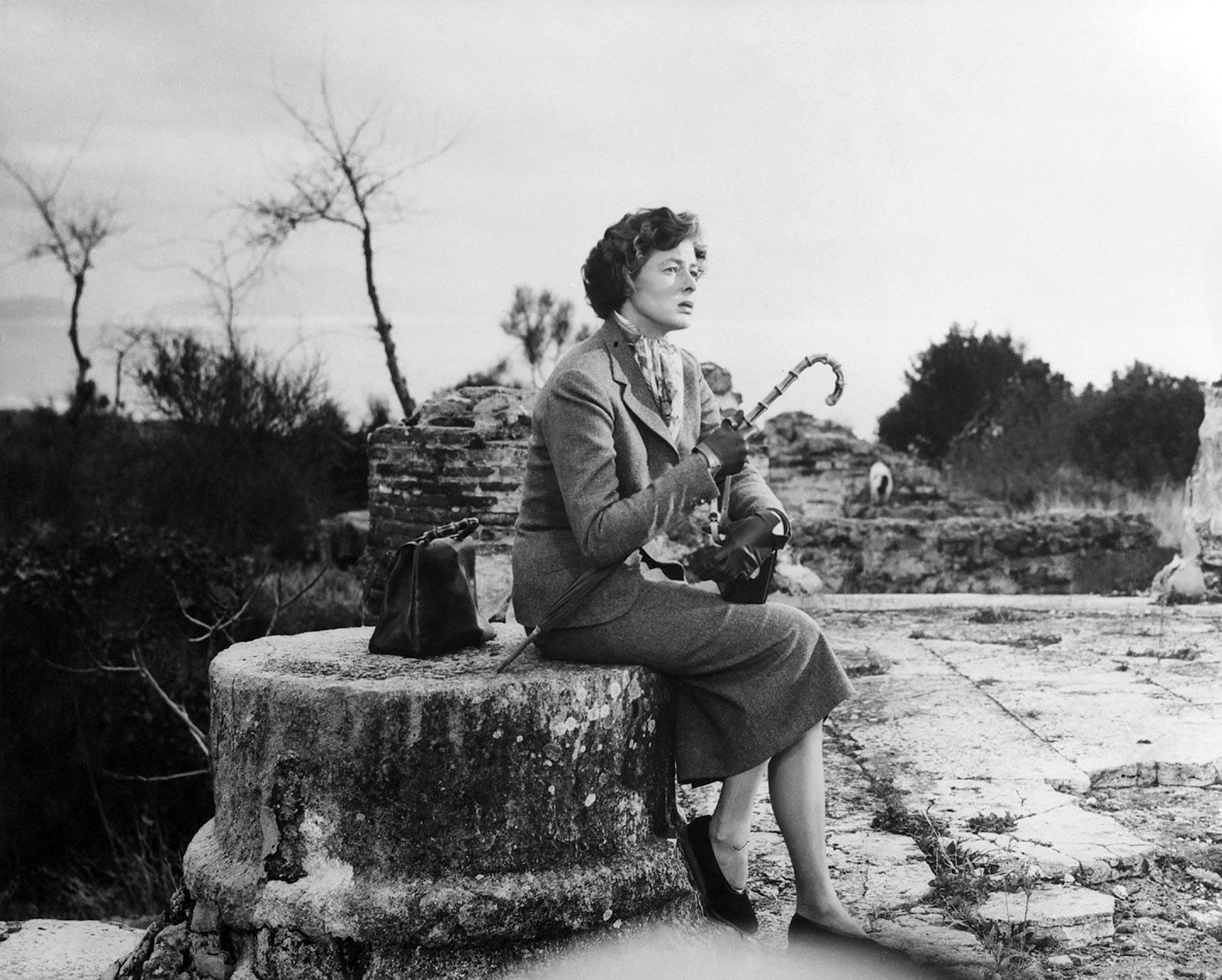
Roberto Rossellini’s classic vacation film found the neorealist innovator turning towards more melodramatic territory in the story of a husband and wife who travel from England to Italy while contemplating the end of their marriage. Alex (George Sanders) and Katherine (Rossellini’s wife Ingrid Bergman) arrive in Naples to take possession of an inherited villa but become further estranged during their tour. While Katherine visits the city’s cultural and geographic sites, Alex seeks out the company of other women. In the heat of an argument, they decide to divorce. But a final visit to Pompeii to view the ashen remains of dead lovers thrusts them back together.
Often cited as Rossellini’s masterpiece, Journey to Italy combined a panoramic landscape and intimate chamber drama to redefine not only the imaginative portrayal of Italy on film, but also the potentiality of a new kind of modern cinema.
Also by Rossellini:
Rome, Open City/Roma città aperta (1945)
Paisan/Paisà (1946)
Germany, Year Zero/Germania anno zero (1948)
Stromboli (1950)
Europe ’51/Europa ’51 (1952)
Divorce Italian Style/Divorzio all’italiana (1961)
Pietro Germi’s classic comedy centers on a poor Sicilian aristocrat, Fefè (Marcello Mastroianni), who conspires to arrange an honor killing of his wife in lieu of divorce (which was still illegal) so that he can marry his 16-year-old cousin. This kind of twisted premise forms the bedrock of what became the decade’s popular commedia all’italiana genre, a comedy of manners that regularly lampooned sex, marriage, the state, the middle class, and the Catholic Church. But, as Stuart Klawans writes, Germi’s film is really “a comedy about the horrors of inertia”—a decaying Italian aristocracy where everything is falling apart yet daily life remains painfully the same.
Such heaviness does not prevent Germi and Mastroianni’s abundant use of sight gags, physical comedy, and winking references, including a movie theater scene in which the entire Sicilian town congregates to watch the recently released La dolce vita, famously starring Mastroianni!
Also by Germi:
Seduced and Abandoned/Sedotta e abbandonata (1964)
L’Eclisse (1962)
The third installment in Michelangelo Antonioni’s informally dubbed Eros trilogy, all starring actress Monica Vitti, is perhaps the most sensual and strangest of the three, and arguably one of the most visually stunning films ever made. The recently single Vittoria (Vitti) meets rakish Piero (Alain Delon) at the Rome Stock Exchange. They begin a tentative love affair in the Roman neighborhood of EUR, a Mussolini-designed suburb of baroque monuments and modernist towers. Around them, the stock market crashes, a corpse is fished from a lake, new constructions rise—and despite Piero’s efforts to seduce her, Vittoria remains incapable of returning his affections. They make love and life plans, then seem to vanish into the Futurist surroundings.
L’eclisse ends in an unspoken mystery, as befits Antonioni’s preference for elliptical narratives. Vitti and Delon, who might be the most glamorous couple in movie history, do not even appear in the film’s seven-minute denouement, one of the most haunting in all of cinema.
Also by Antonioni:
L’avventura (1960)
La notte (1961)
Red Desert/Il deserto rosso (1964)
Blow-Up (1966)
Zabriskie Point (1970)
8 ½/Otto e mezzo (1963)
The follow-up to Federico Fellini’s gonzo exposé of the Via Veneto, La dolce vita, 8 ½ is the director’s surrealist-inspired movie-within-a-movie, and perhaps the most critically lauded and influential film in Italian cinema history. The film follows movie director Guido (Marcello Mastroianni), who suffers from a creative block during the production of his newest work, a science-fiction film. The on-screen auteur muses on the stresses of his daily life and past relationships with wives and mistresses, while his fantasies focus in part on an Ideal Woman, played by Claudia Cardinale, whom he thinks will solve his artistic dilemma. The mise-en-abyme of the film is reflected in Fellini’s own frustrations during the pre-production of 8 ½. He later described himself at the time as “a director who wanted to make a film he no longer remembers.” The final dance sequence is perhaps the director’s most fanciful set piece in a career of spectacular set pieces.
Also by Fellini:
Nights of Cabiria/Le notti di Cabiria (1957)
La dolce vita (1960)
Juliet of the Spirits/Giulietta degli spiriti (1965)
Fellini Satyricon (1969)
Fellini’s Casanova (1976)
The Leopard/Il gattopardo (1963)
The second in a series of historical melodramas about wealth, decadence, and corruption by Luchino Visconti, The Leopard tells the story of the Risorgimento-era collisions between the worlds of the aristocracy, the nationalists, and the middle class. Burt Lancaster is Don Fabrizio Corbera, an aging Sicilian prince of the old regime, whose cunning nephew Tancredi (Alain Delon) plays both sides of the kingdom’s emerging constitutional order. While Corbera shuns politics and business, Tancredi uses his skill and looks to inveigle himself into the nouveau riche, including a marriage proposal to the wealthy heiress Angela (Claudia Cardinale), who is then introduced into Sicilian high society. The film climaxes with Visconti’s elaborate, 45-minute ball scene in which Corbera’s aristocratic order is symbolically eclipsed by the bourgeois business class of a new world.
Also by Visconti:
Senso (1954)
Rocco and his Brothers/Rocco e i suoi fratelli (1960)
The Damned/Götterdämmerung (1969)
Death in Venice/Morte a Venezia (1971)
The Innocent/L’innocente (1976)
Before the Revolution/Prima della rivoluzione (1964)
Bernardo Bertolucci’s sophomore film is a romantic ode to Italy’s politically awakened youth at the beginning of the 1960s. Wealthy college student Fabrizio (Francesco Barilli), torn between adulthood and adolescence, has joined the Italian Communist Party and contemplates ending his engagement to Clelia, a local bourgeois debutante. After his close friend commits suicide, he begins an affair with his aunt Gina (Adriana Asti) from Milan, who is a part of the older generation but has the fragile anxieties and transgressive desires of youth. Gina confesses her love to him but then returns home. Now adrift between the failures of love and of idealism, the old bourgeois world and the emerging revolution, Fabrizio is riven by feelings of fecklessness. “My bourgeois future is in my bourgeois past,” he admits.
Bertolucci’s film is a formally beautiful and occasionally pedantic study of youth, with all of its ambitions, desires, and contradictions. With technical and formal nods to predecessors like Godard, Resnais, Antonioni, and Pasolini, the last of whom was Bertolucci’s mentor, the film perfectly portrays a young European generation teetering between innocence and experience. Bertolucci would revisit these themes 30 years later in his film The Dreamers.
Also by Bertolucci:
The Grim Reaper/La commare secca (1962)
The Conformist/Il conformista (1970)
Last Tango in Paris (1972)
Stealing Beauty (1996)
The Dreamers (2003)
The Good, the Bad and the Ugly/Il buono, il brutto, il cattivo (1966)
No Italian filmmaker did more for genre filmmaking than Sergio Leone, whose low-budget “spaghetti westerns” (most of which were actually filmed in Spain) helped to reinvent a staid Hollywood style during the 1960s and ’70s. Leone’s three-hour The Good, the Bad and the Ugly is an epic, if not operatic, story of a nameless gunslinger (Clint Eastwood) whom the director first popularized in 1964’s A Fistful of Dollars. Mixing sequences of choreographed violence with extreme closeups and panoramic wide shots (all set to Ennio Morricone’s seminal score), the film follows three ambiguous antiheroes who steal, double-cross, and murder their way across the Civil War-era American frontier in search of a cache of gold. The penultimate scene, culminating in a three-way Mexican standoff, is one of the most iconic in the genre.
The film’s impact resonated throughout revisionist westerns of the 1970s and ’80s and inspired a wave of American independent films throughout the 1990s. Ever a devotee of the genre, Quentin Tarantino famously called The Good, the Bad and the Ugly the greatest film ever made.
Also by Leone:
A Fistful of Dollars/Per un pugno di dollari (1964)
For a Few Dollars More/Per qualche dollaro in più (1965)
Once Upon a Time in the West/C’era una volta il West (1968)
Once Upon a Time in America/C’era una volta in America (1984)
Investigation of a Citizen Above Suspicion/Indagine su un cittadino al di sopra di ogni sospetto (1970)
Leftist filmmaker Elio Petri’s Poliziotteschi grotesque is set amid the increasing workers’ strikes and student protests in Italy at the end of the 1960s. In the film, an unnamed police inspector (Gian Maria Volonté) murders his masochistic mistress before being promoted to head of the government’s Political Section to root out left-wing subversives. Rather than hiding his crime, the inspector pads the investigation so that all clues lead back to him—but his bureaucratic underlings refuse to believe it and, instead, terrorize the innocent. Volonté’s performance draws a straight line from the fascist machismo of Mussolini to the sociopathic theatrics of Patrick Bateman and Donald Trump, and the results are a blood-curdling caricature of law without limits and the authoritarian addictions to absolute power. As a formative entry in the Poliziotteschi genre, the film anticipated a decade of similar police procedural, vigilante, and rogue-cop B-movies. It also perfectly portrays a paranoid postwar Italian state that would descend into countrywide violence and authoritarian repression during the so-called Years of Lead.
Also by Petri:
We Still Kill the Old Way/A ciascuno il suo (1967)
The Working Class Goes to Heaven/La classe operaia va in paradiso (1971)
Property Is No Longer a Theft/La proprietà non è più un furto (1973)
Todo modo (1976)
Suspiria (1977)
The characters in Dario Argento’s giallo/horror film Suspiria were originally envisioned to be played by eight-year-olds. For better or worse, that version never came to fruition—but Argento’s Technicolor vision bears the residues of a Gothic fairytale, from its naïve dialogue and childlike ballet recitals to its oversized, Lewis Carroll-inspired set design and ornate death scenes. Its thin plot, about a coven of witches living inside the prestigious Tanz Akademie and possessing its dance students, is merely a pretext for Argento’s psychotropic mise en scène, which intensifies as the viewer plunges deeper into the secret interiors of the dance academy.
Suspiria imparted a Baroque palette to the horror genre that made every frame into a painterly tableau resembling the works of Ernst Kirchner or Disney’s Snow White. It is a sui generis achievement in Italian horror.
Also by Argento:
The Bird with the Crystal Plumage/L’uccello dalle piume di cristallo (1970)
Four Flies on Grey Velvet/4 mosche di velluto grigio (1971)
Deep Red/Il Profondo Rosso (1975)
Inferno (1980)
Tenebrae (1982)
