



Eric Gales: Using position shifts to shape melodic ideas – YouTube
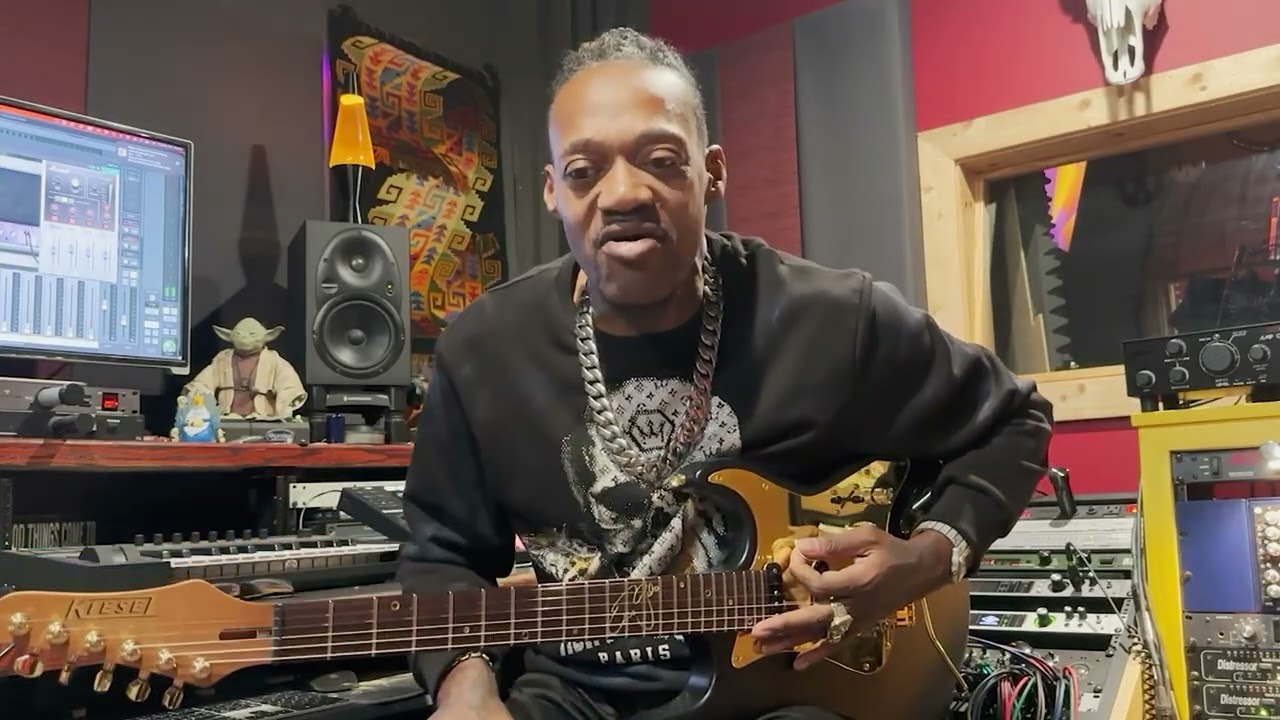
An important element in my improvisational style and approach is the use of position shifts, which serve to spark the development of new and spontaneous melodic ideas. As the saying goes, “there are a million ways to skin a cat,” and I am always searching for new ways to get from one area of the fretboard to another.
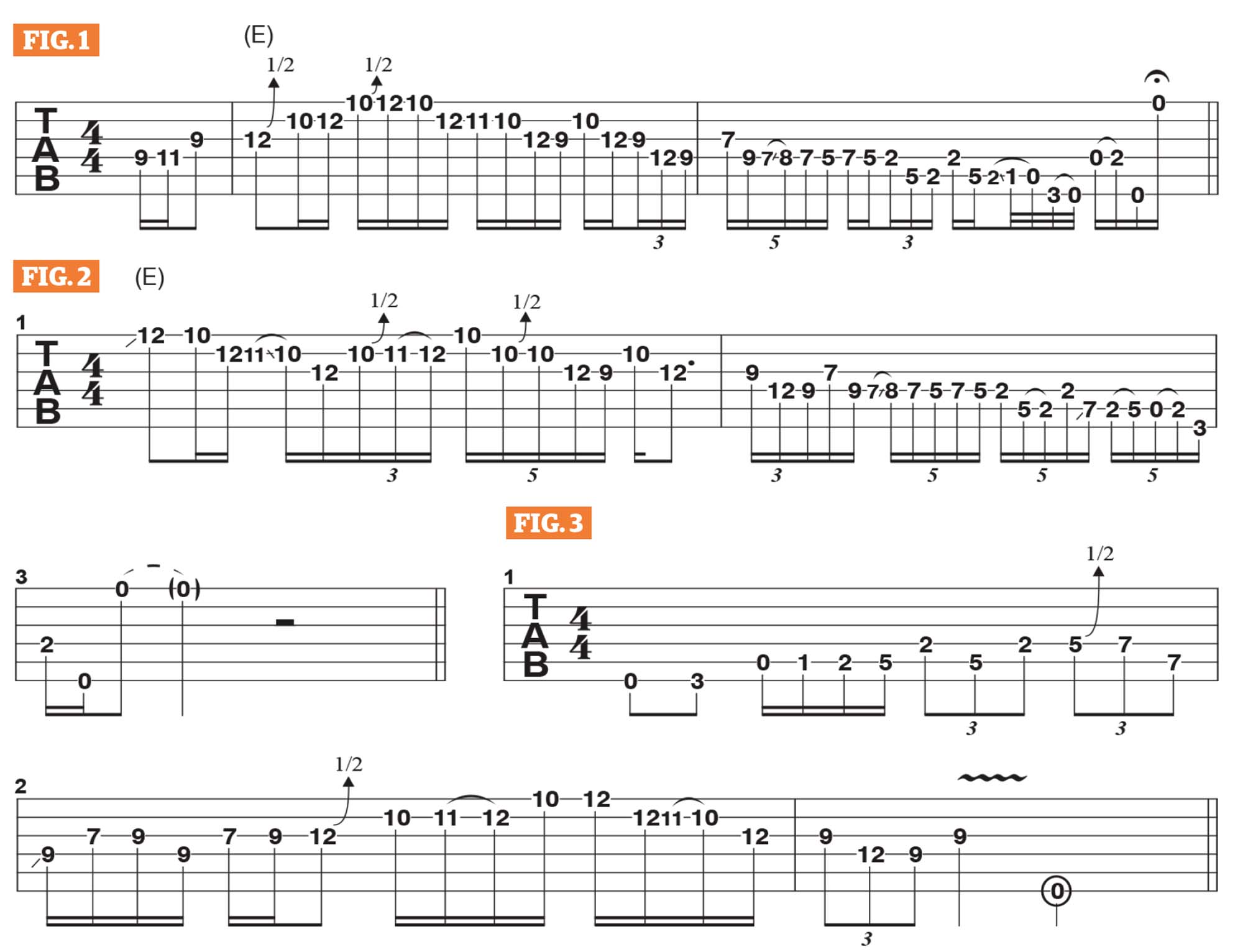
Figure 1 offers an example of some free improvisation in the key of E: though the majority of the lines are based on the E blues scale (E, G, A, Bb, B, D), I begin with the notes B, C# and E, referencing E major pentatonic (E, F#, G#, B, C#), switching immediately to the E blues scale, in 9th/10th position, in bar 1.
On beat 1 of bar 2 I shift down to 7th position then immediately shift down to 5th position. From there I shift down to 2nd position on the upbeat of beat 2. These shifts set up the final move to open position, where I perform some quick finger slides and pull-offs to the open strings and wrap up the phrase.
Also based on the E blues scale, Figure 2 offers another example of how I might move from the treble strings and higher region of the fretboard down to the low strings and 1st position.
Bar 1 sits squarely in 10th position, with slides, bends and hammer-ons used to evoke a vocal-like legato quality. In bar 2, I gradually work my way down to 9th, 7th, 5th and 2nd positions, utilizing quintuplet note groupings to give the lines an unusual and fluid rhythmic feel.
The opposite approach would be to move up the fretboard. In Figure 3, I begin on the bottom three strings in 1st/2nd position, ending bar 1 in 5th position and then shifting up to 7th, 9th and 10th positions in bar 2. Once I reach the high E note, I descend back to the G and D strings in 9th position.
I should point out that none of these position shifts are predetermined; I’m improvising spontaneously here and following where the melodic shapes and ideas will take me in an instinctive, natural way.
The way I developed the ability to move up and down the fretboard like this was to initially practice and memorize all the minor pentatonic and blues scale “box” patterns and positions, moving across all six strings, ascending and descending. Once I’d learned every pattern, I could easily envision each one as I jump from one area of the fretboard to another.

Figure 4 shows the E blues scale played in a descending manner, traversing the neck from 10th to 2nd position.
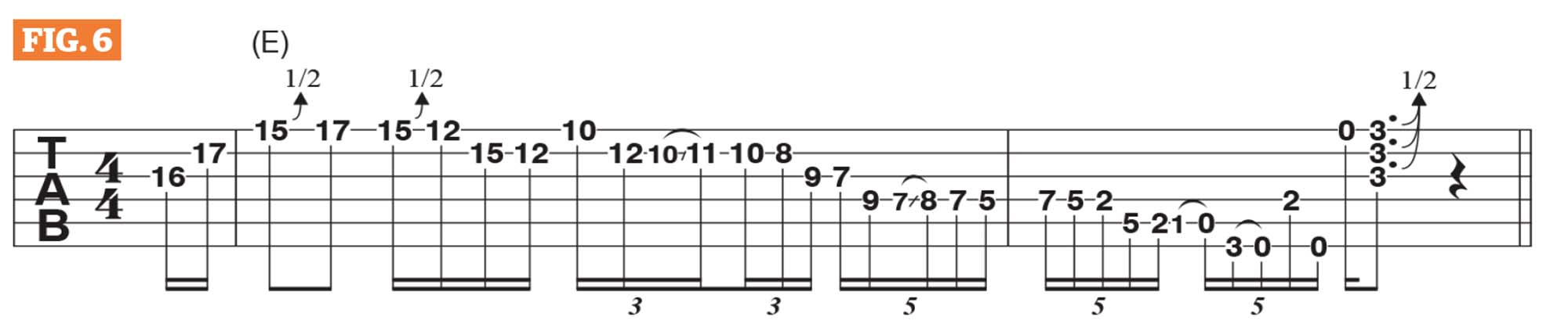
For any key you’re playing in, it’s very beneficial to visualize all of your root notes on each string as you move up the board. For example, Figure 5 shows the E root note on five different strings. That awareness will facilitate the phrase shown in Figure 6.
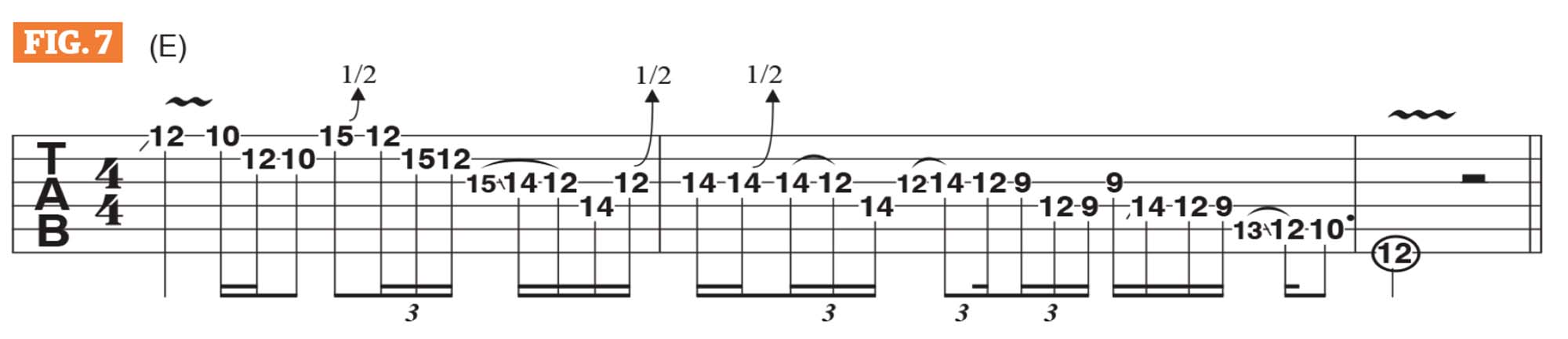
It feels very natural for me to start high and end low. Figure 7 is played in this manner, sticking mostly with the higher portions of the fretboard.
Try the “step ladder” approach, move up two positions, then back one, then up two more, then back down, etc. The possibilities for new melodic discoveries are endless.
- This article first appeared in Guitar World. Subscribe and save.
