


By
Roxana Hadadi,
a Vulture TV critic who also covers film and pop culture.
She is a juror for the Peabody Awards.
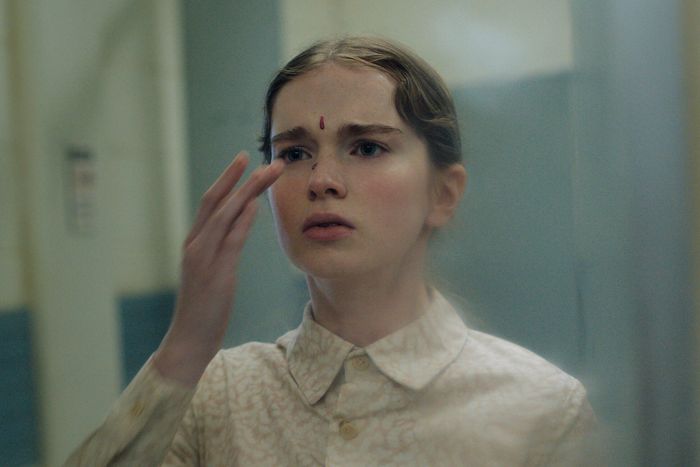
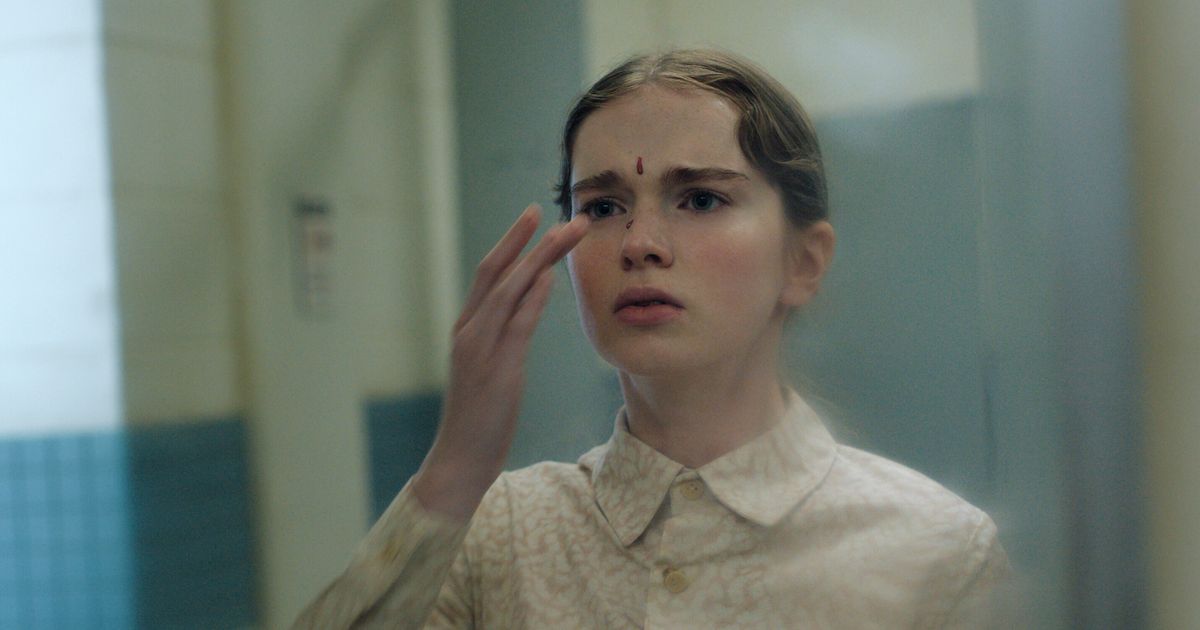
Mike Flanagan’s latest adaptation deepens every character in Stephen King’s debut novel, except for the one who matters most.
Photo: Prime Video
As Carrie’s creator, showrunner, and writer, Mike Flanagan expands his role as the Stephen King whisperer. In the past decade, he adapted many of the Maine writer’s novels into movies while simultaneously building a tidy Netflix empire of “actually it was trauma” horror miniseries based on non-King works, like The Haunting of Hill House and The Fall of the House of Usher. But Carrie is Flanagan’s first stab at turning a King work into a TV series (as well as his first TV work under a new deal with Prime Video), and the result is cause for concern. As jam-packed with girl-power needle drops and shallow women’s-history lessons as it is light on an internal world for its main character, Flanagan’s Carrie refashions King’s debut novel into eight episodes of commentary on bullying, parenting, social media, class, and the many ways women have been demonized by men. What Carrie is rarely about, though, is Carrie herself.
Introduced in King’s debut, immortalized in Brian De Palma’s adaptation starring a blood-drenched Sissy Spacek, and given the reboot treatment once before, Carrie White is one of horror’s most recognizable protagonists, a teen girl whose telekinetic powers explode out of control as she fights her overbearing, abusive mother and the ruthless bullies who have picked on Carrie her entire life. King’s book starts with the character getting her period while showering after gym class and screaming in horror as she’s pelted with tampons and pads by her classmates, then one-ups itself with the introduction of Margaret White, an ultrareligious banshee who uses all her oxygen to shriek at her daughter about the evils of sex. In the decades since the book’s publication, Carrie’s powers have trickled down into everything from The Craft to Stranger Things’s Eleven, putting the onus on Flanagan’s adaptation to make her newly distinct. But instead of leaning into all the details in King’s book that are provocative and discomfiting, Flanagan’s Carrie goes for the path of least resistance. Margaret’s belief that Carrie is inherently evil because her conception wasn’t too far from rape is gone, along with Carrie’s awkwardness and chubbiness (and King’s suggestion that even fat girls can be desirable). In this series, Carrie is pretty, thin, nice, friendly, supportive of everyone, and a frictionless version of good; she has no internal world past placidity.
Those qualities replace the naïveté, ignorance, and eventual rage that define Carrie and her telekinesis in the book, and they also make this version of the character a bland, smooth surface with no messiness to compel us — and, frankly, not much to discover. The experience of watching Carrie is akin to standing in a really long line for a roller coaster with your friend who keeps saying they’re excited to get on the ride with you and then the train pulls up and your friend bails on you instead. Carrie simply backs away from the parts of the novel that it doesn’t want to engage with and overloads what’s left with invented characters positioned for a possible season two. The eight episodes dropping on Prime Video October 7 comprise an unwieldy story that sprawls widely around Carrie but also seems afraid of her — and not in the way King’s novel intended. In the text, Carrie may eventually do awful things (seen in the series via flash-forwards to that infamous prom), but she’s proactive about them and makes intentional, deliberate choices that challenge our sympathy for her. In Flanagan’s version, she’s a victim that the show so badly wants to protect that it infantilizes her instead. (Maybe she’ll finally grow up in the other two seasons Flanagan has planned, but I’m not holding my breath.)
In Flanagan’s reimagining, Carrie (Summer H. Howell, open-faced enough to play 15) and her mother, Margaret (Samantha Sloyan), are not enemies but friends, two parts of a cozy trio made with father and husband Ralph (Tahmoh Penikett), a military veteran turned conspiracy theorist. Were Ralph’s combat tours so awful that he turned his back on the U.S. government? Why did Margaret agree to be confined to their house with a daughter who would never be allowed to leave? Carrie skips over the specifics of this updated White-family dynamic, which breaks when Ralph dies on a construction site and social services learn that Carrie exists. Margaret gets a cleaning job at a big-box store to support them (something Carrie presents with an odd condescension), and Carrie gets sent to school, where she falls in with a group of popular kids. Sue Snell (Siena Agudong) and Chris Hargensen (Alison Thornton) are longtime best friends whose plans to attend Duke together are threatened by Chris’s father’s newfound financial problems caused by Ralph’s accident; Tina Blake (Josie Totah) is a Chris admirer trying to get one over on Sue; and Tommy Ross (a Keanu Reeves-evoking Joel Oulette) is Sue’s sports-star boyfriend who doesn’t understand why Sue, after Carrie’s locker-room accident, jokes about calling her “Carrie Red.”
Does every teenager have a glimmer of meanness within them that they’re just waiting to unleash? When Carrie flashes among the teens’ faces as they track each other at a party or scroll through social-media accounts, it underscores how much of adolescence, in any era, is about watching and being watched and how strange it is for Carrie — whose only friends were her parents — to enter that thunderdome. But the series’ greatest failure is that it doesn’t show us the pressure Carrie might feel to fit into the mold, nor does it go much deeper into Carrie’s psyche. Without all that, the series misses out on the ugly, earthy, sensual details that could have complicated her past blank innocence. Howell dutifully offers the appropriate emotions needed for the series’s expected plot points — friendship with Sue, feud with Chris — and she incrementally hardens Carrie into a girl who stammers over saying fuck for the first time, then smiles afterward. But the series skimps on exploring how Carrie reacts, outside her powers, to anything on a human level: to her unexpected menstruation, to a cute boy flirting with her, to the realization that she’s being catfished, to fear of her mother’s punishments in the Prayer Closet, in which Carrie is told she must kneel in darkness for hours on end. The visceral details that define adolescence broadly, and Carrie’s experience specifically, are all missing.
Perhaps this is because Carrie’s attention is divided with Margaret and Chris getting a shocking amount of screentime as they each pursue different means of social-media stardom — and as Carrie suggests, in Flanagan’s typical way, that neither is an irredeemable villain. The series tries to link all these women together into a tapestry of feminist frustration by devoting a few minutes at the beginning of each episode to an unnamed narrator telling different tales of misunderstood women throughout history. Push on that flimsy framing, though, and Carrie’s thematic coherence crumbles. There’s a nature-vs.-nurture message here that Flanagan has increasingly been drawn to in his work, a belief that people are inherently good and it’s only our fears of rejection, loneliness, and displacement that turn us against each other. It’s a fine worldview, but that’s what Midnight Mass was for; here, too much sympathy with the series’s baddies makes Carrie into a blurrier subject.
More than anything, this adaptation feels scared of being too unlikable or scaring anyone too much. Flanagan’s customary whip pans are here to surprise us with characters lurking outside the frame, but this isn’t a story with many external supernatural threats, and tension doesn’t build. Margaret’s religious fundamentalism is blunted into a vague mistrust of the government, and as a parenting advocate, she’s a reasonable, levelheaded critic of how America has accepted gun violence in schools. (Maybe Sloyan didn’t want to go as all-out evil as she did in Midnight Mass, but she feels constrained by Margaret’s one-note acidity.) Ewen High School’s teachers and administrators are underfunded and disrespected, but they’re trying their best. Even the characters involved in the season’s intriguing, yet infuriating, cliffhanger ending have justifications for their schemes. All of this is part of Flanagan’s general preference for giving characters the benefit of the doubt and for grounding the eerie and the uncanny in our lived experiences. But that approach needs a strong foundation of character on which to build terror, and Carrie has neither.
-
The Gilded Age Has Perfected the Art of Trivial Drama
-
Everyone on The Mob Is Having Fun, and So Am I
-
Reality TV Broke the Stanford Prison Experiment
Carrie Is Afraid of Carrie
Your product is saved! You’ll receive emails when your saved products go on sale. Manage preferences.
Things you buy through our links may earn Vox Media a commission.
