


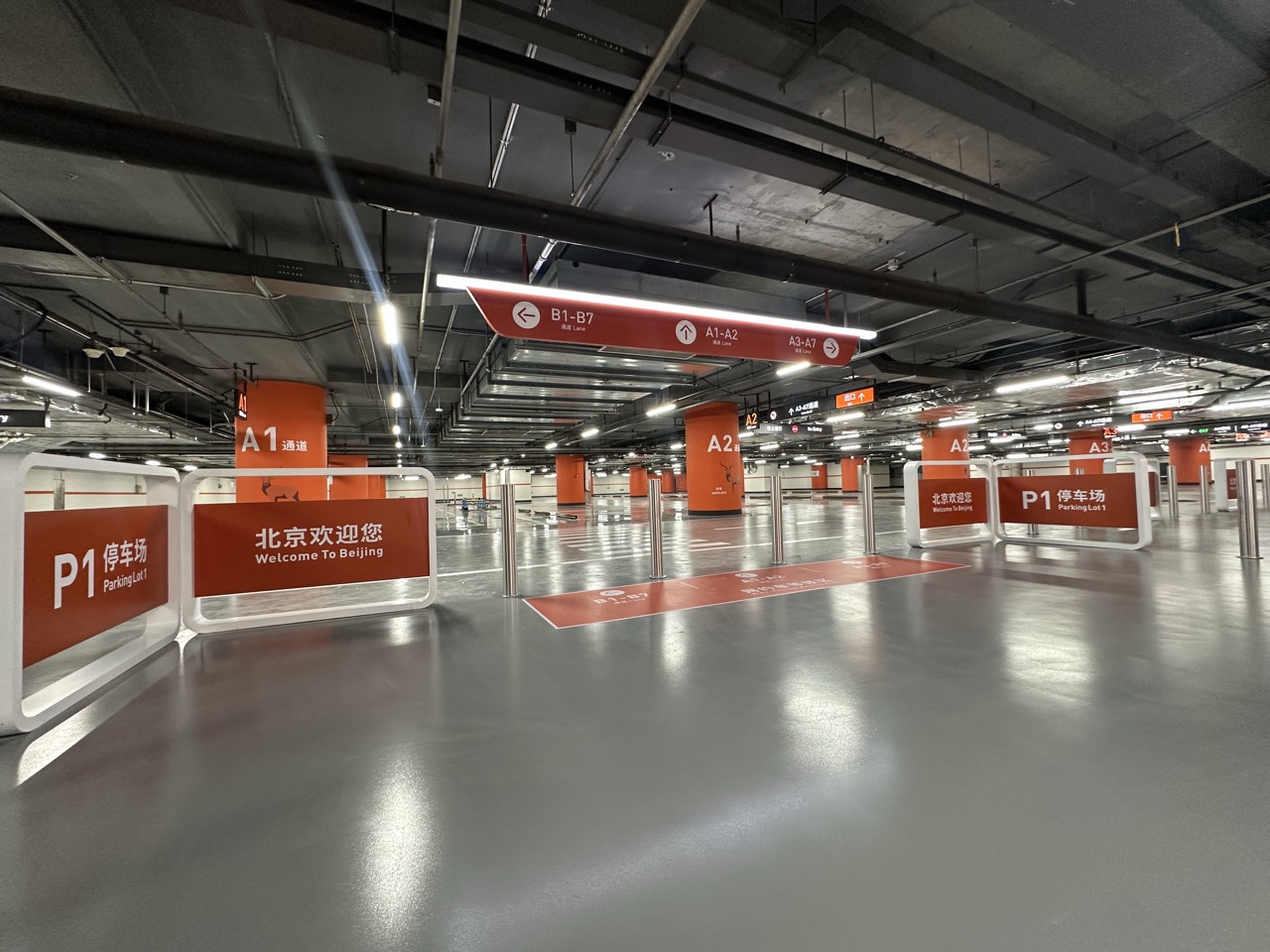
You’ve made it off the train and down to the car park, suitcase in tow.
Your driver says he’s in E2.
So are you.
Yet with cars edging along the lane and passengers scanning every plate, neither of you can see the other.
Another phone call follows: “I’m here. Where are you?”
At Beijing South Railway Station, that familiar post-train ritual may finally be on its way out.
Ten new screens across the P1–P4 underground car parks now track ride-hailing vehicles as they arrive.
Once a driver pulls in, the car’s license plate, lane and parking bay appear on screen.
That means passengers can wait in the air-conditioned seating area until their car arrives, then head straight to it.

Image via Beijing Major Railway Station Areas Administration Website
For one recent passenger, the magic words were “E2, Bay 15.”
An announcement confirmed that her car had arrived and, within 10 minutes of booking her ride, she was in the car and on her way.
The screens give a bird’s-eye view of the car park, with lanes and parking bays clearly marked.
Petrol and new-energy vehicles are shown in different colors, adding another visual clue when looking for your car.
Didi users receive the parking location and walking directions automatically through the app.
Using another ride-hailing platform?
Scan the QR code beside the screen, enter the license plate, and it will show you where the car is waiting.
There’s a useful bonus for anyone leaving a private car at the station: the same search function can help you find it when you return.
Pink Cat or Blue Dolphin?
Finding the right part of the car park has also become easier.
P1 and P2 use colorful animal illustrations, e.g., a cat and a dolphin, to distinguish different zones.

Image via Beijing Major Railway Station Areas Administration Website
P3 and P4 take their cues from the traditional plum blossom, orchid, bamboo and chrysanthemum.
For families, ‘wait by the dolphin’ is certainly easier to remember than a trail of letters and numbers.
It also gives passengers and drivers a shared visual landmark if that phone call is still necessary.
The waiting areas have been designed around the pickup experience too, with seating, air conditioning and vending machines.
Instead of heading straight to the lane and waiting beside passing traffic, passengers can stay inside until their car is ready.

Image via Beijing Major Railway Station Areas Administration Website
Drivers, meanwhile, have a numbered bay to aim for rather than crawling along a pickup lane looking for the right face in the crowd.
And at Beijing South, that adds up.
During the summer travel rush, P3 alone can handle around 12,000 vehicles a day.
Across all four underground car parks, the figure approaches 40,000.
Pickup traffic has also been separated.
Taxis collect passengers from dedicated areas at the north and south exits, while the underground car parks serve ride-hailing vehicles and private cars.
According to station figures, the average time vehicles spend entering and leaving the car parks has fallen from around 15–16 minutes to 7-8 minutes following the changes.
For passengers, the improvement is simpler: wait somewhere comfortable, see when your car arrives and know exactly where to find it.
And hopefully, fewer train journeys in Beijing will end with another journey around the car park asking: “I’m in E2—but where in E2?”
Driving Yourself?
Beijing South has 862 parking spaces across P1–P4.
Parking costs RMB4.50 per 15 minutes, with stays of less than 15 minutes free and a daily maximum of RMB240.
