


Frequently asked questions
What should you look for in a sunscreen for acne-prone skin?
Choose noncomedogenic, oil-free, fragrance-free, and lightweight sunscreens that also contain acne-fighting and anti-inflammatory ingredients, such as lactic acid and niacinamide, says Blair Murphy-Rose, MD, FAAD, a board-certified cosmetic and medical dermatologist at California Skin Institut. And while you’re peeping those ingredient labels, skip anything with thick emollients such as coconut oil, mineral oil, beeswax, and silicones. “These ingredients are more likely to clog pores and flare up acne breakouts, particularly in warmer months,” says Azadeh Shirazi, MD, FAAD, a board-certified dermatologist and founder of La Jolla Dermatology in California. “Instead, look for hydrating ingredients like glycerin or hyaluronic acid.”
Look for a mineral sunscreen as well. “Chemical sunscreens that have ingredients like avobenzones can cause pimples in sensitive, acne-prone skin,” says Hadley King, MD, a board-certified dermatologist in New York City. It’s also important to avoid ingredients such as cocoa butters, oils, and isopropyl palmitates, as these can also be irritants.
Does SPF level matter when shopping for a sunscreen for acne-prone skin?
Look for a sunscreen with at least SPF 30, as studies have found that it will block 97% of the sun’s UVB rays, says Dr. King. “I therefore generally recommend using a sunblock that has SPF 30 or higher. But it is important to keep in mind that you will need to reapply every two hours or after swimming or sweating to maintain the SPF,” she says.
Pooja Rambhia, MD, a board-certified dermatologist based in New Jersey, says SPF is especially important for people with acne-prone skin. “Patients with acne often develop post-inflammatory hyperpigmentation, and adequate sun protection is essential to prevent darkening of these spots,” she says. She also recommends opting for tinted sunscreens if you have acne, as they help mask post-inflammatory discoloration: “This gives patients immediate cosmetic benefits all while protecting their skin.”
Can sunscreen make your face oily?
Yes. Particularly formulations with heavy emollients.“This occurs when the sunscreen interferes with the skin’s natural oil balance or adds too much product to already oily skin,” says Dr. Rambhia. She recommends choosing oil-free, gel-based, or mineral formulations to help prevent this issue while still providing adequate protection.
Does sunscreen make acne worse?
No, according to Hope Mitchell, MD, a board-certified dermatologist and founder of Mitchell Dermatology in Ohio. “It’s a myth that sunscreen will make acne worse. In fact, not using sunscreen can delay healing, worsen breakouts, and lead to more dark spots,” she says. The key is finding the right formula that provides protection with a lightweight, noncomedogenic finish. “If you’re using acne treatments like retinoids or exfoliants, sunscreen is nonnegotiable,” she says. “It protects your progress and helps you maintain healthy, glowing skin.”
Can you use sunscreen on fungal acne?
Yes, but check the ingredient list. “People with fungal acne should look for lightweight sunscreens that avoid certain oils, fatty acids, and esters that may feed Malassezia yeast,” says Jenna Queller, MD, a board-certified dermatologist and founder of Derm Works. She notes that mineral sunscreens with zinc oxide are better tolerated because they tend to have simpler formulations.
What ingredients should you avoid in a sunscreen for acne-prone skin?
While it’s important to know what ingredients you should look out for in the best sunscreens for acne-prone skin, it’s just as important to know what to avoid. “Chemical sunscreens that have ingredients like avobenzones can cause pimples in sensitive, acne-prone skin,” says Dr. King. It’s also important to avoid ingredients such as cocoa butters, oils, and isopropyl palmitates, as these can also be irritants.
What sunscreens are best for acne scars on the skin?
All sunscreens and sun care products are extremely important for acne scars, particularly post-inflammatory hyperpigmentation, because UVA/UVB exposure can deepen discoloration and prolong scar appearance, says Dr. Queller. “I often recommend mineral sunscreens that contain zinc oxide and tinted formulas with iron oxides, which can also help protect against visible light that contributes to pigmentation.” You can also look for formulas that contain antioxidants, such as vitamin C, to help correct discoloration and brighten skin. Most importantly, you should be using a broad-spectrum SPF every day to combat all signs of aging and scarring.
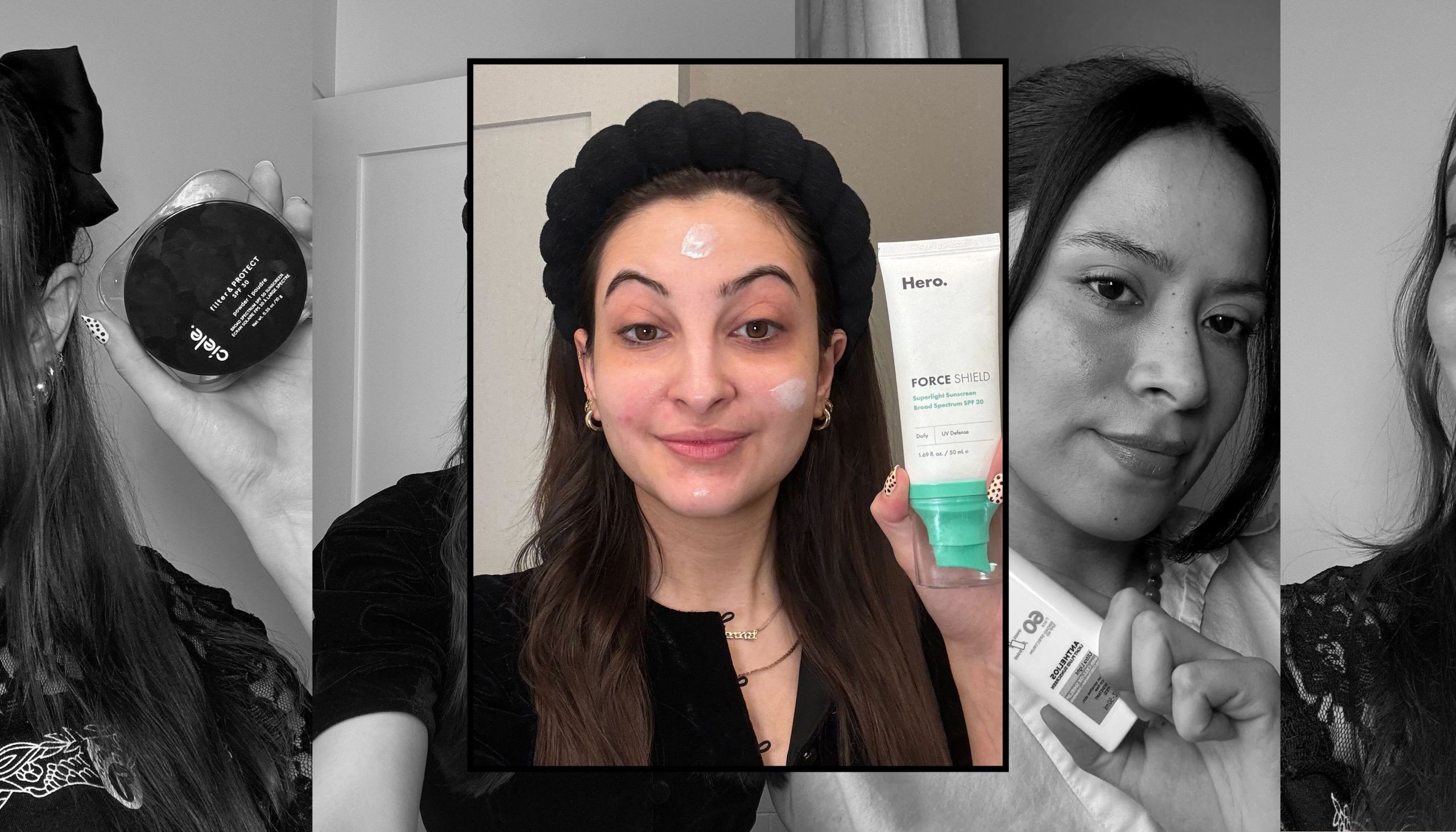
During evaluations, we assessed all of the most important attributes of a great sunscreen: ingredients, consistency, finish, scent, and—of course—how well the product actually prevents sunburn by blocking UV rays. We looked for noncomedogenic ingredients, meaning they won’t cause breakouts or clogged pores. We opted for sunscreens that were ultralight and oil-free, had little to no fragrance, and dried down quickly without leaving a film or white cast behind. We also looked for options that were easy to reapply (like powders) and could be smoothly layered with makeup. The best sunscreens for acne-prone skin didn’t irritate our existing pimples or create new ones—instead, they made our complexions look clarified, even-toned, and bump-free.
- Deborah Longwill, DO, FAOCD, founder of the Miami Center for Dermatology
- Hadley King, MD, board-certified dermatologist in NYC
- Blair Murphy-Rose, MD, FAAD, board-certified cosmetic and medical dermatologist at California Skin Institute
- Jenna Queller, MD, board-certified dermatologist and founder of Derm Works
- Gretchen Frieling, MD, triple board-certified dermatopathologist in Boston
- Marisa Garshick, MD, board-certified dermatologist at MDCS Dermatology in New York City
- Azadeh Shirazi, MD, FAAD, board-certified dermatologist and founder of La Jolla Dermatology in California
- Pooja Rambhia, MD, board-certified dermatologist in New Jersey
- Hope Mitchell, MD, board-certified dermatologist and founder of Mitchell Dermatology in Ohio