


- The NFL is under scrutiny after the DoJ started investigating its antitrust exemption.
- Roger Goodell is shifting towards streaming services over TV broadcasts.
- Amid fan and political pressure, the NFL losing its antitrust exemption would not be the best move.
In a culture that splinters a little more every day, the NFL remains one of the few things pulling Americans onto the same couch each Sunday. Just look at this year’s Super Bowl. During the second quarter of the game, around 137.8 million viewers tuned in – the biggest peak audience in U.S. television history. I plan my Sundays around football during the regular season; I’m sure millions do! The NFL, knowing this attention does not last forever, wants to capitalize on it. But it will first have to weather the blitz coming its way.
Watch What’s Trending Now!
More than six decades ago, a court ruled that NFL teams could not collectively negotiate television rights because doing so violated antitrust law against monopolization. Congress then introduced the Sports Broadcasting Act of 1961, giving major American leagues a limited exemption that allowed teams to pool media rights and negotiate together. This antitrust immunity applied specifically to over-the-air broadcast and helped the NFL establish itself as a financially stable product.
But the media landscape no longer resembles that of the 1960s. Now, the league quietly keeps sliding more games behind paywalls with platforms like Netflix, Peacock, and Amazon Prime, pushing the limits of what Congress originally envisioned with the exemption. It has angered NFL fans and lawmakers to the point of calling for the legislation to be removed altogether.
Last month, The Wall Street Journal reported that the U.S. Department of Justice initiated an antitrust probe into the league. The DoJ reportedly wants to know whether the NFL’s media-rights strategy is forcing an average fan like you and me to juggle an ever-growing list of subscriptions. NFL commissioner Roger Goodell, though, continues to repeat the league’s only argument:
“87% of our games are on free television,” he said.
The Justice Department launches an investigation into the NFL’s media universe. It’s a bigger riddle than football. https://t.co/aZkPAkkmZm
— The Wall Street Journal (@WSJ) April 10, 2026
But I would argue that all the NFL games should be free. When you look at the NFL’s five primary weekly windows, only three consistently air on TV. There are also 23 exclusive streaming matchups for the 2026 season, including a Week 1 international, Black Friday, Thanksgiving Eve, Christmas, and all the Thursday Night Football games. That percentage of free NFL games clearly dips well below 87 percent (with 272 regular-season games, it is 84 percent only). This discussion is even bringing the left and right wings of the US politics together.
“I don’t like it,” President Donald Trump said this month while discussing the league’s media-rights strategy. “They’re making a lot of money. They could make a little bit less.
“They could let the people see. You have people who live for Sunday. They can’t think about anything else, and then all of a sudden, they’re gonna have to pay $1,000 a game? It’s crazy, so I’m not happy about it.”
Meanwhile, U.S. Senator Tammy Baldwin, from Wisconsin, is launching The For the Fans Act. It requires the league to broadcast every home team’s game across the state to be broadcast for free and avoid blackouts if a service is used.
For once, plenty of frustrated NFL fans probably nodded along with Trump. Lawmakers further argue that the exemption gives the NFL too much market power and lets the league dictate prices without meaningful competition. Fair point. But the DoJ tearing down this privilege system sounds satisfying until you realize the NFL would be far worse without it. Let me walk you through the problems in such a situation.
Broadcasting chaos would confuse NFL fans
After World War II, Americans bought televisions in droves, and the NFL rode that wave straight to their living rooms on Sundays. Soon, landmark moments in the NFL followed one after another, from the first nationally televised game to the birth of the Super Bowl and beyond. But it was actually the antitrust exemption that helped create the league’s juggernauts, such as “Monday Night Football,” which strengthened football’s relationship with television – and us.
TV broadcasts turned football into a weekly ritual as NFL Fans built their schedules around Sunday kickoffs. Prime-time and holiday games followed. The Super Bowl evolved into an unofficial national holiday complete with military flyovers, halftime shows, and commercials that fans actually watch. Television is what made it America’s favorite pastime!
But the NFL now believes working with streaming giants will give more returns than the three-lettered networks.
Roger Goodell wants to reopen the NFL’s current TV deals years before they expire. Back in 2021, the NFL struck a $110 billion agreement starting 2023 with Amazon, CBS, NBC, FOX, and ESPN that runs through 2033. Those deals already doubled the rights fees, but Goodell wants more and may use early opt-out clauses as leverage. That would be a big blow to local stations that depend on the NFL for advertising revenue.

Imago
Live NFL games remain one of the few reliable audience magnets left on TV, and the ad revenue from them helps fund local newsrooms, sports bars, and more. Fans would suffer, too. More exclusive streaming means higher costs and more confusion. But consumer benefit actually sits at the heart of the NFL’s antitrust exemption.
Without the exemption, the situation will only spiral further. In place of one centralized media strategy, all 32 NFL teams could negotiate separate TV deals with dozens of networks and streaming platforms. Can you imagine trying to keep track of that circus?
The Dallas Cowboys games might stay on FOX, but the Jacksonville Jaguars games could land on Apple TV. The Indianapolis Colts matchups will be on Peacock, but the Detroit Lions matchups could be on Prime Video. This fragmentation would make the viewing experience for NFL fans miserable almost overnight. But what’s worse than that is the existential threat to the NFL itself.
The NFL would lose its value as a product
In the early television era, the NFL introduced blackout rules to stop televised games from hurting ticket sales. When the federal government challenged the policy under antitrust law, Judge Allan K. Grim delivered a ruling in 1953 that sounds quaint today. But it is something that modern critics of the NFL’s exemption often forget.
“There are always teams in the League which are close to financial failure,” Grim said. “It is both wise and essential that rules be passed to help the weaker clubs in their competition with the stronger ones.”
Before 1961, popular franchises like the New York Giants earned far more TV revenue than small-market teams like the Green Bay Packers — creating a competitive imbalance.
But now, the NFL consists of 32 independent businesses or teams working as one front. They compete for coaches, players, fans, branding, and championships on the field, but cooperate financially through the NFL’s shared media rights and salary-cap structures. Without the exemption, teams would negotiate media deals individually, and the NFL could crumble financially. College football already offers a cautionary tale.
In recent years, a wave of successful antitrust lawsuits against the NCAA has unleashed chaos across the sport. The NCAA can still solve this chaos through the collective bargaining agreement. But if the NFL faces a similar mess, there will be no easy fix.
As of now, Forbes values a highly popular team like the Cowboys at around $13 billion, with revenue topping $1.2 billion. Meanwhile, a small-market team like the Cincinnati Bengals is valued at around $5.25 billion, with $573 million in revenue. Now, imagine this financial gap widening overnight. Because it will!
Imago
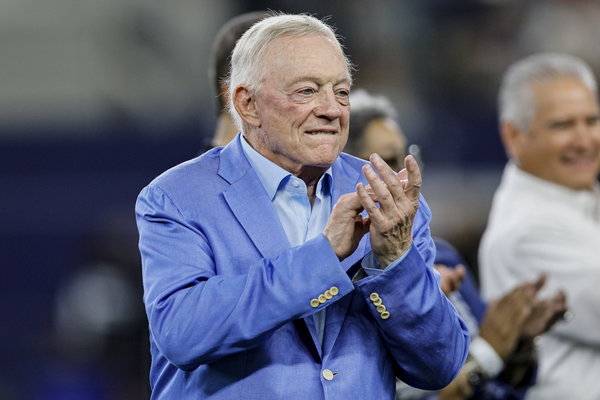
Jerry Jones could sell out the Cowboys’ home games for millions while smaller-market franchises struggle to stay competitive. The salary cap would eventually buckle under that pressure, and the NFL could split into haves and have-nots. Congress understood this reality back in 1961.
You see, the NFL doesn’t merely sell games – it sells uncertainty.
Millions of fans tune in to watch NFL games because they believe their team can win on any given day. Nobody wants to watch a complete blowout where one NFL team wins by 70 points every week. Failing teams will eventually dissolve, taking the league with them.
For years, the revenue-sharing model tied to the exemption has kept the playing field even in the NFL. It also discourages billionaire owners from building independent empires and keeps the NFL functioning as one competitive ecosystem. Strip away that balance, and you risk killing the goose that lays the golden eggs for the NFL.
The future of professional football will be eclipsed
The NFL’s antitrust exemption is also tied to an agreement that protects college and high school football. Under that agreement, the NFL is barred from airing its games within 75 miles of a college or high school football game played on Fridays after 6 p.m., and all day on Saturdays. Each year, this restriction runs from the second Friday in September until the second Saturday in December.
This arrangement has helped Friday nights become synonymous with high school matchups, and Saturdays belong to college football. Of course, the NFL keeps looking for loopholes to air games on Black Fridays and other such beneficial windows. Still, the restriction prevents the NFL from completely steamrolling lower levels of the sport. But this is exactly what’s happening with traditional TV broadcasting with the NFL’s transition to streaming platforms. So, what’s the solution?
At this point, I can tell you that the DoJ’s intervention is just a Hail Mary attempt to stop the inevitable fate of TV broadcasting. And it carries enormous risk for the NFL itself. If lawmakers weaken or eliminate the exemption, it could unleash the very chaos that the NFL spent decades avoiding. The smartest outcome for both the NFL and traditional networks should involve accepting the reality that they still need each other.
So, instead of scrapping the exemption entirely, lawmakers should revisit one question: should the same protections apply when the NFL sells games to subscription streaming services rather than to free over-the-air television? To me, this debate feels far more reasonable because fixing a leak doesn’t require burning down the entire house.
Ultimately, without the exemption, everyone could lose – the NFL, the networks, and the fans. I’m sure that the NFL’s army of lobbyists in Washington has already delivered this message over slides to the FCC officials. Now, lawmakers have the ball in their court to decide the NFL’s fate.
