



The House voted on Tuesday to end a brief partial government shutdown, but Congress immediately faces another challenge: negotiating immigration enforcement reforms pushed by Democrats before funding for the Department of Homeland Security runs out in 10 days.
After federal immigration agents fatally shot Alex Pretti, a Minneapolis nurse, as he filmed them on Jan. 24, Senate Democrats refused to pass an annual DHS funding bill without significant changes to rein in the agency and hold it more accountable to the public. They want to ban federal agents from wearing face masks, require visible identification for Immigration and Customs Enforcement and Border Patrol law enforcement (both housed under DHS), and tighten warrant requirements.
Many of their demands are widely unpopular among Republicans, who say revealing law enforcement members’ identities puts them at risk.
Why We Wrote This
Following the shooting deaths of two people during protests in Minneapolis, Democrats are targeting Department of Homeland Security funding as they try to put new restrictions on the agency’s immigration enforcement efforts. Republicans in Congress are pushing back.
Five government funding bills were passed on Tuesday, but Congress approved only 10 days of funding for DHS while it negotiates Democrats’ demands. President Donald Trump supported the deal. But Senate Majority Leader John Thune, a Republican from South Dakota, reportedly said the two sides are so far apart that a deal by the Feb. 13 deadline was an “impossibility.”

Motorists suspected of being activists and following agents’ vehicles are approached by a federal agent brandishing a firearm, in Minneapolis, Feb. 3, 2026.
In interviews with the Monitor, Republicans and Democrats alike underscored the difficulty of the 10-day timeline. Republican Sen. John Boozman of Arkansas said it would be “very difficult” to draft and translate a bill into legal language by Feb. 13. Asked whether Congress could pull off passing a bill by then, Democratic Rep. Ilhan Omar of Minnesota said simply, “I doubt it.”
What would a shutdown affect?
If the two chambers of Congress can’t finalize a bill by the deadline, some parts of DHS will shutter all but essential operations unless Congress passes another stopgap funding bill that acts as a bridge to keep federal agencies operational while lawmakers negotiate longer-term budget agreements. Such a shutdown could affect agencies including the Transportation Security Administration and the Federal Emergency Management Agency.
Congress had appropriated $10 billion for ICE in the original DHS bill. Even if that is delayed or blocked, ICE already received an extra $75 billion over four years in the Republicans’ tax-and-spending bill last year. Immigration enforcement operations could continue, using that funding.
Several Democrats said they would not vote for even temporary DHS funding without reforms.
“We need to hold our line right now,” said Democratic Rep. Brittany Pettersen of Colorado. “It is all hands on deck.”
Republican and Democratic demands
Senate Minority Leader Chuck Schumer last week laid out three Democratic demands as conditions for funding DHS: prohibiting roving immigration enforcement patrols and blocking ICE officers from entering people’s homes without a judicial warrant; banning masks and requiring video cameras and visible identification for ICE officers and Border Patrol agents; and adopting a universal code of conduct for all federal law enforcement officers.
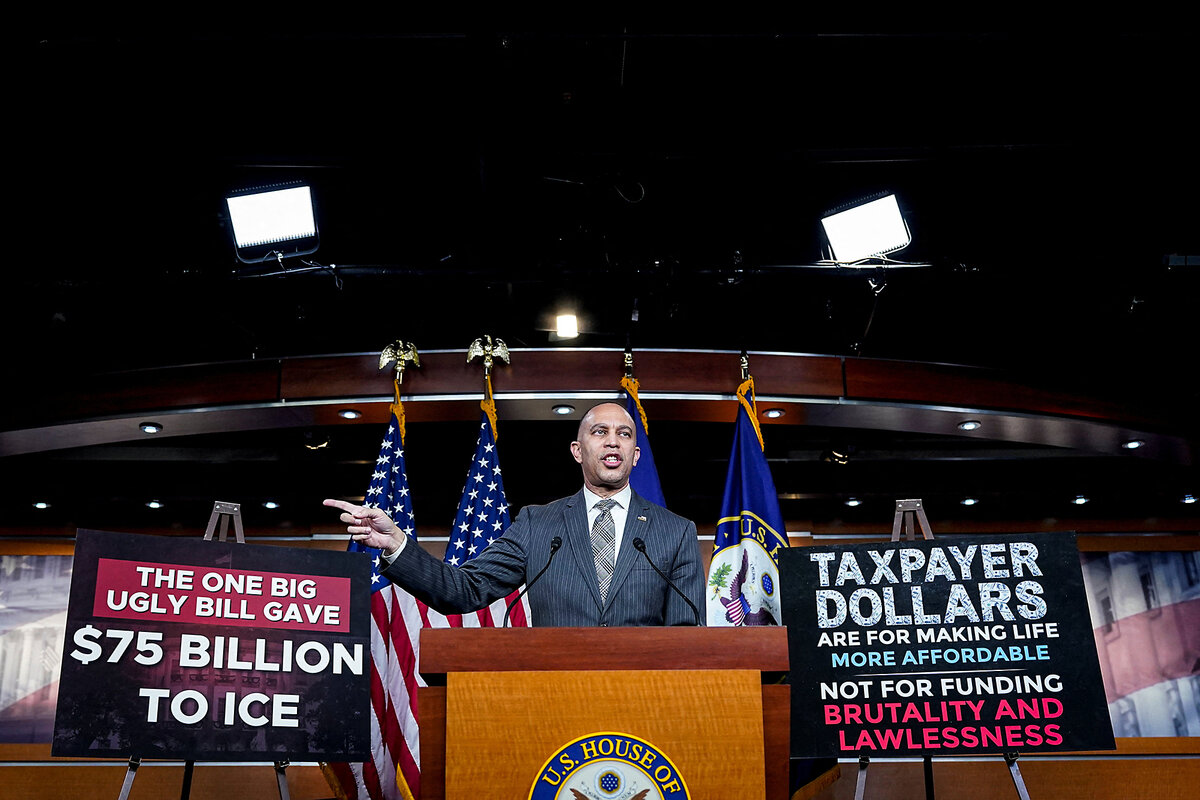
House Minority Leader Hakeem Jeffries, a Democrat from New York, speaks during a news conference at the Capitol, Feb. 2, 2026.
House Minority Leader Hakeem Jeffries, a New York Democrat, endorsed those proposals and added another: Banning the deportation of U.S. citizens picked up in Mr. Trump’s immigration enforcement surge.
Rep. John Larson of Connecticut was among several Democrats who said that they support their party’s conditions – especially the ban on masks worn by agents and the tightening of restrictions on warrants.
“They ought to have a warrant. They don’t need masks. They ought to identify themselves and make sure that they’re coordinating with the states,” Mr. Larson said. “Three simple things.”
Some lawmakers appear to have additional priorities. Democratic Sen. Cory Booker of New Jersey says DHS is violating due process by tracking Americans’ phones and collecting private data as part of the immigration enforcement surge.
“They won’t get my vote … as long as they’re violating Americans’ rights in the ways that they are,” he said when asked whether those issues needed to be addressed before he would support a new DHS bill.
Administrative vs. judicial warrants
Republican House Speaker Mike Johnson of Louisiana has flatly rejected new warrant restrictions or a mask ban. Others in his party agree. Republicans say officers can legally rely on an immigration judge’s administrative warrant to enter someone’s home.
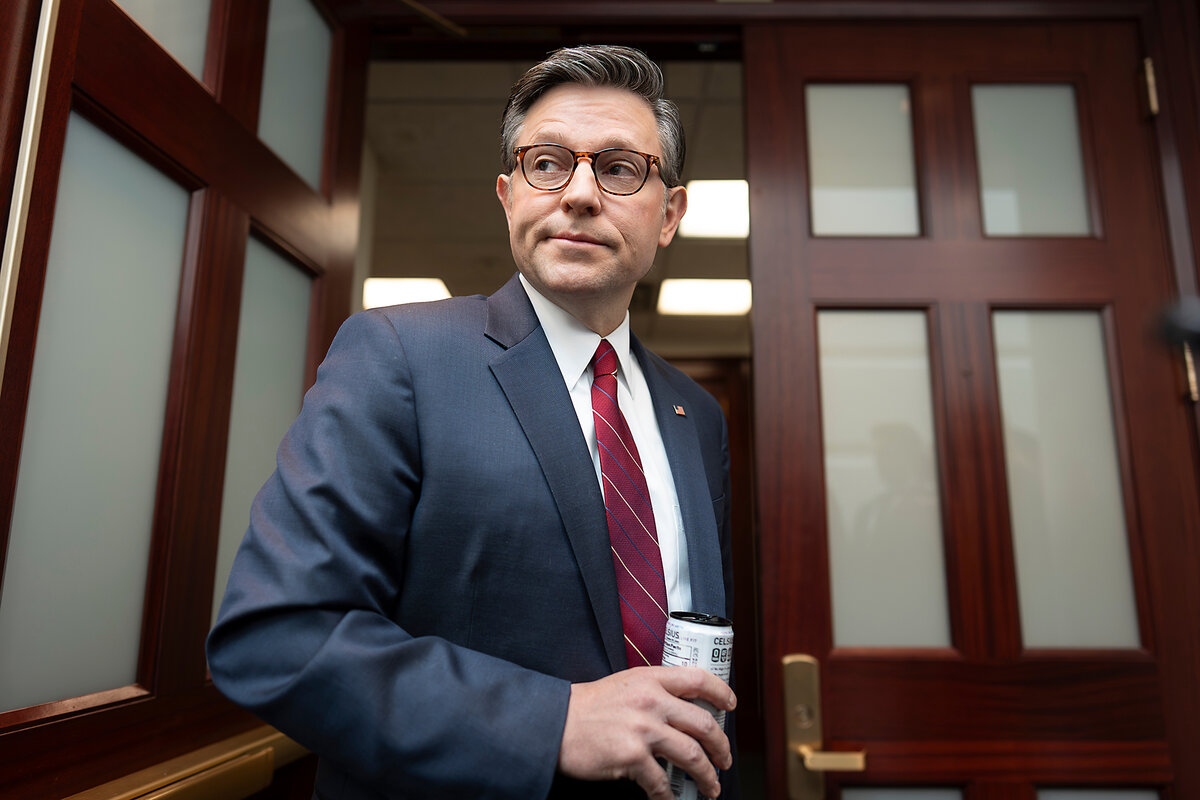
House Speaker Mike Johnson, a Republican from Louisiana, listens as reporters ask questions at the Capitol in Washington, Feb. 3, 2026.
“Judicial warrants versus administrative warrants … that will never happen,” Republican Sen. Pete Ricketts of Nebraska said when asked whether any Democratic proposals were nonstarters for him.
Meanwhile, Republicans are issuing their own demands. Speaker Johnson said on Monday that he wanted negotiations to include restrictions on sanctuary cities. This term lacks a legal definition but generally refers to cities that limit cooperation with federal authorities on immigration.
Wisconsin Sen. Ron Johnson told Punchbowl News that, “if Democrats get anything, we have to demand all kinds of things.”
He listed restrictions on sanctuary cities as well as passage of the SAVE America Act, a voter-ID bill Republicans are pushing that has garnered strong Democratic opposition.
Other Republicans are waiting on the White House to weigh in.
“I’d love to see some measures in the bill about sanctuary cities,’’ said Rep. Nathaniel Moran of Texas. “But we’ll see where the president lands on it.”
