


As recently as a few years ago, Substack was struggling to shed the perception that it was radioactive. “Substack Has a Nazi Problem,” read the headline of a 2023 Atlantic story that surfaced “scores of white-supremacist, neo-Confederate, and explicitly Nazi newsletters” on the platform, which was, in some instances, taking its standard 10% profit from them. Over 200 Substack writers wrote an open letter opposing the company’s hands-off approach to content moderation, and several high-profile writers and publications migrated to competitors.
Three years later, no one would argue that Substack, which launched in 2017 as a platform for individual writers to charge their subscribers and has since ballooned to five million paid subscriptions, is fringe. Last year, the company closed a $100 million Series C round at a $1.1 billion valuation. But can it, as the title of cofounder Hamish McKenzie’s new memoir-cum-manifesto suggests, really Save the Media?
Kareem Abdul-Jabbar and Charli xcx publish there—Kylie Jenner has said she’d like to—as do new media phenomena like Feed Me and The Free Press. The platform has significant footholds in fashion, AI, politics, literature, celebrity gossip, and most everything in between. In the opening pages of his book, How to Save the Media, McKenzie recalls drinking whiskey at the Chelsea Hotel alongside former Vanity Fair editor Tina Brown, who now publishes the popular Fresh Hell newsletter on Substack. The United Kingdom–born Brown, like McKenzie, came to America from abroad, only to rise to the highest rungs of its media world, and she seemed now to see him as a peer.
“You’re a New Zealander, aren’t you?” she asked McKenzie. “There’s something to being an outsider.”

‘How to Save the Media’ by Hamish McKenzie
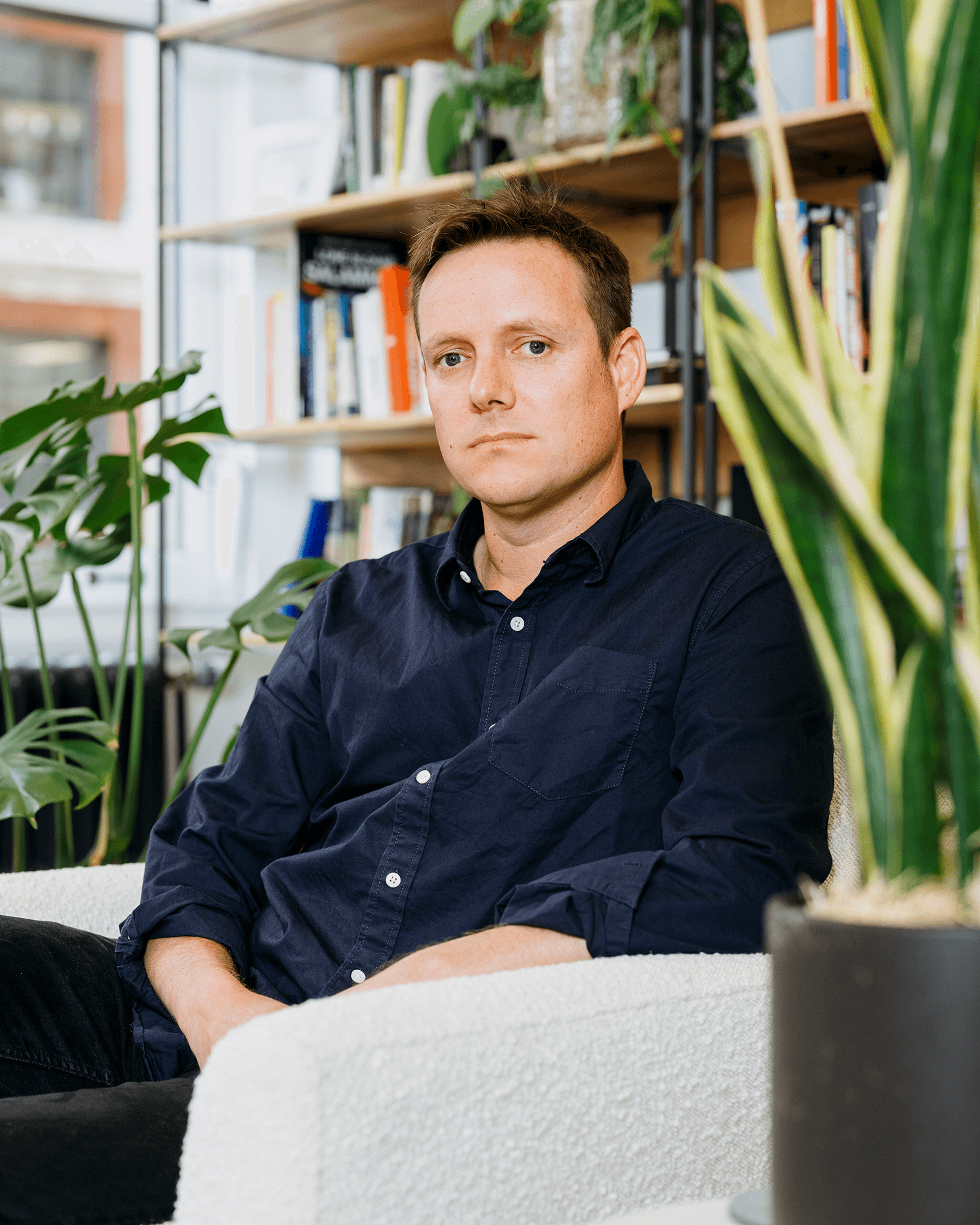
In a recent interview with Vanity Fair, speaking from the Toni Morrison Conference Room at Substack’s San Francisco headquarters, McKenzie appeared uncomfortable with the idea that his book, liberally sprinkled with such encounters with the cream of the Substack crop, amounted to a victory lap. He was, despite a generally mild manner and steadfast earnestness, relentlessly on message. “I’m always going to be like a broken record coming back to the importance of direct relationships,” McKenzie acknowledged. It’s the Substack theory of fixing an ailing media ecosystem: replacing the ad-based chaos sown by the internet with a more nourishing connection between writer and reader, and having consumers pay for the media they want to see in the world rather than subject themselves to the whims of an attention economy controlled by big social media companies. McKenzie admitted his book’s title was a provocation, but “for me, it’s backing up the gospel that I’m trying to preach.”
Still, we could agree that something about the controversies that dogged the platform in recent years now seems quaint—that Substack has achieved some fundamental conquest. Instead of reactively responding to the “Nazi problem,” the company chose to stick with its hands-off approach to content moderation, and the outcry dissipated: Substack remains the go-to home for your established journalists striking out on their own (Jim Acosta, Nate Silver) as well as your upstart media operations repurposing the expertise once best associated with legacy outlets (The Bulwark, The Ankler). I suggested to McKenzie that the platform today is akin to Instagram or Grindr: a tech company, yes, but also an undeniable element of the fabric of contemporary life.
From a writer’s perspective, one knock-on effect of the Substack boom has been the rising cachet around writing itself, despite the spree of recent news stories declaring the end of reading. There are so many—too many?—personal essayists and gift guide impresarios emerging seemingly out of nowhere. (“I’m not snobby about that,” McKenzie said. “I think everyone should try to write and no one should be discouraged through peer pressure from writing.”) And then there is the ever-increasing atomization across media, with political discourse splaying out across countless newsletters that are only intermittently in conversation with one another. Is this new cacophony strictly better than the ones we encountered on Facebook and Twitter? Part of the reason the open letter concerning Nazi Substack newsletters didn’t stick, perhaps, was that no one is reading the same things anyway.
McKenzie is currently chipping away at Anna Karenina. “I honestly think writing is good and reading is good,” he said, echoing the kind of unadorned aphorisms he sometimes issues on X. As far as the purported literacy emergency, he says, “I don’t see many centuries of progress on this fundamental communication form being undone overnight.” Our “cultural crisis,” McKenzie thinks, has more to do with the distribution mechanisms of writing, and “is intrinsically tied to the state of the media system.”
After departing small-town New Zealand to pursue a career in journalism, McKenzie, 44, tried his hand at tech reporting in Hong Kong and San Francisco. Later, while working at the messaging app Kik, he and the company’s chief technology officer Chris Best hatched their plan to reroute the flow of publishing profits away from social media companies and toward writers. (Best is Substack’s CEO, while McKenzie works as its “chief writing officer” and heads up the company’s partnerships and talent acquisition efforts.)
“We had more direct relationships in the traditional media system,” McKenzie said, referring to, for example, a subscription to a print newspaper. “But then it got broken by the internet and replaced by something that corroded the direct relationships and gave all the power to Elon Musk and Mark Zuckerberg instead.”
As it happens, one of the touchstones in McKenzie’s own writing career is his dust-up with Musk. He worked for a time in communications at Tesla, and Musk, McKenzie writes, threatened to sue to block a book that he wrote about the company after leaving. (Insane Mode was published in 2018. After this story was published, Musk, whom I’d reached out to for comment prior to publication, told me, “Hamish grossly and deliberately violated his Tesla NDA. No one should ever trust Hamish ‘Oathbreaker’ McKenzie. Total piece of shit.” McKenzie responded on X, writing, “Can I use this as a blurb for the book?”) Later, McKenzie and Best would turn down acquisition offers from Jack Dorsey’s Twitter and Musk’s X.
It was a choice they made, in McKenzie’s telling, to preserve the company’s independence—to prevent the Substack ecosystem from going the same way as those social platforms, which tend to leave their consumers more exhausted and frustrated than enlightened. I proposed to McKenzie that the company’s endurance in the face of its detractors has something to do with the shifting shape of online discourse, and that Substack itself has had a key role in making the tools of mass censure weaker in the age of media fragmentation. “I wonder if a lesson we are all learning,” he suggested, “is that the heavy-handed censorship approach can often backfire.”
“Did it do any good to kick Trump off Twitter and Facebook for two years?” he asked.
In How to Save the Media, McKenzie reflects on an evening he spent at the Biltmore Hotel in downtown Los Angeles in 2021. He was there to support Bari Weiss, who had struck out on Substack after leaving The New York Times about a year earlier. The schism would go on to shape the future of journalism from the newsletter economy all the way up to the highest echelons of Hollywood and television news after Weiss was appointed editor in chief of CBS News last year. (Of the common criticisms that Weiss has made the network overly Trump-friendly and lacks the requisite TV experience for the role, McKenzie says, “I think for the most part, the media industry is experiencing Bari Weiss as a media gossip story. And I think the more interesting story is the structural story and what it suggests about what’s possible in this emerging media economy. So I’m mostly watching from that perspective and I still think it’s too early to draw grand conclusions about what’s happened so far.”) In her resignation letter from the Times, Weiss wrote that Twitter had become the paper’s “ultimate editor.” On Substack, she built The Free Press, an outlet that has largely defined itself in opposition to what it sees as mainstream media orthodoxies.
That night, the Los Angeles Press Club was honoring Weiss. McKenzie took the accolade, he writes, “as validation of the nascent direct-relationships model”: Despite the ongoing and widespread opposition to her politics, Weiss had identified a journalistic niche that required no traditional media backing. Yet, The Free Press ultimately brought Weiss back to the legacy press—the new Substack class has its eye on some of the old media rewards, to the extent that they remain available.The night served as a sign, McKenzie writes, that “independence can still deliver prestige.”
“I don’t think what we’re going through here,” he told me, “is a moment of change where all the benefits from the old things have to be thrown out.”
This story has been updated.
-
Penélope Cruz Says She and Husband Javier Bardem are Selective When They Work Together
-
Making the Elizabeth Holmes Doc Fried Nathan Fielder’s and Lance Oppenheim’s Brains
-
“I Hate My Fucking Life Right Now”: How DC Republicans Reacted to the Blue Wave
-
Inside Lane Kiffin’s Trash-Talking, “Joey Freshwater” Era With Nick Saban at Alabama
-
Stacey Abrams Discusses the 2026 Midterms—and Her Future—with Ta-Nehisi Coates
-
From the Archive: Inside Elizabeth Holmes’s Chilling Final Months at Theranos
