


As I write this, it’s two days before Thanksgiving in Chicago, and I’m tending to my prep work; to clarify, I don’t mean peeling potatoes. At 46, my skin gets ultra-dry this time of year, and getting ready for the holidays also means sourcing the best moisturizers for aging skin, lest I show up to seasonal celebrations looking dry and sallow—basically, anything but celebratory. So along with making a shopping list for the many side dishes in my future, I booked a Hydrating Facial at St. Regis Chicago’s spa—and maximized my time there by asking the team to fill me in on everything I need to know to stay moisturized at home.
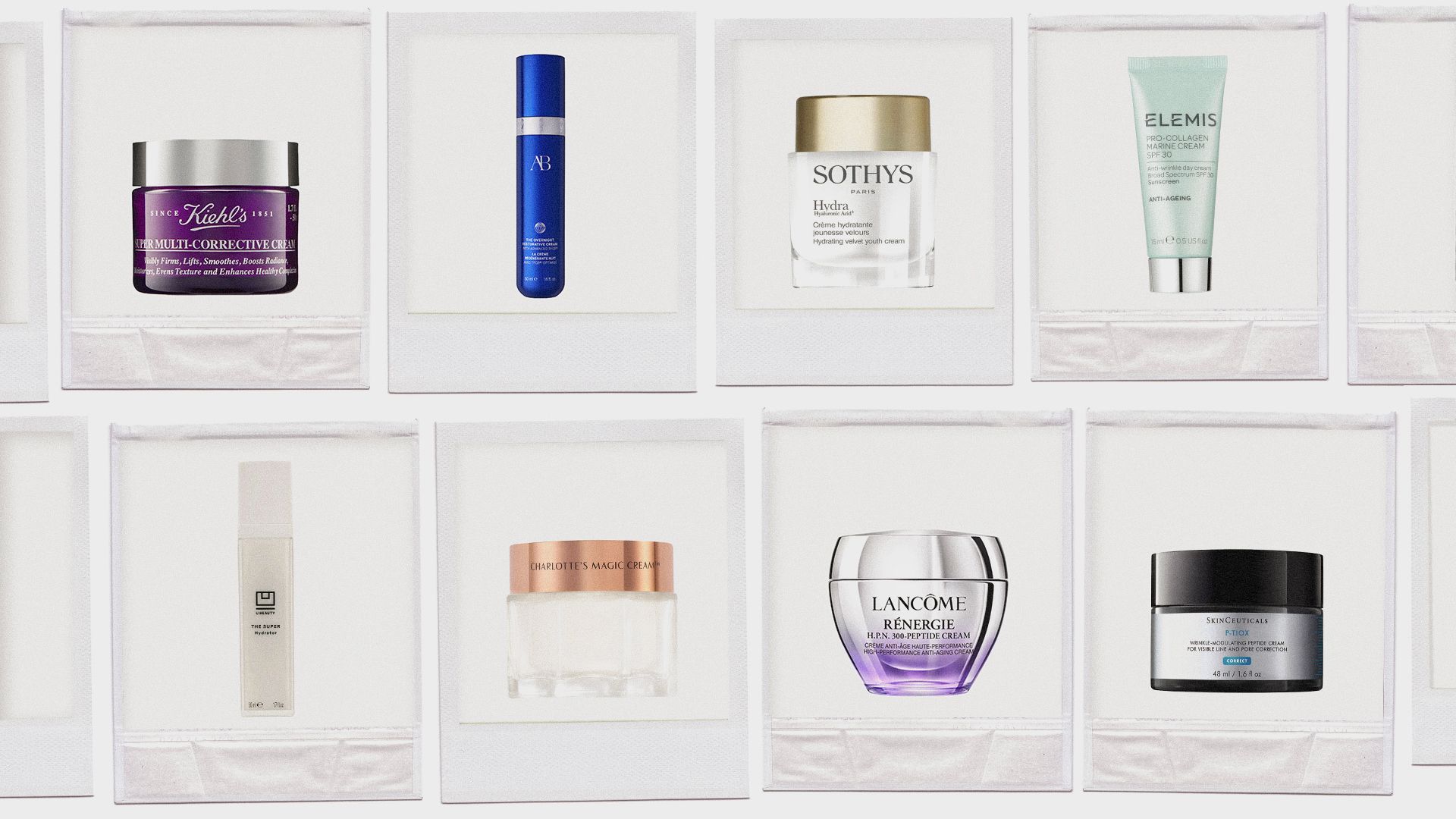
Vogue’s Favorite Moisturizers for Aging Skin:
- Best Overall: SkinCeuticals P-Tiox Cream, $150
- Best Peptide Cream: Lancôme Rénergie H.P.N. 300 Peptide Cream, $140
- Best Retinol Alternative: Kiehl’s Multi-Corrective Anti-Aging Face & Neck Cream, $76
- Best for Day: Elemis Pro-Collagen Marine Cream SPF 30, $150
- Best for Dry Skin: U Beauty The Super Hydrator, $168
- Best for Redness: Tata Harper Superkind Calming Crème, $168
- Best for Night: Augustinus Bader The Overnight Restorative Cream, $365
“In your 40s, you may notice changes in your skin, including increased dryness, fine lines, loss of elasticity, and a decrease in overall radiance,” said Patty Aguilar, one of the spa’s esthetician. “At this stage, it’s important to move beyond simply moisturizing and begin incorporating targeted ingredients that address your skin’s changing needs while supporting its moisture barrier.”
A common mistake she sees older women making is focusing only on hydration while overlooking ingredients that can improve skin texture and tone. “I recommend looking for moisturizers that combine nourishing ingredients with gentle exfoliating or skin-renewing ingredients, such as lactic acid or fruit enzymes, when appropriate for your skin type,” she notes.
And though thick, cushiony creams can often feel the most luxurious on parched skin—particularly as winter approaches—Aguilar emphasizes that the right texture depends on individual skin types. A thicker moisturizer isn’t necessarily more effective. What matters most is the formulation and whether the ingredients address your skin’s specific needs. With that in mind, we’ve tapped skincare pros to share the best formulas for redness, dry skin, daytime, and more below. Winter is coming—stay moisturized out there!
Best Overall: SkinCeuticals P-Tiox Cream
SkinCeuticals
P-TIOX Anti-Wrinkle Peptide Cream
- Why We Love It: This was (unofficially) the year of P-Tiox Cream at Vogue. Our editors are so impressed with the product’s whipped texture and thoughtful, wrinkle-targeting formula that the recent launch earned a spot in our edit of the best skin-care products of 2026—and our nod for favorite wrinkle cream. Designed to complement SkinCeuticals’ P-Tiox serum, which contributor Deanna Pai dubbed “the next best thing” to a Botox injection, the moisturizer harnesses peptides and a complex called Myrixin to hydrate, plump, and strengthen the skin barrier while reducing the appearance of enlarged pores and boosting radiance. It’s also been tested to complement your injectables; and it’s not just for those with deep-set wrinkles. “It’s an excellent option for patients looking to address early signs of skin aging, particularly fine lines and expression lines,” Y. Claire Chang, MD, a board-certified dermatologist at Union Derm, previously told Vogue.
- Editor’s Experience: The texture feels more like a lightweight gel-cream than a rich, anti-aging moisturizer. It sinks in quickly, layers beautifully over serums (ever the rule follower, I used it with the P-Tiox serum), and it leaves the skin with a smooth, softly blurred finish that wears exceptionally well under makeup. —Jenny Berg, contributor
- Key ingredients: 10% patent-pending Myrixin, 2% tripeptide technology, Crystalide Micropeptide, niacinamide, LHA, Zinc PCA
- Size: 1.6 fl. oz.
Best Peptide Cream: Lancôme Rénergie H.P.N. 300 Peptide Cream
Lancôme
Rénergie H.P.N. 300-Peptide Cream
- Why We Love It: “Peptides are valuable in an aging-skin routine because certain ones can support processes involved in maintaining skin firmness and elasticity,” says Carol Eisenstat, MD, a board-certified physician and founder of Line Eraser MD in New Jersey. “What stands out about Lancôme’s Rénergie is that it doesn’t rely on peptides alone. It combines its extensive peptide blend with hyaluronic acid for hydration and niacinamide to support the skin barrier and improve uneven tone.” She notes that this combination is particularly appealing for mature skin because it addresses several concerns simultaneously: dehydration, dullness, fine lines, and loss of firmness. The multitasking moisturizer, which has a spot in Amanda Seyfried’s beauty routine, combines more than 300 types of peptides derived from three natural sources: linseed, lupine, and pea extracts.
- Key ingredients: More than 300 types of peptides (derived from linseed, lupine, and pea extracts), hyaluronic acid, niacinamide
- Size: 1.7 oz
Best for Dry Skin: U Beauty The Super Hydrator
U Beauty
Hydrating Skin Moisturizer
- Why We Love It: The ingredient list in U Beauty’s cult-loved moisturizer reads like an organic feast for the skin—but this high-tech formula is more than a blend of nourishing oils. In addition to avocado, grapeseed, and argan oils that help seal in moisture, the brand’s proprietary SIREN Capsule Technology delivers a blend of peptides, antioxidants, and other skin-supporting ingredients. Five different forms of hyaluronic acid provide multilevel hydration, while shea butter and squalane help soften and nourish the skin. Samantha Susca, master esthetician and founder of New York’s Refinery4 boutique facial studio, has described this as “the ultimate rich cream.” With its deeply nourishing formula, the product is also Susca’s pick for hydrating skin after a peel. “Its intense richness also provides unmatched relief for dermatitis,” she said.
- Key ingredients: Five forms of hyaluronic acid, argan oil, shea butter, avocado oil, grapeseed oil, squalane, peptides, antioxidants
- Size: 1.7 oz
Best Under Makeup: Charlotte Tilbury Charlotte’s Magic Cream
Charlotte Tilbury
Magic Cream
- Why we love it: Charlotte Tilbury’s rich, rose-scented cream is formulated with hyaluronic acid and vitamins C and E. “It hydrates and evens the complexion, and it diminishes the look of fine lines and wrinkles,” says Jeannette Graf, MD, a board-certified dermatologist based in New York. Initially launched in 2013, the iconic cream was reformulated in 2026 to include a blend of more than 100 peptides engineered to target visible signs of aging, plus ectoin to support the skin barrier. “The 2026 reformulation is interesting because of the addition of Recoverstem Peptide,” Eisenstat says. “Peptides can complement a moisturizing formula by targeting the appearance of fine lines and elasticity over time, although the presence of more peptides doesn’t automatically translate into better clinical results. What has always made Magic Cream appealing is its immediate cosmetic effect.” She notes that well-hydrated skin reflects light more evenly, looks plumper, and creates a smoother surface for foundation. “For mature skin, that can make a noticeable difference because makeup tends to settle into fine lines when the skin is dehydrated,” she says.
- Editor’s Experience: “There’s a bit of magic in every Charlotte product (this one is even named after it!) and I was a fan even before it got its massive peptide infusion. The revamped formula maintains the light, rosy scent and the silky-smooth texture of the original, but somehow, it seems to work better than ever under makeup. While the original formula felt a tad slow to sink in, this one absorbs more quickly on me. I’m not sure if that’s due to the new ingredients, any tweaks in texture, or if my skin just drinks this in faster because I’m not getting any younger. I’ll chalk it up to magic for now.” —Jenny Berg, contributor
- Key Ingredients: Recoverstem Peptide (100+ peptides), ectoin, hyaluronic acid, vitamins C and E
- Size: 0.5 oz-5 oz
Best for Day: Elemis Pro-Collagen Marine Cream SPF 30
Elemis
Pro-Collagen Marine Cream SPF 30
- Why we love it: Elemis’s iconic Pro-Collagen Marine Cream gets an SPF 30 boost in this daytime iteration, which combines broad-spectrum sun protection with a nourishing blend of marine and botanical extracts. Chlorella helps soothe and firm the skin, while antioxidant-rich Padina pavonica (brown algae) supports hydration, and ginkgo biloba is rich in antioxidants. Meanwhile, mimosa and rose give the formula a soothing, spa-like scent. “The most important anti-aging ingredient in a daytime moisturizer is often the sunscreen,” Eisenstat says. “UV exposure is a leading cause of premature skin aging, including pigmentation changes, collagen breakdown, and wrinkles. Elemis combines broad-spectrum SPF 30 protection with moisturizing ingredients and marine-derived extracts, making it an appealing multitasking daytime product.” The key is applying enough for the labeled SPF protection, she says; dermatologists typically recommend applying two fingers’ worth. “When patients use only a tiny amount of moisturizer, they may not get the sun protection they expect.”
- Editor’s Experience: This is the moisturizer I’m happy to have on hand when I want my morning routine to feel streamlined but still luxe. The texture is silky and cushiony without feeling heavy, and it melts into my skin with a smooth finish that sits beautifully under makeup. The only caveat? The signature floral scent is noticeable, so those sensitive to fragrances may want to test before committing—I, as a card-carrying fragrance lover, happen to appreciate the scent.—J.B.
- Key ingredients: Ginkgo biloba, chlorella, padina pavonica
- Size: 1.7 oz
Best for Redness: Tata Harper Superkind Calming Crème
- Why we love it: “Redness and dryness often happen together: A compromised skin barrier allows moisture to escape and leaves the skin more vulnerable to irritation,” Eisenstat says. “Tata Harper’s Calming Crème incorporates soothing ingredients such as bisabolol and Tasmanian pepperberry to help reduce the appearance of redness while supporting hydration. This type of moisturizer can be helpful for someone with dry, reactive skin who finds traditional anti-aging products too aggressive.” However, she says, persistent redness may reflect rosacea or another inflammatory condition that requires more than moisturizer.” The fragrance-free formula also contains Tahitian gold microalgae and a Marine Prebiotic Complex, which help soothe sensitive skin and support the skin’s microbiome. Not to mention, the gentle formula has earned the National Eczema Association’s Seal of Acceptance.
- Editor’s Experience: Like all things Tata Harper, this has a farm-fresh botanical scent that I can’t get enough of—it reminds me of dried flowers and sunlight. The cream has a balmy texture that cocoons the skin but doesn’t feel heavy; instead, it just feels silky, like I’m wrapping my dry skin in a satin duvet. I may shelve this in the warmer months because of its super-rich texture, but I’m adding it to my winter rotation for sure. —J.B.
- Key ingredients: Bisabolol, Tazman pepperberry (Tasmanian pepperberry), Tahitian gold microalgae, Marine Prebiotic Complex, oat seed oil, squalane, calendula
- Size: 0.5 oz, 1.7 oz
Best for Night: Augustinus Bader The Overnight Restorative Cream
Augustinus Bader
Overnight Restorative Cream
- Why we love it: This 2026 launch from the German skin-care brand puts an after-dark spin on its signature, TFC8-infused skincare. The brand’s proprietary technology, TFC8 (short for Trigger Factor Complex), is designed to support the skin’s natural renewal processes through cellular communication. Dr. Bader once described it to Vogue as a “proprietary technology that targets common skin-care complaints like the appearance of wrinkles, dryness, and beyond.” This nighttime iteration features Advanced TFC8, the latest evolution of the technology, which the brand says is designed to deliver faster, more visible results. The complex has a supportive squad of ingredients that soothe and nourish aging skin. Advanced TFC8 works alongside a melatonin-mimicking rosehip extract, which helps reduce signs of fatigue overnight. The formula is also enriched with a cica recovery complex to calm visible redness and support the skin barrier, a carob repair extract to improve the appearance of firmness and elasticity, and a hydrating duo of hyaluronic and polyglutamic acids. The result is a deeply replenished complexion that looks smoother, plumper, and more refreshed by morning.
- Editor’s Experience: Augustinus Bader has gorgeous, luxe packaging and a legion of celebrity loyalists—but I love that it has a heart of med-and-science cred. (It was, after all, founded by a biomedical scientist and physician.) This cream, with a thick, almost paste-like texture and a slight medicinal scent, feels like the real deal—the opposite of creams merely designed just for the sensorial experience. After using the reparative salve for one night, I woke up to skin that felt hydrated and smooth and looked more even and luminous overall. I’m eager to see how this works over time, particularly when it’s used with the Augustinus Bader Elixir, also said to support collagen production. —J.B.
- Key ingredients: Advanced TFC8, purified cica recovery complex, Nordic rosehip extract, carob repair extract
- Size: 50 ml
Best Retinol Alternative: Kiehl’s Multi-Corrective Anti-Aging Face & Neck Cream
Kiehl’s
Super Multi-Corrective Anti-Aging Cream
- Why We Love It: Kiehl’s multitasking moisturizer is designed to target wrinkles, uneven skin tone, and rough texture across the face and neck. It’s made with PhytoMimetic vitamin A, a plant-derived retinol alternative, along with antioxidant-rich Chaga mushroom and hyaluronic acid. “This is an appealing option for someone who wants to address visible aging but struggles with the irritation associated with retinol,” Eisenstat says. Its phytomimetic vitamin A ingredient is designed to improve texture and fine lines without relying on a traditional retinoid. She notes that the formula also contains Proxylane GX, which helps improve the appearance of firmness and elasticity. What’s more, “I appreciate that it targets the neck as well as the face, since the neck is frequently overlooked in anti-aging routines,” she says. “I wouldn’t consider it a true replacement for prescription tretinoin, but it can be a reasonable alternative for someone prioritizing tolerability.”
- Key ingredients: PhytoMimetic Vitamin A, Chaga mushroom, hyaluronic acid, Proxylane GX, capryloyl salicylic acid (LHA)
- Size: 1.7 oz-2.5 oz
Best for Softening Texture: Sothys Hydrating Velvet Youth Cream
Sothys
Hydrating Velvet Youth Cream
- Why We Love It: Consider this your shortcut to that just-left-the-spa glow. From French professional skincare brand Sothys, this cushiony moisturizer combines two patented active ingredients—organic rowan berry peptides and 1055 boletus extract—with high-molecular-weight hyaluronic acid. Organic samphire adds another layer of hydration support, while nourishing shea butter and squalane leave skin feeling soft, supple, and comfortable. At St. Regis Chicago The Spa, estheticians incorporate this velvety formula into the Hydrating Facial, and recommend that clients take their own jar home to keep up the hydration at home. “The Sothys Hydra Moisturizer is a great moisturizer option for mature skin to use after a hydrating facial,” says Daniela Kirchner, an esthetician at the spa. “I would suggest pairing this with an active serum to maintain hydration and prolong the results of the facial.”
- Editor’s Experience: “I had a live-from-the-scene reporting experience with this, testing it at the St. Regis Spa after a massage. (Such grueling work.) Before giving a sample, the retail expert confirmed that I have dry skin (indeed!) since there is a Satin cream for more oil-prone skin. As soon as I applied the Velvet cream, I thought of classic La Mer moisturizers—thick, decadent, and somehow quick to sink in. It left my skin soft and hydrated, and though I was daydreaming in the spa lounge with granola bites and not a mirror in sight as the cream sank in, I could practically feel the glow.” —J.B.
- Key ingredients: Organic rowan berry peptides, 1055 boletus extract, high-molecular-weight hyaluronic acid, organic samphire, shea butter, squalane, ceramide NP
- Size: 1.69 fl. oz.
Best Post-Procedure: Iope XMD Stem III Clinical Recovery Cream
Iope
Stem III Clinical Recovery Cream
- Why we love it: One of Vogue’s favorite collagen-supporting moisturizers, IOPE’s formulation has ingredients that soothe and strengthen an aging complexion—and it works particularly well as a recovery cream after aesthetic procedures. “[It’s] enriched with a powerful skin-revitalizing combination of allantoin, niacinamide, madecassic acid, and peptides,” Dr. Claire Chang, a board-certified dermatologist based in New York, previously told Vogue. Both allantoin and madecassic acid help soothe redness and irritation, while niacinamide supports the skin barrier. The formula also features PDRN H.A. Liposome Complex, which combines hydrolyzed DNA with micro-molecular hyaluronic acid to help replenish moisture and support skin recovery. Lightweight and cooling, it absorbs easily and nourishes the skin without feeling heavy. For additional hydration, the brand recommends layering it twice.
- Key ingredients: PDRN (hydrolyzed DNA), micro-molecular hyaluronic acid, Allanto Complex (allantoin, spiraeoside, peptide), niacinamide, madecassic acid, asiaticoside, squalane
- Size: 1.69 fl oz
Everything You Need to Know
What is aging or mature skin?
“Our bodies produce less elastin and collagen as we get older,” Saedi acknowledges. “In fact, collagen production begins to slow as early as your mid-twenties. We start losing one percent of our collagen per year after that. By 40, collagen drops more dramatically.” As collagen and elastin decline, fine lines, wrinkles, and sagging becomes more noticeable in the skin. “Your face also loses volume as you age, and your skin will become thinner,” Saedi says.
But that’s not all. “Declining estrogen levels during perimenopause and menopause can also wreak havoc on your skin, contributing to dryness, dullness, thinning, and wrinkling in the skin,” Saedi says. “Lastly, sun damage accumulates over your lifetime and is one of the biggest causes of lines, wrinkles and unwanted pigmentation, also commonly referred to as sun spots.”
What is an ideal skincare regimen for mature skin?
According to Magovern, a morning skin care regime doesn’t have to start with face wash. “Don’t cleanse if skin feels dry or overprocessed, particularly if you did a good cleanse before bed,” she instructs. However, for mature skin that is “doing well and feeling strong,” she signs off on a gentle exfoliating cleanser that contains AHAs or PHAs.
Next up, a hydrating toner is “a great way to cleanse the skin without overwashing it,” she says, noting that “water can actually act as an irritant.” Follow the toning step with a serum that contains antioxidants, such as vitamin C, to protect and restore the skin. “You can also look for a serum with chemical exfoliators,” Magovern adds. “These can help remove some of those older surface skin cells and help the skin retain its ability to hold onto moisture and bring back the glow.” A rich moisturizer, followed by SPF, caps off the ideal morning regime.
In the evening, “gentle cleansers or oil cleansers are great choices for mature skin,” Magovern continues. “I prefer a gentle cleanser at night because subsequent steps tend to include more active products.” Exfoliation can also be part of a nighttime regime one to three times a week. “It may not be intuitive, but exfoliating the skin can actually help moisturize it because it removes the surface dead cells, which make it harder for the moisturizers to penetrate and work effectively,” says Magovern. “Exfoliators also help stimulate collagen production.” For mature skin, she recommends a chemical exfoliator with gentle AHAs like glycolic and lactic acids, and PHAs, like gluconolactone, which have moisturizing and antioxidant properties.
As a second-to-last step before bed, apply a treatment serum infused with active ingredients like retinol or peptides, which encourage cell turnover and cellular repair. “Sleep is the time when the cellular machinery is actively restoring and repairing, and it’s the perfect time to give the skin what it needs to help accomplish its nighttime work,” Magovern notes.
Lastly, apply a face moisturizer that helps the skin attract and retain moisture overnight. “Occluding the skin with a moisturizer also allows the active ingredients in the previous steps to penetrate deeper and perhaps work more effectively,” she says. “The moisturizing step is important for nourishing and hydrating the skin while you sleep.”
What ingredients work best in a moisturizer for aging skin?
“Hyaluronic acid and other humectants, like glycerin, are important to help attract and retain water in the skin,” says Ashley Magovern, MD, a board-certified dermatologist in Manhattan Beach, California, and medical advisor for Dermstore. “But, other ingredients are important for aging skin as well. Once you attract the water, it’s important to trap it and prevent water loss.” Occlusive agents like jojoba-seed oil or shea butter help lock moisture into the skin, while ceramides—lipids that help maintain and repair the skin barrier—“are critical in a moisturizer,” Magovern says.
Additionally, “moisturizers that include retinol—or using a retinoid or retinol serum in addition to your moisturizer—can help improve the appearance of elasticity, texture, pigmentation and wrinkles,” says Nazanin Saedi, MD, FAAD, a board-certified dermatologist in Philadelphia. “Caffeine helps plump the skin which can temporarily improve the appearance of sags and wrinkles. Other ingredients to look for would be ones that help stimulate and support the production of collagen: Peptides, vitamin C, niacinamide (vitamin B3), and growth factors.”
What kind of texture is ideal in a moisturizer for aging skin?
“As a rule of thumb, thicker consistencies are better at locking in moisture by literally creating a barrier on the skin’s outermost layer to prevent water from evaporating from the surface of the skin,” says Tony Nakhla, DO, medical director of OC Skin Institute in Orange County and founder of Eighth Day. “The more occlusive a product is, the more hydrating.”
However, hydration isn’t the only factor to consider. “The viscosity or thickness of a moisturizer is not as important to its efficacy as the active ingredient,” offers Stacey Tull, MD, MPH, board-certified dermatologic surgeon and owner of St. Charles County Dermatologic Surgery in Missouri. “Thicker moisturizers such as shea butter may not be as effective for some skin types as a thinner hyaluronic-acid-based product or an oil-based serum. Even at an older age, some people are still acne-prone and a heavy moisturizer would not be a good option for them. Likewise, someone with dry, fragile skin may benefit from a thicker, more emollient ointment or cream.”
What is the importance of a moisturizer for aging skin?
A moisturizer for mature skin is “absolutely vital,” says Rachel Nazarian, MD, FAAD, a board-certified dermatologist at Schweiger Dermatology in New York City. She explains that one one of the key clinical markers of aging skin is its inability to create and retain moisture naturally. “Loss of moisture can make skin look more flaccid, less youthful, and dull,” Nazarian says.
Furthermore, “dry skin leads to inflammation, even if you can’t see it,” says Magovern. “Inflamed skin will not tolerate all the active skin care products that we all want to use, so it’s imperative to keep that barrier strong. Furthermore, inflamed skin will trigger your skin problems like eczema, seborrheic dermatitis, and rosacea, so it’s important to keep the skin moisturized. Hydrated skin also just looks smoother, younger and brighter.” In short, she says: “There are so many reasons to moisturize.”
Ingredients to Look for in a Moisturizer for Aging Skin
The best moisturizers for aging skin contain key ingredients that tackle everything from dryness to sagging and dark under-eye circles. Below, top dermatologists and a plastic and reconstructive surgeon break down the best ingredients to look for when scouting out a moisturizer that can almost appear to rewind time—or at the very least, diminish the appearance of wrinkles.
- Retinol: The star of almost any anti-aging regime, “Retinol is a form of vitamin A that accelerates skin cell turnover and stimulates collagen production,” says Tiffany J. Libby, MD, a board-certified dermatologist in Rhode Island. “[Retinol] helps reduce fine lines, wrinkles, and hyperpigmentation.” Dr. Noelani Gonzalez, a board-certified dermatologist in New York, adds that retinol can help exfoliate the skin, thereby giving it “improved texture and glow.”
- Caffeine: Going for that bright-eyed look? Caffeine helps one feel—and indeed look—more awake. When applied topically, the skin-firming ingredient works to constrict blood vessels, Dr. Libby explains, which in doing so, “reduces puffiness and minimizes the appearance of dark circles around the eyes.”
- Peptides: Used in everything from collagen-boosting protein powders to hair-growth serums, peptides are “short chains of amino acids that signal to the skin to produce more collagen and elastin,” Libby explains. “Both collagen and elastin start to decrease in our 20s, so focusing on building more should be a priority for aging skin,” Gonzalez notes, adding that peptides are “particularly helpful for those looking to improve wrinkles and skin laxity.” Plus, peptides are generally non-irritating, making them ideal for those with sensitive skin.
- Hyaluronic Acid: As skin ages, natural water loss, damage from free radicals, and other factors can cause dryness to set in. Enter HA: “Hyaluronic acid is a skin hydrator that can bind 1000 times its weight in water, helping to attract moisture to the skin barrier to keep it hydrated and plump,” Libby explains. “Well-hydrated skin appears smoother and more radiant and can minimize the appearance of fine lines and wrinkles.” What’s more, the gentle ingredient is generally well-tolerated by most skin types, including sensitive skin.
- Ceramides: Another hydration hero, “Ceramides are naturally occurring lipids in the skin that help form the skin’s barrier and retain moisture,” Libby says. “They help protect against environmental damage and prevent water loss to help maintain skin hydration and elasticity.” These, too, are typically gentle enough for use on sensitive skin.
- Vitamin C: “Vitamin C is a powerful antioxidant that neutralizes free radicals and stimulates collagen synthesis,” Libby notes. “It also helps treat hyperpigmentation by lightening unwanted dark spots and brightening skin.” Because of its antioxidant properties, the vitamin can also bolster SPF’s ability to protect the skin from photodamage, and it’s often recommended as part of a morning skin-care regimen.
- Niacinamide: Collagen and elastin break down as part of the skin’s natural aging process, leading to fine lines, wrinkles, and sagging. As a topical antidote that’s well-tolerated by most skin types, “niacinamide is vitamin B3 which works to improve skin’s elasticity,” Libby says. She adds that the multitasking ingredient can also regulate oil production, strengthen the skin barrier, even out tone, and minimize inflammation.
- Growth Factors: Dr. Catherine Chang, board-certified plastic and reconstructive surgeon and the founder of Nakedbeauty MD, recommends growth factors for patients with all skin types. Often referred to as cytokines, the naturally occurring proteins “help to increase cell turnover and increase collagen and elastin production,” Chang notes. “This will in turn help reduce fine lines, wrinkles, and overall increase the skin’s firmness.”
What to Consider in a Moisturizer for Aging Skin
The best moisturizers for aging skin have just the right balance of rich, hydrating texture, anti-aging ingredients, and benefits tailored to one’s individual skin type. How to choose the right moisturizer for you? “Depending on your skin type—whether you are dry, oily, normal or combination—you may opt for different ingredients and formulation types, such as gel, lotion, or cream,” says Libby.
- The best moisturizers for aging dry skin: “For dry skin, look for a rich, emollient or cream-based moisturizer with a thicker consistency to provide deep hydration,” Libby says.“Ingredients like ceramides, glycerin and hyaluronic acid are beneficial.” For those with drier skin, Chang also suggests using a moisturizer with ceramides, since the naturally occurring lipids can help strengthen the skin barrier to prevent water loss. “Peptides [are also] a great option [for dry skin] since you can boost collagen and elastin without any dryness or irritation,” Gonzalez says.
- The best moisturizers for aging oily skin: “For oily skin, look for a lightweight, non-comedogenic moisturizer that won’t clog pores,” Libby says. “Gel-based or oil-free formulations would be best for these skin types.” In terms of ingredients, Libby says: “Niacinamide can help balance oil production while providing hydration.” Gonzalez adds that those with oily skin generally benefit from using a moisturizer with retinol, which balances oil production while stimulating collagen synthesis.
- The best moisturizers for aging combination skin:”For combination skin, gel-cream formulations can work well to provide hydration without being too heavy,” Libby says. Gonzalez adds that those with combination skin can benefit from almost any active ingredient used to combat signs of aging, such as the aforementioned niacinamide, hyaluronic acid, or peptides. “I always recommend starting one active at a time and making sure your skin tolerates that well before moving on to the next one,” she says.
On another ingredient note, Libby says that it’s wise for those with sensitive skin to avoid potential irritants such alcohol, fragrances, and essential oils.
- Alicia Zalka, MD, is a dermatologist and the founder and CEO of Surface Deep.
- Rachel Nazarian, MD, FAAD, is board-certified dermatologist at Schweiger Dermatology in NYC.
- Stacey Tull. MD, MPH, is a board-certified dermatologic surgeon and owner of St. Charles County Dermatologic Surgery in Missouri.
- Brendan Camp, MD, is a double-board-certified dermatologist and dermatopathologist at MDCS Dermatology in New York.
- Nazanin Saedi, MD, FAAD, is a board-certified dermatologist in Philadelphia.
- Tony Nakhla, DO, medical director of OC Skin Institute in Orange County, is a board-certified dermatologist, dermatologic surgeon, and founder of Eighth Day.
- Ashley Magovern, MD, is a board-certified dermatologist in Manhattan Beach, California, and a medical advisor for Dermstore.
- Jeannette Graf, MD, is a board-certified dermatologist and anti-aging expert based in New York.
- Laura Scott, MD, FAAD, is a board-certified dermatologist in San Diego
- Blair Murphy-Rose, MD, FAAD, a board-certified dermatologist and the founder of Skincare Junkie.
- Tiffany J. Libby, MD, FAAD, FACMS, is a board-certified dermatologist and the director of Mohs Micrographic & Dermatologic Surgery at Brown Dermatology in Rhode Island.
- Noelani Gonzalez, MD, FAAD, is a board-certified dermatologist, a clinical instructor at Mount Sinai Hospital, and the founder and director of Seren Dermatology and Cosmetics in New York.
- Catherine Chang, MD, is a board-certified plastic and reconstructive surgeon in Beverly Hills and founder of Prive Beverly Hills and Nakedbeauty MD.
- Samantha Susca is a master esthetician and founder of New York’s Refinery4 boutique facial studio.
- Carol Eisenstat, MD, is a Board-certified physician and founder of Line Eraser MD in New Jersey.
- Patty Aguilar is an esthetician at St. Regis Chicago The Spa.
