


Plants don’t exactly have a reputation for being adventurous. They grow, they bloom, and generally stay right where they’re planted. Pretty straightforward, right? Well, nature seems to have skipped a few chapters when writing the rules for some of them. There are flowers growing beneath the ground, seeds that plant themselves, and even underwater plants getting a little help from unexpected visitors. And that’s just the beginning.
From the freezing landscapes of Antarctica to the mountains of the Himalayas, these ten plants are doing things you probably never expected. Some are clever, some are downright strange, and a few might make you wonder what else nature has been keeping to itself.
Related: 10 Mysteries of Plant Intelligence
10 The Palm Tree That Keeps Its Flowers Underground
The Tree That Hides Its Fruit Underground 🌳
Flowers usually grow where everyone can see them. But deep in the rainforests of Borneo, there’s a palm tree that keeps its flowers and fruit underground. Known as Pinanga subterranea, this unusual palm was formally described by scientists in 2023. Local communities, however, had known about it for generations and even enjoyed eating its fruit. So much for being a new discovery!
Scientists are still trying to figure out how its underground flowers are pollinated. They do know that bearded pigs dig up and eat the bright red fruit. Seeds recovered from pig droppings have even been cultivated successfully. After years of studying plants, scientists discovered one that had been growing its flowers underground while local people and wildlife had known about it all along.[1]
9 The Plant That Plants Its Own Seeds
Erodium Seeds in Action; Redstem Filaree Erodium cicutarium seeds uncoiling in soil
Some plants rely on the wind to scatter their seeds. Others need birds or animals to carry them away. But Erodium cicutarium, also called redstem filaree, has a trick that makes gardening look almost effortless. When its seeds are ready, the plant can launch them up to 1.6 feet (0.5 meters) away. That’s impressive enough for something without arms, but the seeds aren’t finished yet.
Each seed has a long, corkscrew-like tail called an awn that responds to moisture. As humidity changes, the awn twists and untwists, gradually working the seed into the soil. Tiny bristles help keep it from slipping backward. The seed doesn’t actively drill itself down; its awn stores mechanical energy, and changes in humidity drive the motion. Meanwhile, I’m over here trying to remember whether I watered my houseplants this week.[2]
8 The Plant That Fools Dung Beetles
Smelly seeds fool dung beetles
Dung beetles spend their days rolling animal droppings around, which probably isn’t anyone’s dream job. But a plant in South Africa has figured out how to take advantage of their unusual hobby. Ceratocaryum argenteum produces large, round, brown seeds that look and smell remarkably like herbivore dung.
The resemblance is so convincing that dung beetles mistake the seeds for the real thing, roll them away, and bury them underground. Researchers documented this sneaky arrangement in 2015. The seeds are hard and offer the beetles no food reward. The plant gets its seeds buried, and the beetles get tricked into doing all the work. I’d say that’s a pretty clever arrangement, although the beetles might disagree.[3]
7 The Orchid That Doesn’t Need the Wind
Orchids have a reputation for being beautiful, but one growing in the forests of Japan has a rather unusual way of spreading its seeds. Most orchids produce tiny, dust-like seeds that can travel on the wind. Cyrtosia septentrionalis, however, produces fleshy red fruit that attracts hungry birds. The birds eat the fruit, and the seeds pass through their digestive systems, ready to be deposited somewhere else.
Researchers have also found that masked palm civets eat the fruit and pass viable seeds. But there’s another twist: This orchid doesn’t make its own food through photosynthesis. Instead, it obtains nutrients and carbon through fungi underground. No photosynthesis needed, and no wind required to carry its seeds. This orchid has found a way to work smarter, not harder.[4]
6 The Plant With a Deadly Defense System
The amazing ways plants defend themselves – Valentin Hammoudi
Caterpillars might want to think twice before crawling across Macaranga trachyphylla, a tree found in Borneo. What looks like an ordinary plant has a nasty surprise waiting for them: Its stems and leaf stalks are covered in tiny, sharp, hooked hairs that can pierce caterpillars.
In a 2025 study, researchers found that some caterpillars were caught on the hooks, lost body fluids, and died. Young caterpillars of one species, Arhopala major, usually died within half an hour of being injured. Ants living on the tree sometimes carried away the insects. But not every caterpillar has to worry. Arhopala amphimuta can crawl across those same hooks without being injured. Scientists are still investigating exactly how it manages that. This tree has ants guarding it, tiny hooks capable of killing some unwanted visitors, and one particular caterpillar that can get past both defenses. Nature certainly knows how to make things complicated.[5]
5 The Plant That Built Its Own Greenhouse
CGTN Nature: Three Parallel Rivers Series | Ep. 6: Noble Rhubarb
Growing in the Himalayas isn’t exactly easy. Between freezing temperatures, intense sunlight, and unpredictable weather, most plants have their work cut out for them. But one decided to come prepared. Rheum nobile, also called noble rhubarb, grows at elevations reaching 19,685 feet (6,000 meters). Instead of looking like ordinary rhubarb, it produces a tall tower of pale, translucent leaves that almost resembles a miniature greenhouse.
Those unusual leaves protect the flowers inside from harsh ultraviolet radiation and rain while allowing sunlight to pass through. On sunny days, temperatures around the flowers can be about 18°F (10°C) warmer than the surrounding air. Researchers have also found that the bracts help protect the plant’s reproductive parts, making them more than just an unusual bit of decoration. Talk about being prepared for anything.[6]
4 The Underwater Plant With Tiny Pollinators
Researcher makes discovery that could aid Florida seagrass restoration
When you think of pollination, bees and butterflies probably come to mind. But what happens when a flowering plant lives completely underwater? In the warm waters of the Caribbean, a seagrass called Thalassia testudinum, or turtle grass, has found some rather unexpected helpers.
For years, scientists believed underwater flowering plants relied on water currents to carry their pollen. Then, in 2016, researchers found that tiny marine creatures were helping with the job, too. Small crustaceans and marine worms visit the plant’s flowers at night. The male flowers release pollen in a sticky mucilage, which can cling to the visitors and be carried to female flowers. Researchers tested this in tanks without water currents and confirmed that the invertebrates could transfer pollen successfully. Who knew the ocean had its own pollination crew?[7]
3 The Flower That Smells Like a Wine Bar
Arum Palaestinum: Food, Medicine, and More
Most flowers attract pollinators with sweet scents and colorful petals. But one plant growing in the Middle East has a rather unusual idea of what smells inviting. Arum palaestinum, also called Solomon’s lily, produces an odor that resembles yeast fermentation. Drosophilid flies find the scent irresistible.
In 2010, researchers discovered that the plant releases chemicals that imitate the smell of fermentation. The scent fools the flies into thinking they’ve found something worth investigating. Once inside the flower’s chamber, the flies become temporarily trapped. As they move around, they help transfer pollen before eventually being released. The flies don’t get the fermenting fruit they were looking for. They’ve been lured in by a plant pretending to offer something it doesn’t have. A fake wine bar, unsuspecting customers, and free labor—this flower has quite the business model.[8]
2 The Plant That Became a Neighborhood
This Week in History: Season 7 Episode 11: Moss Campion
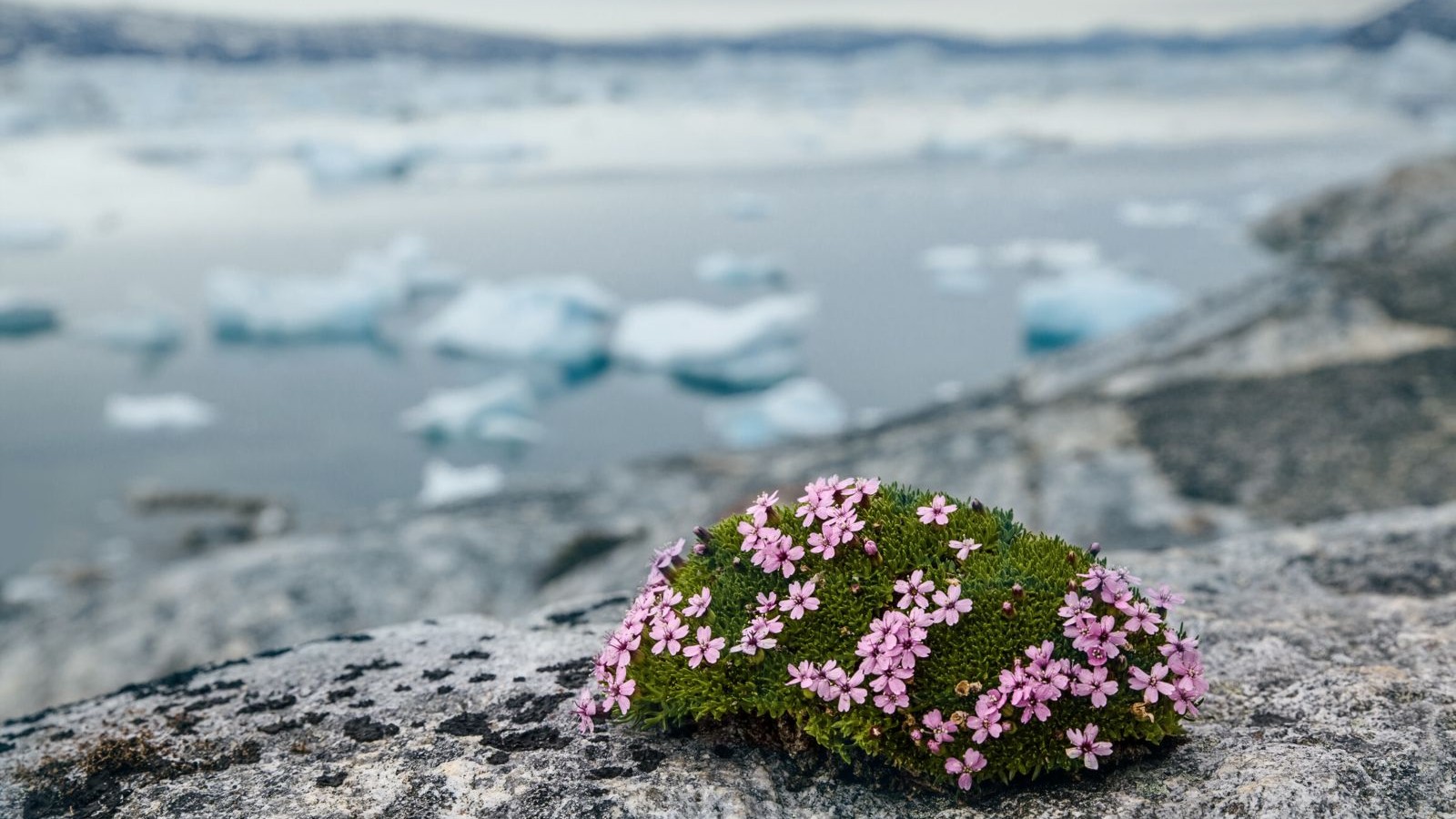
Finding a decent place to live can be difficult, especially when your neighborhood is a freezing mountainside. Fortunately, one little plant has been making life easier for everyone around it. Silene acaulis, commonly called moss campion, grows in dense, rounded cushions covered in tiny pink flowers. It might look like a pretty patch of moss, but there’s a lot more going on beneath those flowers.
Its tightly packed stems create a sheltered environment that helps protect other plants and small creatures from harsh mountain conditions. Some plants even grow right inside its cushions. In a 2012 study on Whistler Mountain in British Columbia, researchers found greater plant richness and more arthropods in moss campion cushions than in nearby vegetation. Scientists call plants like this nurse plants because they help other species survive in difficult environments. Moss campion might be small, but it’s managed to create an entire neighborhood where none of the residents are paying rent.[9]
1 The Flower That Refuses to Freeze Out
Sequencing the Genome of an Antarctic Survivor | Colobanthus quitensis
Antarctica isn’t exactly the first place you’d go looking for flowers. Between the freezing temperatures, fierce winds, and months of darkness, it’s hardly an ideal gardening destination. Yet Colobanthus quitensis, better known as Antarctic pearlwort, has managed to make a home there. It’s one of only two native vascular plant species in Antarctica, growing in small, cushion-like clumps along parts of the Antarctic Peninsula.
This little survivor can screen out harmful ultraviolet radiation, photosynthesize at temperatures close to freezing, and pollinate itself when necessary. Its seeds can also remain dormant in the soil until conditions improve. Antarctica has penguins, glaciers, and some of the harshest weather on Earth. And tucked among all that ice is a flowering plant that refuses to give up its spot.[10]
fact checked by Darci Heikkinen
