


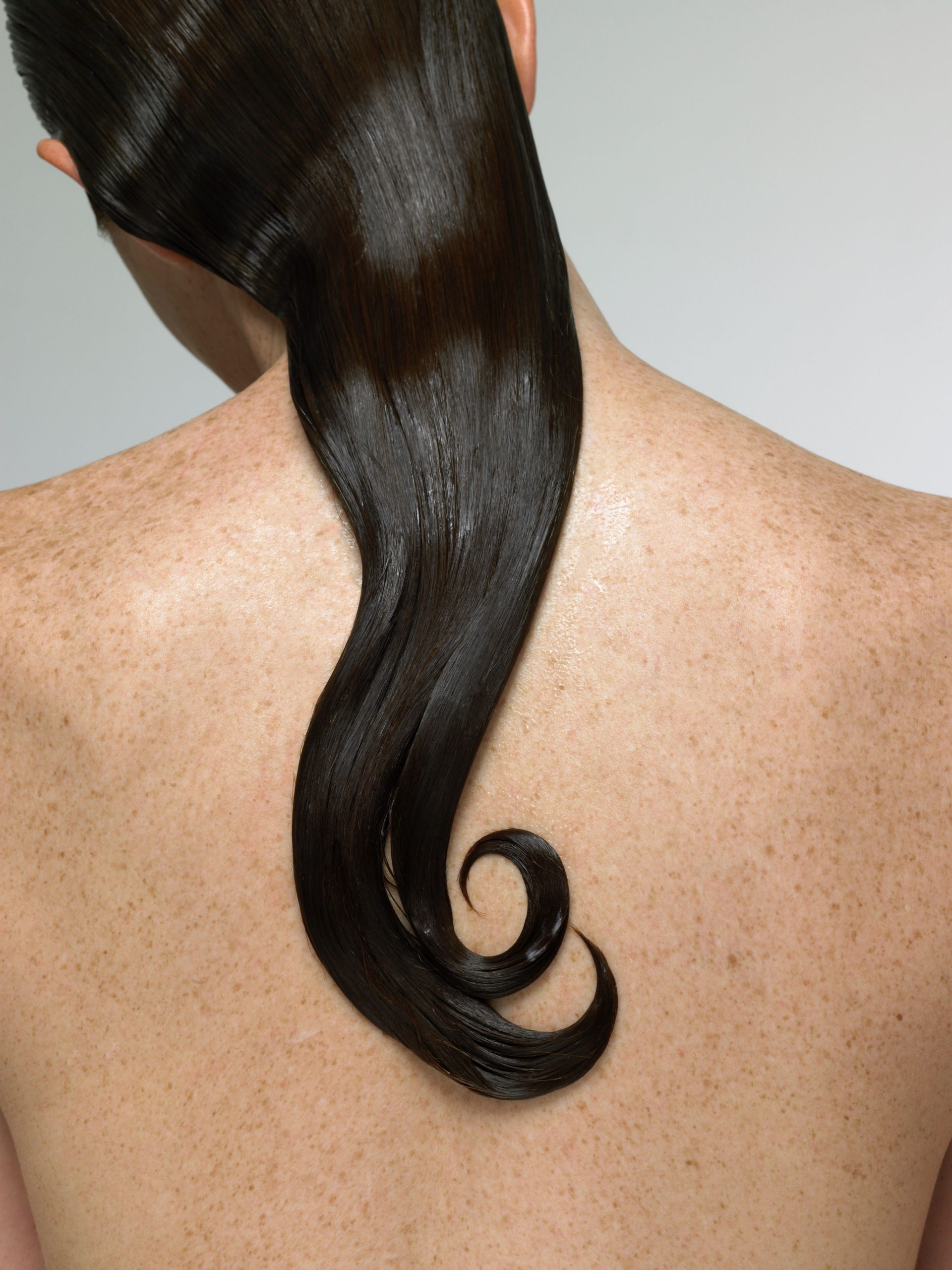
It’s the great generational debate: Side part or middle part? Where we part our hair dictates the facial features we want to play up and sets the tone for our overall vibe.
But what if this defining hair feature that we spend a lot of time contemplating comes with unexpected consequences? According to Korean hair clinic Lee Moon Won, sticking to one hair part forever might be the cause of one of our most pressing hair concerns: unwanted shedding.
How could our hair part possibly contribute to shedding?
There are a few reasons why this might be. Wonuk Hwang, MD, clinic director at the Cheongdam Lebelle Clinic in Seoul, explains that the exposed skin where we part our hair has less protection from environmental stressors such as the sun’s harmful UV rays, and that should always be looked at seriously. Hwang points to studies that show UV radiation can cause cellular damage to the hair follicles and scalp tissue, which could increase hair shedding after severe scalp sunburn. Even though those studies don’t mention hair parts specifically, he says that exposed scalp will always need sun protection.
“It is definitely important to be mindful of cumulative sun exposure on the scalp where we part our hair,” says Helen He, MD, director of lasers and cosmetic surgery and codirector of Mount Sinai-Clinique Healthy Skin Dermatology Center. “Since that area of skin is more exposed to the sun without innate protection from hair, it may be more susceptible to developing skin cancers and precancerous lesions. While there is no current evidence that chronic UV exposure directly leads to increased hair shedding, there is a clear association with skin cancer risk, oxidative stress, and inflammation.”
Treating inflammation is a key part of treating hair loss in K-beauty. As He explains, inflammation around your hair follicles can disrupt the normal hair cycle and lead to increased hair loss and shedding. Several hair conditions, she says, such as seborrheic dermatitis and scalp psoriasis, showcase this; when they increase inflammation on the scalp, it will eventually exacerbate thinning hair. Autoimmune diseases such as alopecia areata, and cicatricial alopecia are considered chronic inflammation disorders that also cause hair loss.
“The thinking is that an inflamed scalp makes follicles more vulnerable,” adds Michelle Lee, chief marketing officer of K-Beauty World and former editor in chief of Allure. “It’s the same logic K-beauty applies to the skin, where you calm the barrier first and everything else works better.”
There’s also some mechanical stress with your regular hair part. He says that when hair is repeatedly parted, brushed, and styled in one direction, it may inadvertently put tension on your strands. “Over time, this repeated friction can accumulate and lead to hair breakage,” she explains. “While excessive pulling or tension can damage hair follicles and potentially lead to traction alopecia.”
Does changing your hair part actually prevent hair loss?
He wouldn’t call this method essential, but she says it may be helpful. “It will prevent any one area of the scalp from excessive UV exposure,” she explains. “It would also prevent excessive tension to the same areas of hair.”
“It’s something so easy and immediately actionable, but it’s more about the mindset rather than thinking that changing your part will completely solve your hair-loss issues,” adds Lee. “It’s more about being thoughtful about how we’re treating the scalp in general and making sure that we care for it and keep it protected and nourished.”
Should you want to give this method a try, she says the Lee Moon Won Clinic, which she visited last year, suggests changing your part every six months and moving it at least four centimeters away from old parts so that the newly covered area isn’t the same spot that has been exposed and it ensures that the same strip of the scalp won’t be subjected to constant sun and dust, both of which can lead to inflammation.
Other K-Beauty Tips to Treat Hair Loss
Hwang says that there’s no single K-beauty approach to hair loss. Instead, it’s a holistic approach that assesses the scalp and identifies the causes of hair loss. “It is focused on optimizing scalp health to create an environment that supports healthy hair growth,” He agrees. Other than reducing inflammation, she says K-beauty prioritizes fortifying the scalp barrier and microbiome, gentle exfoliation to decrease buildup, and improving microcirculation.
For everyday care, she recommends regular washing to prevent buildup and excess oil. You can turn to known K-beauty soothing ingredients such as cica, centella asiatica, and tea-tree and green-tea extracts, which she says are staples in K-beauty skin care and scalp products for optimal scalp health. Hwang recommends avoiding styles that repeatedly pull on your hair and adding scalp sun protection into your routine with a hat or a water-resistant sunscreen with SPF 30 (or higher) broad-spectrum protection.
Lee says that the hair clinic recommended that she tweak certain lifestyle habits, such as changing her pillowcase every two to three days and taking a closer look at her diet. The clinic also gave her tips on how to better dry her hair and sleep to keep hair healthy. “What struck me is that hair loss was treated as a scalp and lifestyle problem,” she says. “At the end of my analysis and treatment, they weren’t trying to treat my issues with medications. Rather, they have their own concoction of natural ingredients as well as a whole list of lifestyle changes.”
And when in doubt, see a doctor for any persistent or unexplained shedding. Addressing any underlying causes, whether it be inflammation, hormones, stress, or an autoimmune condition, will always be the most important step when it comes to hair loss. Whether you have a side part or not.
Have a beauty or wellness trend you’re curious about? We want to know! Send Vogue’s senior beauty and wellness editor an email at beauty@vogue.com.
