


David Nield
Freelance Writer
Experience
David Nield is a technology journalist from Manchester in the U.K. who has been writing about gadgets and apps for more than 20 years.
He has a bachelor’s degree in English Literature from Durham University, where he also spent a term as editor of the award-winning student newspaper Palatinate. His journalism career started in print media, where he contributed to and edited several technology magazines and bookazines sold in the U.K. and internationally.
More recently, he has worked as a freelancer for some of the biggest technology publications on the web, covering everything from on-the-ground reporting about product launches, to detailed explainers and how-to guides on apps, gadgets, and platforms. His expertise covers broad areas of consumer tech, including smartphones, laptops, wearables, and AI.
Add as a preferred source on Google

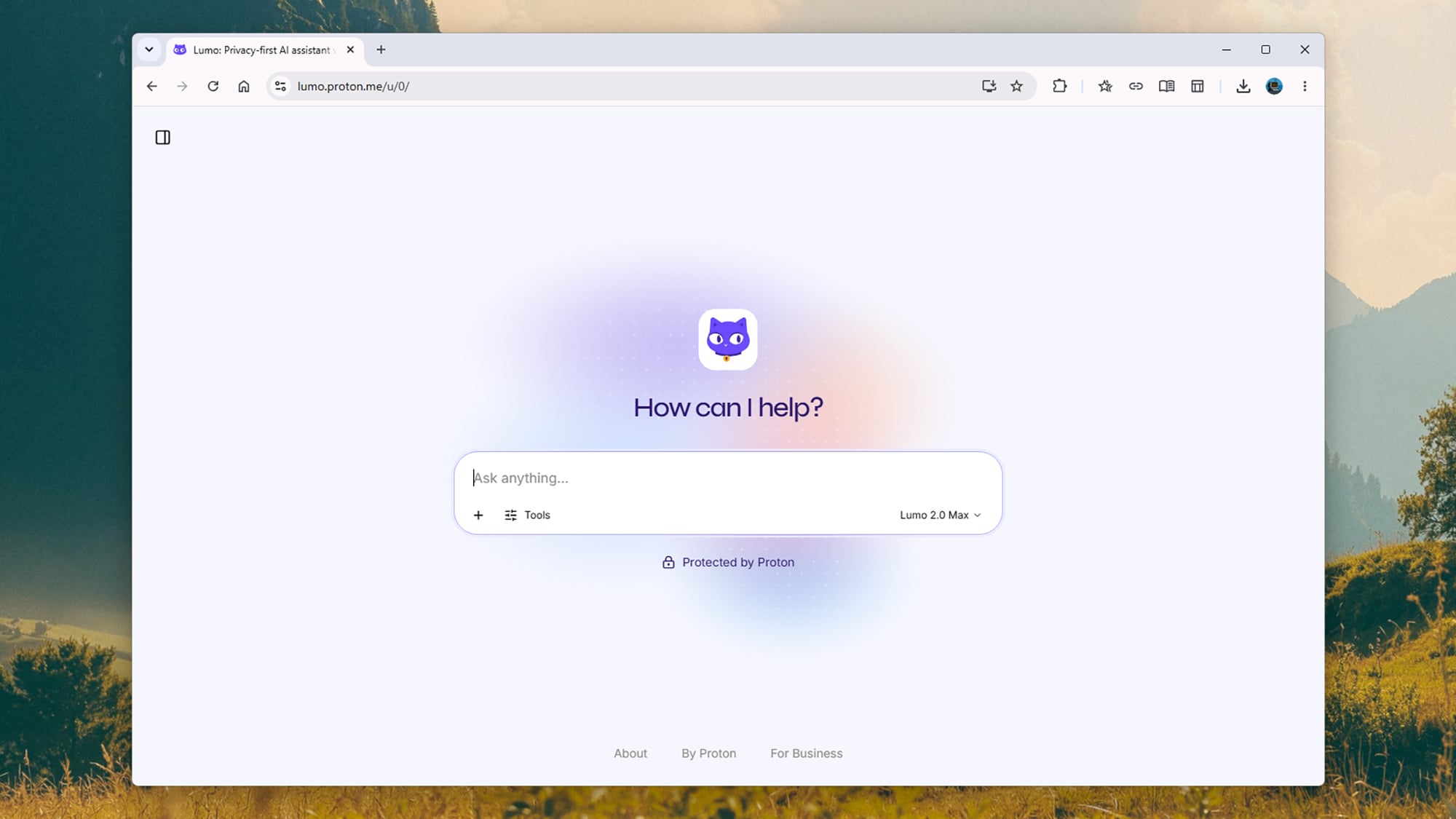
Lumo 2.0 is here.
Credit: Lifehacker
Table of Contents
If you’re a regular Lifehacker reader, you’ll know Proton develops a range of privacy-first products, including an email service, a VPN, and cloud storage. It also now has its own AI chatbot, called Lumo—first launched in August 2025, and recently upgraded with a host of new capabilities, including image generation.
Having given Lumo 1.0 a test run last year, I found it a capable AI assistant. While it wasn’t on the same level as apps like ChatGPT and Gemini, it got close enough to make it worth considering if you didn’t want to deal with OpenAI and Google. Now that Lumo 2.0 is live, I was keen to give it another go.
Lumo is available on the web, on Android, and on iOS, and you can get started for free—you don’t even need a Proton account. As you might expect, there’s a $12.99 per-month Pro tier available, which gets you features like a full chat history, more advanced AI models, and higher usage rates in terms of chats and file sizes. Unfortunately, the Pro tier is not included in Proton’s other subscription packages—it’s separate.
How Proton’s privacy stacks up
Read the Lumo 2.0 launch post, and you’ll see the company is very keen to make its AI assistant stand out in terms of how little data and personal info it keeps. Of course, some data storage is necessary for the bot to actually work, and if you want, you can keep your chats around to refer back to.
First of all, your chats aren’t used to train the AI models Lumo is built on. That’s something you’ll find as an option you can toggle in bots such as ChatGPT and Gemini, while it’s also a selling point for Apple Intelligence. Other AIs are less transparent when it comes to this aspect, so it’s good to see Proton mentioning it up front.

ChatGPT will use your chats to train its AI, though you can opt out.
Credit: Lifehacker
There’s also zero-access encryption for your chats, which means no one can take a peek at what you’re reading—not law enforcement, government agencies, or even Proton staff. That’s a clear advantage over other AI platforms, though the likes of Google and OpenAI would argue there are strict legal procedures and strong regulations in place to keep your saved chats private. However, like other AIs using LLMs, Lumo can’t offer full end-to-end encryption, as Proton explains here.
It’s hard to be definitive here in comparing Lumo to other services, because a lot depends on whether you’re saving or erasing chats as you go. To complicate matters further, OpenAI is currently having to hang on to a good chunk of all user chats (even the deleted ones) as part of its ongoing lawsuit with the New York Times.
What is clear is that Proton takes the issue more seriously than just about anyone else at the moment. There is no review of chats by humans, which happens with other chatbots like Gemini—in order to “help improve Google services” for you and everyone else, supposedly (which is why you should never share anything too private with an AI chatbot).

Gemini’s auto-delete feature for chats.
Credit: Lifehacker
What’s more, Lumo runs on open source AI models, which should mean more transparency. There’s no partnership with any third party in terms of how the service is run, so you can be sure that the policies and protections Proton has implemented aren’t going to be compromised through connections to other companies.
You can read more on Lumo privacy on the Proton website, including information on the large language models (LLMs) used by the chatbot. As ever with Proton, it’s worth remembering that it operates out of Europe—meaning it’s not subject to the same kind of data surveillance and retention policies as somewhere like the U.S.
Lumo 2.0 vs ChatGPT
In my Lumo 1.0 hands-on, I mentioned that image generation and deep reasoning were a couple of the features that it lacked compared to other chatbots—but that’s no longer the case. To begin with, Lumo 2.0 can both generate and analyze images, so I was eager to give this new functionality a go right away.
Lumo’s AI images are high quality overall.
Credit: Lifehacker / Lumo

The same prompts but in ChatGPT.
Credit: Lifehacker / ChatGPT
Lumo lets you modify images you’ve created through follow-up prompts like ChatGPT does, and it really impressed me in terms of how quickly the images were generated—it produced something usable in fewer seconds, though to be fair, the graphics it produced were also at slightly lower resolutions.
Lumo 2.0 comes with a new Thinking mode, which is slower than the alternative Fast mode but better at reasoning. I put it to work on a few dense scientific research papers, and its analysis and summaries appeared to be on a par with ChatGPT’s in terms of how well they were written and structured. On a couple of occasions, Lumo actually presented the relevant information in a more accessible way than the OpenAI chatbot.
Web search is another area where Lumo 2.0 brings improvements, and again, Proton’s AI app matched ChatGPT in terms of how it collected and organized information from the web. I got both bots to summarize a few current tech news stories, and they were equally capable in terms of summaries, complete with updates on search progress along the way, and references at the end. ChatGPT tended to be a little more thorough, but I liked the way Lumo presented its info.

Lumo is now better at finding and presenting info from the web.
Credit: Lifehacker
Other upgrades in Lumo 2.0 include improved memory recall and management, and Custom Lumos that match the Custom GPTs in ChatGPT: They let you create siloed AI assistants for specific tasks, like polishing text or outputting web searches in specific formats. Lumo has clearly come a long way since the initial release, both in terms of the quality of its answers and the features on offer.
ChatGPT is still the more mature AI product, with features like live voice mode and professional coding assistants, but the gap between Lumo and the established AI chatbots is now significantly smaller—certainly for casual, everyday use. If you’re looking for AI with a few more principles built in, it’s worth considering.
The Download Newsletter
Never miss a tech story

Jake Peterson
Get the latest tech news, reviews, and advice from Jake and the team.
The Download NewsletterNever miss a tech story.
Get the latest tech news, reviews, and advice from Jake and the team.
