



Commercial planes have advanced a great deal since the advent of the jet engine. Today, they fly further and faster than ever before, and even though the name of the game in plane design is efficiency, it still takes a large amount of fuel to get a plane to its destination. To maximize an airliner’s range, they are regularly filled with the maximum amount of fuel and take off at the upper limits of the plane’s maximum takeoff weight. Conversely, it can’t land at maximum takeoff weight, as the plane is expected to lose sufficient weight through fuel burn to make it safe to land when it arrives at its destination airport. If something goes wrong at the point of departure, dumping fuel is one of the only ways to make the airplane light enough to land immediately, and to ensure the safety of its passengers.
An important consideration of overweight landings is the plane’s landing gear. A modern airliner’s landing gear is designed to stand up to a lot of punishment. Strong winds often make it very challenging to land, and pilots don’t always have the luxury of landing a plane smoothly. Wind gusts can do things like cause the world’s largest passenger airliner to make a scary crosswind landing, and while the landing gear is designed to absorb the forces of a crosswind landing, it cannot do so without risk of failure if the plane is too heavy. Runway length also comes into play, with heavier airplanes having to land faster than usual because of the weight’s effect on the plane’s stall speed. Overweight planes often struggle to stop if the runway isn’t long enough, and these landings often result in excessive brake wear or tire damage.
How pilots plan fuel loads
Avi Stock/Getty Images
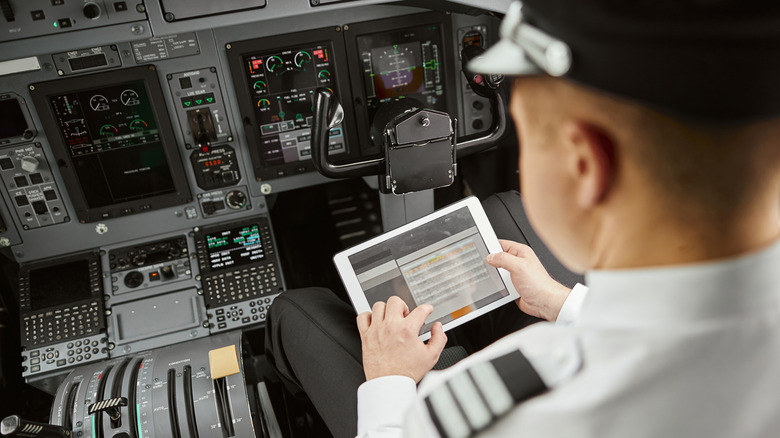
In the world of commercial airline operations, pilots have the responsibility to ensure that a plane has enough fuel to make it to a destination airport, with enough fuel reserve left to fly to an alternate destination should the plane not be able to land at the primary airport. While efforts are being made to offer more efficient jet engines that would ease this process, such as this concept for an advanced plasma jet engine of the future (though it still a major problem to overcome), pilots still have to plan alternate destinations carefully. They have to take into account how many passengers, bags, and fuel are loaded onto their plane. By inputting these weights into preflight calculations, pilots are able to request specific amounts of fuel to get to their destinations with redundancy built in.
In addition to making sure they have enough fuel, pilots must also consider the balance of their plane. Passengers and cargo are not always distributed equally along the length of a modern airliner, and pilots often have to balance fuel loads to make sure that the plane’s center of gravity remains within design limits. Airliners have multiple fuel tanks within the wings and within the fuselage itself, depending on the particular plane type. Fuel can be used to crossfeed, or taking fuel from one side of the plane to be burned by the engine on the opposite side, to help balance a plane, which is often done automatically throughout a flight in modern airliners.
Fuel loads are usually calculated in advance of any flight, and as part of normal cockpit preparations, precalculated fuel loads are entered into the plane’s flight computer to ensure that the fuel remains distributed correctly and that all critical speed reference points such as takeoff speed and stall speed are tracked throughout any flight.
The hazards of dumping fuel
Hasansanci/Getty Images
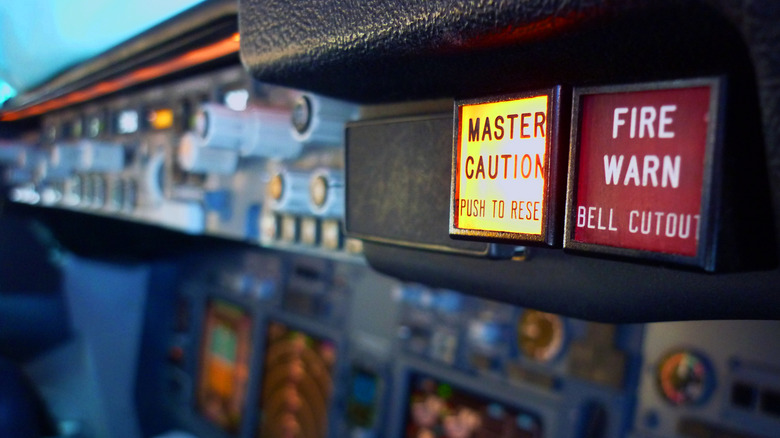
Planes have to make emergency landings for all kinds of reason, mostly related to mechanical issues, but can sometimes happen for other reasons. In 2019, a passenger’s power bank burst into flames onboard a Virgin Atlantic flight, forcing the plane to land immediately. While it’s generally considered acceptable practice in emergency situations, airlines still have the responsibility of ensuring that fuel dumping is only done over unpopulated areas if possible. One example where this was done incorrectly was Delta Air Lines Flight 89. The Boeing 777-200 took off from Los Angeles and was on the way to Shanghai Pudong in China, when one of its engines developed issues. This resulted in the plane having to return to Los Angeles, dumping fuel before landing.
Pilots had dumped fuel over a populated area in Cudahy without notifying air traffic control, which was contrary to FAA regulations. While details remain unclear as to how high the plane was when it dumped fuel, the plane should have been flying at least 2,000 feet above the highest obstacle on the ground to abide by stated rules. Had they been informed of the pilots’ decision, air traffic controllers would also have been able to vector the plane away from populated areas in a more ideal scenario. While no serious injuries were reported, jet fuel can have serious effects on human health and the environment, and the situation could have been far worse.
