



Iran must be feeling quite pleased about this dealpublished at 10:18 BST
 Lyse Doucet
Chief international correspondent
We’ll soon find out whether this Memorandum of Understanding is a Memorandum of Misunderstanding.
If you look at the black and white of the text, Iran “reaffirms” that it will not acquire a nuclear weapon – but that’s what it’s been saying for years. It was in the 2015 nuclear accord President Trump pulled out of in his first term, declaring he could do a much better deal.
In this 14-point framework, the only hint of the shape of Iran’s nuclear programme is the mention of “down- blending” Iran’s 440 kg of uranium, enriched to some 60%, dangerously close to weapons-grade.
It’s a concession Iran made in the February 2026 talks in Geneva – two days before this war. There’s no mention of president Trump’s repeated demand that what he calls ‘nuclear dust’ is shipped to the United States.
If Iran wants a web of crippling sanctions lifted, and assets unfrozen, it needs to make concessions on dismantling its nuclear programme.
But what it already has in this framework is immediate waivers on exporting its crude oil, its petroleum products, and a $300bn “reconstruction fund” being put in place .
This morning Iran must be feeling quite confident and quite pleased about this deal.
‘It smacks of appeasement’ – how some Republicans see the dealpublished at 10:05 BST
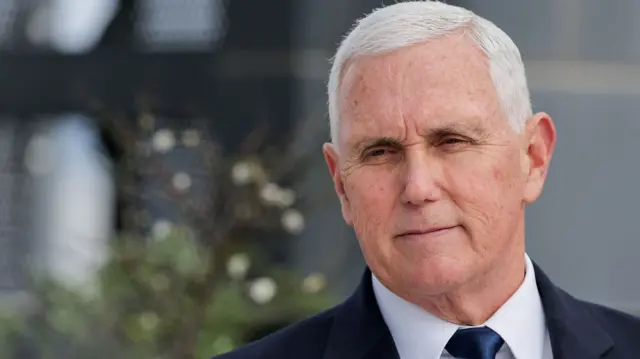 Image source, Reuters
We’ve had some reaction from Republican politicians in the US who have criticised the Iran deal.
Former US Vice-President Mike Pence says on X that the Memorandum of Understanding “does smack of the kind of
appeasement that our administration rejected in the Obama-Iran nuclear deal.”
He told Fox News he gave credit to Trump for launching the war, but he says the deal has no commitment to the dismantling of Iran’s nuclear programme or to “end supporting terrorist proxies.”
“I don’t trust the Iranians,” Pence adds.
Congressman Thomas Massie raises concerns about the $300bn fund earmarked in the deal for Iran, posting on social media that “$300 billion is 5 X as much as Congress spends on our roads
& bridges annually.”
For context: The text of the MOU says the $300bn will be developed with regional partners, and does not come from the US itself.
“Reagan
is rolling over in his grave,” says Louisiana Republican Senator Bill Cassidy. “This is the worst foreign policy blunder in decades.”
Iran has “learned that threatening the Strait of Hormuz works,” and will do it again, he adds.
But others, such as South Carolina Senator Lindsay Graham are backing the deal. He has posted on X that it will create economic stability for the US and the world.
Trump reacts to criticism he has not been ‘tough enough’ on Iranpublished at 10:00 BST
Donald Trump has taken to his Truth Social site to hit back against criticism that he has not been “tough enough” on Iran.
He says: “These fools, who think I haven’t been tough enough on Iran, when the Stock Market Just Hit A RECORD HIGH, and Oil prices are “tumbling” down, are either jealous, bad people, or stupid. MAKE AMERICA GREAT AGAIN!!! President DJT”
- For context, some US lawmakers have been criticising Trump for the US-Iran Memorandum of Understanding, warning that it does not adequately curb Iran’s nuclear ambitions and leaves Iranians with the power to leverage the Strait of Hormuz. We will bring you more on this shortly.
Iranian president signs Memorandum of Understanding on behalf of Iranpublished at 09:51 BST
These images have been shared by the X account of the Government of the Islamic Republic of Iran and the Telegram account of Iran’s Mehr news agency this morning.
They show Iranian President Masoud Pezeshkian signing the Memorandum of Understanding on behalf of Iran.
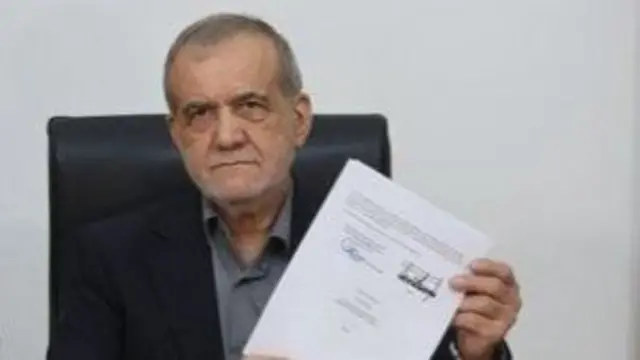 Image source, IRNA images
Iranian President Masoud Pezeshkian signed the memorandum on behalf of Iran
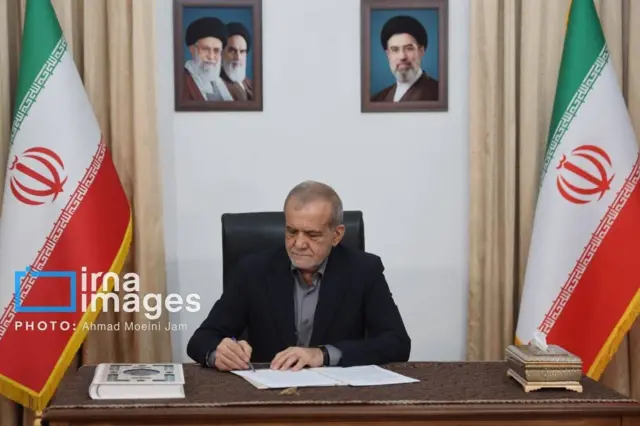 Image source, IRNA images
Pakistani Prime Minister Shehbaz Sharif has also shared photos of himself signing the memorandum as a mediator.
And you can see President Trump adding his signature in our video at the top of the page or in our previous post.
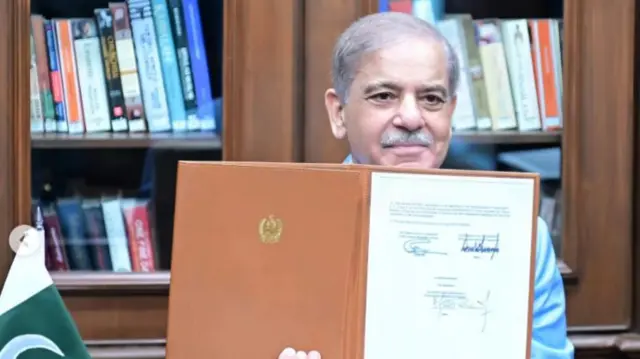 Image source, Instagram/@shehbazsharif
Pakistani Prime Minister Shehbaz Sharif also signed the memorandum
International Atomic Energy Agency ready for ‘concrete steps’ on Iran nuclear agreementpublished at 09:39 BST
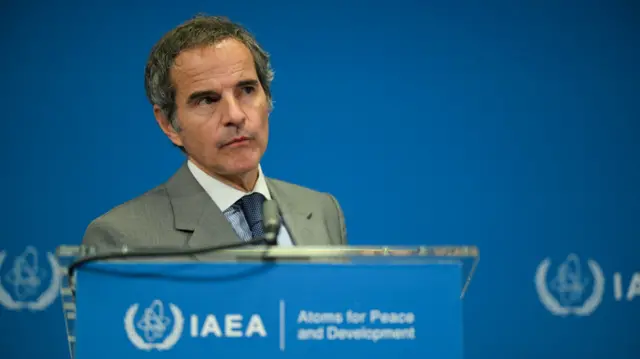 Image source, Reuters
The director general of the International Atomic Energy Agency has said they are ready to figure out “concrete steps” to address Iran’s nuclear programme.
As a reminder, within the current agreement between the US and Iran, Iran has recommitted to not procuring or developing nuclear weapons while both sides have agreed to deal with the enriched uranium Tehran already has.
In a briefing this morning, Rafael Grossi says that speculating about what might cause problems technically “is not wise”.
“I initiate any negotiation on the assumption that we are all in good faith, that we want to be successful.
“If they have signed this […] it’s because everybody wants this to be a success.”
He adds the agency has a “pretty good idea” of the specific things and places the agency will need to access, but “it would be incorrect to step ahead of the process”.
“We are at the gates of the decisive phase of the technical conversations.”
War has taught Iran how to use the Strait of Hormuz as a weaponpublished at 09:21 BST
 Jeremy Bowen
International editor
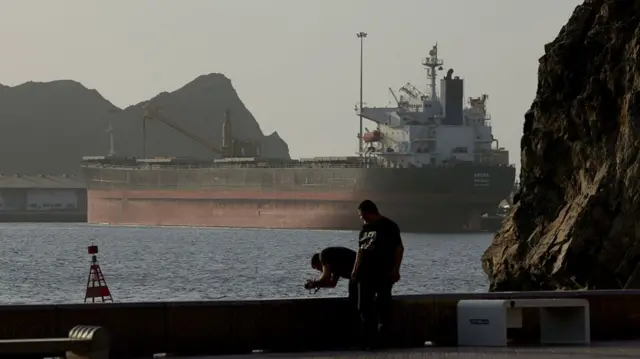 Image source, Anadolu via Getty Images
Ships wait in the Gulf of Oman on Wednesday, preparing to transit through the Strait of Hormuz
When all this started on 28 February, Donald Trump and Benjamin Netanyahu said there was going to be a regime change.
And now we’re at a point where the Iranian regime and the Americans, through intermediaries, did this deal essentially speaking to each other as equals.
We’re looking at an empowered Iranian regime which has had its worst nightmare happen – a joint attack by the Americans and the Israelis aiming at a regime change. They got through it. It didn’t happen.
Iran has spent billions over the years – first of all on their nuclear programme, which they have always denied was to do with getting a weapon – and also on building their network of regional allies, starting with Hezbollah in Lebanon.
But what they’ve found is that closing the Strait of Hormuz is way cheaper and way more potent. It’s a weapon that can actually be used, unlike the threat of a nuclear weapon, which is about deterrence.
Just throwing a few missiles at a few tankers will once again re-close the Strait of Hormuz if Iran wanted to – and everybody knows that. And that is something that must be very empowering for the regime in Tehran.
Let’s not forget Iran has taken an absolute hammering. They’ve got billions of dollars in damage that needs to be fixed. So actually, the economic inducements in the Memorandum of Understanding may push them towards thinking, let’s do a deal on the nuclear issues.
Lebanon remains a ‘stubborn’ talking point between US and Israelpublished at 09:13 BST
A senior Israeli official close to prime minister Benjamin Netanyahu has told Reuters news agency that “stubborn negotiations” are ongoing between the US and Israel regarding Lebanon.
They added that Israel has no intention of backing down on its position of continuing its deployment of troops in Southern Lebanon.
Despite the Memorandum of Understanding stating that military operations would cease in Lebanon, as we reported in our previous post, Lebanese media is reporting strikes in the country.
Lebanese media reports Israeli strikes in south of countrypublished at 08:49 BST
Lebanese media is reporting Israeli strikes in the country, despite the US-Iran memorandum of understanding ruling them out.
Lebanon’s state-run National News Agency (NNA) says a person was killed by an Israeli strike on a car in Kfar Tebnit, in the Nabatieh area in southern Lebanon this morning.
The agency also reported drone strikes in the towns of Beit Yahoun and Hadatha.
Earlier, the Israel Defence Forces (IDF) reported on Telegram that a soldier had been killed in an incident in southern Lebanon.
The IDF said on X: “Hezbollah continue spreading their terror across southern Lebanon, threatening our civilians and soldiers.”
As we’ve been reporting, the memorandum of understanding signed by the US and Iran yesterday begins with the point: “The immediate and permanent termination of military operations on all fronts, including in Lebanon.”
The Israeli government has yet to publicly respond to the US and Iran deal signing.
Oil prices continue downward trajectory following signing of agreementpublished at 08:28 BST
Shanaz Musafer
BBC business reporter
Oil prices have continued to fall this morning after the US and Iran signed a Memorandum of Understanding last night.
Apart from a brief spike on Wednesday, oil has been dropping since it emerged at the weekend that the two countries had agreed a framework deal to end the war and reopen the key Strait of Hormuz shipping route.
Brent crude, the global benchmark, began the week trading at about $86.80.
It’s currently trading at $74.80, down about 2% on the day.
The Memorandum of Understanding’s 14 core points – in 300 wordspublished at 08:19 BST
The US-Iran agreement to extend the ceasefire centres around these 14 core points:
1. “The immediate and permanent termination of military operations on all fronts, including in Lebanon“
2. US and Iran to “respect each other’s sovereignty and territorial integrity and to refrain from interfering in each other’s internal affairs”
3. They “commit to negotiating and achieving the final deal in maximum 60 days, extendable with mutual consent”
4. Immediately, the US “will begin the removal of its naval blockade… and will fully end the naval blockade within 30 days”
5. In the Strait of Hormuz, Iran “will make arrangements using its best efforts for the safe passage of commercial vessels with no charge, for 60 days”
6. The US undertakes “with regional partners to develop a definitive, mutually agreed plan with at least USD $300 billion for the reconstruction and economic development of” Iran
7. US to “terminate all types of sanctions against” Iran
8. Iran “reaffirms that it shall not procure or develop nuclear weapons“, but other parts of the programme are still to be negotiated. The two parties “agreed to discuss the issue of enrichment and other mutually agreed matters related to the Islamic Republic of Iran’s nuclear needs”
9. Pending the final deal, the US and Iran “agree to maintain the status quo”
10. Upon signing, and until the termination of sanctions, US Treasury will “issue waivers for the export of Iranian crude oil, petroleum products, and derivatives, and all associated services”
11. US undertakes “to make fully available for use the frozen or restricted funds and assets” of Iran
12. “An executive mechanism will be established to monitor the successful implementation” of this memorandum
13. After signing – subject to implementation of points 1, 4, 5, 10 and 11 – the US and Iran “will start negotiations regarding the final deal exclusively on the other paragraphs”
14. “The final deal will be endorsed by a binding UNSC (United Nations Security Council) resolution“
Iran says new talks in Switzerland ‘under consideration’published at 08:04 BST
A new round of talks in Switzerland “remains under consideration”, Iran’s Foreign Ministry spokesperson Esmaeil Baqaei has said.
“Discussions are expected to continue through diplomatic channels and mediation efforts in the coming hours,” a statement from the official social media account for the government adds.
Meanwhile, the Swiss government has indicated that representatives from the US and Iran will meet in Switzerland tomorrow for initial talks, according to a statement reported by the Reuters news agency.
“As things stand, the plan is still for the US and Iran,
along with mediators Pakistan and Qatar and other involved
countries, to meet tomorrow at Buergenstock for initial
negotiations about implementing the agreement,” the statement reads.
“No further information is currently available regarding the
schedule and details of this meeting.”
As a reminder, the official signing of the deal had been scheduled to take place in Switzerland on Friday – but an electronic version of the deal has already been signed by both countries and Trump signed a hard copy of the agreement yesterday.
Deal includes end of military operations in Lebanonpublished at 07:49 BST
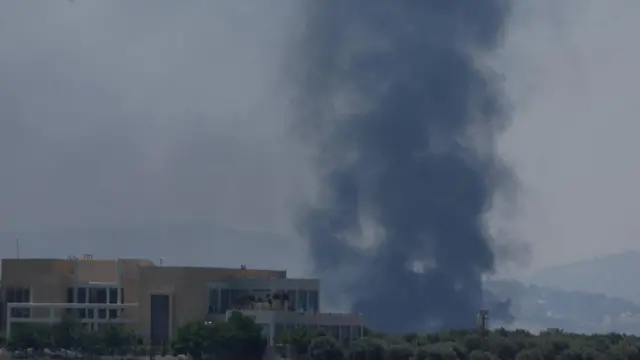 Image source, Reuters
Smoke billows from southern Lebanon after reports of strikes yesterday
The first paragraph of the US-Iran agreement notes that the US and allies will declare an “immediate and permanent” termination of military operations on “all fronts” – including Lebanon.
It has been a sticking point throughout the conflict, with Hezbollah, the Iran-backed armed group which operates from Lebanon, and Israel accusing each other of breaking ceasefire pledges.
Iran’s Foreign Ministry spokesperson Esmail Baghaei said on Telegram earlier that if Israel continues to attack Lebanon, it will be considered a breach of the memorandum. According to Iranian state TV, he also said that the continued presence of Israel’s military in Lebanon would be a “violation” of the deal to end the war.
The Israeli military carried out new strikes in southern Lebanon yesterday, and today said a soldier had died in an “incident” in southern Lebanon.
Speaking at the G7 Summit in France yesterday, US President Donald Trump said peace in Lebanon is “something we will have to work on”, but that “the big deal is the Iran deal”.
The Israeli government has yet to publicly respond to the US and Iran deal signing.
Lebanon was drawn into the war on 2 March, when Hezbollah launched rockets into Israel, saying it was in retaliation for the killing of Iran’s supreme leader.
Israel responded by launching a bombing campaign across Lebanon and carrying out ground military operations in the country’s south.
Deal comes ahead of scheduled meeting on Fridaypublished at 07:24 BST
Moment Trump signs Iran deal at Palace of Versailles
The memorandum of understanding, which is now in effect, was signed by the US and Iran on Wednesday.
It came ahead of a scheduled meeting in Switzerland, with US and Iranian representatives, which had been expected on Friday.
Iran’s Speaker of the Parliament Mohammad Bagher Ghalibaf and US Vice-President JD Vance were both expected to attend the signing.
It is not clear whether that will now go ahead.
Meanwhile, both sides have committed within the current agreement to negotiating for a lasting agreement within a provisional deadline of 60 days.
That, however, can be extended and when asked yesterday, Trump told reporters “it could take longer”.
Reopening the Strait of Hormuz among points agreed between US and Iranpublished at 07:08 BST
 Image source, Reuters
As we’ve been reporting, a US-Iran agreement to extend a ceasefire has come into effect and centres around 14 core points.
Among those will be the reopening of the Strait of Hormuz.
The US has said it will begin removing its naval blockade – with the agreement outlining that the blockade is set to end fully within 30 days.
Iran, separately, will “make arrangements using its best efforts” to allow safe passage of commercial vessels through the Strait without charges for 60 days.
Among other points, Iran has agreed to not procure or buy a nuclear weapon while the US will terminate all economic sanctions against Iran.
The two countries have agreed to commit to working towards a final deal in a “maximum” of 60 days – this deadline is extendable if there is mutual consent.
Our White House reporter has unpicked the agreement in more detail.
Deal is signed – but distrust remains between Iran and USpublished at 07:01 BST
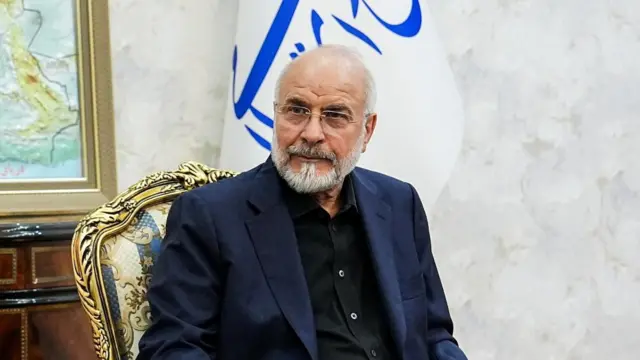 Image source, Iranian Parliament Speaker Office/Reuters
Iranian Parliament Speaker Mohammad Bagher Ghalibaf said that even if there is a final peace agreement, “it is still not trustworthy”
The memorandum of understanding between the US and Iran has been signed. But distrust remains between the two countries – and both warn that hostilities could resume.
As details of the deal were revealed at the G7 summit in France, President Donald Trump warned the US would “bomb the hell” out of Iran if it didn’t abide by the terms of the deal.
And Iran’s parliamentary speaker, and key negotiator, Mohammad Bagher Ghalibaf, who agreed the deal with the Trump administration, told Iranian media his distrust of the US remained, and Iran’s “finger is on the trigger”.
New US-Iran agreement in effect after signing last nightpublished at 06:56 BST
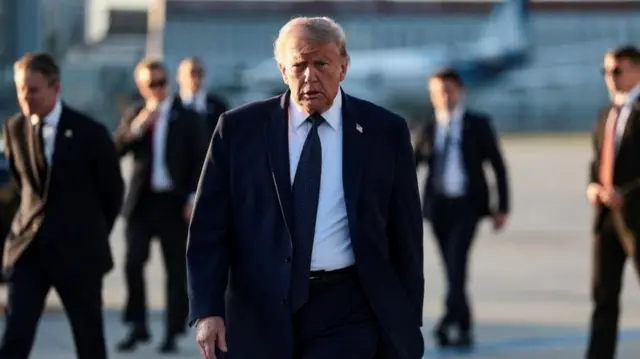 Image source, Reuters
Late last night, US President Donald Trump and Iran’s Masoud Pezeshkian signed an initial deal to end the war, extending the current ceasefire for another 60 days.
The so-called Memorandum of Understanding was signed by Trump while he attended a dinner hosted by French President Emmanuel Macron at the end of the G7 summit.
The 14-point agreement says that Iran has agreed to not procure or buy a nuclear weapon, and also proposes a $300 billion fund for the “reconstruction and economic development” of the country – although the US is not required to contribute.
However, there are a number of issues which as of yet remain unresolved, including the key issue of Iran’s nuclear programme, which are still to be negotiated over an extendable 60-day period.
Trump caps off G7 summit with late-night Iran deal signing at Versaillespublished at 00:35 BST 18 June
 Anthony Zurcher
North America correspondent, travelling with the president
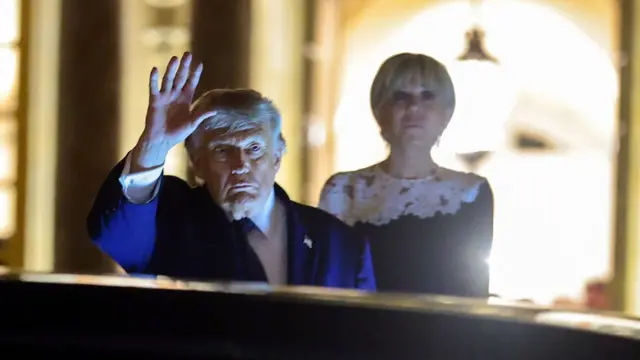 Image source, Getty Images
After Donald Trump’s long day at the G7 summit in Evian-les-Bains, France – attending a morning plenary session, meeting with President Abdel El-Sisi of Egypt and Prime Minister Narendra Modi of India, and giving a news conference on the US’s agreement with Iran – the US president took a short flight to Paris.
Then, it was time for dinner at the historic Versailles Palace with French President Emannuel Macron and French first lady Brigitte
Macron – which didn’t start until 22:00 local time (21:00 BST), in true European fashion.
At some point, the president took time out
from his meal to sign the memorandum of understanding with Iran.
It is after
midnight now, and the American and French presidents have just left the
opulent estate, as those of us in the White House’s travelling press pool follow along in vans for the 20-minute
drive back to Paris’s Orly airport.
With an
approximately seven-hour flight still ahead, the 80-year-old president
may not arrive back in Washington until just hours before dawn, as the clock ticks on the US and Iran’s agreed-upon – but extendable – 60 days to come to a more permanent deal.
- To find out more about what’s in this initial deal, head here: What’s in the US-Iran agreement that’s now in effect
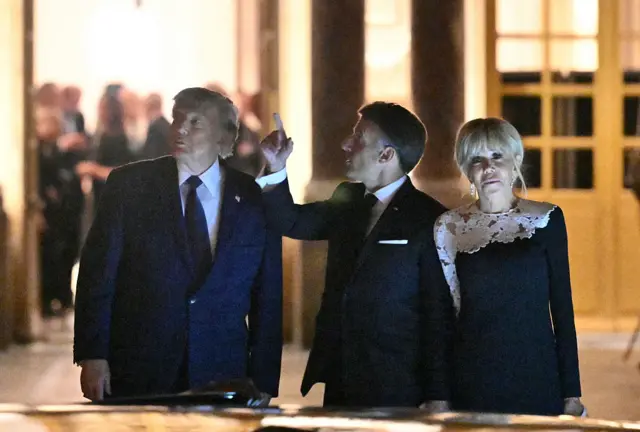 Image source, Getty Images
Israel attacks on Lebanon would breach deal, Iran sayspublished at 00:29 BST 18 June
Iranian Foreign Ministry spokesperson, Esmail Baghaei, says on Telegram that if Israel continues to attack Lebanon, it will be considered a breach of the memorandum.
Israeli forces carried out new strikes in southern Lebanon on Wednesday, state media says, despite renewed criticism from Trump of Israel’s actions in the country.
Both Israel and Hezbollah have carried out attacks against each other since the US-Iran agreement was announced on Sunday night.
Iran to charge ships crossing Strait of Hormuzpublished at 00:21 BST 18 June
Iran’s parliamentary speaker, Mohammad Bagher Ghalibaf, says in an interview that aired on state TV that the Strait of Hormuz “will not return to pre-war conditions”.
He adds: “Iran has the right to sovereignty over the Strait of Hormuz and of course we will receive a fee for services.”
The country will charge ships crossing the key passage after 60 days.
In the longer-term, the deal signed by Trump notes that Iran will work with Oman and other Gulf states to set up a “broader” agreement on how to manage the Strait of Hormuz.
The US believes that Iran will assert its rights “aggressively”, but that the Gulf states would “never” accept a future in which there is a tolling system in place, the official said.
Trump: ‘It’s signed. Signed in Versailles’published at 00:13 BST 18 June
Breaking
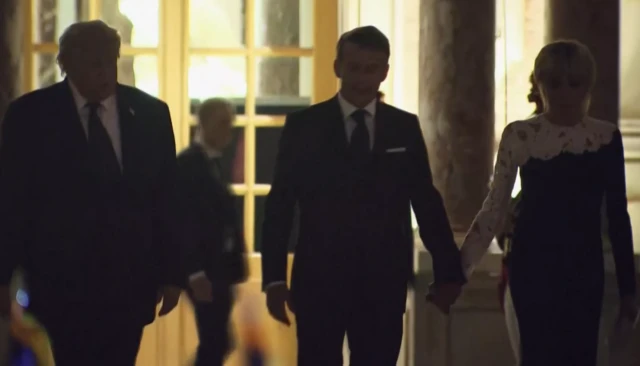 Image source, Reuters
Donald Trump has just left the Palace of Versailles in France, where he was having dinner with French President Emmanuel Macron after the G7 summit.
Asked about the deal before getting into the presidential motorcade, Trump told reporters: “It’s signed. Signed in Versailles. Just signed it.”
