


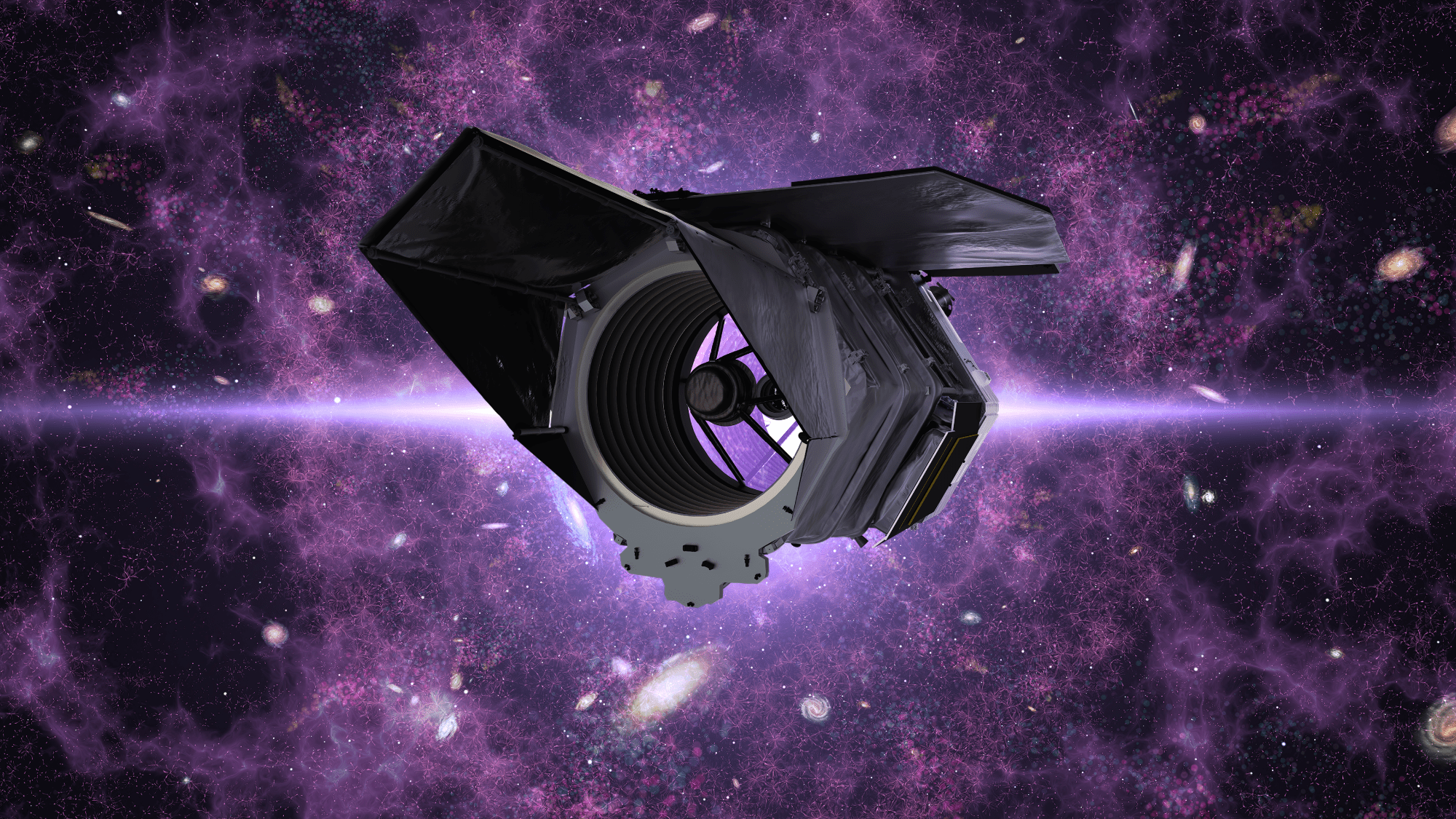
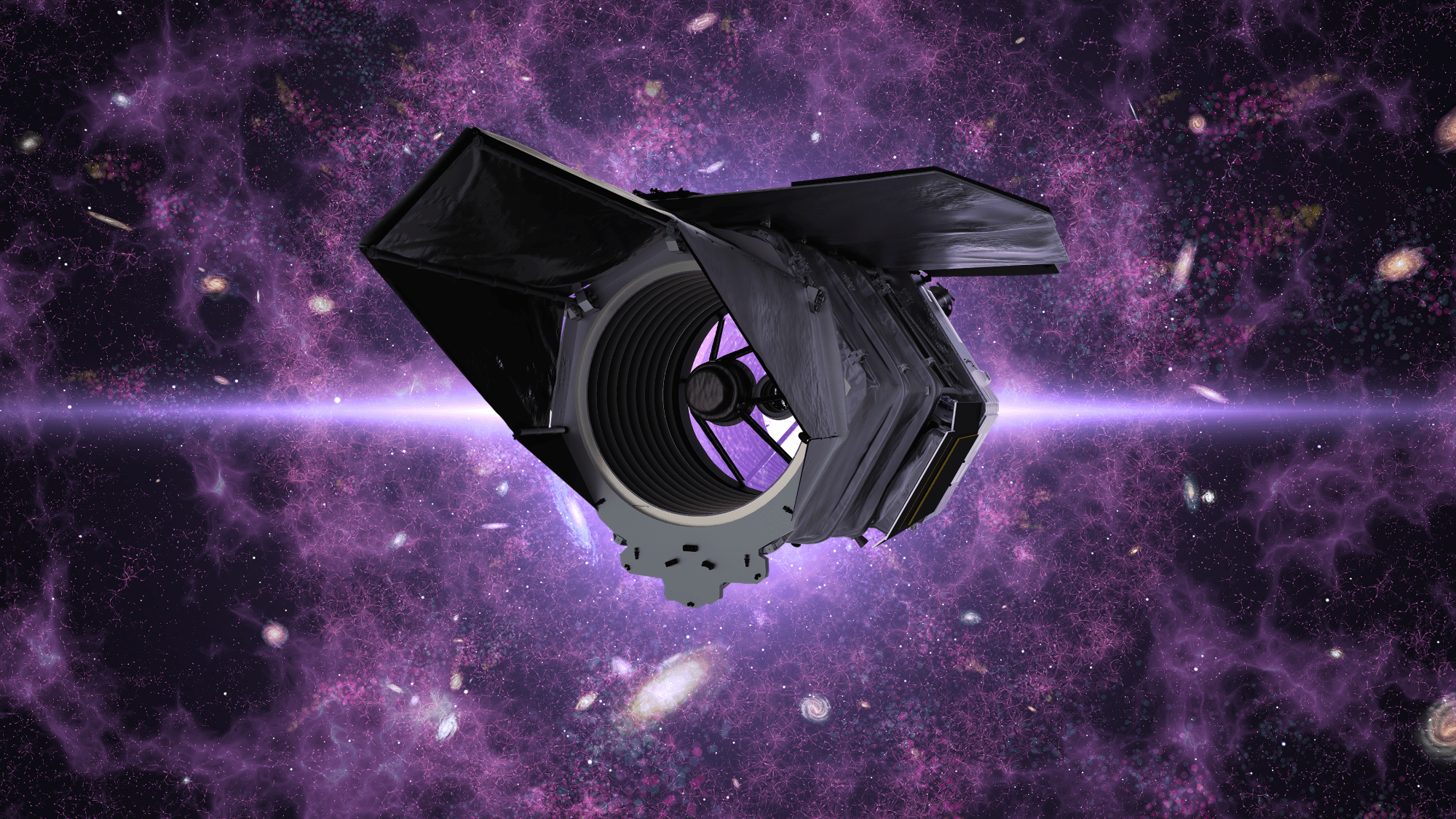
An illustration of the Nancy Grace Roman Space Telescope. The NASA observatory was designed to settle essential questions in the areas of dark energy, exoplanets, and infrared astrophysics. Roman’s barrel-like shape will help block out unwanted light from the sun, Earth, and moon, and the spacecraft’s distant location will help keep the instruments cool.
Image: NASA Goddard Space Flight Center Scientific Visualization Studio
Get the Popular Science daily newsletter💡
Breakthroughs, discoveries, and DIY tips sent six days a week.
By signing up, you confirm you are 16+, will receive newsletters and promotional content and agree to our Terms of Use and acknowledge the data practices in our Privacy Policy. You may unsubscribe at any time.
If you missed the chance to get your name in space during Artemis II’s historic mission in April, you don’t have to wait until Artemis III in 2027 for another opportunity. Today, NASA opened up submissions to have your name put aboard the Nancy Grace Roman Space Telescope.
Currently scheduled to launch on August 30, the Nancy Grace Roman Space Telescope is NASA’s next space observatory. According to NASA, it will pair a large field of view with crisp infrared vision to scan vast, deep swaths of sky. Roman’s field of view is at least 100 times larger than the still-chugging Hubble Space Telescope and could measure light from one billion galaxies. The observatory will also be able to block starlight, allowing it to directly see exoplanets and planet-forming disks. Engineers plan to use Roman to take a complete statistical census of all the planetary systems in our galaxy, and settle some of the essential pressing questions about dark energy, exoplanets, and infrared astrophysics.
Roman is named in honor of the late Dr. Nancy Grace Roman. She was NASA’s first chief astronomer and paved the way for the space telescopes focused on the broader universe that we know and love today. Dr. Roman is considered the “mother” of the Hubble Space Telescope, and she tirelessly advocated for space-based platforms that help us understand the broader universe from above Earth’s hazy atmosphere.
“Despite facing adversity, she persisted in finding new ways to explore the universe, including advocating for the development of a space-based telescope,” NASA writes. “Dr. Roman’s zealous leadership made Hubble, and all of the other space telescopes that followed, a reality.”
The submitted names will be uploaded to an SD card attached to the observatory, as it travels over one million miles in space. You will also receive a digital boarding pass to commemorate your name’s journey.

2025 PopSci Best of What’s New
The 50 most important innovations of the year
