


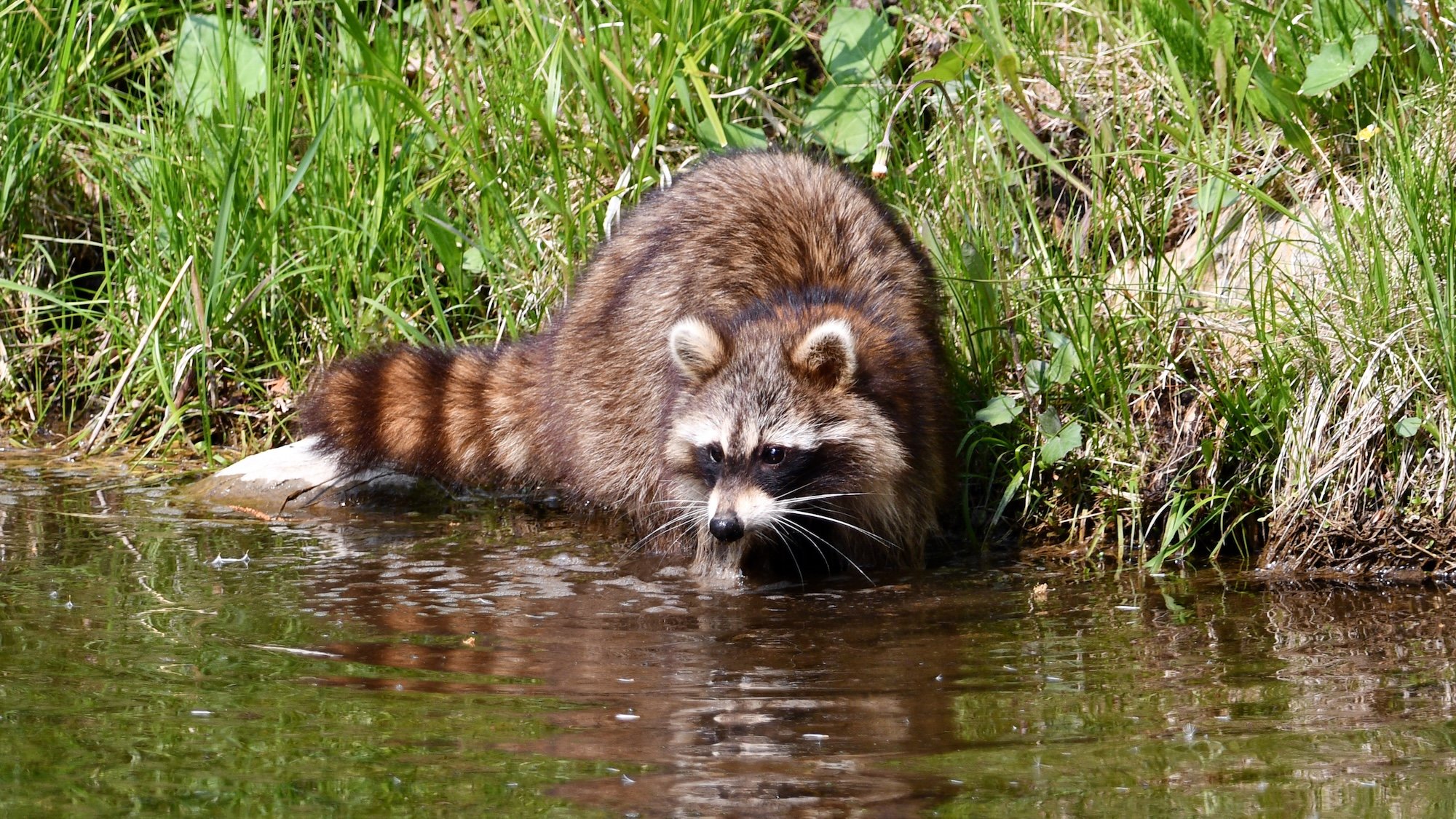
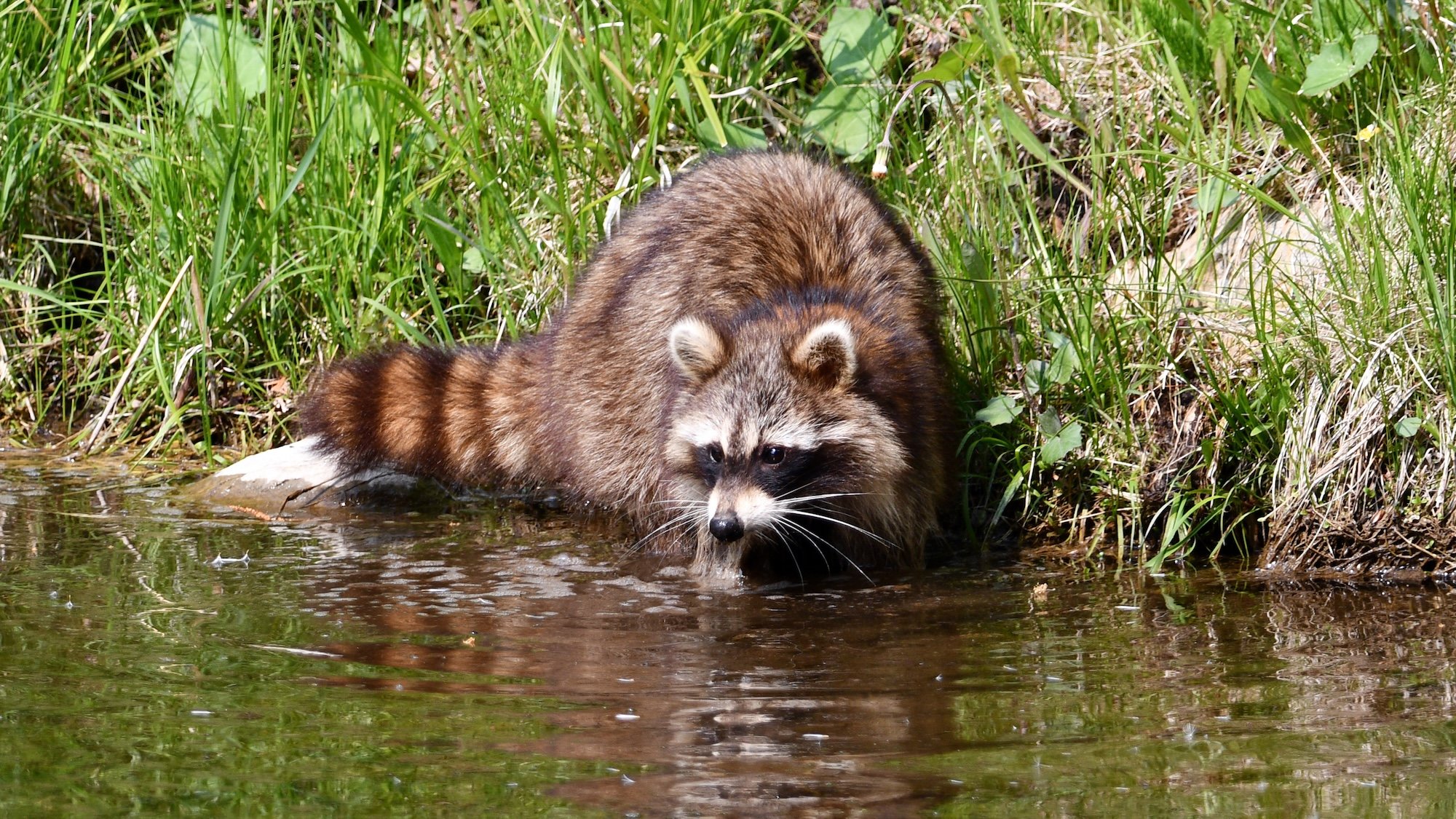
Raccoons are increasingly encroaching on populated areas, posing health risks for humans.
Credit: Carol Hamilton via Getty Images
Get the Popular Science daily newsletter💡
Breakthroughs, discoveries, and DIY tips sent six days a week.
By signing up, you confirm you are 16+, will receive newsletters and promotional content and agree to our Terms of Use and acknowledge the data practices in our Privacy Policy. You may unsubscribe at any time.
Raccoons are cute and curious creatures, but frequently carry infectious diseases. This poses serious problems for humans, especially when evidence indicates the animals are increasingly accustomed to more populated areas including cities and farms. Researchers at Japan’s Osaka Metropolitan University (OMU) say that the omnivores are now vectors for an emerging bacterium called Escherichia albertii, that’s already responsible for multiple severe outbreaks of food poisoning. However, monitoring raccoons isn’t enough. To formulate the best public health policies, experts should also focus on rivers, according to a study published in the journal Applied and Environmental Microbiology.
The teams led by OMU veterinary scientist Atsushi Hinenoya recently conducted an extensive survey of both the wild raccoons and waterways in southern Japan’s Osaka Prefecture, which is known for its high concentration of the sneaky omnivores. They flagged the presence of E. albertii in 77 percent of water samples across six of the eight rivers examined,but only during the late spring, summer, and fall. Any negative samples were otherwise collected during the winter and early spring,when infected raccoon numbers are known to decline.
Moreover, Hinenoya’s team identified E. albertii upstream from populated areas and in water sources far removed from places like neighborhoods and recreational parks. Because riverborne bacteria typically accumulate downstream, this further supports the theory that wildlife—not humans—are responsible for the contamination.
From there, researchers studied 122 wild raccoons and discovered 56-percent were carrying E. albertii. Subsequent whole-genome analysis confirmed an array of bacterial strains, many aligning with those found in the water samples. This means that E. albertii was already entrenched in the ecosystem instead of starting from one outbreak. These also appeared remarkably similar to the strains documented in human patients which can cause severe diarrhea and vomiting sometimes requiring hospitalization.
“These findings are strong indicators that these [variants] pose a potential risk to public health,” Hinenoya said in a statement.
If E. albertii can survive for prolonged periods of time in both rivers and in wildlife, then that may significantly increase the risk of repeated exposure. This would make future outbreaks much harder to trace.
So what can be done about it? Hinenoya and the team emphasize the importance of adopting a “One Health” strategy that doesn’t only track human infections, but also the interconnected ecological, agricultural, and wildlife systems. From here, researchers intend to focus on more specific contamination routes that involve the raccoons, local farms, food products, and waterways. They also add that the approach will hopefully be applied to other diseases.
“We hope to expand this research toward the development of comprehensive strategies for infectious disease control,” said Hinenoya.

2025 PopSci Best of What’s New
The 50 most important innovations of the year
