


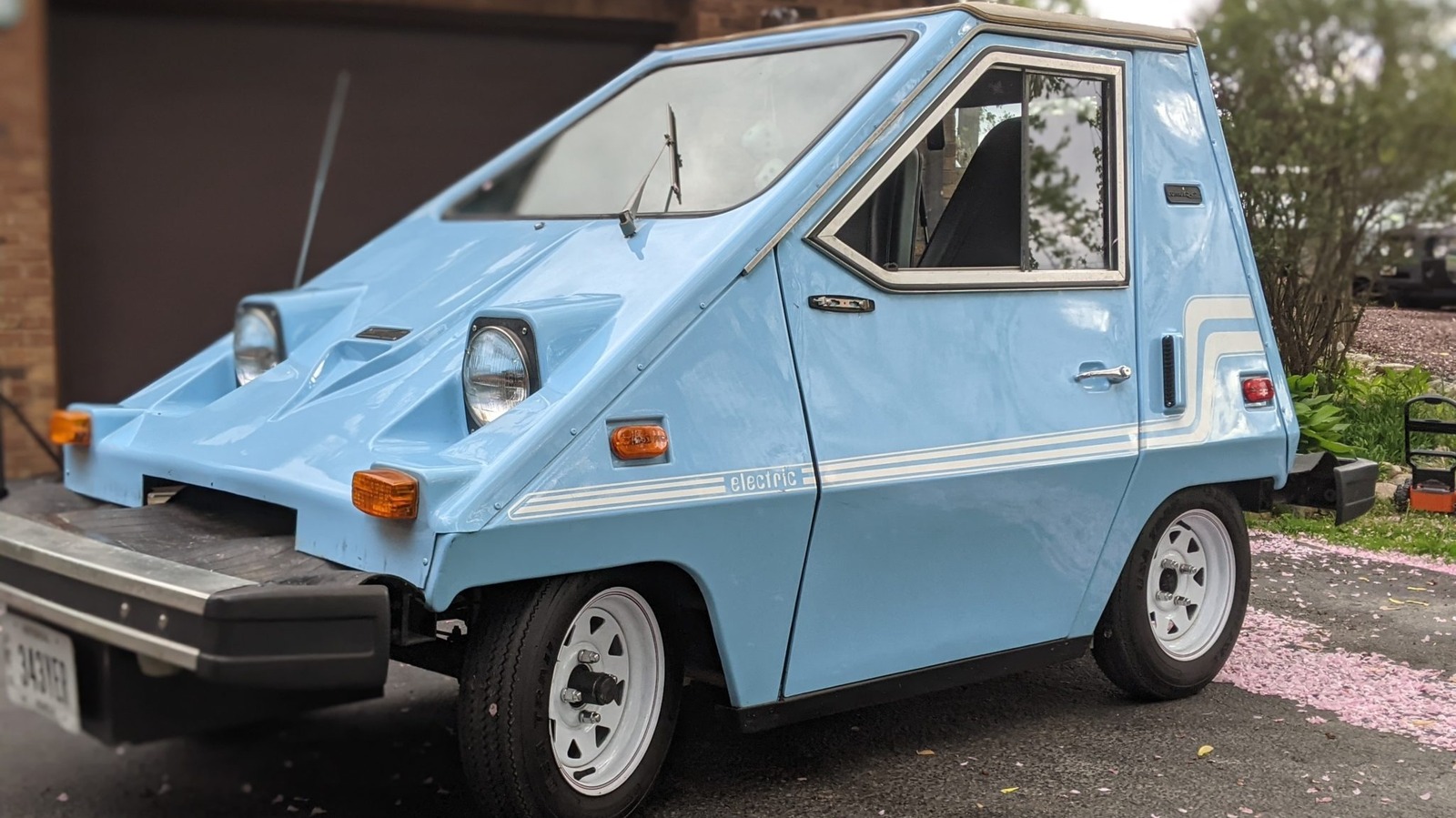
The history of the electric car dates back to the early 1800s, but if you’re looking for one of the most obscure — and wacky-looking — EVs of all time, you’ll only have to go back to the 1980s. That’s when the all-electric Comuta-Car was last offered, but the origins of this wedge-shaped EV actually date back to 1973 oil embargo. Built from 1979 until 1982, the Comuta-Car was based on an earlier model, the CitiCar, which was first produced in 1974. An interesting side note for this car is that combined sales for the CitiCar and Comuta-Car totaled 4,444 units, making it the best-selling EV in the U.S. after World War II until the arrival of the Tesla Model S in 2013.
Similar to today, the Comuta-Car offered an alternative to gas-guzzling vehicles, although it was hardly an everyday car with 40-mph top speed and 40-mile range. The car weighed just 1,400 pounds thanks to a lightweight aluminum spaceframe and a body made from acrylonitrile butadiene styrene (ABS) — a durable, impact-resistant, and lightweight plastic — and it was powered by a 6-horsepower GE motor, which is comparable to a modern electric golf cart. As its name suggests, the Comuta-Car wasn’t intended for cross-country trips, but it would get you to work or help you run errands around town without filling up your tank at $1.25 a gallon in 1980 (that’s about $5.05 today).
How the ’80s electric car shaped today’s EV market
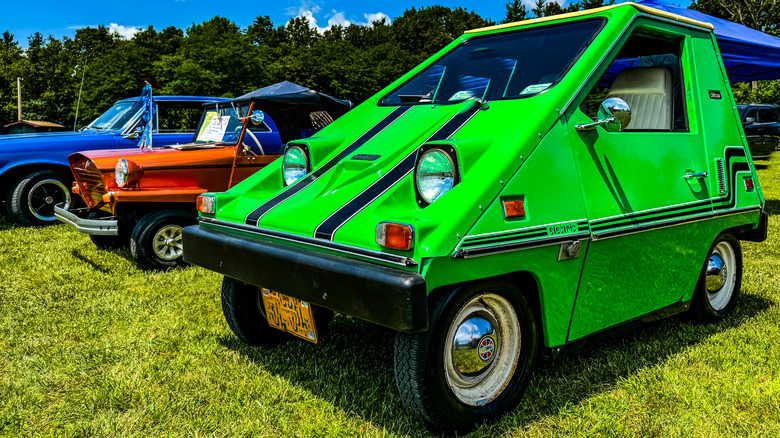
Barry Winiker/Getty Images
Originally produced by Sebring-Vanguard, Inc. in Sebring, Florida, inspiration for the CitiCar (shown above) came from the Club Car golf cart, and while it wasn’t the sole factor in the rise of the modern EV, it did help the movement. While a golf-car-inspired car probably didn’t bolster the image of reliable EVs back then, the development team understood that most daily driving is local, so the 40-mile range made perfect sense. In fact, recent vehicle usage data shows that the average EV is driven just 20 to 45 miles a day — in the range of the CitiCar and Comuta-Car. Compare the Comuta-Car’s 40-mile range to the Lucid Air, one of the best luxury EV sedans, with its EPA-estimated driving range of 512 miles.
The company was purchased by Commuter Vehicles, Inc. and the CitiCar’s name was changed to Comuta-Car. An easy way to tell the difference between these two cars is the bumpers, which have been extended on the Comuta-Car to meet crash standards and to relocate the batteries for added interior space. The Comuta-Car was certainly a niche car, but it fit the need of budget-minded consumers. Beyond its ability to sidestep high gas prices, the Comuta-Car cost $3,995 in 1980, which, at the time, was a little more than half the average price of a new car.
