


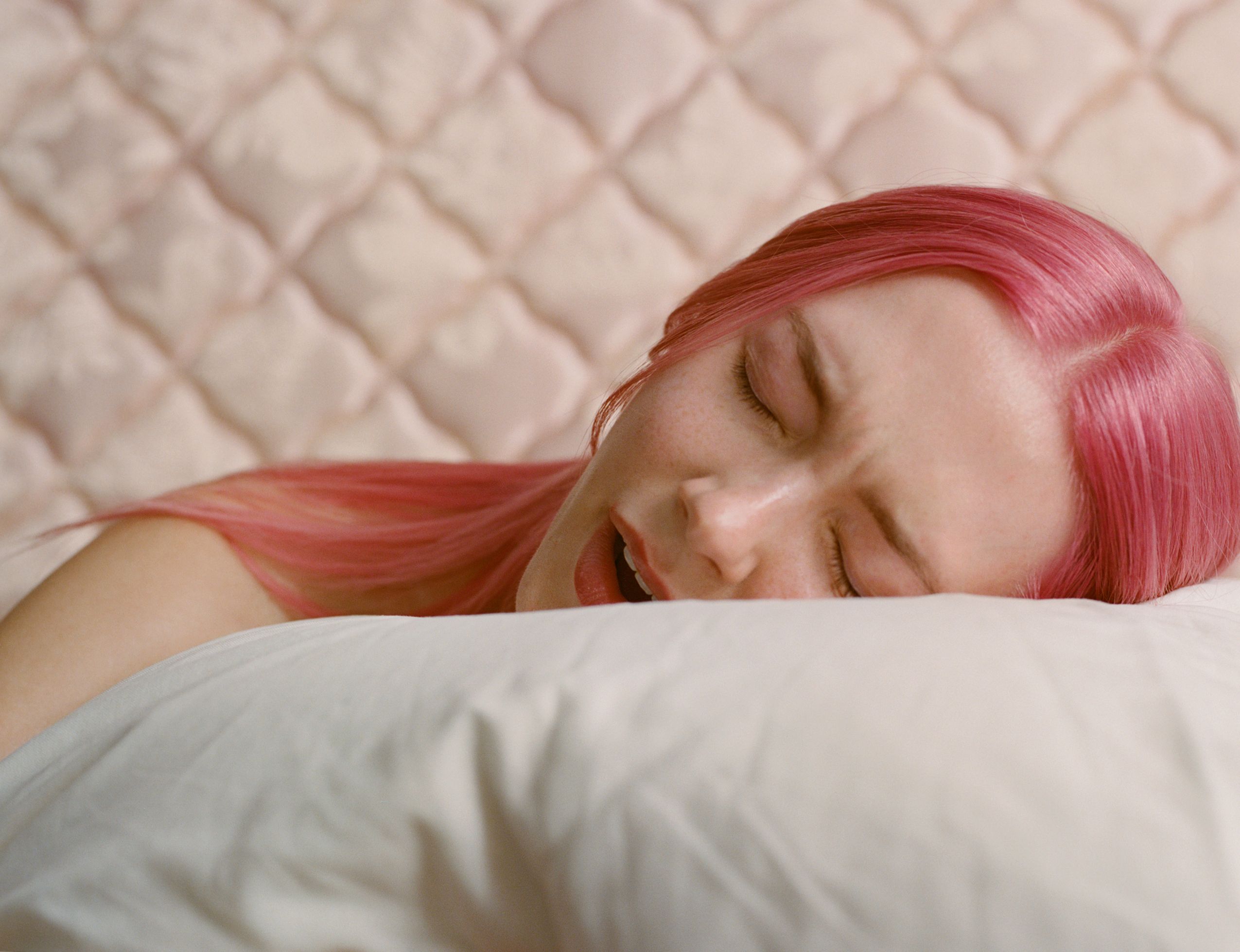
There are at least a dozen reasons why women may wake up with a headache, jitter with anxiety, or struggle to keep their eyes open at work, no matter how well they think they slept: menstruation, menopause, motherhood—the list truly goes on. But these symptoms, as vague as they are, could actually stem from a health condition that’s historically been deemed a “male disease”: obstructive sleep apnea, or OSA.
If you immediately pictured an older man snoozing on a couch and snoring like a lawn mower, you’re not alone. It wasn’t until the ’90s that researchers first recognized that OSA, which causes you to repeatedly stop breathing while asleep, often presents differently in women than it does in men. For starters women with the condition may not even snore.
There’s still much to discover about the biology underlying these distinctions, but research suggests that hormonal fluctuations throughout life, differences in upper airway anatomy, and even social stigmas about how women should sleep are likely at play.
“The disease itself was defined in men,” explains Jennifer Martin, PhD, a behavioral sleep medicine specialist and professor at Florida International University’s Herbert Wertheim College of Medicine in Miami. “The way men and women breathe when they’re asleep is not the same, and our definition of the disease doesn’t account for that.”
Although obstructive sleep apnea appears to be less common and typically milder in women (at least before menopause), studies suggest that the consequences of the disease, if left untreated, can be similar, if not worse, for us, making it vital to learn the signs and seek help. Here’s what we know about obstructive sleep apnea and its impact on women. Plus, experts explain how to advocate for the best care if you think you may have the condition.
How and why sleep apnea differs in women
Sleep apnea is one of several conditions that fall under the sleep-disordered breathing umbrella. The most common type is OSA, which happens when your upper airway repeatedly collapses during sleep, making it harder for air to reach your lungs, says Anita Valanju Shelgikar, MD, a sleep medicine physician with University of Michigan Health and president of the American Academy of Sleep Medicine.
The textbook symptoms of this condition—which, for the record, were determined based on studies mostly involving men—include loud snoring and dramatic gasps for air as a person tries to continue breathing while asleep. But this often isn’t the case for women, Dr. Shelgikar tells SELF. Instead, women with OSA are more likely to have nightmares, wake up multiple times a night, have trouble staying asleep, and deal with insomnia, which then causes symptoms like daytime fatigue, morning headaches, and mood swings. Women also have more hypopneas (shallow breaths with less oxygen flow), whereas men tend toward apneas (complete pauses in breathing).
Some experts speculate that it’s possible snoring isn’t commonly reported among women with this disorder because they’re embarrassed to talk about it, given society expects them to sleep like Disney princesses. But a growing body of research suggests that biology may better explain this and other sex-related differences in symptoms. For example, compared with men, women have smaller, more stable airways that are less likely to collapse (and in turn vibrate, making you snore) during sleep. Women also tend to have less fat around their necks, and before menopause they seemingly benefit from the protective effects of estrogen and progesterone, which interact with the respiratory system in a way that aids breathing.
All things considered, it makes sense why more men than women in the US have this condition, making up about 59% and 41% of obstructive sleep apnea patients, respectively. However, once women go through menopause, which causes their estrogen and progesterone levels to drop, the rate of OSA and the severity of symptoms in this group increases dramatically, Dr. Martin says. Studies have found that anywhere from 47% to 67% of postmenopausal women have obstructive sleep apnea, which is about the same as men in this age range (50 and older). The number of women who actually get diagnosed with the condition is a different story, though—more on that shortly.
Regardless of age, however, women still deal with more sleep apnea–related symptoms than men, Dr. Martin adds, even if they have a less severe form of the condition. This is likely because women have more “subtle breathing disturbances” during sleep that hurt the overall quality of their rest compared with men, Dr. Martin says.
Why misdiagnoses are common in women with sleep apnea
Because women often don’t experience “classic” OSA symptoms, they end up being misdiagnosed or dismissed. “When [men] walk into a physician’s office and say they’re sleepy and they snore, they get a diagnostic test right away,” Dr. Martin says. “When a woman walks in and says, ‘I don’t sleep well, and I’m very fatigued during the day,’ they don’t often get referred” for screening. In fact, research suggests that men are nine times more likely to be referred for diagnostic testing than women.
Women with OSA commonly have their symptoms misattributed to conditions like depression, anxiety, insomnia, and menopause or even medication side effects, says Dr. Shelgikar, who is also a neurology professor at the University of Michigan Medical School. Not to mention women can have these other conditions as well, which might make their sleep apnea not only harder to detect but also worsen it. Take the double whammy that is insomnia and OSA: Having both of these disorders at the same time is more common among women than men, Dr. Martin says, and in some cases they may be given a sleep aid (such as diphenhydramine or a benzodiazepine) that can further relax their throat muscles, exacerbating their sleep apnea and leaving them even more oxygen-deprived.
And it doesn’t help that, as we talked about earlier, the diagnostic criteria for OSA are largely based on how the condition presents in men. “When we diagnose sleep apnea, we require one of two things to happen: A breathing interruption has to be associated either with a drop in oxygen levels or a brief awakening from sleep,” Dr. Martin says. “Women don’t have those very deep drops in oxygen levels that men do. So that means that the way we define the disease itself kind of biases us towards diagnosing it more in men than women.” What’s more, Medicare, which the vast majority of Americans ages 65 and older rely on for health insurance, only recognizes a sleep apnea diagnosis if a person has those steep drops in oxygen, Dr. Martin says. Those typical mid-slumber wake-ups don’t count on their own. So even “the criteria that Medicare forces people to use to define sleep apnea is very male-centric,” she adds.
Home sleep apnea tests, which are becoming increasingly common as a cheaper alternative to the gold standard in-lab exams, are also more prone to miss the condition in women. Because women tend to have fewer and milder events than men, these at-home tests may not be able to diagnose sleep apnea as accurately in this population, Dr. Martin says. They can be even more inaccurate in women with insomnia. These individuals “may not get enough sleep to get an accurate diagnosis,” she says, “so if they wear [the monitor] for six hours, but they’re only sleeping for four of them, it may look like they have less sleep apnea than they really do.”
That’s all to say that sleep apnea is likely much more common among women than the available data suggests, experts tell SELF. And that reality reveals a sobering point: A lot of women with this condition probably aren’t receiving the care they need, a delay that can, for some people, snowball into an avalanche of additional yet preventable health issues.
Why you should treat your sleep apnea
If left untreated, sleep apnea can have downstream effects on your health, particularly your heart, says Atul Malhotra, MD, research chief of pulmonary, critical care, and sleep medicine at UC San Diego Health. Every time you stop breathing, your body responds to the lack of oxygen by releasing the stress hormone adrenaline to jolt you awake so you take a breath. This happens really quickly; you are typically up for just a few seconds and probably won’t even remember it the next morning.
Over time this constant stress strains your cardiovascular system, Dr. Malhotra says, which may increase your risk for high blood pressure, heart attack, stroke, irregular heartbeat, and heart failure. Although the evidence is mixed, some research suggests that it’s more common for women with severe sleep apnea to experience cardiovascular complications than it is for men. Studies also show that women tend to have more health conditions upon diagnosis than men do, including thyroid disease, asthma, and depression. This raises the classic “chicken or the egg” question, but either way treating OSA can only help.
Because obstructive sleep apnea leads to low-quality shut-eye, it is also associated with memory and cognition issues and poor daytime alertness, which can boost the likelihood of car and workplace accidents (for certain high-risk jobs like those in the transportation and construction industries), Dr. Shelgikar says. Perhaps less discussed is how untreated sleep apnea affects our ability to care for ourselves and maintain relationships. “We don’t do a good job thinking about sleep apnea as a potential cause of mental health symptoms,” Dr. Martin says. In fact, research shows that managing OSA could actually help some people dealing with anxiety and depression improve their symptoms.
As researchers continue searching for answers, Dr. Martin points to a silver lining: There’s good evidence to suggest that women “benefit at least as much as men, if not more” from sleep apnea treatment, which is why it’s important to know what to look out for.
How to get a sleep apnea diagnosis
Although you’re quite literally working against decades of medical bias, it’s still possible to receive a sleep apnea diagnosis if you’re equipped with the right intel.
Here’s some advice from the sleep experts we spoke to.
- Pay attention to daytime energy levels: Feeling sleepy during the day “is not part and parcel of life beyond a certain age or at a certain phase,” Dr. Shelgikar says. “These are things that should be evaluated.” Having trouble keeping track? Create a sleep diary to note how you feel when you wake up and throughout the day.
- Don’t ignore your snoring: Women with sleep apnea might snore, Dr. Malhotra says, and that’s not something to trivialize or be embarrassed about.
- Keep other health conditions under control: Treating other health problems, such as high blood pressure and insomnia, may help improve some sleep apnea symptoms, Dr. Martin says.
- Advocate for yourself: “Especially for women, if you feel like you’re not getting what you need from your own health care team, a sleep medicine specialist is really the right person to help you decide what kind of diagnostic tests you need and the range of treatment options that might benefit you,” Dr. Martin says.
Related:
- This Common Natural Sleep Aid Could Be Making Things Worse
- 6 Foods to Eat for Better Sleep
- Trying to Recover From Sleep Debt? This Type of Exercise May Help
Get more of SELF’s great service journalism delivered right to your inbox.
Photographer: Sofia Alvarez
Stylist: Mel Reneé
Prop Stylist: Rae Godin
Hair: Aya Yamashita
Makeup: Juan Jaar
Model: Ella
