



Image: Apple
The MacBook Neo is Apple’s newest entry-level laptop, officially announced in early March 2026. It’s a 13-inch device designed to be the most affordable Mac yet, starting at just $599 (or $499 for students and educators).
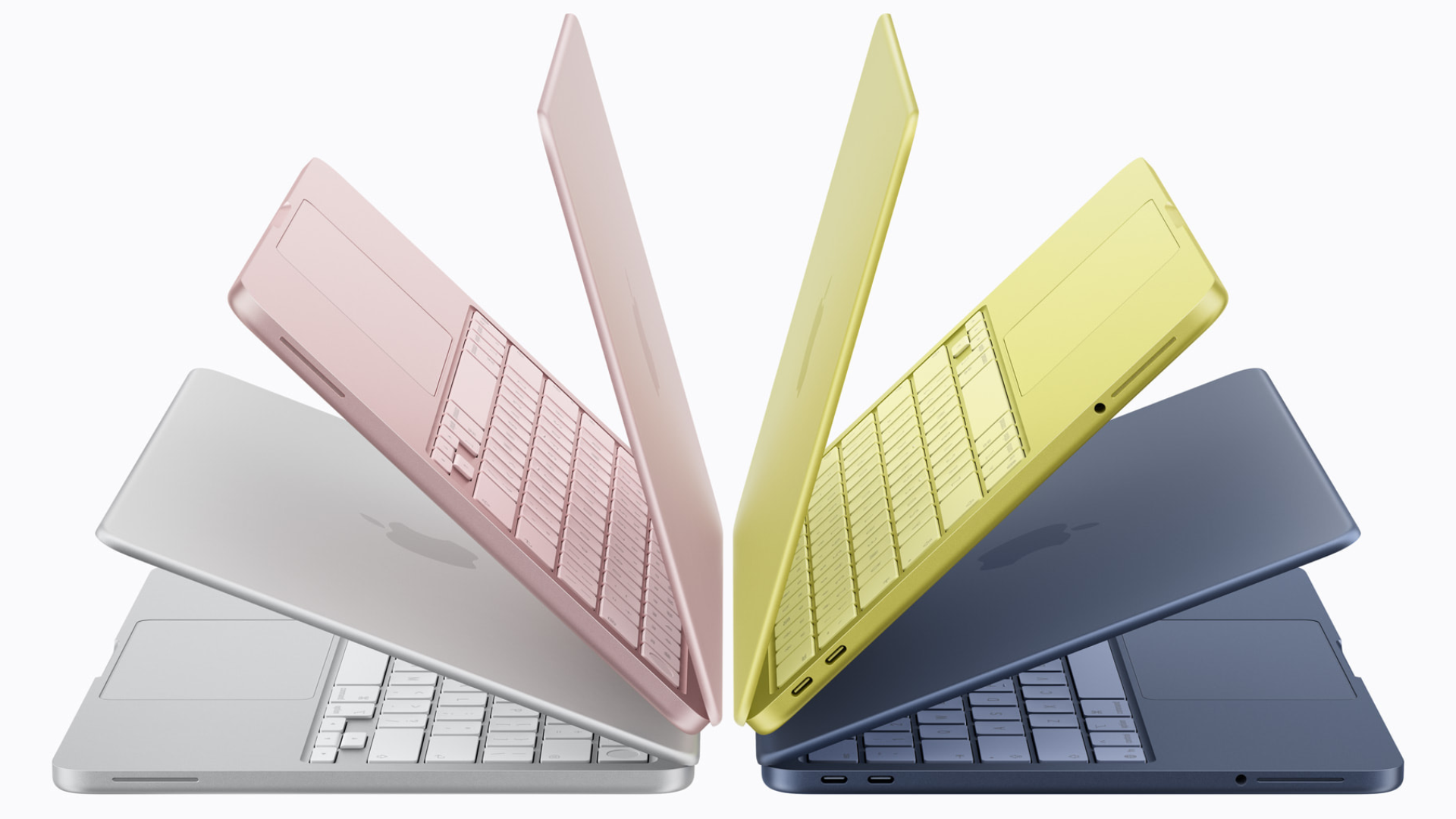
It features a colorful aluminum chassis available in silver, indigo, blush, and citrus, and is powered by the A18 Pro chip—the same processor found in the iPhone 16 Pro.
The MacBook Neo has already proven to be a major success. Industry analysts and reviewers have described it as a “sensation,” disrupting the affordable laptop market. Much of its popularity stems from its premium build quality at a budget-friendly price, allowing it to compete effectively with Chromebooks and Windows laptops.
However, strong demand has led to supply constraints. As of April 23, shipping delays are running between two and three weeks.
Read on to learn about the MacBook Neo’s key features and limitations, where to buy one, and which configuration is right for you. You can also read our full review of the MacBook Neo and read about our experiences with the new laptop in I pushed my MacBook Neo to the limit. It didn’t break.
MacBook Neo vs MacBook Air: At a glance
| Feature | MacBook Neo | MacBook Air |
|---|---|---|
| Starting Price | From $599/£599 | From $1,099/£1,099 |
| Chip | A18 Pro | M5 |
| Colors | Silver, Blush, Citrus, Indigo | Sky Blue, Silver, Starlight, Midnight |
| Screen | 13-inch, Liquid Retina, 2408×1506 pixels, sRGB | 13.6-inch, Liquid Retina, 2560×1664 pixels, P3 color, True Tone |
| Ports | USB 3 (USB‑C) port; USB 2 (USB‑C) port, 3.5mm headphone jack | Two Thunderbolt 4 (USB‑C) ports, 3.5mm headphone jack with support for high-impedance headphones |
| GPU | 5-core | From 8-core |
| CPU | 6-core | 10-core |
| RAM | 8GB | From 16GB |
| SSD | From 256GB | From 512GB |
| Battery life | 16 hrs | 18 hrs |
| Security | Touch ID on 512GB model | Touch ID |
| Camera | 1080p FaceTime HD camera | 12MP Center Stage camera |
| Audio | Dual-speaker sound system | Four-speaker sound system |
| Mic | Dual-mic array with directional beamforming | Three-mic array with directional beamforming |
| Dimensions | Height 1.27 cm (0.50 inches) Width 29.75 cm (11.71 inches) Depth 20.64 cm (8.12 inches) Weight 1.23 kg (2.7 pounds) |
Height 1.13 cm (0.44 inches) Width 30.41 cm (11.97 inches) Depth 21.5 cm (8.46 inches) Weight 1.23 kg (2.7 pounds) |
MacBook Neo Buying Information: Availability and stock shortages
- Shipping Delays: There are delivery delays of two to three weeks, as of April 23.
The MacBook Neo went on sale on Wednesday, March 11, through Apple retail locations and authorized resellers. Following it’s release, MacBook Neo has generated unprecedented interest, particularly among first-time Mac buyers. In a late March post on X (formerly Twitter), CEO Tim Cook noted that the Mac had its “best launch week ever for first-time Mac customers.”
To help manage demand, Apple initially limited purchases to two units per person. Despite this, strong demand – combined with broader supply chain challenges across the PC industry – has resulted in ongoing stock shortages and extended shipping times.
As of April 23, orders on the online U.S. Apple Store were scheduled to ship between May 8 and May 15. Amazon U.S. indicates shipping times that range from overnight to a week. Best Buy U.S. appears to have stock available for overnight delivery. On the online U.K. Apple store, the Neo was scheduled to ship in “2-3 weeks.”
Why Apple can’t meet MacBook Neo demand
- Processor production challenges: The MacBook Neo uses “binned” A18 Pro chips – processors originally intended for the iPhone 16 Pro but repurposed due to minor defects that prevent use in phones. Because Apple depends on this existing chip supply, it cannot quickly scale production to meet higher-than-expected demand.
- Component shortages: The wider PC industry is currently facing a surge in component costs, particularly for memory. By equipping the Neo with non-upgradable 8GB of RAM and a lower-cost SSD, Apple is able to keep prices down despite these pressures.
- “Supply Chase” Mode: During its January 2026 financial results call, Apple confirmed it was operating in a “supply chase” mode, facing constraints similar to the rest of the industry the industry.
MacBook Neo Buying Information: Price and how to buy
The MacBook Neo starts at just $599 / £599 – an even lower price than many expected.
While competitors like Microsoft have been forced to raise prices across products such as the Surface lineup – by as much as $500 in some cases – due to rising memory and storage costs, Apple has managed to keep the Neo firmly at an entry-level price point. This aggressive pricing should help it compete directly with Chromebooks and budget Windows laptops.
However, some analysts warn that this strategy may not be sustainable. If Apple is forced to produce new A18 Pro chips specifically for the Neo, rather than relying on existing “binned” stock, profit margins could come under pressure.
Before the Neo’s launch, Apple’s most affordable laptop was the $999 MacBook Air. With the introduction of the M5 MacBook Air, the starting price of the that model increased to $1,099 / £1,099. This creates a significant $500 / £500 gap between the two MacBooks – meaning you could almost buy two MacBook Neo units for the price of a single MacBook Air.
Apple clearly recognises that there is a market for a low-cost MacBook. Until recently, Walmart has been selling the M1 MacBook Air with a 256GB SSD for $649 and sometimes $599. In many ways, the MacBook Neo can be seen as a modern replacement for that offering.
Find the best price right now in our round up of the Best MacBook Neo deals.
MacBook Neo Buying Information: Configuration options
- Processor: Apple A18 Pro chip
- Memory: 8GB unified memory (base)
- Storage: 256GB SSD or 512GB SSD
- Colors: Silver, indigo, blush, citrus
- Other: Keyboard options.
The configuration options for the MacBook Neo are very basic. There are no options to increase RAM beyond the basic 8GB unified memory.
U.K based and European shippers will need to add a Power Adapter if they need one as Apple no longer includes that in the box.
While the Neo is highly popular, it does involve some trade-offs to reach its low price, such as the lack of Thunderbolt support, a slower USB 2.0 speed on one of its two USB-C ports, and a display that lacks True Tone and P3 wide color support
MacBook Neo Design: What does the MacBook Neo look like?

Apple
- Colorful aluminum chassis in Silver, Blush, Citrus, Indigo
Back in June 2023 analyst Ming-Chi Kuo accurately predicted the following colors: silver, blue, pink, and yellow. That is close to the Silver, Blush, Citrus, Indigo on offer.
The colorful chassis is aimed at students and casual users.
The MacBook Neo has a thin notebook design similar to other MacBooks and it lightweight. The dimensions are:
- Height 1.27 cm (0.50 inches)
- Width 29.75 cm (11.71 inches)
- Depth 20.64 cm (8.12 inches)
- Weight 1.23 kg (2.7 pounds)
This means it is a similar size and the same weight as the MacBook Air.
MacBook Neo Display: How good is the display?
Apple
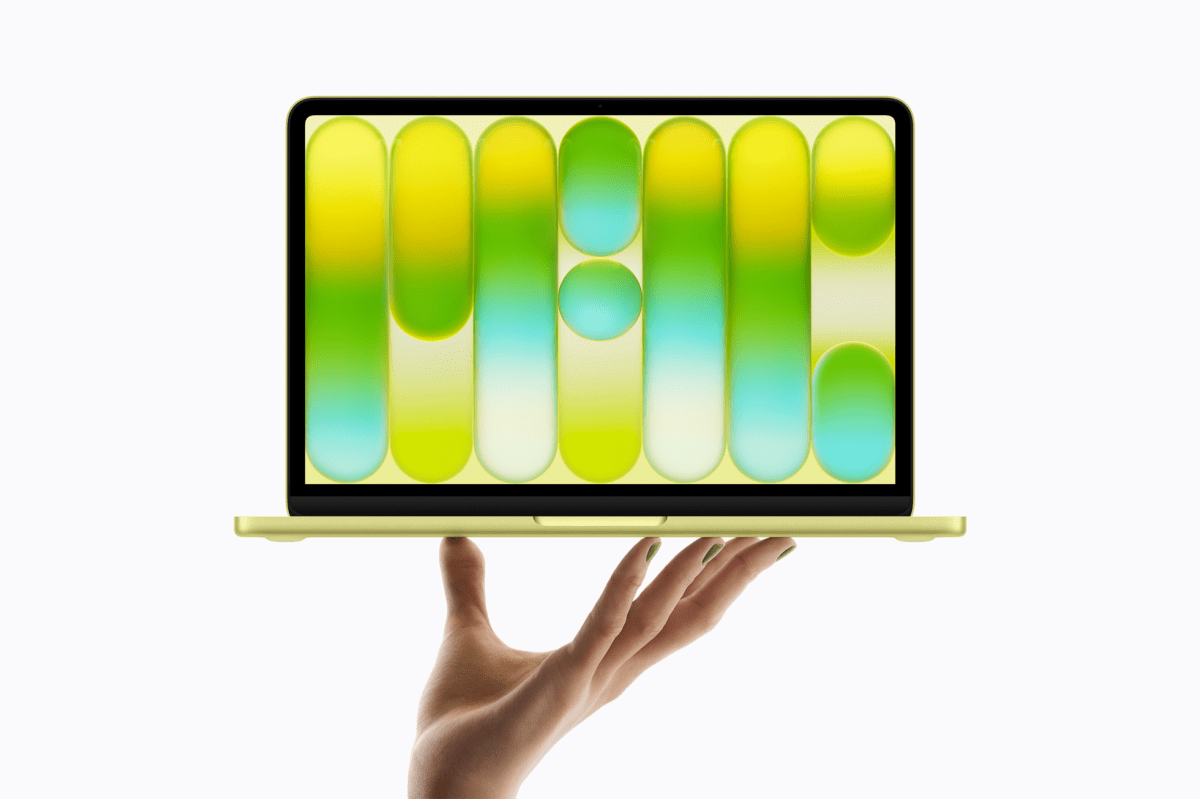
- 13-inch Liquid Retina display
- 2408×1506 pixels
- 500 nits brightness
- sRGB
Like the MacBook Air the MacBook Neo features a Liquid Retina (LED-backlit display with IPS technology) display, but the display on the MacBook Neo is slightly smaller at 13 inches than that on the MacBook Air, which measures 13.6 inches diagonally.
Brightness is 500 nits, just like the MacBook Air, but significantly lower than the MacBook Pro model, which offers 1,600 peak brightness.
Unlike the MacBook Air and MacBook Pro the MacBook Neo display is sRGB rather than Wide colour (P3) and it also lacks True Tone technology, which adjusts color temperature based on ambient light, e.g. to better suit outside on a sunny day, or inside in a lit room.
This means the MacBook Neo can’t compete which the MacBook Air and MacBook Pro screens, which offers more vibrant, richer colours that are better for creative work (photo/video editing, design). We expect that colors on the MacBook Neo screen will still look good, but be less saturated and less accurate for professional color work.
MacBook Neo performance: What processor does MacBook Neo use?
- A18 Pro
- 6-core CPU
- 5-core GPU
The MacBook Neo marks the first time Apple has used an iPhone-class chip in a Mac instead of one of Apple’s M-series processors.
It is powered by the A18 Pro, the same processor used in the iPhone 16 Pro. While Apple’s A-series and M-series chips share the same underlying architecture, the M-series processors are designed for laptops and desktops and generally offer greater overall performance.
In benchmark comparisons, the A18 Pro delivers single-core performance roughly comparable to the M3, according to Geekbench 6 results. However, with six CPU cores instead of the eight found in the M1, its multi-core performance is slightly behind Apple’s first-generation Apple Silicon Mac chip.
In practice, a MacBook Neo powered by the A18 Pro is likely to perform similarly to an M1 MacBook Air for everyday tasks – which is more than fast enough for typical workloads such as web browsing, productivity apps and media consumption.
The chip should still provide solid everyday performance, with a GPU capable of handling casual graphics tasks and light gaming. It also includes Apple’s Neural Engine, enabling on-device AI features and support for Apple Intelligence.
As for graphics performance, the A18 Pro has a 6-core GPU, and its Metal score in Geekbench 6’s Compute benchmark is similar to that of the M1 found in the MacBook Air. It’s not a cutting-edge performer, but it’ll handle everyday tasks without any issues.
MacBook Neo Connectivity & Ports
Michael Simon / Foundry
The MacBook Neo supports Bluetooth 6, but not Wi-Fi 7. Instead, it offers Wi-Fi 6E, which is one generation behind the latest Wi-Fi standard.
Apple has begun using its own wireless networking chip, the N1, in newer devices such as the MacBook Air, so there had been some expectation that it might also appear in the MacBook Neo. However, that is not the case here.
There were also rumours that the new Mac could include cellular connectivity using Apple’s C1 or C1X modem, but the MacBook Neo does not support cellular networking.
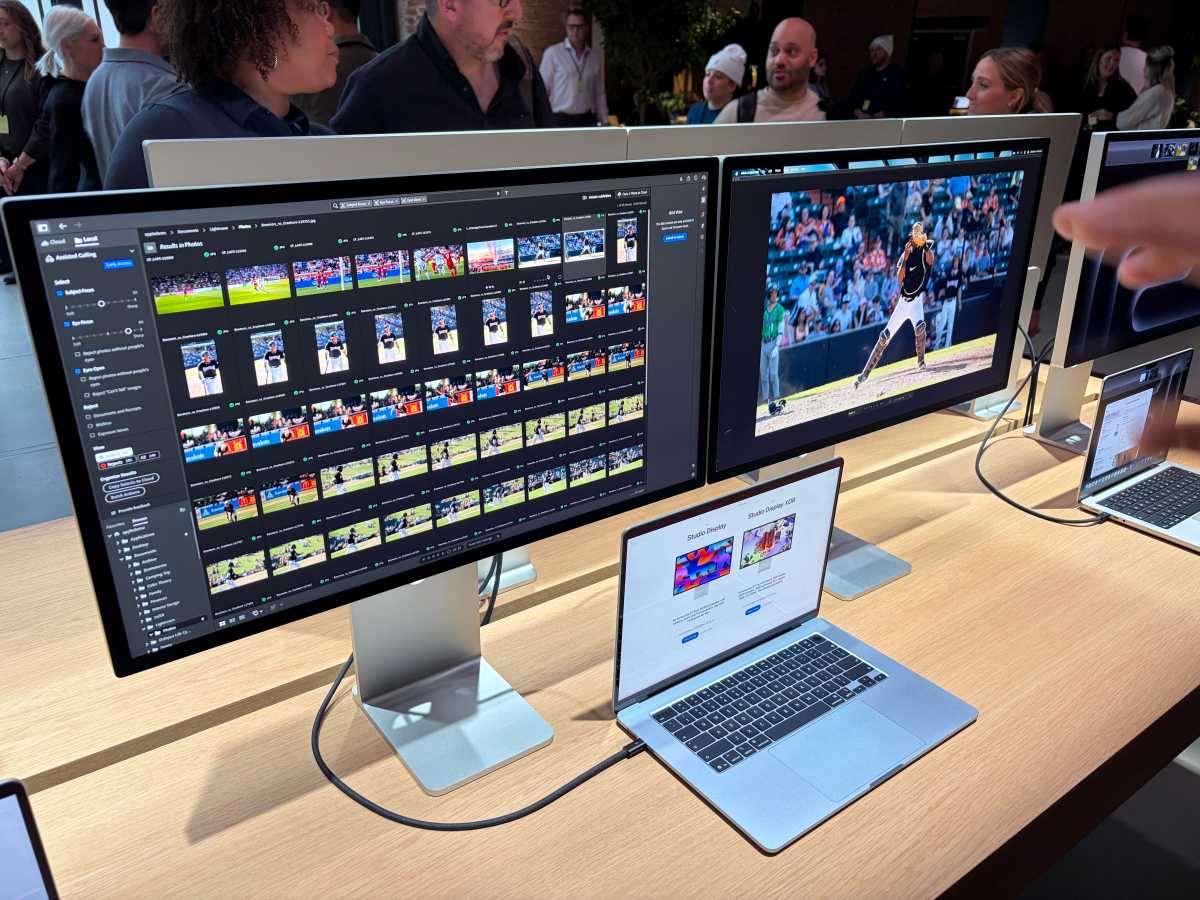
The budget MacBook includes two USB-C ports. One supports USB 3, while the other is limited to USB 2 speeds. There is no Thunderbolt support. Neither port offers MagSafe so the MacBook Neo relies on USB-C for charging.
MacBook Neo Camera & Audio features
- 1080p FaceTime camera
- Stereo speakers with spatial audio/Dolby Atmos
The MacBook Neo includes a 1080p FaceTime HD camera, which will. provide full HD video and basic webcam functionality for video calls. This is a trade-off compared to other Macs which offer a more advanced 12MP Centre Stage camera camera.
There are two built-in microphones that use beamforming and noise-reduction technology to capture voice without background noise.
MacBook Neo’s stereo speaker system features side-firing speakers and offers Spatial Audio support and Dolby Atmos compatibility.
The MacBook Neo also does not support high-impedance headphones, likely because it uses the same lower-cost audio DAC found in the older M1 MacBook Air.
MacBook Neo Battery & Charging
- 16 hours of battery life
- Doesn’t support fast charging
The new MacBook Neo offers up to 16 hours of battery life, which is two hours less than the MacBook Air and lower than any other MacBook currently sold, but it should still provide enough power for a day’s use browsing, streaming video, and working in productivity apps.
The Neo’s battery is about 30–45% smaller than the Air, with the efficiencies of Apple’s silicon allowing it to achieve just a two hour difference in battery life. We’ll be running our own battery life tests to verify this.
Here’s how battery capacity compares to the MacBook Air:
- MacBook Neo: 36.5 wh.
- 13-inch MacBook Air: 52.6 Wh
- 15-inch MacBook Air: 66.5 Wh
The real trade-off is in charging. MacBook Neo only offers USB-C charging at 20W and it doesn’t support fast charging, which is offered by all other MacBook models.
A18 Pro: Performance
Results are expressed as Geekbench scores. Higher scores/longer bars are faster.
Author: Karen Haslam, Managing Editor, Macworld

Karen has worked on both sides of the Apple divide, clocking up a number of years at Apple’s PR agency prior to joining Macworld more than two decades ago. Karen’s career highlights include interviewing Apple’s Steve Wozniak and discussing Steve Jobs’ legacy on the BBC. Having edited the U.K. print and online editions of Macworld for many years, more recently her focus has been on SEO and evergreen content as well as product recommendations and buying advice.